Author

Soapbox

Soapbox's Latest Articles

Smartfish Studio and Sustainable Supply wants to fill niche in OTR

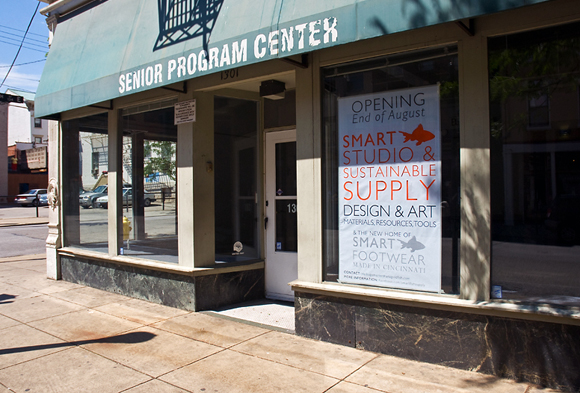
By some accounts, Alisha Budkie's new venture should come as no surprise. The graduate of the University of Cincinnati's College of Design, Architecture, Art and Planning (DAAP) is on track for the Aug. 26 opening of Smartfish Studio and Sustainable Supply, an art and design supply resource based at the corner of 13th and Main streets in Over-the-Rhine.Budkie says her idea for the store springs from the environment she observed as a design student. "My first focus is on all the local schools and students that are here," she says, referring to DAAP, the Art Academy of Cincinnati, the School for Creative and Performing Arts, and the legions of students drawn to the schools' art and design programs.Budkie explains that, while local suppliers such as Suder's Art Store in Over-the-Rhine carry a wide range of standard glues, paints and artists' supplies, she hopes to complement their offerings with something a bit different. Smartfish will stock products that are American made, locally sourced and/or sustainable alternatives to standard products. Budkie will also work with clients to special-order hard-to-find materials, she says."I'm trying to cover a very broad range, and go beyond what's available locally," she says.Her undertaking appears to have support from the community."People are recognizing Over-the-Rhine as a great place to live, work, shop and play," says Brian Tiffany, president of the OTR Chamber, in a video posted on Budkie's website. He points out what could be a big advantage for Budkie: the store's physical location. "Those corners are critical to driving traffic," he says, noting that a retail business located on a corner will draw traffic from a three-block radius.The three blocks surrounding Smartfish hold a high density of design studios, architecture firms, art galleries and businesses launched by Budkie's fellow DAAP graduates. These residents and business owners, she hopes, will appreciate having a resource within walking distance.And the foot traffic might doubly appreciate it, given Budkie's other business: the designer included a workshop in the Smartfish space where she produces Smartfish Footwear, her line of men's and women's shoes.By Matt Cunningham Follow Matt on Twitter @cunningcontent

Local bakeries expand to satisfy gluten-free customers

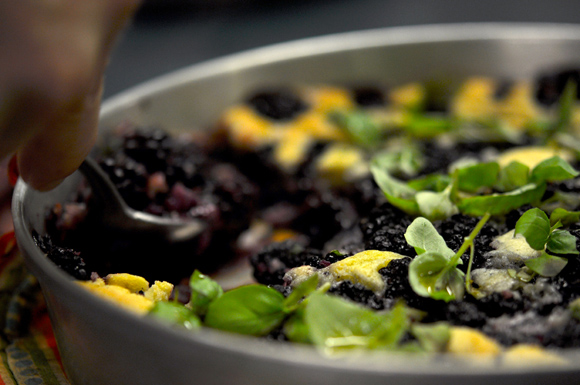
The phrase "gluten-free bakery" might seem oxymoronic.  Gluten is found in wheat, rye, barley and possibly oats. It's part of what gives baked goods their light, fluffy texture, and is a common component in breads, rolls, cookies and other bakery staples.But a growing body of evidence suggests too much gluten may cause problems for some people. In extreme cases, such as people with Celiac disease, a genetic disorder, the protein gliadin, which is found in gluten, sets off an autoimmune reaction that destroys cells in the small intestines. Severe reactions can be life-threatening, and those who suffer from the disease have limited opportunities to eat outside of their homes. Even products advertised as gluten-free might have traces of gluten, given the difficulty of creating a gluten-free environment in a bakery or restaurant that sells gluten products.  Given the growing public recognition of gluten-free dietary restrictions, bakeries that offer low-gluten and gluten-free products are popping up in storefronts and farmer's markets across Cincinnati.Amber Jones, owner of AJ Creations, the only completely gluten-free bakery in the region, suspects that the growing number of people with gluten intolerance comes from greater awareness and better diagnostic tools. "Before, people were often told they had a weak stomach," she says. Her bakery, located in an historic storefront in downtown Covington, offers a variety of baked goods, from muffins and fresh biscuits to cookies, candies and coffee cakes, many of which are also dairy-free. Instead of wheat or rye flour, she uses a wide variety of alternatives, like garbanzo bean flour, rice flour, potatoes, tapioca, corn flour and almond meal.  In Over-the-Rhine, Madison's at Findlay Market sells several gluten-free projects, from Udi's bread to Tinkyada pasta and Sesmark crackers. Neighboring bakery Skirtz & Johnston's Fine Pastries and Chocolates offers a low gluten bread. Called Dinkelbrot, this dense spelt flour bread with sunflower seeds, flax seeds and oats, is based on an old German recipe. The bakery also offers a low-gluten chocolate torte with only four ingredients: chocolate, butter, eggs and sugar.  The Cincinnati Celiac Support Group lists eight bakeries in the region with gluten-free offerings. And with a host of restaurants throughout the area offering gluten-free menu items - or even full allergen-sensitive menus - it's becoming easier for people sensitive to this common food item to enjoy the smells and tastes of fresh-baked goods. By Becky Johnson

Green Business Council focuses on ‘triple bottom line’

People, planet, profits.  First coined in the 1980s, the term "triple bottom line" expands the measurement of organizational success far beyond business-as-usual economics. And it's the focus of the newly minted Greater Cincinnati Green Business Council.    This area's first "green" collaboration of local business leaders is dedicated to expanding the spectrum and values of success into sustainability while increasing their bottom lines.The driving force behind this new council is Cintas, a Cincinnati-based corporation that provides nationwide business support ranging from uniforms and first aid safety to cleaning products and document management. Cintas has been a local leader in sustainable business initiatives, switching to green detergents, recycling everything from paper to hangers, saving gas with combined routing, and creating a line of business clothing that is made of 100 percent recycled polyester.   Cintas noticed that some of its nation-wide clients belonged to green business councils in Cleveland, Pittsburgh and other metropolitan areas. "So we decided to reach out into our own backyard," says Melanie Boyle, environmental sustainability specialist for Cintas.   The reaction was immediate.   In addition to Cintas, six other major companies quickly signed on to share best practices, lead by example and consider the role of both culture and technology in sustainability: Procter & Gamble, Mitsubishi Electric Automotive America, Melink Corporation, Macy's, Luxottica Group and Fifth Third Bank.  "One of our core values is giving back to the communities in which we operate, so advancing sustainability in the Greater Cincinnati area through the GCGBC is a natural extension of these values," said William Gates, Macy's director of paper, print media services and sustainability, in a press release announcing the council's formation.Already, some member companies are adopting green ideas shared at the first council meetings. Cintas is saving paper now through double-sided copying, a practice picked up via the council.    Boyle sees the benefits of the collective knowledge within the group. "Learning about the advantages and ways to overcome obstacles with a project or initiative from another company who has already gone down the path is a great advantage for the rest of the group."Since the launch of its website, the Greater Cincinnati Green Business Council has had 70 requests for more information from local businesses. Some of them may have just started to "think green" and could learn the most from this new council.   "We want their commitment and a willingness to drive projects" like composting and water conservation, says Boyle. "People are very excited to talk about what's going on in Cincinnati." By Becky Johnson

Power in proximity at The Brandery’s new OTR space

Cincinnati-based business accelerator The Brandery began moving in late June into a three-story office space in the 1400 block of Vine Street. The rehabilitated building features high ceilings, an open floor plan and skylights that let in light to all floors - all desirable features in rapidly-revitalizing Over-the-Rhine.But The Brandery founders J.B. Kropp and Dave Knox say the features that go beyond the architecture are what will attract creative energy -- and a new generation of startup businesses -- from across the country."We looked at a couple of spots," says Kropp, who adds that the revitalization underway in Over-the-Rhine has turned what was once a no-go part of the city into a powerful introduction to Cincinnati for startups from out of town. "If we're going to pull in 15 to 20 people for their first experience of Cincinnati, this is going to be great for it."Knox added that, although the team considered other sites in Over-the-Rhine, Vine street's placement between Main Street and Washington Park made it ideal."It's more the heat of what's happening," he says of the glass-fronted office.Along with being a fitting introduction to the Queen City, Kropp and Knox say the 4,500-square-foot office is designed to cultivate idea sharing and connectivity among like-minded entrepreneurs. To that end, they say The Brandery office will be open for local startups and startup-related businesses to gather and work. "We envision seeing more people in Cincinnati coming in," Kropp says. "They might be saying, 'I'm not ready for funding yet, but can I just hang out?'"Knox adds that The Brandery hopes to serve as a meeting place for area tech and startup meetups, establishing the office space as a central gathering place for people to generate and cultivate new ideas."It's a good experience from all sides," Kropp says.The Brandery's newest class of startups will begin the business development program August 1. Knox says he's excited to begin the program in the new space, a location that he noted is much as he and Kropp envisioned when they launched The Brandery with Bryan Radtke and Rob McDonald in 2010. "We've been looking for a permanent home ever since we started," he says. "This place has power in its proximity."By Matt Cunningham

#Cincinnati social media coup: Mashable rank = #1

Sure, we're livable, but are we social media savvy? The latest word from techie guru site Mashable is yes. In fact, we're the tops. As part of its "Social Media Day" celebration, Mashable asked its audience to nominate cities they believed had the strongest social media scene. We ranked above New York and San Francisco, thanks in part to social media hot dogs like @ochocinco and in part to a video submitted by Cincinnatian Blair Ward. Ward gave props to groups like Cincinnati Social Media, Inc. and the more regionally minded Cin-Day Social Media Club, whose members meetup and tweetup regularly to build momentum and connections."Based on our position as a consumer marketing hub with well-established companies such as The Kroger Co., Procter & Gamble and Macy's, Cincinnati is in a perfect position to capitalize on social media venues," says Kevin Dugan, director of marketing for Empower Mediamarketing. By Mike SimkinHe counts Cincinnati's dense consumer marketing as well as innovative social networks and powerful arts community as key factors that drive residents to go social. Mashable promoted the award as part of its Social Media Day June 30. Mashable's Cincinnati Social Media Day meetup attracted 124 attendees to The Pub at Rookwood Mews.

UC researcher earns NIH grant for miRNA study

A University of Cincinnati neurobiologist may soon help mental health researchers understand depression at a more effective level than ever before, thanks to an innovative research method and a nearly-quarter-million-dollar grant from the National Institutes of Health.James Herman, PhD, received a two-year NIH grant worth $248,159 in its first year to fund research into the role that microRNA (miRNA) - molecular-level controllers that help regulate the brain's chemistry - play in how the brain reacts to stress."We're attempting to develop this as a discovery platform to understand what's going on in the brain," Herman says. He explains that this research, in which scientists analyze how miRNA in mice affect the brain's mood-regulating prefrontal cortex, is very early-stage work in the exploration of the molecular process behind depression. But the ultimate implications of Herman's work could be significant. He explained that miRNA in mice function the same as miRNA in humans: identify a link between mouse miRNA and a brain dysfunction, and there's good reason to look for a similar relationship in the human brain. Beyond this tantalizing fact, though, scientists don't completely understand how miRNA works, or even how many types of miRNA exist in the brain.Herman's team is tackling this hurdle with a new analysis technique, called deep sequencing, to analyze miRNA at a high level of detail."The method is really, really powerful," he says. Processing one set of data from a sample, for example, can keep lab computers running nonstop for a weekend. Thanks to a collaboration with informatics researchers at the University of Michigan, Herman's team can spot relationships and patterns in this sea of data, results that could help scientists link certain miRNA function - or dysfunction - to the stress-processing problems underlying depression and mood disorders.These results could eventually give psychiatrists a new weapon against mood disorders. Rather than giving a patient medicine that floods the brain with mood-altering chemicals - a practice that often comes with severe side effects - physicians could one day provide treatment that fixes the way the brain controls its own chemistry. Medicine has a long way to go to reach that point, but the work Herman's team is undertaking at UC could be a major step in the right direction.By Matt Cunningham

St. Elizabeth’s growth includes health, wellness institute

St. Elizabeth's Hospital in Edgewood, already recognized for performing more cardiovascular procedures than any other hospital in Cincinnati, plans to expand its services, becoming a health and wellness institute over the course of the next few years. "We're already known for our cardiac services and well recognized by independent health grades," says Sara Giolando, St. Elizabeth's senior vice president and chief strategy officer. "We're already a strong program, but this expansion will give an additional opportunity to expand the services that we already offer, in addition to the clinical research program. This gives patients an option to try the latest devices and drugs monitored by one of the best programs, allowing local access to high-tech advancements." The new expansion will include two phases. Phase one involves the physical expansion of the space to create a heart hospital in one central location. Phase two will add three additional levels to the hospital, making room for a clinical research institute, universal patient rooms, additional patient beds, ICU capacity and additional exam rooms. Because St. Elizabeth is a non-profit organization, $15 million for the first phase of the project will come from hospital earnings, with additional funding coming from a capital campaign."St. Elizabeth's is really unique. We typically fund from retained earnings and employee contributions. I am always blown away to see how many people and employees give back to the hospital in a form of donation," says Giolando, who adds that the hospital has the highest contributing employee system in the region.Giolando says that the expansion is about more than physical growth; it's also a move to make more area residents aware of heart disease and the new resource taking shape in their backyard.By Lisa Ensminger

Madisonville gives urban farm project a tentative trial run

Steve Rock spoke to the Madisonville Community Council in mid-June about an update and a request. He and a team of volunteers plan to convert a derelict industrial building on Whetsel Avenue into an urban farm and education center, employing the latest technology to grow fresh meat and produce in the neighborhood.  But the response of the more than 50 people in attendance showed that innovation is not just about ideas and experiments; it's also about connecting with people and building community support."I think education is huge in this project," says Rock, an environmental engineer by trade who has taken on the urban farm project in his spare time, partly to see if some of its more unusual ideas will work. He spent part of the meeting - and much of the time afterward - explaining various aspects of the project: a system of vertical integration would grow both hydroponic vegetables and tilapia in the building (a former laundry) using waste from the fish to fertilize the plants. A classroom and community gardens would help area residents learn about agriculture and grow their own food. And a program to train at-risk youth would help staff the facility while improving the employment prospects for its participants. But questions also revolved around the building itself. Madisonville Community Council president Bob Igoe explained that the building, which has been vacant for years, is slated for demolition. "We've got to be confident Steve can make this thing work, or we're going to be stuck with [the building] for another year," Igoe says.Several Madisonville residents asked pointed questions about timelines and the likelihood of the project getting grant funding; Igoe pointed this out as an indication - the project's merits aside - that city residents wanted to see progress in their community."You have a room full of people who have had a handful of promises for decades," he says.At the end of the meeting, the community voted to place a three-month stay on the demolition. This gives Rock time to try to secure grant funding, showing the community the project can raise the $500,000 to $1 million he estimates it will take to launch. Volunteers have launched a website and have drafted handouts to help spread the word about the project, and Rock said he hopes to hear about grant funding prior to the community council's next meeting on the project, planned for September.By Matt Cunningham

American Can Lofts open for apartment tours

Northside kicked off the long-awaited grand opening of the newly renovated American Can Lofts, located near the neighborhood's Hamilton Avenue business district, with presentations and informational sessions during the Northside 4th of July parade and Rock and Roll Carnival.Developed by Bloomfield/Schon + Partners, the American Can development took seven years to complete. Economic shifts delayed construction and changed the project from a focus on condominiums to apartments. Developer Steve Bloomfield says that Northside has been an enthusiastic home for the project throughout the process."The Northside community has been incredibly supportive," he says. "A lot of people are investing in Northside, when for years this building has been an eyesore in the community and has held back some new developments. But with this new renovation, we will certainly help in the investment of Northside."Northside Community Council president Martha Dourson shares that enthusiasm."I think it will be a great boom for Northside," she says. "For one thing, the building looks so much better than ever before, and I believe this new development will attract more people the neighborhood. It's an eclectic neighborhood, the business district is vibrant and growing, and the people that live here give a sense of community. Northside is a great community with involved people. They always have a sense of improving, which always makes a difference."Bloomfield says the project followed the developer's policy of incorporating environmentally sensitive aspects into the project. Developers recycled construction materials, installed energy-efficient heating and cooling systems to reduce energy bills, and included other green amenities such as low-VOC paint, low-flow plumbing fixtures, efficient fluorescent and LED lighting and recycled carpet material. Bloomfield expects the general target market audience to be young to middle-aged professionals. Leasing agents have begun offering tours of the site for potential tenants, and offer more information at the development's website.By Lisa Ensminger

Streetcar design to respect FONSI guidelines, OTR history

The Cincinnati Streetcar could soon become one of the first projects in the country to be funded by the Federal government's Urban Circulator grant program. The city of Cincnnati announced June 10 that the project received a Finding of No Significant Impact (FONSI) from the U.S. Environmental Protection Agency, a final step needed before the project could access the Urban Circulator funds it won in June 2010.According to Streetcar Project Manager Chris Eilerman, a key to passing that government-mandated standard has been a commitment to protecting not only the physical environment, but the cultural one as well."Because this project extends into Over-the-Rhine, which is pretty heavily regulated, we were really sensitive when looking at the impact," he said. "We want to make sure we don't produce a negative impact on the historic properties."Over-the-Rhine's historic collection of Italianate architecture is as much a part of the environment as air and water quality - at least in terms of what the EPA's environmental assessment evaluates. Eilerman said as part of the assessment, the city has promised to work closely with the Ohio Historic Preservation Office. The office will review designs for platforms, transmission wire poles and other streetcar facilities, to ensure they complement the historic neighborhood's overall look and feel."This is a neighborhood that grew up around streetcar transit," Eilerman said. "We view the resurgence in this type of transit as something that could make the neighborhood better, and we want to make sure we do that."He explained that, now that the FONSI is on the records, the project will work to complete initial design work and right-of-way negotiations. Throughout the process - especially in the design department - the Ohio Historic Preservation Office will provide review and oversight, to make sure Cincinnati's streetcar fits in with the past as it moves the city into the future.

Our Partners

Taft Museum of Art
Warsaw Federal

Don't miss out!

Everything Cincinnati, in your inbox every week.

Close the CTA

Already a subscriber? Enter your email to hide this popup in the future.