StartupCincy Week marks a decade of building Cincinnati’s startup community
The event returns in October with a bigger footprint, more programming, and proof that Cincinnati’s startup ecosystem has grown without losing community-driven spirit.
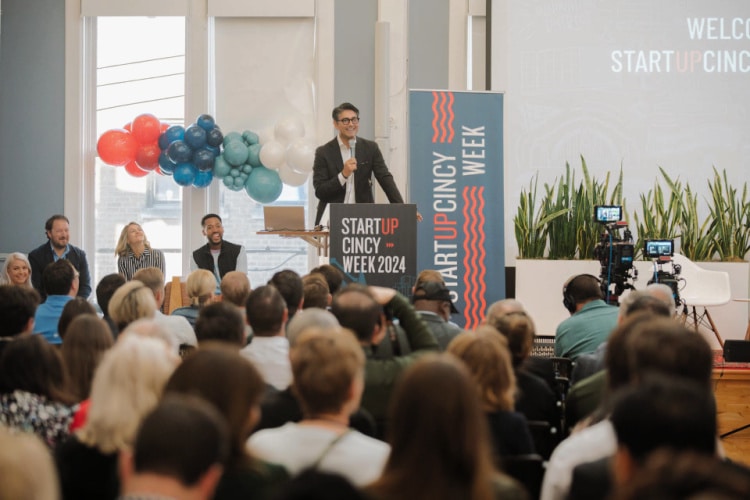
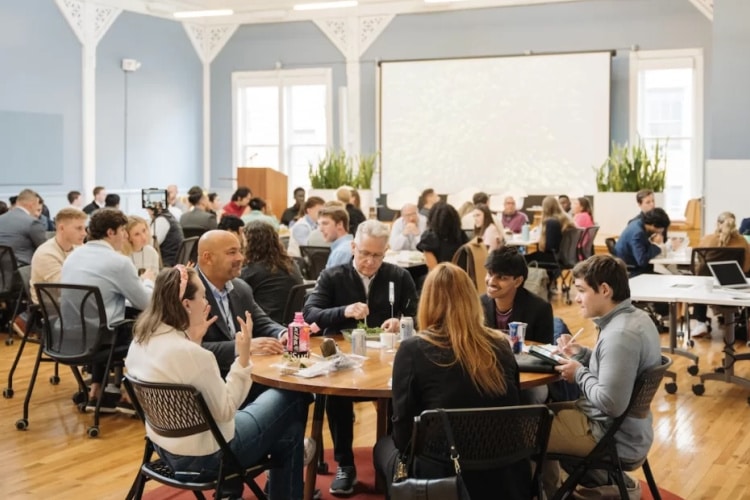
What began as a grassroots movement and a Twitter hashtag has grown into a four-day gathering October 5th-8th and is expected to draw about 1,500 people. There are more than 100 sessions, workshops, showcases, fireside chats, and keynotes designed for founders, investors, students, established companies and others working throughout the region’s innovation ecosystem.
For Abby Grimm, director of engagement and experience at Cintrifuse, that growth is significant, but it is not necessarily the only measure of what StartupCincy Week has become.
“I think the first year of StartupCincy Week was maybe around 100 people, and this year we’re expecting 1500 people to come,” Grimm said. “But what has remained consistent is the underlying purpose of bringing people together.”
A hashtag that created an ecosystem
StartupCincy did not begin as a formal organization or a strategic initiative developed in a boardroom. Grimm described its early days as a grassroots effort among founders and others already participating in Cincinnati’s emerging startup community.
In the early days of Twitter, #StartupCincy became a way for people to identify themselves as part of that community. It was a marker, a rallying cry, and eventually the foundation for StartupCincy Week.
That history still shapes the event.
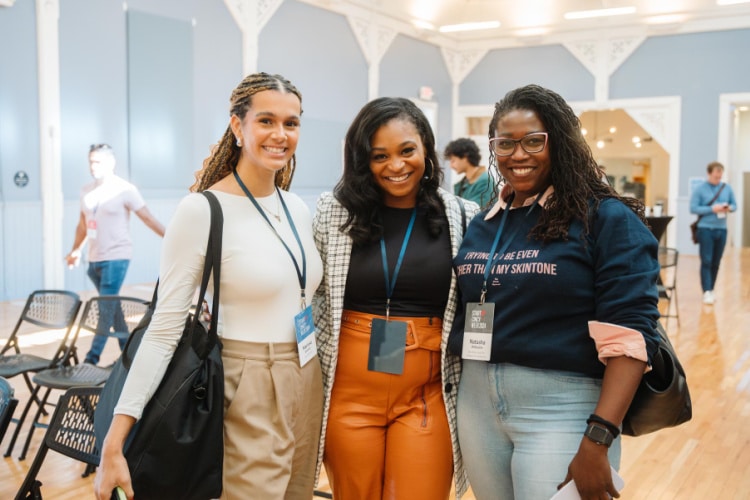
Grimm said the first StartupCincy Week was small and scrappy, centered in and around Union Hall. Ten years later, the event still uses Union Hall as a central gathering place, but its footprint has expanded into multiple blocks in Over-the-Rhine.
That expansion also reflects a broader goal: using the week to showcase Cincinnati itself alongside the people building companies and ideas here.
“It came down to how are we singing the song of Cincinnati and putting our region on the map,” Grimm said.
The 2026 event is organized around four days of programming, beginning Monday with a kickoff and founder-focused content, moving into venture capital on Tuesday, investment into early-stage and non-tech founders on Wednesday, and programming specifically designed for students on Thursday.
A program built by community, for the community
The scale of StartupCincy Week can make the event look highly curated from the outside, but Grimm said much of the programming comes directly from the community.
A handful of signature events anchor the week, including the kickoff, community lunch, and nightly happy hours. Beyond those staples, organizers open a public submission process and invite people throughout the ecosystem to propose sessions.
The goal is not simply to create another platform for companies to promote themselves.
“We’re looking for people that have a point of view, a unique insight, a story, something that they want to share with the community that’s going to help others in this startup space,” Grimm said.
Speakers are not paid to participate, another piece of the event’s community-driven model.
As submissions come in, organizers look for themes and trends that can shape the year’s programming. This year’s tracks include venture, small business, food founders and artists as entrepreneurs, along with a new city-building focus.
The result is a schedule that reflects what people working in Cincinnati’s startup ecosystem are thinking about right now, rather than a predetermined list of topics.
Beyond the panels
One of the biggest changes Grimm highlighted for this year’s event is a stronger emphasis on interactive programming.
StartupCincy Week includes speed mentoring, workshops, the Startup Clubhouse, showcases, and other formats intended to get attendees participating rather than simply sitting through a series of panels.
Organizers have pushed speakers to make sessions useful beyond the hour or so spent in the room.
“We want people to walk away with something tangible,” Grimm said.
That could mean a worksheet outlining steps for building an AI agent team, a hiring checklist for a startup, or another resource attendees can take back to their teams.
The Startup Clubhouse is another example of how the event has evolved. What began as a talent-focused initiative was originally designed to help connect employers and job seekers. Grimm said organizers eventually recognized that the name and format felt too transactional.
Finding a job or hiring someone is rarely just a transaction, she said. Relationships and networks matter.
The Startup Clubhouse was created as a more open environment for startup founders, employees and people looking for opportunities to mix and connect throughout the week.
This year’s event will also include a dedicated VC workspace called VentureHaus, curated networking and matchmaking opportunities, startup showcases, and an assortment of workshops and community events.
Putting Cincinnati’s innovation to work
Another area of focus this year is the relationship between startups and the city itself.
Grimm is leading Cintrifuse’s City as a Lab initiative, which was created around the idea that Cincinnati can serve as a testing ground for startup innovation while also giving entrepreneurs an opportunity to help address real community challenges.
The initial premise was relatively straightforward: understand the problems facing the city, understand the technologies and startups capable of addressing those problems, and connect the two.
The reality has proved more complicated.
“Rather than simply matching a startup with a city department and expecting a perfect solution to emerge, the initiative has shifted toward deeper collaboration and co-creation,” Grimm said.
That work is reflected in the new city-building track at StartupCincy Week, which will explore how innovators, technology, and civic leaders can work together on issues affecting Cincinnati.
Grimm said the session will include lessons learned during the initiative’s first year, as well as some of the progress that has come from bringing the startup and civic communities closer together.
A bigger Ohio conversation
At this year’s event, Cincinnati has an opportunity to consider its place within Ohio’s broader startup ecosystem.
One session will bring together representatives from Cincinnati, Cleveland, and Columbus to examine how the state’s three largest startup communities can learn from one another.
Grimm sees the conversation as particularly timely as Ohio receives increased attention for its business and innovation environment.
“Cincinnati has developed a model built around collaboration, with StartupCincy itself serving as an example of how organizations can work together rather than operate independently,” she said.
At the same time, she sees areas where Cincinnati can learn from other Ohio cities, particularly when it comes to attracting state-level funding.
That tension between competition and collaboration is part of the conversation she hopes StartupCincy Week can encourage.
“The only way that we grow and progress is having those difficult conversations and putting the challenges really in front of our faces and talking through it,” Grimm said.
Building a front door for Cincinnati’s startups
The week is also connected to a resource that exists beyond the four-day event.
StartupCincy.com was launched in 2025 as what Grimm called a “digital front door” for the region’s startup ecosystem. Rather than directing founders, entrepreneurs and others to a single organization, the platform aggregates resources from across the region.
Users can find information about organizations including Alloy, Mortar, Cintrifuse, Aviatra Accelerators and Blue North, along with job opportunities and a shared events calendar.
For Grimm, that broader network is an important distinction.
“StartupCincy is not its own organization,” she said. “It is still a movement, a collaborative, a rallying cry that is made up of so many partners that are collaborating and coming together.”
That same philosophy is visible throughout StartupCincy Week. The event provides a central gathering point, but the programming is intended to reflect the larger ecosystem rather than a single organization’s work.
A decade of momentum
Some of this year’s sessions highlight individual founders and companies, while others look at larger questions about capital, talent, small business, civic innovation and the future of Cincinnati’s startup community.
Among the sessions Grimm highlighted is “Pop Up to Permanent,” featuring Alex Zyndorf of Model Group alongside Christy Samad of 3CDC and a local small business owner. The conversation will examine new approaches to helping entrepreneurs test brick-and-mortar concepts before taking on the full risk of a traditional long-term lease.
Another session will feature Dan Levine of Accel, a West Coast venture firm that has invested in Kernel, which maintains dual headquarters in Cincinnati and San Francisco. That discussion will look at why a company might choose to build in Cincinnati even while operating in a market where Silicon Valley remains a dominant center of technology investment.
Students will have an entire day of programming on Thursday, a change from previous years when student-focused sessions were spread throughout the week. The shift is intended to make the event more accessible to that audience and create a concentrated opportunity for students to engage with founders, investors and other people working in the ecosystem.
For Grimm, however, the strongest case for attending StartupCincy Week may be simpler than any individual session.
“There is so much cool stuff going on, and we simply give the platform for the innovation to continue,” she said. “You know the amazing people and the amazing efforts that are already taking place in Cincinnati.”
After 10 years, the scale of StartupCincy Week looks very different from the small gathering that first brought roughly 100 people together. But the underlying idea has remained remarkably consistent: create a place where people building companies, investing in ideas, developing talent, and strengthening the region can find one another.
Learn more about StartupCincy Week
Explore Cincinnati’s startup ecosystem at StartupCincy.com
Author

Related Articles
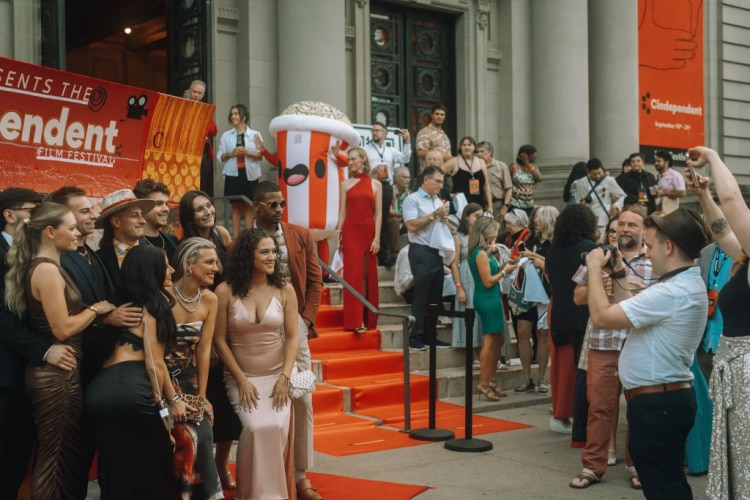
Cincinnati’s independent film scene enters new chapter with unified Cindependent Festival
Two longtime film festivals are joining forces, bringing together independent filmmaking, accessibility and a broader vision for the city’s film community.
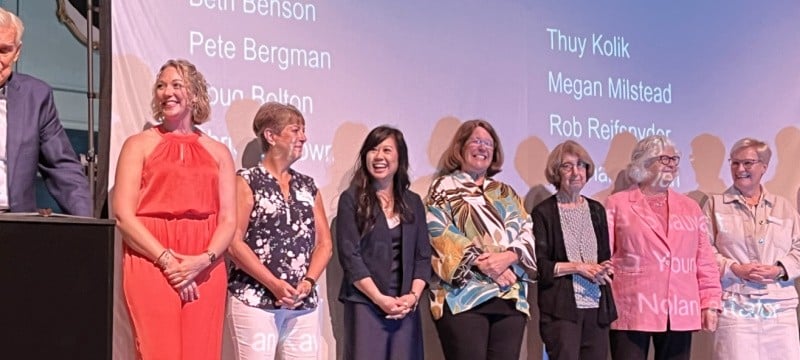
Three organizations merge to optimize non-profit support
Beam Center for Nonprofits unifies OneSource, Leadership Council and Social Venture Partners to provide more diverse and efficient service.

Non-conventional by design: A new conference puts scaling entrepreneurs at the center
Non-Con brings entrepreneurs, creatives and small business owners together in Northern Kentucky to share practical lessons on growing businesses outside traditional pathways.