
Author

Soapbox

Soapbox's Latest Articles

UC researchers innovate with lab-on-a-chip technology

A sensor chip developed by researchers at The University of Cincinnati is small enough to be covered by a matchbook. But this little device offers huge potential for making medical care faster, easier and less painful.UC researchers Erin Haynes, DrPH, and Ian Papautsky, PhD, are in the early stages of testing a sensor that can measure the level of manganese, a potentially toxic metal, in a blood sample. Excessive manganese exposure can cause a range of symptoms, including behavioral changes, balance problems and nervous system damage. Haynes, an environmental medicine researcher, initially began studying manganese exposure after she was contacted by residents of Marietta, Ohio, who worried that a manganese processing facility in that city was releasing dangerous amounts of the metal into the air.Haynes says that current testing practices, which involve periodic blood testing among participants, can take up to six months or more as her team collects a batch of samples, ships them to a lab, and then waits for results."Families are anxious," Haynes says. "They want to know the results immediately or in a short amount of time."Haynes says she approached Papautsky with the idea of developing a so-called lab-on-a-chip: a single-use device that could quickly test a small blood sample for manganese and provide a near-instant result. Papautsky says this type of point-of-care testing is a hot topic in biomedical engineering. And the subject at hand presented a unique challenge, he says."It turns out manganese is very challenging to detect in an electrochemical approach," he says.The researchers' prototype chip uses an electrical current to pull manganese out of the blood sample, and measures how much energy it takes to do that - the amount of energy required correlates to the amount of manganese in the sample. The electrodes normally used in this kind of device are often made from mercury, but the team found that making the electrodes out of less-toxic bismuth produced a more sensitive sensor, and one that's more environmentally friendly.Papautsky says the chip is still in the early phases of lab testing - it has shown promise detecting manganese in blood serum, and his team hopes to test it using whole blood in the near future. It could be several years before a consumer-ready version of the chip can be deployed to Marietta, thanks to the long process of verification and testing that goes into ensuring any medical device is ready for use.But both Papautsky and Haynes are excited about the chip's potential. Its high sensitivity could trickle down into making other tests, such as that for lead exposure, more effective. But patients young and old may better appreciate another fact: the lab-on-a-chip could one day conduct a range of front-line lab tests with only a finger-prick's worth of blood, rather than the vials required today."These type of systems are changing the way medicine is practiced and can be delivered," Papautsky says.By Matt Cunningham Follow Matt on Twitter @cunningcontent
Brush Factory’s smooth trip home

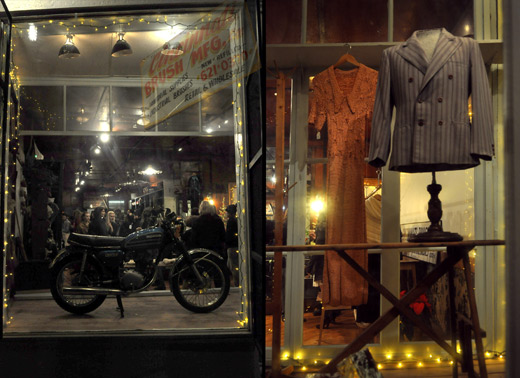
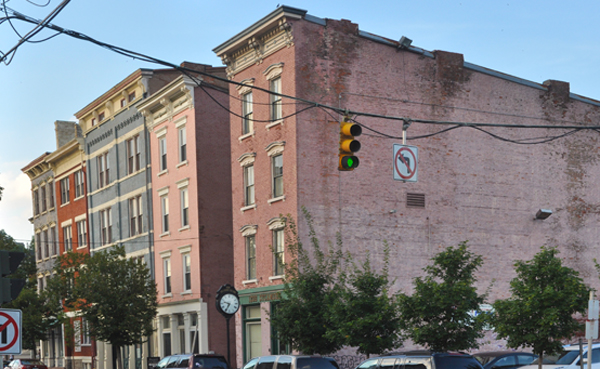
The Brush Factory is moving back to its roots.   After a year in Oakley retail space, the designers and makers of casual, eclectic sportswear and accessories are returning to Brighton, a pocket of industrial history within Cincinnati's West End neighborhood.   "Our hearts belong to Brighton," admits Hayes Shanesy, co-owner of The Brush Factory.  "When I first moved here, I couldn't believe a place like this still existed."  Vestiges of the community's rich history – its canal traffic, streetcar line, and industrial architecture – give the past an almost tangible quality to Shanesy.  "If you squint, you can still see it."Both he and his partner Rosie Kovacs draw inspiration from the neighborhood, once a center for furniture manufacturing, meat-packing and distillery operations in Cincinnati. The design shop's 120-year-old building, at one time the workshop and showroom of the Cincinnati Brush Manufacturing Company, makes a fitting home for the designers' interests, his industrial and hers fashion. In the building's garage and upstairs workshop, Hayes focuses on 3-D forms in design, handcrafting wood furniture and restoring motorcycles and old sewing machines. In addition to her tailoring business, Kovacs creates her clothing line downstairs, where design patterns and hand-woven fabrics make each item unique. "Nothing is shipped out and our hands touch every part of it," Shanesy says.  The closing of the Oakley storefront will allow the designer-craftsmen time to expand their latest creative endeavor, melding their two worlds of soft and hard materials through a new line of accessories and bags. Without the demands of a retail operation, they say they can now concentrate on their wholesale business with boutiques here and across the country.Christopher Dam, The Brush Factory's director of men's and women's sales, believes that Shanesy and Kovacs' vision, inspired by the high-quality products of the past, is a response to America's growing rejection of mass-produced quantity. The Midwest lags behind fashion centers like New York and Paris in embracing this quest for quality and uniqueness, but Dam sees great potential in Cincinnati. "With wonderful neighborhoods [in the city] like Oakley and Northside, we know the customers are out there."By Becky Johnson Photos courtesy of The Brush Factory

NDT exceeds funding goal for initial series

Joel Ivers is making it look easy to raise venture capital dollars in Southwest Ohio.As CEO of NanoDetection Technology, Ivers recently announced that the start-up company had closed its Series A funding round with 21 investors and was "oversubscribed" – venture capital talk for taking more money than it set out to raise.The company had set a $2 million goal for the round of financing, but investor interest was so strong it decided to take an additional $300,000, Ivers says. And even more impressive: All but three of the 19 individual investors are local individuals."We were thrilled by the number of individuals who saw the potential for our technology, especially so many local investors," says Ivers. Ivers joined NDT, a health-care diagnostics company, last fall after CincyTech brought it here from Knoxville, Tenn. CincyTech led the round, which closed in July, with a $400,000 investment and brought half a dozen investors into the deal. Southern Ohio Creates Companies invested $100,000, and 19 individual investors put in the rest. "The seven-month effort was especially impressive given the tough fund-raising climate," Ivers says.NDT is focusing initially on marketing a low-cost point-of-care diagnostic system to hospitals and physicians' offices, with a first target on the detection of MRSA (Methicillin-resistant Staphylococcus aureus) in skin and soft tissues. Ivers says this investment round will fund efforts for clinical trials and for NDT to complete Food and Drug Administration clearance of its new test. NDT expects its initial U.S. MRSA-targeted sales early in 2013. NanoDetection Technology was founded by Knoxville physician Charles Barnett, who developed a way to detect and identify pathogens much more quickly than existing technologies – within minutes instead of days. Ivers was brought in to run the company in Cincinnati after working in biomedical fields in the region for 30 years. He has served as president of Union Springs Pharmaceuticals and CEO of Hill Top Research. NDT moved to the Tech-Way Office Park in Franklin, Ohio, in March, and hired two research scientists. Tech-Way Industries will produce the plastic parts for the devices and assemble the final product.NDT's local capital-raising success validates its move here, says Bob Coy, president of CincyTech. "It was serendipity that NDT came across our radar, but serendipity only happens when your networks are robust to begin with."By Sarah Blazak

This Place Matters showing boosts more than OTR

It was a near miss that some still see as a much-needed shot in the arm. The Over-the-Rhine Foundation, a community organization dedicated to promoting sustainable growth in the historic neighborhood, was the dark horse story of the National Trust for Historic Preservation's 2011 This Place Matters Community Challenge. The organization came from behind in the closing weeks of the voting drive event, which offered its winner $25,000 to support historic preservation efforts. At one point, the OTR Foundation led the field of 100 finalists in a close race that came down to the final days.But when the final tallies came in, preservation projects in Newport, RI, and Wellington, TX, gained first and second spots, respectively. The OTR Foundation placed third, with an accompanying $5,000 prize.But never mind the scoreboard: the organization's representatives - and historic preservation advocates in the city - are calling the third-place finish a huge success, for both Over-the-Rhine and Cincinnati as a whole."The way we look at it, any interest in the neighborhood is good," says OTR Foundation Vice-President and former Soapbox managing editor Sean Rhiney. "It puts us on the map and in the national conscience."Cincinnati Preservation Association executive director Paul Muller agrees, noting that it was community mobilization in multiple neighborhoods that drove the voting effort. "It was really exciting to be part of the community that mobilized for that effort," he says. "It was great, particularly, to show the National Trust the passion and support for Over-the-Rhine in Cincinnati."According to both advocates, Over-the-Rhine's success speaks to something happening in Cincinnati: a renaissance of interest in the city's history, and a new respect for its urban core - the 'inner circle' neighborhoods like Over-the-Rhine."That's almost like the city is coming to terms with itself," Rhiney says. "We're changing the conversation from focusing on negatives to attributes."On Tuesday, Aug. 2, Mueller and CPA preservation director Margo Warminski asked members of Cincinnati City Council to push forward an effort to have Cincinnati designated a Preserve America Community by the Federal government. The move would help preservation initiatives in the city receive grant funding, and would help build what Mueller calls one of the city's greatest present and future assets: its historic treasures. By Matt Cunningham Follow Matt on Twitter @cunningcontent
Organizers call for support of Office of Environmental Quality

Like Federal, state and other local governments, Cincinnati needs to trim its budget. But if a group of vocal supporters have their way, those cuts won't come at the expense of revenue-generating efforts to increase the city's sustainability. City Administrator Milton Dohoney's office proposed cuts include disbanding the city's Office of Environmental Quality. The office's responsibilities include managing energy conservation and use in city facilities, obtaining grant funding for city projects that enhance the city's environmental friendliness and working with the city and Hamilton County to improve the region's air quality. Under the proposed plan, the OEQ would be absorbed into the Department of Public Services and the Finance Department's Risk Management Division. Five OEQ staff members would be absorbed into other city departments; two would lose their jobs. "To call the City Manager's proposal of eliminating the OEQ short-sighted would be a gross understatement," says Libby Hunter, a green realtor for Comey & Shepherd and chair of the U.S. Green Building Council's Cincinnati Residential Green Building committee. She argues that the numbers don't add up. "The OEQ has increased public participation in the recycling program to more than 75 percent of households, while creating 20 new city jobs and decreasing the city's net recycling cost by more than $1 million," she says. "OEQ has raised over $14 million of private investment to improve the energy efficiency of city buildings and reduce the city's utility bill by over $1.2 million a year, and is pushing to finalize a plan with a private vendor to install a solar array at no cost to the City that could generate $250,000 a year in electricity." At the first of five planned hearings on the budget, 21 of the 23 citizens who spoke to council did so to voice their support for keeping the OEQ. Likewise, groups of concerned residents have launched an online petition drive and a Facebook page promoting grassroots action on the proposal."This is about economic development as well as quality of life," says Danny Korman, owner of sustainable goods retailer Park + Vine. He notes that Cincinnati ranks 27th in the nation's metropolitan areas for green jobs, and that the OEQ - and city-level green projects - play a role in keeping the city current in the world of sustainability. "As someone who loves this city and has a business in the city, this would really be a huge void in the city to not have it around."The Cincinnati Green Group, an affiliation of environmental and sustainability advocates, is encouraging citizens to speak up at budget hearings planned for August 10, 15 and 16. If groups as large as the one that spoke at the first meeting continue to voice their concerns over the matter, council member Laure Quinlivan says the grassroots effort could prompt council to act."I can tell you in my short experience at city hall, I've seen it happen," she says, noting that proposals that would have closed pools and cut nature education in city parks were both amended after strong public outcry."I think citizen power will work if people continue for fight for what we have," she says.According to Korman, this is not a fight to be left for the future."Once you let something like this go, it's hard to get it back," he says. "We're concerned that once we lose it we're never going to see it again."By Matt Cunningham Follow Matt on Twitter @cunningcontent
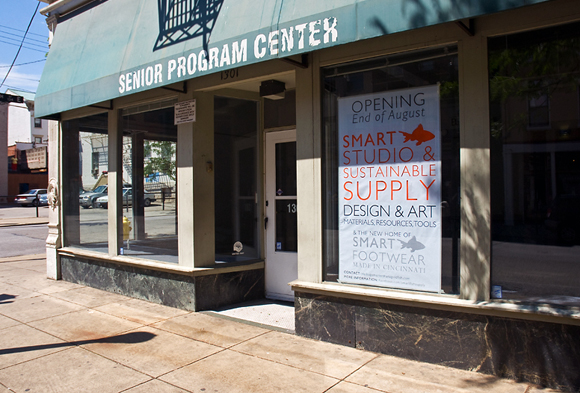
Smartfish Studio and Sustainable Supply wants to fill niche in OTR

By some accounts, Alisha Budkie's new venture should come as no surprise. The graduate of the University of Cincinnati's College of Design, Architecture, Art and Planning (DAAP) is on track for the Aug. 26 opening of Smartfish Studio and Sustainable Supply, an art and design supply resource based at the corner of 13th and Main streets in Over-the-Rhine.Budkie says her idea for the store springs from the environment she observed as a design student. "My first focus is on all the local schools and students that are here," she says, referring to DAAP, the Art Academy of Cincinnati, the School for Creative and Performing Arts, and the legions of students drawn to the schools' art and design programs.Budkie explains that, while local suppliers such as Suder's Art Store in Over-the-Rhine carry a wide range of standard glues, paints and artists' supplies, she hopes to complement their offerings with something a bit different. Smartfish will stock products that are American made, locally sourced and/or sustainable alternatives to standard products. Budkie will also work with clients to special-order hard-to-find materials, she says."I'm trying to cover a very broad range, and go beyond what's available locally," she says.Her undertaking appears to have support from the community."People are recognizing Over-the-Rhine as a great place to live, work, shop and play," says Brian Tiffany, president of the OTR Chamber, in a video posted on Budkie's website. He points out what could be a big advantage for Budkie: the store's physical location. "Those corners are critical to driving traffic," he says, noting that a retail business located on a corner will draw traffic from a three-block radius.The three blocks surrounding Smartfish hold a high density of design studios, architecture firms, art galleries and businesses launched by Budkie's fellow DAAP graduates. These residents and business owners, she hopes, will appreciate having a resource within walking distance.And the foot traffic might doubly appreciate it, given Budkie's other business: the designer included a workshop in the Smartfish space where she produces Smartfish Footwear, her line of men's and women's shoes.By Matt Cunningham Follow Matt on Twitter @cunningcontent

Local bakeries expand to satisfy gluten-free customers

The phrase "gluten-free bakery" might seem oxymoronic.  Gluten is found in wheat, rye, barley and possibly oats. It's part of what gives baked goods their light, fluffy texture, and is a common component in breads, rolls, cookies and other bakery staples.But a growing body of evidence suggests too much gluten may cause problems for some people. In extreme cases, such as people with Celiac disease, a genetic disorder, the protein gliadin, which is found in gluten, sets off an autoimmune reaction that destroys cells in the small intestines. Severe reactions can be life-threatening, and those who suffer from the disease have limited opportunities to eat outside of their homes. Even products advertised as gluten-free might have traces of gluten, given the difficulty of creating a gluten-free environment in a bakery or restaurant that sells gluten products.  Given the growing public recognition of gluten-free dietary restrictions, bakeries that offer low-gluten and gluten-free products are popping up in storefronts and farmer's markets across Cincinnati.Amber Jones, owner of AJ Creations, the only completely gluten-free bakery in the region, suspects that the growing number of people with gluten intolerance comes from greater awareness and better diagnostic tools. "Before, people were often told they had a weak stomach," she says. Her bakery, located in an historic storefront in downtown Covington, offers a variety of baked goods, from muffins and fresh biscuits to cookies, candies and coffee cakes, many of which are also dairy-free. Instead of wheat or rye flour, she uses a wide variety of alternatives, like garbanzo bean flour, rice flour, potatoes, tapioca, corn flour and almond meal.  In Over-the-Rhine, Madison's at Findlay Market sells several gluten-free projects, from Udi's bread to Tinkyada pasta and Sesmark crackers. Neighboring bakery Skirtz & Johnston's Fine Pastries and Chocolates offers a low gluten bread. Called Dinkelbrot, this dense spelt flour bread with sunflower seeds, flax seeds and oats, is based on an old German recipe. The bakery also offers a low-gluten chocolate torte with only four ingredients: chocolate, butter, eggs and sugar.  The Cincinnati Celiac Support Group lists eight bakeries in the region with gluten-free offerings. And with a host of restaurants throughout the area offering gluten-free menu items - or even full allergen-sensitive menus - it's becoming easier for people sensitive to this common food item to enjoy the smells and tastes of fresh-baked goods. By Becky Johnson

Green Business Council focuses on ‘triple bottom line’

People, planet, profits.  First coined in the 1980s, the term "triple bottom line" expands the measurement of organizational success far beyond business-as-usual economics. And it's the focus of the newly minted Greater Cincinnati Green Business Council.    This area's first "green" collaboration of local business leaders is dedicated to expanding the spectrum and values of success into sustainability while increasing their bottom lines.The driving force behind this new council is Cintas, a Cincinnati-based corporation that provides nationwide business support ranging from uniforms and first aid safety to cleaning products and document management. Cintas has been a local leader in sustainable business initiatives, switching to green detergents, recycling everything from paper to hangers, saving gas with combined routing, and creating a line of business clothing that is made of 100 percent recycled polyester.   Cintas noticed that some of its nation-wide clients belonged to green business councils in Cleveland, Pittsburgh and other metropolitan areas. "So we decided to reach out into our own backyard," says Melanie Boyle, environmental sustainability specialist for Cintas.   The reaction was immediate.   In addition to Cintas, six other major companies quickly signed on to share best practices, lead by example and consider the role of both culture and technology in sustainability: Procter & Gamble, Mitsubishi Electric Automotive America, Melink Corporation, Macy's, Luxottica Group and Fifth Third Bank.  "One of our core values is giving back to the communities in which we operate, so advancing sustainability in the Greater Cincinnati area through the GCGBC is a natural extension of these values," said William Gates, Macy's director of paper, print media services and sustainability, in a press release announcing the council's formation.Already, some member companies are adopting green ideas shared at the first council meetings. Cintas is saving paper now through double-sided copying, a practice picked up via the council.    Boyle sees the benefits of the collective knowledge within the group. "Learning about the advantages and ways to overcome obstacles with a project or initiative from another company who has already gone down the path is a great advantage for the rest of the group."Since the launch of its website, the Greater Cincinnati Green Business Council has had 70 requests for more information from local businesses. Some of them may have just started to "think green" and could learn the most from this new council.   "We want their commitment and a willingness to drive projects" like composting and water conservation, says Boyle. "People are very excited to talk about what's going on in Cincinnati." By Becky Johnson

BioEnterprise: Cincinnati snags four top venture deals

Two Cincinnati-based health care startup companies were among the top four venture deals in Ohio in the first half of 2011, according to a new report by Cleveland-based BioEnterprise. Blue Ash-based Akebia Therapeutics raised $14 million and Mason-based AssureRx Health raised $11 million during that time, joining Cleveland companies Athersys ($13 million) and Explorys ($11.5 million) in the top four. Ohio ranked as the top state in terms of number of deals in the time period among 11 Midwestern states analyzed for the BioEnterprise Midwest Health Care Venture Investment Report. Ohio saw 25 deals; Minnesota was second with 13. (Kentucky ranked at sixth with four deals.)Minnesota startups attracted the most dollars, $88 million, but Ohio was a close second with $80 million, BioEnterprise determined."While the number of companies funded remains high and similar to prior years, the total dollars invested is down compared to recent years," says Baiju Shah, president and CEO of BioEnterprise. Shah says Midwestern growth-stage health care firms are increasingly being purchased rather than pursuing additional financing because of the economic climate.In Ohio, Greater Cincinnati and Northern Kentucky accounted for $23 million in venture deals, while Cleveland saw $50 million in activity and Columbus saw $6.1 million. The Cincinnati region's total applied to four deals. That compares to two deals worth $7 million in the first half of 2010.Both Akebia Therapeutics and AssureRx Health are portfolio companies of CincyTech, the region's seed-stage investment firm. Akebia has received about $500,000 from CincyTech since 2007 and more than $50 million total in venture financing, led by Novartis. AssureRx has received $1 million from CincyTech and a total of $15 million. Its $11 million round this spring was led by Silicon Valley firms Claremont Creek Capital and Sequoia Capital.Akebia is a biopharmaceuticals company focused on the development of small molecules for the treatment of anemia and vascular disease. AssureRx has developed a genetic test that helps doctors more precisely determine dosage and medication for individuals.CincyTech President Bob Coy says the firm has seen strong activity among health-care-related startups.  "The interest among high-caliber venture investors in these startups shows the kinds of companies our region can produce when our research institutions, corporations, early-stage investors and entrepreneurial minds come together," says Coy. By Sarah Blazak for CincyTech

NKU team helps develop, launch innovative CPR app

An area university has brought its technical expertise to the table to help develop a live-saving mobile application for fire departments and first responders.The Center for Applied Informatics (CAI) at Northern Kentucky University in June joined the advisory board of the PulsePoint Foundation, a non-profit group created to develop and expand the use of a mobile application that helps fire departments spread information and emergency information. "In today's connected world, the public can stay current on emergency situations via this application directly from the EMS/Fire unit," says Tim Ferguson, executive director and chief information officer of the CAI at NKU. "The technology automates this with integration with the 9-1-1 system. Public service now and in the future will be more focused on providing real-time information from the teams that provide the service."The mobile technology, known as the Fire Department CPR notification application, was originally developed and tested by the San Ramon Valley Fire Protection District in California, in conjunction with CAI, Ferguson says."It began several months ago as a research project," Ferguson says. "NKU has provided our mobile application research to the foundation."The application currently works on the iOS platform found on Apple iPhones, says Josh Rodamer, marketing specialist for CAI.Approximately 10 students and four faculty members served as graphic designers, testers and web and database developers on the project, which is similar to applications currently in use by school systems and other governmental agencies that need to communicate to the public, Ferguson says.The partnership with PulsePoint falls in line with NKU's efforts to contribute back to the local community, says James Votruba, president of NKU."Collaboration with the PulsePoint Foundation perfectly aligns with Northern Kentucky University's community outreach mission," Votruba says. "This innovative technology has true potential to change and save lives, and we are proud to be part of such an initiative." Besides normal fire department notifications, the application includes a cardiopulmonary resuscitation (CPR) function meant to increase life-saving measures and improve patient care. This helped earn the application multiple technology and innovation awards since its inception, including an American Heart Association Life Saver Heart Partner Award."The CPR feature connects someone trained in CPR who is close proximity-wise (within one block) to someone who is in need of CPR," Ferguson says. "This almost immediate response before EMS shows up can save lives."Approximately 10 fire and EMS departments throughout Northern Kentucky are in partnership talks with the PulsePoint Foundation and NKU regarding the mobile application – including the Erlanger, Ky, Fire/EMS Department."We have been working with them to review the Fire Department Application and to hopefully deploy it in the fall," Ferguson says. "They are a good example of a local EMS/Fire that sees the mobile technology as a necessary step in informing the public and in fact public service."The department was informed of the project by a mutual partner it has with the university, Sprint Wireless."Sprint, knowing our desire to be cutting edge, thought our department would be a good local match for NKU," says Steve Castor, an officer with the Erlanger Public Safety Communications Center.The application benefits not only fire and EMS units, Castor says, but the public as well."The more hands out there, the better," Castor says. "It's putting that many more trained people out there (in the area of an incident) that can help someone until that paramedic or ambulance arrives."Residents that sign up and download the application, once the city of Erlanger institutes it, will be acting under the Good Samaritan laws and not as agents of the city, says Terry Allen, Erlanger fire chief.Allen says he wishes he had the application one evening while eating at Outback Steakhouse when another diner began choking."All of a sudden the EMS showed up and I didn't know about it," Allen says, "but if I had this application I could have helped."Not only will the application notify citizens of medical emergencies and locations of defibrillators but also of road closures and other information, Allen says.There is no additional cost to taxpayers if the city institutes the application, Allen says."I think it's a tremendous tool for the public and we are 100 percent behind it," he says. "It's worth it if we can help save a life."A presentation on the mobile application is to be presented at the Erlanger City Council meeting Aug. 2, Allen says.By James Sprague

Our Partners

Taft Museum of Art

Common Ground Is Brewing

Support local stories and receive our signature roast straight to your door when you join at the Standard level (or above).

Drink Better, Read Local

Close the CTA

Don't miss out!

Everything Cincinnati, in your inbox every week.

Close the CTA

Already a subscriber? Enter your email to hide this popup in the future.