
Soapbox Takes a Holiday
The Soapbox staff is taking next week off to enjoy the Fourth of July holiday, but we'll be back Tuesday July 12 with a new issue. In the meantime, we hope you'll enjoy this week's issue twice as long.
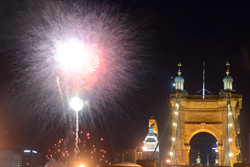
The Soapbox staff is taking next week off to enjoy the Fourth of July holiday, but we'll be back Tuesday July 12 with a new issue. In the meantime, we hope you'll enjoy this week's issue twice as long.
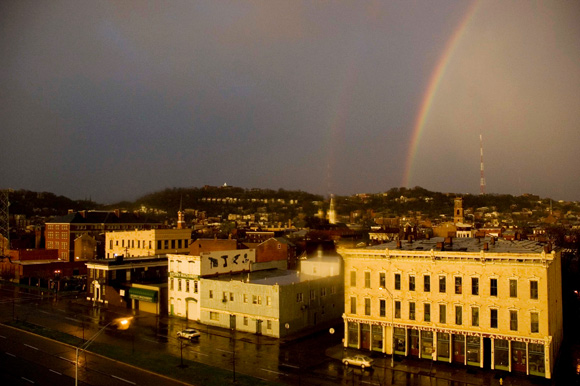
Cincinnati's Over-the-Rhine neighborhood has become a surprise contender in the National Trust for Historic Preservation's This Place Matters Community Challenge, a competition that could win the Over-the-Rhine Foundation $25,000 to aid in sustainable preservation efforts.Voting for the online competition ends June 30. As of June 24, OTR was ranked second out of the 100 buildings and communities selected for the competition. OTR is the only finalist from Cincinnati, and one of four selected in the state of Ohio.Margaret O'Neal, manager of marketing programs for the National Trust, said the community challenge is designed to do more than reward the contender with the biggest voter drive."We're giving out grant money, but we also want to give communities a platform to get people involved in preservation around the country," she said, noting that the competition has motivated a number of preservation groups to step out of their PR comfort zones. "Last year, a lot of smaller organizations tried Facebook campaigns for the first time. This was a reason for them to try something new, to push their boards a little bit."OTR Foundation trustee and board member W. Kevin Pape said a range of groups, from Findlay Market to the band Over the Rhine, have stepped up to help promote the voter drive."A lot of people are associated with Greater Cincinnati, and even people outside the city are voting and getting their friends to vote," he said. "I think there's a very large and diverse population that values Over-the-Rhine."Pape said that while the OTR Foundation isn't counting its winnings before they're won, it could possibly use the $25,000 prize to help expand the Life Cycle Assessment Study, an initiative underway in Over-the-Rhine that hopes to provide standards and resources to reconcile LEED-certified green building practices with historic preservation. The project, if successful, could eventually incentivize rehabilitation and provide a guide for homeowners to reduce environmental impact at the same time they're preserving historic structures.But win or lose, Pape said there are other positives that have already come out of the neighborhood's strong run in the competition."One of the things the National Trust tries to do is get the community excited about place, and I think that's working," he said. "There's a lot of buzz about it."Voting is quick, easy and only requires an email to register. If you'd like to vote for the Foundation's nomination of Over-the-Rhine, you can go here. To see the current results, go here. Writer: Matt Cunningham

"Historians tell it like it was," goes one saying, and many were doing just that at the June 22-24 National Underground Railroad Conference at the Holiday Inn-Eastgate in Clermont County. But these museum managers, archivists, historic preservationists and interpreters from across the county were also touring historic sites in Clermont County, all adding to the dollars flowing into local hotels, restaurants and retail establishments.These are the fruits of heritage tourism, which Clermont County has been cultivating for more than a decade. In the late 1990s, the Clermont County Convention and Visitor's Bureau recognized an opportunity to celebrate the county's bicentennial with the Clermont County Underground Railroad Research Project. Led by Gary Knepp, a lawyer and county native with an avid interest in local history, the project used tax records, archived documents and oral history to tease out the long-held secrets of Underground Railroad and abolitionist activity in Clermont County. In all, 33 Underground Railroad sites were documented in the county. This led, in turn, to the creation of a Clermont County Freedom Trail, a walking or driving tour guide of these sites. Of those, 19 sites were designated by the National Park Service as part of the Network to Freedom, a national recognition of these sites' importance in American history. This is the highest concentration of these sites in any county in the United States, which in turn inspired the National Park Service to host this year's national conference in Clermont County.Heritage tourism is an eclectic phrase, including such obvious attractions as museums and living history farms but also historic homes, libraries, and walking tours. By supporting research that connects this area so vibrantly with the past, Clermont County has tapped into a unique kind of marketing that has increased tourism and scholastic attention, making its history a valuable asset in its future development. Writer: Becky Johnson
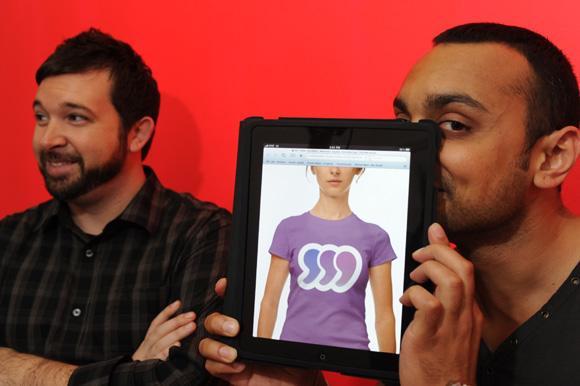
The days of using puffy paint and glitter pens to create homemade t-shirts are over - Cincinnati entrepreneurs Jaydev Karande and Chad Reynolds' latest company is taking t-shirts high tech. Wearcast is an on-demand merchandise company that allows people to create something physical out of the digital by "casting" social media content onto apparel.On Friday, July 15, Wearcast will pair with Cincy Apparel and Yelp.com to sponsor the Cincy Apparel T-shirt Fest on Fountain Square. From 11 a.m. to 11 p.m. local t-shirt vendors will celebrate all things Cincinnati with locally themed t-shirts for sale. Wearcast will appear on the JumboTron facing Fountain Square, picturing t-shirts being "cast" live at the festival. "The festival serves to encourage more people to come downtown and spend time on the Square, while creating new customers and visibility for participating vendors," says Christy Samad, communications director of Cincinnati Center City Development Corp. (3CDC), which is organizing the event. Karande and Reynolds have been friends for more than 10 years and were both successful entrepreneurs before Wearcast. Karande is co-founder of Zipscene, a mobile-app marketing firm. Reynolds brings years of clothing-design experience from Fanattik, a company he started in high school to design school spirit wear. Wearcast is accessible online or through mobile apps on Android and iPhone. The software lets the user create, purchase and ship a personalized t-shirt in as little as 30 seconds. With the ease and simplicity of updating your Facebook status or sending a tweet, you can now create your own t-shirt with an inside joke, or even a picture snapped from your mobile phone. "The idea is that you can tell your story through what you wear," Karande says. "Just as Instagram has turned the average person into a photographer, Twitter has made the average person a news reporter, LinkedIn has made everyone a networking genius and Facebook has made everyone a stalker," Karande jokes. "We've created an outlet with tools that make it easy for anyone to become a t-shirt designer."Not only does Wearcast provide individuals with creative freedom, but it's an excellent tool for marketing, brand identity and promotion. Local music personality Bootsy Collins plans to use the website to promote his latest tour. Wearcast has a lot of projects in the works, with new clothing styles being added just this week. Users can now design tank tops and v-neck shirts along with the original t-shirts at a reasonable price. Karande is also in talks to provide Wearcast services to charities and political candidates as a fundraising tool. Sizes for children and group orders should also be available through the website within the next month. Writer: Sarah Blazak
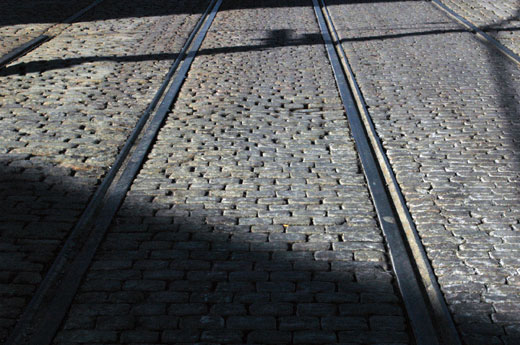
The Cincinnati Streetcar could soon become one of the first projects in the country to be funded by the Federal government's Urban Circulator grant program. The city of Cincnnati announced June 10 that the project received a Finding of No Significant Impact (FONSI) from the U.S. Environmental Protection Agency, a final step needed before the project could access the Urban Circulator funds it won in June 2010.According to Streetcar Project Manager Chris Eilerman, a key to passing that government-mandated standard has been a commitment to protecting not only the physical environment, but the cultural one as well."Because this project extends into Over-the-Rhine, which is pretty heavily regulated, we were really sensitive when looking at the impact," he said. "We want to make sure we don't produce a negative impact on the historic properties."Over-the-Rhine's historic collection of Italianate architecture is as much a part of the environment as air and water quality - at least in terms of what the EPA's environmental assessment evaluates. Eilerman said as part of the assessment, the city has promised to work closely with the Ohio Historic Preservation Office. The office will review designs for platforms, transmission wire poles and other streetcar facilities, to ensure they complement the historic neighborhood's overall look and feel."This is a neighborhood that grew up around streetcar transit," Eilerman said. "We view the resurgence in this type of transit as something that could make the neighborhood better, and we want to make sure we do that."He explained that, now that the FONSI is on the records, the project will work to complete initial design work and right-of-way negotiations. Throughout the process - especially in the design department - the Ohio Historic Preservation Office will provide review and oversight, to make sure Cincinnati's streetcar fits in with the past as it moves the city into the future.
Residents of several Cincinnati neighborhoods gathered at Tuesday's meeting of the city's Public Safety Committee to vent frustration. Their concern is the pace of proposed reforms that would refine a city ordinance intended to root out crime and public nuisance hot spots.Chapter 761 of the Cincinnati Municipal Code, better known as the chronic nuisance ordinance, gives the city authorization to impose fines and other penalties for landlords whose properties are the site of significantly-above-average numbers of police calls for service. Since its creation in 2006, the ordinance has endured a number of lawsuits over its constitutionality, and underwent modification in early 2009. A council motion filed at the end of 2010 called for public hearings on the changes, in response to public concern that the changes weakened the law.That hearing was supposed to have taken place no later than January 2011. It has yet to be scheduled. And for a number of city residents, the matter is getting tiresome. The debate over the law's final form has the potential to weaken it too much, they say, and they expressed concern that the ordinance isn't being enforced in the meantime."I am so fed up and tired of having to come down here over the same issue, just to see that the ordinance is enforced," said North Avondale resident Michelle Baxter.Westwood resident Chris Kearney agreed, and added that he sees the chronic nuisance ordinance as a key to healthy development in Cincinnati neighborhoods struggling with crime and blight."I believe the chronic nuisance ordinance is a part of solving our budget situation," he said. "People are losing confidence in our neighborhoods."Council members Cecil Thomas and Charlie Winburn responded to the concerns."I agree that this should have been added to the agenda a lot sooner than now," said Thomas, who noted that part of the delay was due to changes in drafts of the revised law."The city administration has not really responded in the last seven to eight months," said Winburn. "I'm baffled at why this has taken so long."But sorting out the problem became a convoluted matter as the meeting progressed. Winburn threatened to call a special session of council to address the issue if it didn't move forward. Thomas then noted that council was still waiting to receive one version of the draft resolution - from Winburn's office. The competing versions of the revision were on the subcommittee's agenda to be addressed, but could not be addressed, since they are still technically under revision and have not been finalized as drafts.A back-and-forth discussion over draft resolutions, revisions and the timing of the issue ensued, and the subcommittee meeting ended without council being able to set a date for hearings on the chronic nuisance ordinance. Thomas expressed interest in moving forward in the next two weeks, but sounded doubtful council could address the issue before August.
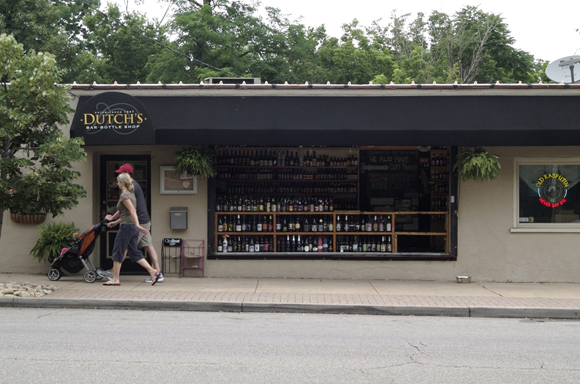
Dutch's Wine Bar in Hyde Park has been in operation since 1947, first as a popular neighborhood carry out. Renovations of late expanded the store's wine offerings and interiors. In keeping with both the establishment's history and the historic inclinations of its owners, Jay Ashmore and developer/manager Jim Cornwell, a new expansion will include a fine foods store that will carry the traditional name larder, rather than other names that could hang on a supplier of gourmet and seasonal food. "We believe in the slow food movement and we want to showcase that belief to people and to demonstrate that their food can be prepared in a slow natural way," Ashmore stated. "We loved the whole idea of larder, which is a space for food storage, that once it came up we realized that it fits with our philosophy and the history of our property."Ashmore said Dutch's Larder will carry high quality protein sources as well as secondary items such as breads, coffees, olive oil, cheese, and potentially a small seasonal produce section. The owners hope to support the community by providing local products alongside imported items.But serving quality products is not Ashmore's and Cornwell's only concern: the proprietors also plan to educate their customers about the artisan process and the importance of the slow food movement."This will become an even more enriched resource for people to learn about hand crafting the artisan process, which we already do with beer and wine," Ashmore explained. "Education is paramount to what we do. We want someone to learn and continue to enjoy a quality product that they appreciate."Even though the new addition is still in the planning process, Cornwell explained that he hopes to connect with more local farmers who support free-range farming, in order to support the local community and sell their products. "Supporting locally owned businesses has always been an important goal of mine," Ashmore said. "By having most of the revenue staying in the community, your creating a sustainable community by not only enriching lives financially, but also from a knowledge perspective. Supporting these creates an enriched community."The owners also plan to incorporate green construction and practices by incorporating energy-efficiency and reuse programs, such as selling refillable glass bottles for olive oil.An opening date has yet to be announced, but could occur in fall 2011, Ashmore said.Writer: Lisa Ensminger
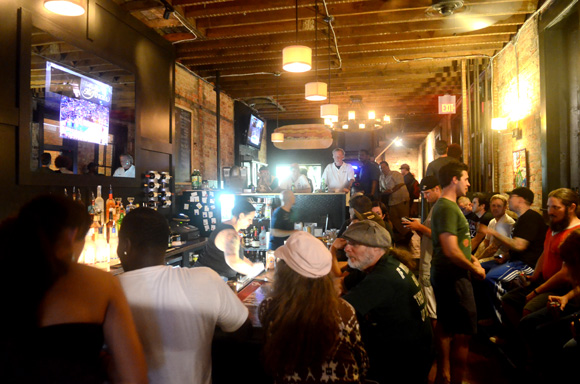
Short Vine in Corryville, once a hot spot for electic night spots, gets a a new bar and restaurant that replaces a former drug hot spot.Dive Bar owner Joe Pedro, a Columbus native and business owner of two bars near Ohio State University, said choosing the site for the Dive Bar came down to the old real estate maxim: Location, location, location."We like the proximity to the college campus and to the hospitals," he said. "There is a lot of people around the area who are good for our services. We also immediately fell in love with the history and character that Short Vine has to offer."Although in recent years this stretch of Short Vine has been known more for drug activity than business opportunities, Pedro said the past serves as a model for what the street could again become."The drug activity is a concern that we are aware of, but we are making an effort to get involved right away with the community and other business members to take hold of the street for the community and push out those elements that no one really cares for," he explained. "Over the past eight months we've seen more businesses coming through as well as more involvement with the community business association and city officials that have made changes that everyone has longed for and wants for the area."Construction of the bar took six months and involved completely gutting and renovating the whole space, leaving exposed brick throughout. Pedro also installed wood floors and new counter tops. The impetus for the work? Pedro's, and his partners', desire for the personality - and affordable cost - of an older building.Beth Robinson, President and CEO of The Uptown Consortium, is extremely supportive and thrilled about the new local hangout."We've made great strides in the past couple of years on Short Vine with continuous police control and increased activity of businesses and residents on Short Vine," she explained. "The bad image is starting to fade into the past as we start to have more businesses open in the area, which will help attract people back on the street and customers back to the area."Writer: Lisa Ensminger
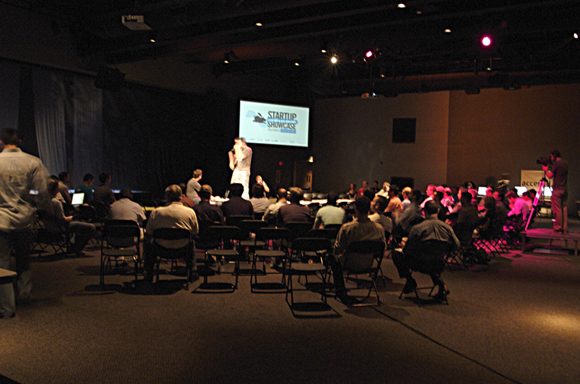
A community of web tech, design and startup entrepreneurs came together last Saturday to share ideas and creative energy at meetup group Continuous Web's second annual Startup Showcase. More than 50 participants, ranging from experienced startup veterans and marketing and design pros to individuals with rough ideas for pursuing new ventures, gathered at Crossroads Community Church in Oakley for a day of seminars and presentations by the people behind some of the area's most innovative web startups."Our major objective is to build energy around startups in this community," said Continuous Web co-organizer Joshua Johnson. "It's about inspiration, energy and building a network [participants] wouldn't have had prior to the event."The day kicked off with a presentation by keynote speaker Todd Henry, creator of Accidental Creative. After offering ideas for finding balance in the busy, overwhelming life of a startup founder, he turned the stage over to speakers from some of the day's featured startups, who updated the audience on their progress.A series of breakout sessions followed the presentations. Metro Innovation founder Elizabeth Edwards led a session on startup funding, while multiple startup founder Tony Alexander discussed the concept of creating ideas based on one's lifestyle. Johnson led an ideation session, in which participants shared their startup ideas and received feedback from other Continuous Web members. And Queen City Angels member Brian Beeler shared insight on identifying the stages of a startup's life cycle, including exit strategies.The event's namesake Startup Showcase took place in the afternoon: a group of 10 startup founders presented their projects, and received feedback from the gathered group of like-minded creatives.Continuous Web co-organizer Chris Costanza said the event was a huge expansion of the previous year's two-hour event. "It's been really great," he said of the meetup initiative's growth. "We're building awareness of, and energy around, the growing startup community in Cincinnati."Johnson agreed, adding that he's optimistic about what events like the Startup Showcase will do for the startup community."We have such good inertia, and it's nice to have this encouragement in a good direction," he said.Writer: Matt Cunningham
The US Green Building Council's conference this week, "Greening the Heartland: Breaking New Ground," held in Cincinnati, could have adopted the theme "Breaking the Mold" for its innovativeLegacy Project. Scheduled to be presented to the green building community on Wednesday, June 22, this life cycle assessment study, possibly the first of its kind in the nation, will compare the eco-profile of renovating existing historic homes to that of newly constructed homes and evaluate the environmental benefit of reusing existing vacant buildings in historic neighborhoods.Based on an actual case-study of renovating two existing homes in the historic neighborhood of Over-The-Rhine, the study will measure the benefits of rehabilitation through four life-cycle assessment impact categories: primary energy consumption, cost, weighed raw resource use, and global warming potential. "Historic buildings can be hard to make energy efficient," said Sanyog Rathod of Sol Developments, one of the study's presenters. But quantifying the embodied energy of an existing building takes into account the reuse of an old building's original materials, which have already been harvested, milled and refined. Likewise, the study also quantifies the green value of location. Factors that favor walkability and urban chemistry can often give an old building in an urban landscape an immediate head start in LEED certification, Rathod added.Based on these and other impact categories, the study creates an eco-profile for the renovation project. It evaluates a systematic life-cycle inventory of all existing and new materials used, labor to restore historic elements of the project, and cost. This eco-profile can then be compared to an equivalent-size standard new construction home in a suburban setting.Co-developers Cincinnati Habitat for Humanity and Over-the-Rhine Community Housing have joined forces with sustainable and historic preservation professionals from Over-The-Rhine Foundation to develop the Legacy Project. The result is a true community study of urban neighborhood sustainability. With this new measurement tool to evaluate historic renovations on similar footing as new construction, Rathod said that historic renovation and green building - typically seen as conflicting goals, could come together and, "can become a sustainable choice." Writer: Becky Johnson
Our Partners