West End / Brighton

This expansive neighborhood borders Over-the-Rhine in the shape of a sliver. Mostly residential, it has a rich history and diverse inhabitants, a beauty discovered by only the most discerning eye. The Dayton Street Historical District, a cluster of houses built mostly in the late 1800s, is on the National Register of Historic Places. City West, a mixed-income housing development just north of downtown in the neighborhood's southern-most point, is the biggest housing development in Cincinnati since World War II. The quiet streets have come alive with additions like the Mockbee across Central Parkway and a church renovation that will yield a climbing gym.

Video Cincinnati growing Cincinnati

Find out how a new generation of entrepreneurs, from farmers and artisans to digital app developers, are making history as they build the future of Cincinnati, one idea at a time. Video courtesy of The Queen City Project.

Watkins offers personal touch at Seven Hills

University of Cincinnati senior David Watkins might best be known as the student who was forced to evacuate Egypt when his study-abroad plans dovetailed with the Arab Spring uprising.

My Soapbox: Hayes Shanesy, co-founder, Brush Factory

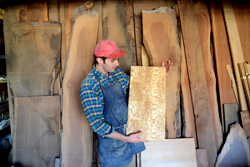
Hayes Shanesy and Rosie Kovacs created the Brush Factory in 2009, selling handmade clothing and furniture. Together, they create everything from candlesticks to t-shirts to canvas bags. Soapbox's Evan Wallis talks with Shanesy to get the latest news about the designing duo and their plans, and inspiration, for the future.

CityLink looks to change statistics on poverty

Steel-gray slabs rising several stories high mark the emerging shape of the main building’s entrance. Ductwork awaiting installation rests in row after row of silver stacks. Construction work has begun in earnest on the CityLink Center, a five-acre campus on Bank Street that aims to change the game in fighting poverty by giving hope and help to people who want to make positive life changes. Despite years of effort and expertise from non-profit ministries and governmental agencies, nearly 1 in 4 Cincinnatians remains in poverty today. CityLink, initiated by a group of social service agencies and drawing support from a host of faith-based organizations, is a radical effort to change that statistic for the better.   Its approach is based on “bundling” social services, much like the Centers for Working Families (CWF) model developed by the Annie E. Casey Foundation. Often, those who are impoverished do not find the programs that might help them, either through lack of awareness, embarrassment, transportation barriers or scheduling conflicts. By amassing these programs under one roof, CWF has tripled and sometimes quadrupled its success rates and is now creating centers in Baltimore, Atlanta, Chicago and New York. If there can be success elsewhere, why not here? CityLink plans to offer easy-to-navigate programs and services under one roof, managed by professionals, trained volunteers and mentors--people who will provide comprehensive care and continue those connections throughout clients’ lives. CityLink has already built support from faith-based programs and is continuing to strengthen its foundation with support from corporations, foundations and individuals. On April 13, its sixth annual Party for a Purpose will keep raising funds, offering dinner by the bite at the Manor House in Mason and music by Soul Pocket. Over-the-Rhine’s Memorial Hall will host another fundraiser April 28, when 30 business professionals, who have all auditioned, will share their rock-star alter-egos on the stage to keep funding CityLink and what may be the most thoughtful and comprehensive approach Cincinnati has seen in alleviating poverty and its hardships.   Do Good: • Attend a CityLink fundraiser: Here is more information on the April 13 Party for a Purpose and the Memorial Hall Rock This Town. • Support: Help Cincinnati Works, CityLink’s partner, raise up to $10,000 this week through GE’s What Works Project by going to celebratewhatworks.com and click to donate $1 once or daily to the cause.   By Becky Johnson 

iPads, grads from UC capture ancient Pompeii data

Many collegiate graduate programs are not exactly glamorous. You forfeit your social life and free time for sleepless nights and library-related migraines. However, there is a grad studies program at where students gladly dig deep into their studies: the Pompeii Archeological Research Project in the University of Cincinnati’s Classics Department. Spearheaded by assistant professor Steven Ellis and 35 graduate students, the research project is the only American graduate program with an excavation presence in Pompeii. Eliis has been leading the digs for the past 15 years. The excavation effort in Pompeii focuses on uncovering how Pompeian families lived 200 years before the city was leveled in 79 AD by a volcanic eruption from Mt. Vesuvius. “We’re interested in excavating stuff from before the volcano erupted,” says Ann Santen, a 10-year volunteer with the Classics Department who regularly participates in UC’s digs. “We are excavating very small stuff, not huge statues of mosaics.” UC’s team has turned up many relics of life in Pompeii. The area was largely commercial, bustling with markets and commerce. Most of the finds are coins and ancient, carbonized food, like fish bones. Last year, the team found ornate decorated tiles, a controversial find because they appeared out of place for the time period. “What was it doing in our merchant area?” asks Santen. “People who lived in this area would never have that decoration.” But UC’s presence in Pompeii isn’t the only unique quality of the Classics’ digs. How they’ve been recording their findings has also garnered national attention. Ellis’s team used iPads to record and store the information from the site. This not only saved hundreds of man-hours in manual data entry, but was a prime example of using new technology to document ancient data. In 2010, Ellis sent an email describing how they used iPads on excavation to former Apple CEO Steve Jobs. Remarkably, Jobs returned the email and expressed great interest in their efforts. Apple featured UC’s efforts on its website for much of 2010 as an example of creative iPad use. “We got more hits than people who watched the Superbowl,” says Santen. As the Classics Department readies for another dig in Pompeii, Cincinnatians can visit The Cincinnati Museum Center’s current “A Day in Pompeii” exhibit, where some of the children’s activities and displays were designed with help from UC Classics grad students. Do Good: • Visit the relics. The Cincinnati Museum Center is located at 1301 Western Ave. Buy tickets online or call 513-287-7000. • Show your support. Become a Museum Center member or make a donation.  • Connect. With the Museum Center on Facebook and Twitter. By Ryan McLendon

‘Last Mountain’ panel led by Urban Appalachian Council

From the cresting mountain ridges of Appalachia to the rolling hills of Cincinnati, the story of one small community’s fight against big coal corporations resonates with a message of environmental justice. That story will be told during a screening of the documentary, “The Last Mountain,” and a panel discussion afterward, moderated by the executive director of the Urban Appalachian Council, Greg Howard. The free public events kick off the Passport to the World Series Appalachian Culturefest at the Cincinnati Museum Center. The panel includes University of Cincinnati biological sciences professor Eric Maurer; Shanon Rice, photographer and curator of “A Coal Story,” a photographic exhibit now at the Museum Center that delves into the lives of coal miners; coal miner Claude Stamper; Richard Durtsche, Northern Kentucky University biology professor; and associate journalism professor (and SoapboxMedia managing editor) Elissa Yancey. The documentary “Last Mountain” takes an intense look at how the townspeople of Coal River Valley, W.Va., battled to protect a mountaintop from destruction at the hands of big coal corporations. Many Cincinnatians have deep family roots in Appalachia, which led to the formation of the Urban Appalachian Council in the early 1970s. UAC is a service and advocacy organization working to improve the quality of life for urban Appalachians in the Greater Cincinnati area. Families who migrated to Cincinnati generations ago note interesting parallels between what’s taking place in Coal River Valley and the streets of the Queen City. The close-knit Appalachian culture, where complaints are few and publicity shied away from, does not make advocacy a natural path for them. The results have not served the people, or the land upon which they depend, well. In many ways, Coal River Valley sets out a new vision for Appalachians willing to stand up for their own health and well-being, for their own futures. Do Good: • See the movie; hear the panel. The Insights Lecture series event will be held at 6 p.m. Feb. 17 at the Cincinnati Museum Center. Click here for more information. • Like the Urban Appalachian Council on Facebook. • Make a donation to support the work of this local nonprofit.

Young mothers find support, guidance — and vision for the future

When co-founders Marcia Simmons and Denise Steward opened the doors to Visions Community Services in 1990 in the Queen City Vocational Services building, they expected to deliver hope, guidance and a second chance to youth at Taft High School who were at risk for becoming high school dropouts as they struggled to survive as teen mothers. Today, Visions carries on that mission, serving young women in their 20’s and early 30’s, many of whom became mothers in their teens and who now have as many as four or more children.   Denise Steward, director of early childhood education says, “Visions is unique in that it provides childcare services to young children and parallel services to their parents.” The Parent and Community Outreach program prioritizes education as the most significant factor in breaking the cycle of poverty, and in many cases, abuse. The program includes parenting classes, as well as emphasis on staying in school and graduating, or completing a GED. Learning to make sound decisions is another important component to the program, which holds parents accountable for their actions. At the same time, parents are supported for making good decisions that lead to positive changes that stand to impact the future for both parent and child.   “According to teachers, a poor social and emotional health is the number one deterrent to success,” Steward says. Visions’ Early Childhood Program serves as a resource for young parents. The program functions as both a daycare and learning center where young children are taught to value education, and staff are committed to improving and strengthening their social and emotional health.   Serving children ranging in age from 6 weeks to 11 years, the Early Childhood Program promotes literacy at all levels, beginning when children are very young. “We read to them daily,” Steward says. “Our program tugs at your heart strings.”   Accredited by the National Association for the Education of Young Children, Visions’ Early Childhood Program has received two stars in the Step Up to Quality Program through the Ohio Department of Job and Family Services.   Visions Community Services has strong ties and a deep commitment to the West End community. Currently there are openings for all age groups. To inquire about services, call 513-651-2229.   Do Good: • Fill a young parent’s Wish List by donating supplies for infants and children. • Volunteer to read to a child. Visions accepts volunteers from middle school age and up. • Become a mentor. Many young moms need a listening ear.   By Deidra Wiley Necco

Get on the bus: art abounds on urban route

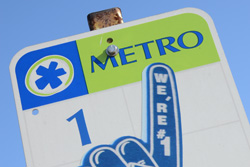
The smaller buses that traverse the streets of Mt. Adams, downtown and the West End offer more than colorful exteriors and a route guaranteed to please museum-goers and downtown workers alike. Route #1 helps re-define Cincinnati's bus commuting scene with a sitting-room setting and a cast of friendly regulars. Soapbox's Jane Durrell takes a ride.

AMOS Project puts faith in fair employment

Nonprofit coalition of 25 congregations, helped push a Fair Hiring Policy through Cincinnati City Council and helped pass an Ohio bill to build pathways to post-incarceration employment.

Soapbox special: women to watch

We've come a long way, baby, redux. And if you have any doubt, ask one of these five women, each of whom is staking her claim on the future of the city in a creative and surprising way. Join Soapbox's Evan Wallis and Scott Beseler as they explore some serious feminine mystique.

Our Partners

Taft Museum of Art
Warsaw Federal

Don't miss out!

Everything Cincinnati, in your inbox every week.

Close the CTA

Already a subscriber? Enter your email to hide this popup in the future.