Clifton / CUF

Resting on a hill overlooking the north side of Cincinnati, Clifton offers a wide range of experiences from a college atmosphere with the city's largest school, the University of Cincinnati, to an international center for cutting-edge medicine featuring University, Children's and Good Samaritan hospitals. Clifton's history has been preserved in historical buildings and homes — from modest to millionaire. Trendy shops and restaurants can be found on Ludlow Avenue in the Gaslight District, along with the Esquire Theatre, yoga studios, Clifton Market and a newly renovated branch of the Cincinnati Public Library. Even though Clifton is tightly compacted with large buildings and interesting architecture, green space does exist at Burnet Woods

Building sustainable, resilient communities

Cincinnati may be venturing into the winter season, but civic and eco-groups are doing their part to keep our community green. This fall and winter the Women’s City Club, the Social Justice Committee of the First Unitarian Church and the city's Office for Environmental Quality team up to present “Fixing the Future: Building a Just and Sustainable Economy,” a Friday night lecture series focused on ways to ensure both a strong economy and a healthy planet. The series is open to the public and features experts in topics ranging from Peak Oil and building community resilience to building transition towns, and includes lectures, documentary screenings, and open discussion. The third installment in the series, “Building Transition Towns and Intentional Communities” occurs Friday, Jan. 6, 2012. It includes speaker Nancy Sullivan from Enright Ridge Ecovillage and takes place from 7-9 p.m. at the First Unitarian Church, 536 Linton Street. Sullivan’s lecture on building transition towns explores proactive ways that communities can build resilience within their local economies to deal with changes to daily living caused by Peak Oil. “Things we take for granted will change as the price of extraction for oil becomes more expensive,” says Sullivan. “It starts with understanding what is likely to happen, and determining where people’s interests lie in terms of awareness of transition and change.” Things such as utilizing farmers’ markets, natural building materials and repurposing materials contribute to resilience. Jeanne Nightingale, president of the Women’s City Club says, “It’s about creating an economy of abundance rather than an economy based on scarcity.” Founded in 1915, the Women’s City Club of Cincinnati is on a mission to “secure a more just and livable community for all.” The WCC encourages citizens to become active members of the community on a broad range of topics. Upcoming topics covered in 2012 include a town forum on Cincinnati Public Schools’ community learning centers, urban farming and local food economy, the Cincinnati premiere of the documentary “Growth Busters,” and an examination of green housing and infrastructure, to name a few. Do Good: • Attend: “Building Transition Towns and Intentional Communities” on Friday, Jan. 6, 2012 from 7-9 p.m. at the First Unitarian Church at 536 Linton Street. • Shop local. • Become: a member of the Women’s City Club of Cincinnati. • Tour: Enright Ridge Ecovillage the fourth Saturday of the month from 9-11 a.m. By Deidra Wiley Necco

Video FUEL Cincinnati

Need some FUEL for your great idea? Take a look at this video, an introduction to a philanthropic initiative of Give Back Cincinnati, to see what community-focused start-ups are taking root around town.

La Poste four will bring Western flavor to Northside with Django Western Taco

Four years ago Dave Taylor, Kelly Lough and her husband Bryant Phillips were sitting on a patio having drinks when they came up with an idea for a late night restaurant in Cincinnati that served tacos and western food. But when they found the perfect space for their first restaurant it had elegant paned windows and an airy dining room and was located in the Gaslight District of Clifton; it just wasn’t right for hot cast iron and western spice. So they opened La Poste instead, a casual fine dining restaurant with an extensive wine program, and along with fourth partner Jens G. Rosenkrantz Jr. they put their Western aspirations on hold. When a quirky space with a prime location came available Northside this year, they decided to move ahead with the idea that jump-started their partnership and open Django Western Taco there this coming spring. Chef Dave Taylor said the space has eclectic design features, including cast iron railing and a milled timber support, that are well suited for a restaurant named after a movie cowboy who dragged a Gatling Gun around the muddy west in a coffin. It has an open kitchen and large windows that face a busy street corner. Like the space where they opened La Poste after the restaurant Tink’s closed, it provides them the opportunity to fill a void for a community. “When Tink’s closed, the neighborhood missed having their restaurant,” Lough says. “We took that and built La Poste based on being a neighborhood restaurant, and being a part of the community. We are doing the same thing in Northside right now.” Taylor and Lough said Django Western Taco will not be a taqueria, but a place that serves “food from the American west.” The menu will include traditional Mexican specialties as well as western staples like cast-iron cornbread, spicy beef chili and a cowboy steak. The full bar will focus more on traditional whiskey and tequila than fancy mixed drinks, Phillips said. “We want kind of like a raw mud-on-your boots atmosphere,” Taylor says. “We'll play rock n roll music and hopefully be a fixture for the neighborhood and a destination for late night dining.” Hours will be noon to midnight during the week, and the owners said they hope to stay open until 3 a.m. on the weekends. Phillips said all menu items will be priced under $20. Taylor said he and his partners hope to “grow their brand” with their second restaurant, but so far they don’t have a name for their business partnership. Opportunities are opening up for them, and they seem to be too busy doing their thing to have the time to give it a name. By Henry Sweets

Green Streets promotes sustainability at home, work

As Ben Haggerty sweeps up from a weekend night’s business at his Bellevue bar, the B-List, he doesn’t act the part of an eco-warrior. But one conversation makes it clear that Haggerty not only knows the ins and outs of water conservation, he has a great appreciation for businesses working to preserve the environment. From the time his father first built a rain barrel with him as a child, Haggerty recognized the importance of water. Today, he promotes those childhood values through his second business, Green Streets, LLC. After getting the B-List up and running, Haggerty looked around the community, driven to make a positive impact on the city. His knack for rain barrels made their production and sale a natural choice for his burgeoning green initiative, a construction company. With its focus on storm water mitigation, Green Streets works with clients who wish to install sustainable options in their homes and businesses. Haggerty works to meet every client at his or her level of commitment to sustainability. He believes every action towards sustainability is a good one. “If I can get 1,000 people to take two steps I think it will have a bigger impact than getting 10 people to take 10 steps,” Haggerty says.   From a small installation of a rain barrel to a larger project of a green roof, every individual green decision, big or small, can have an impact for both the user and the environment. A rain barrel attached to the gutter system of a home conserves water for use on a dry day, making it possible to water a lawn and garden without using any new water. A green roof reduces run–off and insulates homes. “There is no limit to what you can do to utilize rain water," Haggerty says. Green Street’s most public project was the installation of a green roof, watering system and rain containment system on City of Cincinnati’s City Hall in 2010. The vision began with Mayor Mark Mallory, who wanted to set to an example of sustainability for the city. Green Streets was subcontracted for the project and City Hall’s roof was transformed into an eye-appealing and water-conserving masterpiece that the public can view from upstairs windows of City Hall.   More things changed within City Hall during that project than just the roof’s landscape. Outdated construction codes restricted redirection of water from a downspout to anything other than the sewer. They made it illegal to reorganize the gutters to flow into a rain barrel. City officials amended the rules to allow a more modern sustainable construction method for City Hall and paved the way for future water conservation initiatives.    As he started Green Streets, Haggerty saw an opportunity to do even more. So he formed The Sustainability Partnership of Cincinnati (TSPC) to help consumers learn about investing in sustainable options and strengthen the Cincinnati’s “green” business community. “It can be pretty confusing on what is going to be the best use of people’s money, whether it solar, geothermal or new insulation and so on,” Haggerty says. “So we have joined forces with locally owned and operated companies that are invested in the community, and we are able to help people navigate sustainability.” Haggerty praises the growing network of people with similar goals in and for Cincinnati. One of the first green relationships he created was with Libby Hunter, an eco-broker for Comey & Shepherd. At the time she was known as Cincinnati’s only green realtor. “It makes a lot of sense, particularly in this economy, to band like-minded businesses together to draw from their collective experience and resources,” says Hunter. “Working together helps each member of the TSPC continue to grow their own business under the support and guidance of the bigger partnership, as its recognition and reputation expands.” Currently, Green Streets is looking forward to its newest project. Mackey Advisors, a wealth Advocate Services Company in Independence that was named Green Business of the Year of Covington in 2010, hired Green Streets to transform an historic building in Bellevue into its new headquarters. “It will be the first true TSPC project,” Haggerty says. “We will be saving a historic structure in Bellevue Ky., and adding additional office-grade space, all with an eye for sustainable practices.”   Successful projects demonstrate Haggerty’s passion about making Cincinnati a sustainable city. “Ben is incredibly knowledgeable,” Hunter says. “It comes from a deep conviction that we need to be re-considering how we live in our homes, how we manage our resources and water usage and waste.”   By Erin Leitner Erin Leitner, a new graduate of the University of Cincinnati, completed this story as part of a Journalism Seminar focused on Communicating Sustainability. Look for more stories from this class in Soapbox and around the city.

UC students design event-tracking Tweetographer

It started out merely as a pursuit for a passing grade and wound up getting the attention of Occupy Wallstreet organizers and web surfers as far away as India and Pakistan. Two University of Cincinnati students were simply aiming for the approval of their professors at the annual College of Applied Science Senior Design Fair. So when a whirlwind of curiosity surrounded their innovative attempt at a data-gathering prototype, the novice inventors were more than ecstatic to share their story of a blooming success. Their story begins with a simple, and common, question: “What’s happening?” It’s the question that Alex Padgett and Billy Clifton worked to answer with their innovative social media tool, “The Tweetographer.” From university students in search of a good place to party to event-trackers trying to get information to the public, the question can be simple and straightforward or layered with complexity. The students’ application organizes information gained from Twitter to tell people where and when events are happening across a broad spectrum. Originally inspired by CityBeat, the two inventors explain that the idea for Tweetographer stemmed from the desire to keep people informed about their surroundings. “Public conversation can be used to figure out a general consensus,” Clifton says. The fourth-year computer science majors developed the prototype in six months for their senior design demonstration. Originally, it was conceived as a fundamental proof of concept, but skyrocketed from there, Clifton says. “Once we began to work with the data, we recognized its natural potential to be sorted, organized and analyzed,” Clifton says. Currently, the web application is still raw and basic. With no eye-candy for visual slickness, it’s pretty utilitarian: it displays a map and calendar on a bland webpage.   “We plan on dressing it up and putting some features on it and putting the full project out on the web for free,” Clifton says. Yet the possibilities to make it a full-fledged project are clear, and according to the two students, people are excited about the Tweetographer. After the initial presentation at Tangeman University Center for their senior design fair, they were asked to give a demonstration to the Institute of Electronic Engineers. From there, a flurry of tweets and blog posts spread word about the visionary web application. Occupy Wallstreet representatives were interested in utilizing the tool for their movement and the information has been shared as far as India and Pakistan. “We did a few demonstrations and it caught fire and everyone loved it,” Clifton says. “So people asked us to keep working on it and that’s what we’re going to do.” Their journey to a solid prototype wasn’t an easy ride. There were a few problems connecting with the Twitter network immediately, and other issues arose, Padgett says. With the typical glitches and spam issues, Padgett and Clifton simply focused their attention on one issue at a time. “We haven’t come across any glitches that we haven’t been able to resolve,” Padgett says. Because Padgett graduates after the current academic quarter and begins a full-time job, Clifton has dedicated his efforts to perfecting the prototype. He hopes to go public with a working application by the first of January. “Alex and I hadn’t been in touch for months after the completion of our senior design project, so I continued to work on data mining techniques,” Clifton says. “I’ve spent many nights and weekends designing a more complex engine that can grab information about any topic that I tell it to.” The engine is incredibly sophisticated and can be used to power many different applications, including the Tweetographer, Clifton says. He uses this analogy: he’s constructing an engine that can be put under the hood of any car. He hopes to incorporate other social media networks into his application, including Facebook and LinkedIn. The updated prototype should also allow users to find happenings on a smaller scale — even as small as the community of the University of Cincinnati. “There’s no reason it can’t be scaled down to the size of a campus like UC,” says Clifton. “This would be a great way to inform students about welcome week events or even campus safety alerts.” The safety applications alone could prove invaluable. “If someone tweets that they just got robbed on Jefferson Avenue, the Tweetographer would pick that up and inform others about it instantly,” he says. With big ideas and bigger potential, Clifton insists that the project’s foundation won’t change. Designed as a community service, the Tweetographer will remain just that. “If there is a non-intrusive way to make a revenue off of it, then great. I’ll never make people pay to use the service, though,” Clifton says. A self-proclaimed social media enthusiast, Clifton finds the diversity and original content of social media sites to be a beautiful thing. No one has to be a Webmaster to contribute to the authenticity and real opinions of the internet, Clifton says. “As long as there is social media fuel, this engine will thrive and the options will be endless.” By Kara Driscoll ?Kara Driscoll is a freshman journalism major at the University of Cincinnati. An earlier version of this story appeared in the University of Cincinnati’s student newspaper, The News Record.

Reaching outside the ivory tower

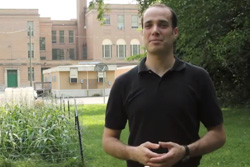
As chancellor of the State University of New York, Nancy Zimpher sees the effects of faltering public schools, family turbulence and a host of other events that occur in the lives of students long before they ever show up at one of the system's 64 campuses. To do so, she draws from her experiences in collective impact while at the University of Cincinnati. Read the full story here.

Startup Such + Such builds collective design future in OTR

After graduating from DAAP and having experience co-oping with large design firms, three UC alums set an ambitious goal: start their own business and do it right here, in Cincinnati Starting out of Losantiville Design Collective at 1311 Main Street in Over-the-Rhine, the team at Such + Such is perfecting design and woodworking skills while working with neighborhood businesses and creating handmade furniture products. The company’s own line of products is available at Losantiville and on Such + Such’s Etsy site. Such + Such also provides design services – founders recently helped create the build-out for Sloane Boutique. The Losantiville Collective was formed to give creative types a place to share rent, tools and ideas. All the tenants pay rent, and the leftover money is invested in tools and an effort to  find a larger space than can hold more tenants. After graduating in June 2010, Alex Aeschbury, Zach Darmanan-Harris and Mike Nauman started Such + Such in March 2011. From clocks to tables to coat racks, all of Such + Such’s work is crafted in OTR. The trio’s eye for beautiful craftsmanship, along with their  manufacturing skills honed in years of DAAP studio work, allow them to make simple, but eye-catching, products. At Such + Such, every day offers a new learning opportunity. One day found the three start-up founders creating a four-foot-long spork to be used in an online video. “We wanted to be in charge. Between us, we had worked for 18 different companies while on UC co-ops. And we knew what we didn’t want and that was to have a small part of a task, product, branding or packaging project. We wanted to dictate the direction of an entire company, from capital investments to the finish on screws,” Aeschbury says. Such + Such founders want to expand their product line and find shops around Cincinnati and Colombus to sell them. The trio is working hard each day on learning business skills and handling a growing number of projects. But in the end, they are living their dreams and enjoying ever-changing workdays. By Evan Wallis

Baby, it’s cold outside

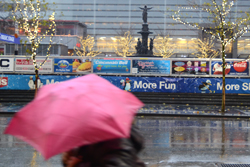
Sure, it's wet. And cold. And there is more than enough bad news to go around. But this month, Soapbox heads out of 2011 in style, with a look at the prospects for our city's future and the faces who will keep us inspired, and growing, into 2012.

Back to backs: Local designer grows brand from scratch

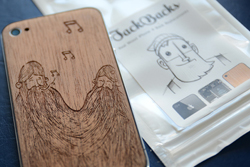
Take a woodworking dreamer, a beautiful product with a weakness and a bold leap of faith. That's what it took to launch JackBacks, which provides custom wood iPhone backs to a smart phone generation. The brainchild of local artist Adam Baumgartner, JackBacks illustrates the power of a good idea well-executed, and the impact of a dream no longer deferred.

Architecture students taking their products from idea to reality

After graduating from the University of Cincinnati with undergrad degrees in architecture, three friends decided to try their hands at manufacturing, instead of just giving people instructions about how to build things. Ryan Ball, Travis Hope and Joseph Kinzelman all graduated from the College of Design, Art, Architecture and Planning in June of 2010. Ball and Hope went on to pursue their masters, and in April, the three decided to start their own business, a dream they had been discussing for month. When the business founders moved in to an E. 13th Street apartment in Over-the-Rhine, where they create all their products, the business name followed naturally: E13. “In architecture school, you’re asked to design a lot,” Ball says. “We just made instructions on how to make things. We were really interested in trying to take an idea from conception through manufacturing.” All three had created prototypes of products while in school, so they decided to take some of those ideas and see if they could turn them into marketable products. Their main focus, what makes their work unique, is their use of unusual materials to create their products. First up, a day-bag made from reclaimed air bags they found in junkyards. They look for durable materials that aren’t normally made into bags. The airbags look different than other bags on the market, plus, they darken and weather over time. Once they had a product, the E13 team set out to create a brand and website. Everything from programming to photo editing was a complete in-house venture. After attracting positive attention from design blogs, E13 sold out of all the repurposed day bags. With proven marketability on their side, the three entrepreneurs are now working on perfecting their manufacturing process. As they hone their sewing skills, they have enrolled in the third round of SpringBoard to help them develop a business plan. While Ball and Hope complete their advanced degrees, spare time is sparse. Still, the group continues to rethink its approach and launch more products as they build an inventory to meet public demand. By Evan Wallis

Our Partners

Taft Museum of Art

Common Ground Is Brewing

Support local stories and receive our signature roast straight to your door when you join at the Standard level (or above).

Drink Better, Read Local

Close the CTA

Don't miss out!

Everything Cincinnati, in your inbox every week.

Close the CTA

Already a subscriber? Enter your email to hide this popup in the future.