
Author

Henry Sweets

Henry Sweets's Latest Articles

Progress on Mercer Commons underway in Over the Rhine

The demolition of two 1850s buildings earlier this month were the first signs that the $55 million Mercer Commons project is on its way. The most expensive project undertaken by non-profit development group 3CDC will inject dozens of rental units, extensive commercial space, condominiums, townhomes and new construction into the Vine Street district of Over the Rhine. The development will stretch from Vine street to Walnut street between 13th and 14th streets. It will cover nearly 3 acres with new construction, 19 renovated historic buildings, a 340-space parking garage and two green spaces. It will introduce 154 housing units and 17,600 square feet of commercial space to Over the Rhine. The Mercer Commons project includes 30 units of affordable rental apartments for qualifying low-income residents. The units will be located in the same buildings, and have the same amenities, as 96 market rate rental units. To date, 3CDC has introduced 68 rental apartments to the neighborhood, so Mercer Commons will nearly triple that number. The design features of a glass and metal structure to be built on Vine Street, and the demolitions, have drawn criticism from community groups. Cincinnati's planning commission approved the project in December on the condition that the developer alter a few design features, mostly on the exterior of the large building on Vine Street. The changes are intended to bring the building in step with the "verticality and rhythm" of existing historic structures, 3CDC’s vice president of communications Anastasia Mileham said. The new design will mimic the appearance of several vertical buildings, rather than one wide building, to blend better with the row houses and other historic structures in the neighborhood, she said. She said the new building’s design features are similar to other buildings constructed by 3CDC in the area. “There are a lot of buildings in that surrounding area that mirror some of the design elements and materials that are used in [the new building on Vine Street],” Mileham said. “It’s a cool building and I think its going to make a statement.” Mileham said the two historic buildings needed to be demolished so the project could “make sense financially” and still provide 30 units of low income housing. It will also allow the parking garage to be encapsulated within the interior of the development. She said there were major structural concerns with the buildings. The first phase of construction on the project will begin in this quarter of 2012, with the third and final phase projected to be finished in the first quarter of 2013. When it is finished, Mileham said the project will provide a vital link between the Vine Street neighborhood and the Main Street arts and entertainment district. By Henry Sweets
Aurore Press gives local writers a forum, has punk roots

Aurore Press’ story might begin on a night in 1984, when then-new-to-town Betsy Young was driving around Newport Ky with an address written on a piece of paper, stopping people on the street to ask if they knew where to find a place called the Jockey Club. Or it may begin two years earlier, when a 15-year-old named Chuck Byrd was digging through the punk section at a local record store and got invited to his first show there. Young and Byrd eventually met at the Jockey Club, moved to San Francisco and married. They returned to Cincinnati and, in 2007, decided to start a publishing house out of their Northside home. "We were really amazed at how passionate and multi-talented our friends were, and thought it would be a great outlet to showcase their talents,’" Young says. Young had skills with layout and design, and Byrd had a knack for catchy titles - and access to discounted printing rates and materials at the printing press where he worked. They named their company Aurore press, after their daughter Aurore (pronounced aurora) and founded it on principles rooted in punk rock culture that encourage people to take the independent initiative to put ideas into the world that aren’t typically heard, they said. Their first work was a chapbook titled “Country at War: Reflections on the War in Iraq," sharing many angles of criticism and experiences of the Iraq war. All proceeds were donated to Disabled American Veterans. Aurore's next title, "Stories for Shorty: A Collection of Recollections from the Jockey Club," compiled stories, photos and memories from the colorful scene at the Jockey Club in the 1980's. It was a former casino owned by an old man named Shorty that played host to about every big name in punk rock, including Black Flag and The Ramones, and whole lot of small ones too. Aurore has published books every year since 2007. Each has been a compilation of material from a wide variety of local writers, launched with an event at a local bar, printed and bound with different materials. The books have a decided boutique feel, some with an authenticity rooted in punk fanzine culture. One book, “1st Hand Stories from 2nd Hand Stores,” was bound with colored Duct Tape. In 2012 the pair will change their format and introduce “The Aurore Press Writer’s Series,” with each book featuring one or two authors. Byrd was recently laid off from his job at the printing press, so printing costs have gone up, but the two said they will continue developing their business model to keep local authors’ work available in an affordable format. “Like I was saying about some of the guys we like to publish, they just do it because they must, and we keep publishing because we have to,” Young says. “I can't tell you why we have to, its just that we have to. Its like it just feeds your soul, or it puts your true self out there.” By Henry Sweets

Former politician Pepper vending ‘healthy snacks’

When he wasn't busy governing the city and country and practicing law, Cincinnati native David Pepper always wondered why people would spend an hour working out at the gym, only to grab a soda and candy bar on their way out the door. So the lawyer-turned-businessman decided to try his hand at social entrepreneurship.   “You've got these vending machines all over the place undermining the goals that people have set for themselves," Pepper says.   And in some instances, foods high in saturated fat, sodium or sugar are the only snacks available to children.   To provide a different option, Pepper, best known for his political career and his lineage (he is the son of former P&G CEO John Pepper and philanthropist wife Francie), began operating a chain of healthy food vending machines in Cincinnati last year.   “We thought it was a really interesting idea both as a business, but also as a part of a cause,” Pepper says.   Pepper started the business with partner Scott Stern, who lives in Denver, last April with a trial run at the Krohn Conservatory Butterfly Show. Their business, called Pepstern, now has about 50 machines in Cincinnati and Denver with plans to expand in both regions. Most of their machines are located in places like schools, gyms and corporate offices, and each location sells a mix of snacks custom-tailored to its clientele.   While it’s difficult to broadly define “healthy snacks,” some products available in the machines are all natural, low in fat or low in sodium, but all of them stand as an alternative to the classic snack items typically found in food vending machines. The machines, provided by a company called H.U.M.A.N. Healthy Vending, carry food like Stacey’s Pita Chips, Popchips and Pirate’s Booty, and drinks like Honest Tea.   Pepper says he and his partner spent the first few months figuring out what products work best in the different locations. The machines contain feedback mechanisms that update the owners every six hours with information about what items have sold in which locations.   “You learn quickly what sells and what doesn't sell,” Pepper says.   Pepper’s company installs machines in schools that enable the schools to be in compliance with healthy eating guidelines implemented by the Ohio state government last year. He said schools are by far their best-selling locations.   Pepper said a healthy vending machine located next to a pack of standard snack machines does not sell well. The success of a healthy food vending machine hinges on it being in the right location.   “We find locations that actually care about this issue,” Pepper says. “They need to be places that say, ‘Hey, we want our employees or our customers to have healthier options.' ” By Henry Sweets

La Poste four will bring Western flavor to Northside with Django Western Taco

Four years ago Dave Taylor, Kelly Lough and her husband Bryant Phillips were sitting on a patio having drinks when they came up with an idea for a late night restaurant in Cincinnati that served tacos and western food. But when they found the perfect space for their first restaurant it had elegant paned windows and an airy dining room and was located in the Gaslight District of Clifton; it just wasn’t right for hot cast iron and western spice. So they opened La Poste instead, a casual fine dining restaurant with an extensive wine program, and along with fourth partner Jens G. Rosenkrantz Jr. they put their Western aspirations on hold. When a quirky space with a prime location came available Northside this year, they decided to move ahead with the idea that jump-started their partnership and open Django Western Taco there this coming spring. Chef Dave Taylor said the space has eclectic design features, including cast iron railing and a milled timber support, that are well suited for a restaurant named after a movie cowboy who dragged a Gatling Gun around the muddy west in a coffin. It has an open kitchen and large windows that face a busy street corner. Like the space where they opened La Poste after the restaurant Tink’s closed, it provides them the opportunity to fill a void for a community. “When Tink’s closed, the neighborhood missed having their restaurant,” Lough says. “We took that and built La Poste based on being a neighborhood restaurant, and being a part of the community. We are doing the same thing in Northside right now.” Taylor and Lough said Django Western Taco will not be a taqueria, but a place that serves “food from the American west.” The menu will include traditional Mexican specialties as well as western staples like cast-iron cornbread, spicy beef chili and a cowboy steak. The full bar will focus more on traditional whiskey and tequila than fancy mixed drinks, Phillips said. “We want kind of like a raw mud-on-your boots atmosphere,” Taylor says. “We'll play rock n roll music and hopefully be a fixture for the neighborhood and a destination for late night dining.” Hours will be noon to midnight during the week, and the owners said they hope to stay open until 3 a.m. on the weekends. Phillips said all menu items will be priced under $20. Taylor said he and his partners hope to “grow their brand” with their second restaurant, but so far they don’t have a name for their business partnership. Opportunities are opening up for them, and they seem to be too busy doing their thing to have the time to give it a name. By Henry Sweets

Sloane brings contemporary women’s fashion to Over the Rhine

Before Duru Armagan opened Sloane Boutique, she called on the help of her neighbors. She hired Switch to design the lighting, Joseph Williams Home to provide furniture and Such + Such to build interior woodwork. The three businesses are based within a short walk from Sloane, the high-end clothing boutique that Armagan opened at 1216 Vine street in Over the Rhine last month. Armagan said she hopes her store can become a hub for a growing set of style conscious women in Cincinnati, and she wanted to draw from the creative character of Over the Rhine when she designed the business. “I think there is a hunger for edgier fashions, especially with the young professionals who live downtown and in this area,” she says. “I think a lot of the people who make edgier fashion picks end up ordering online or going to New York, Chicago or other big cities to do their shopping. But I have made it my goal to get Sloane to be their shopping place instead.” Armagan moved to Cincinnati from Columbus three years ago, and was swept into a growing community in Over the Rhine. “I met so many people here that were really motivated and inspiring, and it became my home,” she says. It was around this time that she began to plan her boutique. She shadowed a business owner in Columbus who had opened one of the first clothing boutiques in the Short North district there. She worked in a high-end boutique in Cincinnati, and prepared a business plan to open her own store. By the time she was making preparations to open Sloane, Cincinnati’s fashion scene had seen major new additions like Cincinnati fashion week and the women’s style magazine A-Line. Also, Over the Rhine’s business district had grown significantly. Sloane opened just before Black Friday and Small Business Saturday, a weekend she said was an overwhelming success at Sloane. “A lot of people saw OTR on the news or from reading different articles and I think that sparked interest out in the suburbs as well as within the neighborhood,” she says. “There were a lot of people who came to Over the Rhine instead of going to the mall on Black Friday.” Sloane carries a stable of designers that are new to Cincinnati, who’s work she describes as “edgy and contemporary, but comfortable.”  Some of the labels carried at Sloane include Aaron Ashe, Ellie Shabatian, Funktional, Rails and LNA. The boutique is named after a fashionable district around Sloane Square in London which gave rise to the term “Sloane Ranger,” referring to members of a hip and high class young set living in London in the 1980’s. Armagan likes to call her customers “Sloane Rangers.” By Henry Sweets

Harrison farmers’ market wins statewide marketing award

In ancient times entire cities were built around the places farmers chose to meet and sell their food. So it’s no surprise that farmers’ markets have become an increasingly popular tool for today’s communities seeking to revitalize their business districts. But a papyrus poster or rock carving does not do the trick anymore when it comes to getting the word out about these markets. Today it takes a little more effort - and digital savvy - to draw crowds in for fresh, local food This summer the City of Harrison, Oh launched a marketing campaign that utilized social networking and live entertainment, as well as traditional media, to promote its farmers’ market’s second season. The effort won the city a statewide marketing award from the Ohio Economic Development Association (OEDA) last month. "A lot of times people underestimate social media and how effective it can be,” Harrison’s development director Jennifer Ekey says. “But we were thrilled with the turnout this year.” The marketing team posted weekly Facebook updates to keep customers abreast of seasonal produce availability, and featured a different vendor each week in a digital newsletter called the “Market Minute.” The newsletter included recipes those vendors recommended for their products. The digital media generated a buzz not just about the products, but the people that grew or raised them. Ekey says that farmers’ markets are centered around relationships, and customers in Harrison would return to see specific vendors, talk with them and buy their produce. Harrison launched its farmers’ market last year as part of an effort to invigorate its downtown business district, and as a community-building exercise, Ekey says. Despite some requests from vendors to move to a cooler area in a grass field at a nearby community center, they chose to stay downtown and move vendors into the shade. "If you look at other communities, when they implement farmers' markets and when they do it in their downtown business district those markets have been very successful and very longstanding," Ekey says. Ekey says local businesses extended their operating hours during the event, which ran from 4 to 7 p.m on Thursdays, to keep up with the increased foot traffic. Ekey says that Harrison has been able to grow their economy and population in the last three years despite the economic downturn. She says efforts like the farmers’ market have helped to make that possible. This is the second time the city of 10,000 has won the OEDA “Excellence in Economic Development Marketing Award” since Ekey became the city’s first development director three years ago. Harrison won the award two years ago for a logo and branding re-design. By Henry Sweets

Innovation conference draws on local wisdom

As one of the world's most successful companies, Google allows its engineers to spend 20 percent of their time working on their own personal ideas. But would that work for a small company in Cincinnati? Or would it be wasteful? An upcoming innovation conference will help local business people find the best ways to promote new, fresh ideas in their company. While many people think innovation is a mysterious or even mystical talent, the presenters have a more concrete message. “Innovation is a skill, not a gift,” says University of Cincinnati marketing and innovation professor Drew Boyd. “It’s not something that you’re born with, and that surprises people.” Boyd is co-writing a book about innovation with a professor at Columbia's business school who has been researching innovation through thousands of years of human history. He said a few specific patterns of innovation have been repeated over time. “It’s just a process that can be learned like anything else, like playing a guitar or speaking a new language,” Boyd says. Boyd, along with directors from Procter &d Gamble, SunnyD and GE Aviation, will be speaking at the “Energizing Innovation” conference on Nov. 17 in the METS center in Northern Kentucky. The event’s organizers said the one-day conference will teach best practices of innovation and how to foster a culture of innovation. "A big piece of this conference is about culture, and opening the door to allow people to think creatively inside a company,” the event’s co-creator Will Krieger says. “And allowing them to share ideas without thinking that they're taking too big a risk in doing so.” Eight speakers, most of whom are based in Cincinnati, will draw from their experiences with innovation. David Linger, a technology director for GE Aviation, will discuss ways to leverage in-house research with on-line communities and how to track and evaluate innovation initiatives. Cindy Tripp, a marketing director for Procter & Gamble, will discuss “design thinking” skills like “deep human empathy” and “collective curiosity.” She will also share case studies demonstrating simple ways to bring innovation to an office. Krieger says that, according to his own web research, Cincinnati has more fortune five hundred companies per million residents than any other city in America. That means the town is thick with opportunities, but local businesses need to open themselves to new ways of thinking in order to capitalize on them. "Ultimately there needs to be more risk taking happening,” Krieger says. “You can stick to doing traditional things, but eventually you've got to innovate, and in order to do that you have to take risks." The conference will be hosted by the local chapters of the American Marketing Association and the Product Development and Management Association. Registration information is available at energizinginnovation.com. By Henry Sweets

A Tavola Gets Their Slice of Over-the-Rhine

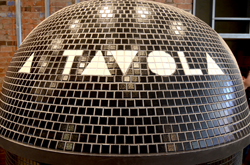
The local boys behind A Tavola Pizza, a trattoria opening this spring in Over-the-Rhine, trust that by staying true to their story they'll offer diners a memorable experience rooted in their restaurant's humble DIY beginnings.

Reimagining the Urban Grocery

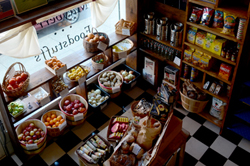
Urban areas with limited access to healthy food are commonly referred to as "food deserts." Learn how local entrepreneurs and leaders are making efforts to improve access to healthy, sustainable food options in Cincinnati through innovation and legislative incentives.

Building the Waffle House from Scratch

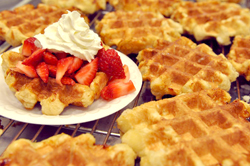
A Taste of Belgium's founder, Jean-Francois Flechet, has spent the last four years growing his empire in Cincinnati from a single waffle iron at Findlay Market to four locations and 30 employees in two cities.

Our Partners

Taft Museum of Art

We want to know what's on your mind.

Close the CTA

Don't miss out!

Everything Cincinnati, in your inbox every week.

Close the CTA

Already a subscriber? Enter your email to hide this popup in the future.