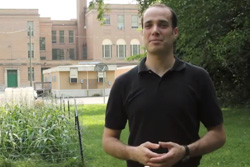
Clifton / CUF

Resting on a hill overlooking the north side of Cincinnati, Clifton offers a wide range of experiences from a college atmosphere with the city's largest school, the University of Cincinnati, to an international center for cutting-edge medicine featuring University, Children's and Good Samaritan hospitals. Clifton's history has been preserved in historical buildings and homes — from modest to millionaire. Trendy shops and restaurants can be found on Ludlow Avenue in the Gaslight District, along with the Esquire Theatre, yoga studios, Clifton Market and a newly renovated branch of the Cincinnati Public Library. Even though Clifton is tightly compacted with large buildings and interesting architecture, green space does exist at Burnet Woods

From the CR: For I Will Consider

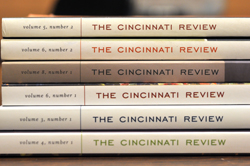
Managing Editor’s Note: This is the first in an occasional series of shared content with a local literary gem, The Cincinnati Review. Named one of the top 20 U.S. literary magazines by Every Writer’s Resource and housed at the University of Cincinnati, the CR will provide poetry, fiction and non-fiction for Soapbox readers, then offer special “bonus material” about each piece—including commentary from local editors, writers and poets—on their blog. The first selection is a poem, For I Will Consider, by Terese Coe.

Two college freshman create innovative app for fellow students

With an idea as good as an app that predicts whether or not school will be cancelled due to inclement weather, two students didn’t let having to learn to program and develop the app stop them. Scott Fink, a UC engineering freshman, and his high school friend and William and Mary student, Matt Sniff worked through the warm summer months to create the app, the Snow Day Calculator, that calculates the possibility of a snow day based on several algorithms. “After all, what more do students want than to know they could potentially have a snow day? Fink says. “The Snow Day Calculator popped into my head, and we started writing the algorithm and developing graphics.” The app was released for both Android and iPhone platforms in December the 99 cent app has since been downloaded hundreds of times, even reaching number 26 in the Apple App store weather rankings. Just like many other apps, once a good idea was seen, people try to copy and compete with apps by making modified versions. “Someone copied our idea about a week after us and came out with a similar app for $1.99. So, we have had to effectively market the app and prove that ours is just as good or better for less money,” Fink says. Fink and Sniff have other Internet and computer related ventures they are trying to capitalize on. Photorankr.com, an amateur photography website, where people can share and rank photos. The site uses algorithms to find which photos are being ranked highest and trending the most at any moment. Another venture is one Sniff has developed at William and Mary is collegecambio.com, a site were students can not only buy and sell textbooks, but they can buy and sell just about anything else, talk about professors and classes, arrange rides home, or anything else they could possibly need. “It has been extremely rewarding to see some real results from our hard work. It's important to translate learning into real world experience,” Fink says. By Evan Wallis

Local vets fly fish for therapy via Healing Waters

The fly fishers on the dock at Parky’s Farm in Winton Woods concentrate on the quiet task before them. Cast the line, wait and watch. They’ve spent days making and tying their flies, concentrating away hand tremors that are daily reminders of PTSD and traumatic brain injury. Today, they engage larger muscle groups. They reach and stretch as they throw out the line. While they remember all they learned from the local Project Healing Waters teachers and mentors, the trip is also about forgetting. Forgetting memories of battles in Iraq and Vietnam, forgetting the frustrations of living with Lou Gehrig’s disease and Multiple Sclerosis. “When they fish, they are outdoors, away from crowds and some of the things that bother the PTSD guys the most,” says Tom Scheer, 70, who founded the local Project Healing Waters group two years ago. An avid fly fisher, the Air Force veteran and retired dentist stumbled across the national Project Healing Waters online while looking for his own resources. He immediately understood how fly fishing might benefit veterans in the healing process. “After being in the stream and listening to the song of the stream, it’s just pretty magical,” he says. While the local group, which consists of about nine regular members, doesn’t make it to a stream that often, there are other nearby opportunities that provide them with chances to be in nature and practice new skills while they both concentrate and relax. “You can work seriously at it,” says Scheer. “They really are into it. And you can see that it’s got to be good for them.” He tells about an Iraqi vet, injured during his fifth tour of duty, whose wife tells the story of how his PTSD has changed their family. At the lake, he stands far from the rest of the vets and fishes, his nerves calmed. And the vet with Lou Gehrig’s disease, who leans against a pole at Parky’s Farm, pulls in a fish and says in a wavering voice, “This is my therapy.” The sessions are a bit of therapy for Scheer, too. After leaving a busy dental practice, he faced an empty calendar. “It wasn’t very fun,” he says with a laugh. His desire to teach took an unexpected turn with Project Healing Waters, but it’s a turn he doesn’t regret. “I get way more back than I put in,” he says of the 24 annual sessions with the group of veterans. “Instead of sitting at home, I have a reason to get up. It’s wonderful.” Do Good: • Share this story with a vet. Interested parties can contact Tom Scheer to join the group. • Donate gently used rods for the group’s “rental” program. Vets pay nothing to be a part of the group, so every bit of support helps. Email Scheer for more information. • Volunteer to be a mentor to a vet. If you are a fly fisher and can help out a few hours a month, consider joining the ranks. Contact Scheer for details. By Elissa Yancey/Follow Elissa on Twitter Photo by D. Brent Miller

Deaconess Medical Monitoring helps seniors age in place

Deaconess Medical Monitoring is marketing a suite of products designed to allow senior citizens to be more independent as they age. These products, developed in partnership with Guardian Medical Monitoring, come as Deaconess continues to evolve from a hospital to a senior services and product provider. Products currently available include the Personal Emergency Response System (PERS), which alerts a personal emergency responder if a person falls or faces a home security breach. Subscribers wear a necklace or wristband that they can activate in an emergency. There's also the Medication Management System, an electronic medication dispenser that helps people manage multiple prescriptions or complex medication schedules. Users can load a month's worth of medication at a time, then be alerted when it's time to take correct doses. After they take their medicines, users hit a blue button on the device to signal they've taken the medications. If they don't hit the button after a certain time, the device withdraws the medicine and notifies a person identified as a first responder. The goal of the new products is as simple as it is necessary. "We are trying to help people age in place and stay independent in their own homes as long as possible," says Deaconess Medical Monitoring Coordinator Holly Williamson. Other products like internet video monitoring and GPS-powered personal location devices help seniors and caretakers transition from a hospital to home. Lack of a successful transition often means repeat trips to hospitals, which translates into seniors more likely to lose their independence while racking up higher healthcare costs. Deaconess Medical Monitoring products are being marketed to individuals, hospitals and senior living facilities, and there are more products being developed, Williamson says. Deaconess Medical Monitoring is an affiliate of Deaconess Associations Foundation. Deaconess Associations, Inc., the parent company for all Deaconess affiliates, owns and operates Deaconess Long Term Care facilities in Ohio, Kansas and Missiouri.   Deaconess Hospital closed in 2010, and has evolved into a  health care campus with health-oriented products, services and resources. The hospital building is leased to University of Cincinnati Psychiatric Services; Regency Rehabilitation Hospital ( a long term rehabilitation hospital); and other other private offices and research facilities. By Feoshia Henderson Follow Feoshia on Twitter

DIY competition inspires guerilla projects for public good

NOTE: Comment on Facebook in the space below to tell us what site-specific guerilla art project you'd like to see in the city! Soapboxes on Fountain Square? Train car seats surrounding Union Terminal? Get creative and you'll have a chance to be featured in an upcoming Soapbox story. We’ve seen shipping containers used as temporary art installations and pigs decorated in city hotspots. We’ve enjoyed pianos in public and colorful yarn bombs en plein air as well. Now you’re invited to propose your own do-it-yourself urban art project as part of a first-of-its-kind competition sponsored by the Architectural Foundation of Cincinnati and the University of Cincinnati Niehoff Urban Studio. The DIY Urbanism in Cincinnati Competition grew out of a fall forum focused on grassroots, collaborative and innovative “guerilla projects” that can change the way we view and use the urban spaces around us. In his presentation last November, Niehoff Studio Director and UC professor Frank Russell quoted David Harvey, author of “Right to the City,” as an inspiration for discussion about how to create opportunities for artists, architects, planners and members of the local design community, including students, to reinvision the city. “The Freedom to make and remake our cities and ourselves is, I want to argue, one of the most precious yet most neglected of our human rights,” according to Harvey.   Submit your ideas for a temporary exhibition for the public good and you will be eligible for cash prizes and to have your work exhibited at the Architectural Foundation of Cincinnati. Entering costs just $10 and the top prize is $500. Find complete competition guidelines by visiting the Niehoff Studio online.   By Elissa Yancey Follow Elissa on Twitter.

GirlsGuide offers advice to social-media savvy young women

Cosmopolitan magazine reaches more than 18 million adults each year and remains the most read magazine by college women in the United States. Facebook membership is well over 800 million users and growing. Chicago native Brette Borow has joined the two -- combining the power of print media with the accessibility of social media -- to create GirlsGuideTo.com, “the Cosmo for the Facebook generation.” GirlsGuideTo is an online forum that supports and engages young women on topics of life, work, relationships, health and beauty. The site allows users to tell stories, ask questions, post links and videos that other users can then respond to with advice or experience, providing women the answers they need and the reassurance that they are never alone. With Ohio State University, the University of Cincinnati, Indiana University and the University of Kentucky as well as dozens of smaller schools within 200 miles of downtown Cincinnati, the city seemed a logical place to locate a Web and mobile application geared toward college women. After months of talks with Borow and a commitment to move the company here from Los Angeles, CincyTech invested $200,000 in GirlsGuideTo as its thirtieth portfolio company. The investment is part of a larger seed-stage round, led by CincyTech, that will allow Borow to move the headquarters of the company to Cincinnati, launch additional features on the site, grow members and hire a sales and marketing staff in the region. Borow created GirlsGuideTo when she graduated from Loyola Marymount University’s School of Film & TV.  She moved into her own apartment and realized there were so many new things happening in her life as a young woman that she wanted to share with friends or ask questions about to people who had been in her shoes. The site that now boasts more than 50,000 registered members and more than 130,000 Facebook users began as a simple blog between Borow and her friends. The young women would tell stories about everything from paying bills to bad dates and ask each other questions when caught in sticky situations. GirlsGuideTo first gained national press in 2009 when it was praised for its use of Facebook Connect, an application that allows Web users to login to a site using their Facebook account. Although this application is now widely used on the Web, GGTo was one of the first to jump on board. Borow was always a fan of the app because it not only allowed her to collect important demographic information, but it prevented men from trolling the site to meet young women. “Borow’s early independent success shows us that she is meeting an unfilled need for this demographic,” says Rahul Bawa, director of digital and software investments for CincyTech, who is working with Girls Guide To. “Being located near several major universities will help Borow grow her business quickly and efficiently.” By Sarah Blazak CincyTech

Rohs serves up coffee, conversations

Next to the sanctuary of University Christian Church in Clifton Heights, college students, community organizers and poets trickle in and out the doors of Rohs Street Café, which has been serving up fair-trade coffee, local music and community since 2003. The Café started with two goals in mind: create a place that fosters relationships and, eventually, give back to the community. When UCC pastor Troy Jackson and Les Stoneham decided to open Rohs Street, they had three main pillars to guide them -- justice, art and community. Justice comes in part in the form of the fair-trade coffee; Rohs Street Café was the first spot in town to serve only fair or direct trade coffee. It also extends to relationships like the ones that church and café staff have developed with coffee farmers at La Armonia Hermosa in Guatemala, where they visit annually. “Fair trade or direct trade isn’t a perfect model to fix trade,” says Austin Coop, general manager of Rohs Street Café. “It can serve as a starting point for more conversations about justice.” While Rohs Street wasn’t created to bring a stream of revenue back to UCC, but once the café is self-sustaining and does turn a profit, Coop says that money will go directly back into the community. Art comes mostly in the form of live music at Rohs Street. With a long-standing tradition as one of the most intimate venues in town, the café has been a part of the Clifton Heights Music Festival and other events. In addition, as one of few local music venues that doesn’t serve alcohol, Rohs Street’s open mic night gives young musicians a place to play. “We wanted to be a spot where aspiring musicians can be heard,” Coop says. The community at Rohs Street is a mix of the employees, volunteers and customers. Coop has been the GM for only seven months, and stands as the least-tenured employee. Several regular customers end up volunteering as baristas to learn about coffee, or just spend more time at the café. The comfortable atmosphere and some of the best coffee in town keeps people coming back for more. “There’s something about a cup of coffee that brings people together,” Coop says. Do Good: • Buy a cup of coffee: Support the farmers, Rohs Street café and the community. • Attend a local show: Many shows are free or only a small cover fee and directly support the local musicians. • Have a conversation about justice: Whether it be personal relationships or the effects of Fair Trade coffee, explore what you can do to make the community a better place. By Evan Wallis

Video FUEL Cincinnati

Need some FUEL for your great idea? Take a look at this video, an introduction to a philanthropic initiative of Give Back Cincinnati, to see what community-focused start-ups are taking root around town.

La Poste four will bring Western flavor to Northside with Django Western Taco

Four years ago Dave Taylor, Kelly Lough and her husband Bryant Phillips were sitting on a patio having drinks when they came up with an idea for a late night restaurant in Cincinnati that served tacos and western food. But when they found the perfect space for their first restaurant it had elegant paned windows and an airy dining room and was located in the Gaslight District of Clifton; it just wasn’t right for hot cast iron and western spice. So they opened La Poste instead, a casual fine dining restaurant with an extensive wine program, and along with fourth partner Jens G. Rosenkrantz Jr. they put their Western aspirations on hold. When a quirky space with a prime location came available Northside this year, they decided to move ahead with the idea that jump-started their partnership and open Django Western Taco there this coming spring. Chef Dave Taylor said the space has eclectic design features, including cast iron railing and a milled timber support, that are well suited for a restaurant named after a movie cowboy who dragged a Gatling Gun around the muddy west in a coffin. It has an open kitchen and large windows that face a busy street corner. Like the space where they opened La Poste after the restaurant Tink’s closed, it provides them the opportunity to fill a void for a community. “When Tink’s closed, the neighborhood missed having their restaurant,” Lough says. “We took that and built La Poste based on being a neighborhood restaurant, and being a part of the community. We are doing the same thing in Northside right now.” Taylor and Lough said Django Western Taco will not be a taqueria, but a place that serves “food from the American west.” The menu will include traditional Mexican specialties as well as western staples like cast-iron cornbread, spicy beef chili and a cowboy steak. The full bar will focus more on traditional whiskey and tequila than fancy mixed drinks, Phillips said. “We want kind of like a raw mud-on-your boots atmosphere,” Taylor says. “We'll play rock n roll music and hopefully be a fixture for the neighborhood and a destination for late night dining.” Hours will be noon to midnight during the week, and the owners said they hope to stay open until 3 a.m. on the weekends. Phillips said all menu items will be priced under $20. Taylor said he and his partners hope to “grow their brand” with their second restaurant, but so far they don’t have a name for their business partnership. Opportunities are opening up for them, and they seem to be too busy doing their thing to have the time to give it a name. By Henry Sweets

Green Streets promotes sustainability at home, work

As Ben Haggerty sweeps up from a weekend night’s business at his Bellevue bar, the B-List, he doesn’t act the part of an eco-warrior. But one conversation makes it clear that Haggerty not only knows the ins and outs of water conservation, he has a great appreciation for businesses working to preserve the environment. From the time his father first built a rain barrel with him as a child, Haggerty recognized the importance of water. Today, he promotes those childhood values through his second business, Green Streets, LLC. After getting the B-List up and running, Haggerty looked around the community, driven to make a positive impact on the city. His knack for rain barrels made their production and sale a natural choice for his burgeoning green initiative, a construction company. With its focus on storm water mitigation, Green Streets works with clients who wish to install sustainable options in their homes and businesses. Haggerty works to meet every client at his or her level of commitment to sustainability. He believes every action towards sustainability is a good one. “If I can get 1,000 people to take two steps I think it will have a bigger impact than getting 10 people to take 10 steps,” Haggerty says.   From a small installation of a rain barrel to a larger project of a green roof, every individual green decision, big or small, can have an impact for both the user and the environment. A rain barrel attached to the gutter system of a home conserves water for use on a dry day, making it possible to water a lawn and garden without using any new water. A green roof reduces run–off and insulates homes. “There is no limit to what you can do to utilize rain water," Haggerty says. Green Street’s most public project was the installation of a green roof, watering system and rain containment system on City of Cincinnati’s City Hall in 2010. The vision began with Mayor Mark Mallory, who wanted to set to an example of sustainability for the city. Green Streets was subcontracted for the project and City Hall’s roof was transformed into an eye-appealing and water-conserving masterpiece that the public can view from upstairs windows of City Hall.   More things changed within City Hall during that project than just the roof’s landscape. Outdated construction codes restricted redirection of water from a downspout to anything other than the sewer. They made it illegal to reorganize the gutters to flow into a rain barrel. City officials amended the rules to allow a more modern sustainable construction method for City Hall and paved the way for future water conservation initiatives.    As he started Green Streets, Haggerty saw an opportunity to do even more. So he formed The Sustainability Partnership of Cincinnati (TSPC) to help consumers learn about investing in sustainable options and strengthen the Cincinnati’s “green” business community. “It can be pretty confusing on what is going to be the best use of people’s money, whether it solar, geothermal or new insulation and so on,” Haggerty says. “So we have joined forces with locally owned and operated companies that are invested in the community, and we are able to help people navigate sustainability.” Haggerty praises the growing network of people with similar goals in and for Cincinnati. One of the first green relationships he created was with Libby Hunter, an eco-broker for Comey & Shepherd. At the time she was known as Cincinnati’s only green realtor. “It makes a lot of sense, particularly in this economy, to band like-minded businesses together to draw from their collective experience and resources,” says Hunter. “Working together helps each member of the TSPC continue to grow their own business under the support and guidance of the bigger partnership, as its recognition and reputation expands.” Currently, Green Streets is looking forward to its newest project. Mackey Advisors, a wealth Advocate Services Company in Independence that was named Green Business of the Year of Covington in 2010, hired Green Streets to transform an historic building in Bellevue into its new headquarters. “It will be the first true TSPC project,” Haggerty says. “We will be saving a historic structure in Bellevue Ky., and adding additional office-grade space, all with an eye for sustainable practices.”   Successful projects demonstrate Haggerty’s passion about making Cincinnati a sustainable city. “Ben is incredibly knowledgeable,” Hunter says. “It comes from a deep conviction that we need to be re-considering how we live in our homes, how we manage our resources and water usage and waste.”   By Erin Leitner Erin Leitner, a new graduate of the University of Cincinnati, completed this story as part of a Journalism Seminar focused on Communicating Sustainability. Look for more stories from this class in Soapbox and around the city.

Our Partners

Taft Museum of Art

Common Ground Is Brewing

Support local stories and receive our signature roast straight to your door when you join at the Standard level (or above).

Drink Better, Read Local

Close the CTA

Don't miss out!

Everything Cincinnati, in your inbox every week.

Close the CTA

Already a subscriber? Enter your email to hide this popup in the future.