
The natural beauty and ecological role of biodiversity
Civic Garden Center of Greater Cincinnati horticulturist Julie Dennewitz on gardening for people AND for nature.
As the day grows longer and sunshine makes our yards and gardens more inviting, it’s time to start planning for spring. For many folks, the garden is simply a place to grow healthy food, but fruits and vegetables aren’t the only things to consider.
According to horticulturist Julie Dennewitz, a garden can be much more than that. With consideration for native plants, even the smallest garden can support wildlife, strengthen ecosystems and connect people more deeply with nature.
Dennewitz works at the Civic Garden Center of Greater Cincinnati, helping gardeners both new and experienced across the Cincinnati region learn how to care for their land and make the most of their outdoor spaces.
“Our organization offers educational opportunities to gardeners in Cincinnati in all different kinds of topics,” she explains. “We cover urban agriculture, backyard farming, community gardens, as well as gardening for ecology and for nature by using native plants and planting pollinator gardens.”
The center works to make gardening accessible to everyone. Whether someone lives in an apartment with a small balcony or owns a large property they want to transform into wildlife habitat, Dennewitz says there are ways to make it work.
“We encourage people to garden whether they have a very, very small space or even if they have a very big yard and they want to rewild it and turn it back into nature,” she says.
As a horticulturist, Dennewitz specializes in ornamental gardening — plants grown primarily for beauty — but she emphasizes that ornamental gardens can also play an important ecological role.
“Beauty is value in itself,” she says. “Something can be worthwhile just because it is beautiful, but the great thing about an ornamental garden is it can be beautiful and it can be really valuable to the ecosystem as well.”
That value comes from choosing plants that support pollinators and other wildlife. Many flowering plants attract bees, butterflies, and other insects that are vital to the food chain.
“You can plant things that you can cut and bring inside and put in a vase,” Dennewitz says, “but that also are going to be visited by pollinators.”
Gardening hints from a pro
Often, to support wildlife you’ll have to make some sacrifices in the garden. Dennewitz encourages gardeners not to panic if insects begin nibbling on their plants.
“I really encourage people to actually let their plants get eaten,” she says with a laugh. “Maybe let their plants get visited by insects. If there’s one hungry caterpillar munching on some of your flowers, those caterpillars might be food for a bird who then is going to be singing outside your window the next day.”
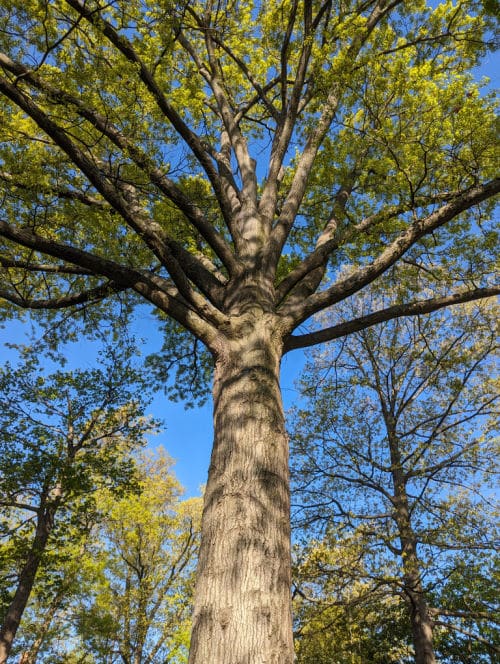
Native plants are especially valuable because they evolved alongside local wildlife and provide food and habitat that many species rely on. If someone wants to plant a tree that benefits wildlife for generations, Dennewitz has a clear favorite.
“If you’re thinking about planting a native tree in your yard, I always recommend an oak tree,” she says. “We have dozens of different species of oak trees, so whatever the circumstances in your yard are, there is an oak tree that is going to work for that space. Oaks live for a very long time. They might start out small, but your grandchildren might sit under the shade of that tree, which is a really beautiful message.”
In addition, a single oak tree can support hundreds of species of animals.
For gardeners with less space, Dennewitz recommends starting with native flowers that are easy to grow and beneficial to pollinators. One standout is purple coneflower, a perennial known for its distinctive pink petals and spiky center.
“Purple coneflower is really popular for a good reason,” she says. “It’s very easy to grow. It grows well in sunshine and once it’s mature you don’t really have to water it. It grows well in our soil here in Cincinnati, which can be kind of tough sometimes … and the butterflies love it.”
Other beginner-friendly native plants include black-eyed Susan, which features bright yellow petals and a dark center, along with sunflowers. Dennewitz notes that all of our sunflowers are native, and “if you plant a sunflower seed, you would be growing a native plant and helping wildlife while enjoying a wonderful display.”
While Dennewitz encourages planting native species, she also warns gardeners about certain invasive plants that can harm local ecosystems. One example is the Callery Pear Tree, widely planted across many American cities. “They’re going to be blooming here probably next week with those white flowers,” she says. “They smell kind of bad, and they’re all over the city.”
Originally from China, the Callery Pear spreads aggressively and outcompetes native plants.
“It doesn’t belong here and it doesn’t play so well with others,” Dennewitz explains. She encourages homeowners who have one to consider removing it and replacing it with a native tree. Topping the Callery and grafting different varieties of pear, including edible fruit-bearers, is also becoming a popular alternative to outright tree removal.
Beyond planting and maintenance, Dennewitz believes gardening is also about learning and curiosity. Her own passion began early and that early exposure sparked a lifelong interest.
“I grew up in a family that really valued nature,” she says. “I have a lot of memories of helping my parents in the garden and my mom teaching me the names of birds and wildflowers. It’s always been a passion of mine. The more that I learn, the more questions I have.”
She also emphasizes the importance of learning from those with deep ecological knowledge, including Indigenous communities who have long understood the uses and relationships of plants. “There are so many different species [of native growing medicinal plants and herbs], and Indigenous communities would be the leaders in that knowledge,” she says. “There would be nothing that couldn’t have some kind of gift to share if you had that knowledge.”
For those who want to learn more, the Civic Garden Center offers a wide range of opportunities. Visitors can explore the neighboring botanic garden, browse free resources in the center’s lobby library, or attend affordable classes on topics like seed starting, shade gardening, and pollinator habitats.
The center also hosts volunteer opportunities and special events. One of the biggest is its annual spring plant sale, Grow Fest, scheduled for May 2 from 9 a.m. to 2 p.m. The event features thousands of plants, including herbs, vegetables, flowers, trees and rare heirloom varieties.
Ultimately, Dennewitz says the key to gardening and caring for the environment is simple: action.
“You’ve got to put the seeds in the ground.”
To learn more about the Civic Garden Center of Greater Cincinnati at 2715 Reading Rd., visit the website.
Author

Related Articles

Interfaith coalitions drive sustainability across region with climate action
Cincinnati initiative “Faith Communities Go Green” allies with houses of worship to put diverse religious teachings into practice.

Greater Cincinnati Society of Professional Journalists and Ohio’s Best Journalism recognize Soapbox for excellence in 2025
Solutions journalism reporting about health, social justice and environment earn top honors.

Beyond the runway: Goodwill and UC DAAP explore fashion’s circular future
A cross-sector collaboration between Cincinnati organizations turned discarded textiles into a conversation about fashion’s future.