Transportation

Portland streetcar success has fueled interest elsewhere

The streetcar built in 2001 in Portland, Oregon has now inspired other cities, including Cincinnati, to build streetcars in a time of rebirth for the city. Portland's streetcar proved to be a successby transforming a neighborhood with boutiques, condos, and restaurants. The U.S. Department of Transportation has awarded 258.6 million dollars for streetcars in various cities.Read the full story here.

Latest in Transportation
Cincinnati leaders looking to humanize streets with more two-way conversions

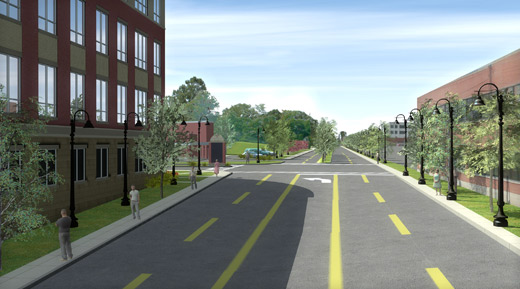
In the near future, city officials hope to convert two Uptown streets back to two-way traffic as they once were during their business district's heydays.  In addition to William Howard Taft Road and E. McMillan Street, some city leaders believe there may be a future for additional two-way street conversions throughout Cincinnati."There was lots of discussion about converting Vine Street to two-way traffic in the early 1990's, but it was ultimately done to create a more vibrant corridor," explained Cincinnati Vice Mayor Roxanne Qualls, who is pushing for additional Complete Streets measures to be included throughout the city.  "There might be some streets in the central business district, and definitely some in Over-the-Rhine that should be examined."Before the Uptown streets can be converted back to two-way traffic, they must first be studied in conjunction with the ongoing I-71 Access Improvement Study.  The transportation study is examining various aspects of vehicular access in the subject area, and Vice Mayor Qualls believes that now is the time to look at the conversion before physical progress is made on any possible interchange reconfiguration."The key thing for McMillan and Taft is creating a corridor that supports retail and business," Qualls said.  "This area used to serve as Cincinnati's second downtown, and the goal should be to prioritize pedestrian and bicycle traffic through this type of a neighborhood business district."The idea has been well received by neighborhood residents and businesses who believe a two-way street conversion will help to create additional opportunities to revitalize the area.  Preliminary cost estimates peg the two-way conversion work around $235,000.  A report on the conversion proposal is scheduled to be presented to the administration in early September 2010.According to Qualls, the interchange redesign of Uptown may still be a long way off, but does not eliminate the possibility of other two-way conversions.  In particular, Qualls sees particular promise with other north/south streets in Over-the-Rhine following the success of Vine Street's conversion.  Other possibilities could potentially include Elm, Race, Walnut, and Main Streets through the historic neighborhood."I have been following this kind of movement since I first joined the Congress for New Urbanism Board in 2000, and what we need to be doing is designing our streets in a way that creates and supports vibrant types of urban environments."Writer: Randy A. SimesPhotography by Tiffani FisherStay connected by following Randy on Twitter @UrbanCincy

New hybrid vehicles for Cincinnati Parks to cut costs, benefit environment

The Cincinnati Park Board is adding four hybrid vehicles to its fleet thanks to a $122,000 grant from Clean Fuels Ohio.  The new vehicles were obtained in partnership with the City of Cincinnati Department of Public Services, Fleet Management Division.According to city officials, the new Toyota Prius hybrid cars are replacing four sport utility vehicles that were at the end of their serviceable life cycle."We evaluated the benefits of the SUV versus their operational cost, and found that the winter benefits could not justify the much higher costs," explained Gerald Checco, Superintendent, Cincinnati Park Board.  "The upkeep and gas costs associated with the sport utility vehicles could not be justified by the five to ten days of snow conditions annually."Beyond the $3,000 of annual cost savings, the new hybrid vehicles are expected to make a considerable environmental improvement over the previous vehicles.  City officials estimate that a Toyota Prius emits an average of 3.4 tons-equivalent of CO2 annually, compared to 7.5 tons emitted by the previous sport utility vehicles.  The environmental benefit, officials say, is the clean air equivalent to planting a six-acre forest."Our research found the Prius is especially liked because of its stellar fuel economy, relatively uncompromised driving and acceleration characteristics and reasonable price," said Checco who went on to say that the vehicles will be used by administrative staff.The new vehicles for the Cincinnati Park Board join a growing hybrid fleet for the City of Cincinnati.  Most recently, the City added six hybrid Toyota Highlanders to the Police Department's fleet, and another four hybrid vehicles for its Public Services division.  City officials are also now researching the use of hybrid aerial boom trucks.Park Board officials state that eight trucks powered by propane fuel will be added later this year to further incorporate "green" initiatives outlined in Mayor Mallory's Green Cincinnati Plan.  To date, the Cincinnati Park Board has installed solar-powered trash cans, rain gardens, geothermal units, and 28 other "green" park projects.Writer: Randy A. SimesPhotography by Scott BeselerStay connected by following Randy on Twitter @UrbanCincy

American Airlines starts non-stop service from JFK to Cincinnati

American Airlines announced a daily non-stop service flight between New York and Cincinnati as well as Indianapolis and Norfolk. This addition allows more access to three key business cities for New York residents and also more access to international flights from JFK for Cincinnati residents.Read the full story here.

Reformed Cincinnati parking policy increasing rates while upgrading system

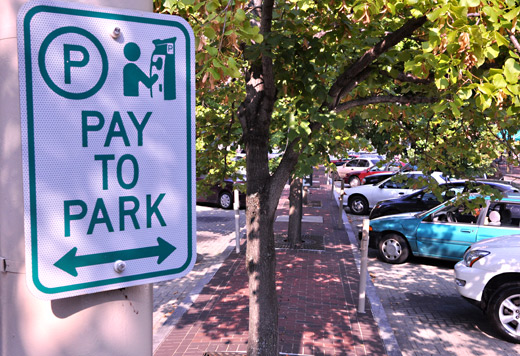
Last week, the City of Cincinnati made significant changes to its parking policy that includes increased rates all across the city.  In most areas the rate is doubling in an effort to upgrade the city's parking infrastructure, while also becoming more cost competitive with private rates.The changes come following analysis of a 2009 parking report completed by Walker Parking Consultants.  The report outlined that Cincinnati's off-street parking facilities, and on-street meters, were priced "well below market rate."  The report will help the City in planning for the following.Increase parking needs as the city continues economic development effortsAddress predicted shortage of the city budget's parking fundProvide for increased efficiency in the parking system's administrationThe rate increases will make on-street meters in downtown Cincinnati $2 per hour, while city-owned parking garages will also see varying increases.  In six neighborhood business districts, on-street meters will double from 25 cents an hour, to 50 cents an hour.Even with these increases, more may be on the horizon as the 2009 Walker Parking report called for the city to price its parking spaces within 5 percent of the private market.  The basis for this recommendation is two-fold as studies indicate that often times public parking spaces are priced artificially low at the detriment of nearby businesses and the immediate environment.Donald Shoup, Professor of Urban Planning at UCLA, has studied this subject matter extensively, and found that higher parking rates actually benefit local businesses by creating higher turnover.  At the same time, the higher rates, Shoup contends, deters drivers from circling blocks in search of that cheap parking space.  This, in turn, reduces direct emissions and reduces congestion on local roads.City officials report that the increased meter rates are the first increases in more than ten years, and places Cincinnati within the lower range of of comparable cities like Louisville, Pittsburgh, Columbus, and Cleveland.The increased rates will reportedly help cover maintenance costs associated with parking facilities, and upgraded on-street parking equipment that will include new solar-powered pay/display stations like those currently found on Court Street and Second Street in downtown Cincinnati.  City officials say that the new pay/display stations will make parking services more efficient, while also reducing maintenance costs long-term. Writer: Randy A. Simes Photography by Scott Beseler Stay connected by following Randy on Twitter @UrbanCincy

Officials meet to discuss importance of Brent Spence Bridge project

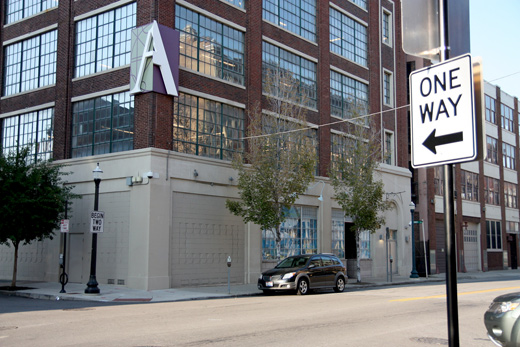
U.S. Congressman Steve Driehaus (D-OH) and James L. Oberstar (D-MN) were in Cincinnati on Monday, August 2 to discuss the Brent Spence Bridge replacement and rehabilitation project.  The congressmen met with local officials on the 25th floor of the Enquirer Building in downtown Cincinnati overlooking the river span. Driehaus and Oberstar were joined by other local officials including Cincinnati City Manager Milton Dohoney and Vice Mayor Roxanne Qualls who also serves as chair of the Livable Communities Committee and Major Transportation & Infrastructure Projects Sub-Committee which study projects of this nature.  They gathered to discuss the project's economic and transportation impacts. Completed in 1964, the Brent Spence Bridge is currently exceeding its designed capacity and presents a variety of safety concerns that range from the bridge's lack of emergency break down lanes for motorists, to poor signage that partially obstructed by the bridge's support structure. In March 2010, Brian Cunningham from OKI Regional Council of Governments told Soapbox that the Brent Spence Bridge project is the metropolitan planning organization's number one priority because of the safety concerns and the major transportation choke point it presently causes. "OKI has estimated that there is a crash along this 8-mile stretch once every three days, and when a crash occurs on that bridge it basically shuts down two interstates," Cunningham detailed. The Ohio River crossing also represents a major economic linchpin for the region, and nation.  It is presently estimated that $400 billion worth of commodities travel across the bridge every year; a number expected to more than double by 2030 to $815 billion. Cunningham states that local officials have been very supportive of the project thus far, but that significant amounts of money are still needed to make the $2-3 billion project a reality.  Local officials are hoping that a large portion of that money can come from the federal government with the help of representatives like Congressman Oberstar who serves as chairman of the House Transportation & Infrastructure Committee. The Brent Spence Bridge replacement designs have now been narrowed to three final design options, and officials hope that if the necessary funding is secured that construction can begin on the new span by 2015. Writer: Randy A. SimesRendering Provided Stay connected by following Randy on Twitter @UrbanCincy

$3.1M Dana Avenue transformation through Evanston underway

Dana Avenue through Evanston is in the midst of a transformation that includes streetscaping and on- and off-ramp improvements at the Interstate-71 interchange. Ramp improvements are currently underway and are expected to be complete this month, while the streetscaping projects are expected to begin this fall.The Dana Avenue improvements have been made possible through more than $1.7 million in contributions from Neyer Properties, who developed Keystone Parke, and a $1.4 million Ohio Job Ready Sites (JRS) grant. The JRS grant was awarded to the City of Cincinnati because of the grant's ability to compliment Keystone Parke and an emerging commercial development node."Positive attributes are that it [Keystone Parke] leverages a small amount of state funds to create a smart office complex of over 460,000 square feet," said Sheena Metzger, administrator for the Ohio JRS program. "The project has excellent visibility from the interstate, and all of the buildings on site are going to be LEED-certified at least to the Silver level."Trend Construction is expected to complete Dana Avenue's streetscaping projects by spring 2011. Improvements will include new sidewalks, crosswalk lights, and street trees in an attempt to make the roadway more pedestrian-friendly. A middle turn lane will also be added along Dana Avenue (map) where needed, with a landscaped boulevard design included where turn lanes are deemed unnecessary."Keystone pushed the idea forward, but these improvements were really needed by the whole community," explained Jeff Chamot, Senior Development Project Manager, Neyer Properties." He adds, "The light poles are not the only thing about this project that is green. Like the light poles, all signage is lit with LED and fluorescent bulbs, landscaping is native and drought-tolerant, and low-flow drip irrigation in the planting beds will be tied into a moisture sensor to ensure unnecessary water usage is minimized."Writer: Randy A. SimesRendering ProvidedStay connected by following Randy on Twitter @UrbanCincy

Transit authority looking to overhaul Cincinnati’s bus system, improve access

As local transit officials struggle to do more with less, leaders at the Southwest Ohio Regional Transit Authority (SORTA) are examining how they might be able to restructure the Metro bus system to better serve Cincinnatians.  The changes may mean that the decades old hub-and-spoke model may finally be on its way out of style. "The hub-and-spoke model in Cincinnati is broken," exclaimed Colin Groth, Government Relations Director, Metro.  "Right now, if you're trying to go from say Mt. Washington to Westwood, you have to go Downtown first.  This is a problem." The problem is especially pronounced in Cincinnati due to its neighborhood orientation which lends itself to more hub-to-hub trips, rather than spokes leading to a singular hub.  According to transportation experts, the solution seems to lie in an option that moves people from neighborhood hub to neighborhood hub. The beginning of such a neighborhood hub bus system in Cincinnati will more than likely start by adding a second hub in Uptown, that will also serve as a facility for the Cincinnati Streetcar, followed by neighborhood hubs in Northside and Walnut Hills. "We have worked with neighborhoods and Parsons Brinckerhoff to figure out where people wanted to see Metro grow, and better access to Uptown and improved crosstown service were at the top of the list," Groth said. Officials say that the goal is to eventually develop a collection of Neighborhood Transit Hubs that will serve as transfer points in the restructured system.  The incremental will mean better service for riders within the city as they move from neighborhood to neighborhood, but it will also mean improved service for those traveling in traditional commuter patterns into Downtown and Uptown as buses will be able to travel in a more direct fashion. What transit officials need now is money.  The Uptown Neighborhood Transit Hub alone is estimated to cost approximately $6.2 million, but Metro officials are currently working with the Uptown Consortium and the Cincinnati Streetcar Development Partners to come up with the best plan for implementation.  Design and engineering work is already underway and is expected to be complete within the next year, and construction will begin as funds are available. In June, Metro received $11.77 million from the OKI Regional Council of Governments through their allocations of two federal transportation programs.  Some of this money will go towards the replacement of aging buses, but another chunk of the money will go toward this Neighborhood Transit Hub vision. "The money is to develop the capital infrastructure to support both existing service, as well as, creating the building blocks for a more robust system down the road," Groth explained.  "With more neighborhood hubs you can really facilitate center-to-center and neighborhood-to-neighborhood transportation...that's when you really begin to change the system."Writer: Randy A. SimesPhotography by Scott BeselerStay connected by following Randy on Twitter @UrbanCincy

Cincinnati awarded $25M for modern streetcar system through Urban Circulator program

TEXT TEXT TEXT TEXT TEXT TEXT TEXT TEXT TEXT TEXT TEXT TEXT.  TEXT TEXT TEXT TEXT TEXT TEXT TEXT TEXT TEXT TEXT TEXT TEXT.  TEXT TEXT TEXT TEXT TEXT TEXT TEXT TEXT TEXT TEXT TEXT TEXT.  TEXT TEXT TEXT TEXT TEXT TEXT TEXT TEXT TEXT TEXT TEXT TEXT.  TEXT TEXT TEXT TEXT TEXT TEXT TEXT TEXT TEXT TEXT TEXT TEXT.  TEXT TEXT TEXT TEXT TEXT TEXT TEXT TEXT TEXT TEXT TEXT TEXT.  TEXT TEXT TEXT TEXT TEXT TEXT TEXT TEXT TEXT TEXT TEXT TEXT. TEXT TEXT TEXT TEXT TEXT TEXT TEXT TEXT TEXT TEXT TEXT TEXT.  TEXT TEXT TEXT TEXT TEXT TEXT TEXT TEXT TEXT TEXT TEXT TEXT.  TEXT TEXT TEXT TEXT TEXT TEXT TEXT TEXT TEXT TEXT TEXT TEXT.  TEXT TEXT TEXT TEXT TEXT TEXT TEXT TEXT TEXT TEXT TEXT TEXT.  TEXT TEXT TEXT TEXT TEXT TEXT TEXT TEXT TEXT TEXT TEXT TEXT.  TEXT TEXT TEXT TEXT TEXT TEXT TEXT TEXT TEXT TEXT TEXT TEXT.  TEXT TEXT TEXT TEXT TEXT TEXT TEXT TEXT TEXT TEXT TEXT TEXT. TEXT TEXT TEXT TEXT TEXT TEXT TEXT TEXT TEXT TEXT TEXT TEXT.  TEXT TEXT TEXT TEXT TEXT TEXT TEXT TEXT TEXT TEXT TEXT TEXT.  TEXT TEXT TEXT TEXT TEXT TEXT TEXT TEXT TEXT TEXT TEXT TEXT.  TEXT TEXT TEXT TEXT TEXT TEXT TEXT TEXT TEXT TEXT TEXT TEXT.  TEXT TEXT TEXT TEXT TEXT TEXT TEXT TEXT TEXT TEXT TEXT TEXT.  TEXT TEXT TEXT TEXT TEXT TEXT TEXT TEXT TEXT TEXT TEXT TEXT.  TEXT TEXT TEXT TEXT TEXT TEXT TEXT TEXT TEXT TEXT TEXT TEXT. TEXT TEXT TEXT TEXT TEXT TEXT TEXT TEXT TEXT TEXT TEXT TEXT.  TEXT TEXT TEXT TEXT TEXT TEXT TEXT TEXT TEXT TEXT TEXT TEXT.  TEXT TEXT TEXT TEXT TEXT TEXT TEXT TEXT TEXT TEXT TEXT TEXT.  TEXT TEXT TEXT TEXT TEXT TEXT TEXT TEXT TEXT TEXT TEXT TEXT.  TEXT TEXT TEXT TEXT TEXT TEXT TEXT TEXT TEXT TEXT TEXT TEXT.  TEXT TEXT TEXT TEXT TEXT TEXT TEXT TEXT TEXT TEXT TEXT TEXT.  TEXT TEXT TEXT TEXT TEXT TEXT TEXT TEXT TEXT TEXT TEXT TEXT. TEXT TEXT TEXT TEXT TEXT TEXT TEXT TEXT TEXT TEXT TEXT TEXT.  TEXT TEXT TEXT TEXT TEXT TEXT TEXT TEXT TEXT TEXT TEXT TEXT.  TEXT TEXT TEXT TEXT TEXT TEXT TEXT TEXT TEXT TEXT TEXT TEXT.  TEXT TEXT TEXT TEXT TEXT TEXT TEXT TEXT TEXT TEXT TEXT TEXT.  TEXT TEXT TEXT TEXT TEXT TEXT TEXT TEXT TEXT TEXT TEXT TEXT.  TEXT TEXT TEXT TEXT TEXT TEXT TEXT TEXT TEXT TEXT TEXT TEXT.  TEXT TEXT TEXT TEXT TEXT TEXT TEXT TEXT TEXT TEXT TEXT TEXT. Writer: Randy A. Simes Photography by Scott Beseler Stay connected by following Randy on Twitter @UrbanCincy
Cincinnati unanimously approves sweeping bicycle policy reforms

TEXT TEXT TEXT TEXT TEXT TEXT TEXT TEXT TEXT TEXT TEXT TEXT.  TEXT TEXT TEXT TEXT TEXT TEXT TEXT TEXT TEXT TEXT TEXT TEXT.  TEXT TEXT TEXT TEXT TEXT TEXT TEXT TEXT TEXT TEXT TEXT TEXT.  TEXT TEXT TEXT TEXT TEXT TEXT TEXT TEXT TEXT TEXT TEXT TEXT.  TEXT TEXT TEXT TEXT TEXT TEXT TEXT TEXT TEXT TEXT TEXT TEXT.  TEXT TEXT TEXT TEXT TEXT TEXT TEXT TEXT TEXT TEXT TEXT TEXT.  TEXT TEXT TEXT TEXT TEXT TEXT TEXT TEXT TEXT TEXT TEXT TEXT.  TEXT TEXT TEXT TEXT TEXT TEXT TEXT TEXT TEXT TEXT TEXT TEXT. TEXT TEXT TEXT TEXT TEXT TEXT TEXT TEXT TEXT TEXT TEXT TEXT.  TEXT TEXT TEXT TEXT TEXT TEXT TEXT TEXT TEXT TEXT TEXT TEXT.  TEXT TEXT TEXT TEXT TEXT TEXT TEXT TEXT TEXT TEXT TEXT TEXT.  TEXT TEXT TEXT TEXT TEXT TEXT TEXT TEXT TEXT TEXT TEXT TEXT.  TEXT TEXT TEXT TEXT TEXT TEXT TEXT TEXT TEXT TEXT TEXT TEXT.  TEXT TEXT TEXT TEXT TEXT TEXT TEXT TEXT TEXT TEXT TEXT TEXT.  TEXT TEXT TEXT TEXT TEXT TEXT TEXT TEXT TEXT TEXT TEXT TEXT.  TEXT TEXT TEXT TEXT TEXT TEXT TEXT TEXT TEXT TEXT TEXT TEXT. TEXT TEXT TEXT TEXT TEXT TEXT TEXT TEXT TEXT TEXT TEXT TEXT.  TEXT TEXT TEXT TEXT TEXT TEXT TEXT TEXT TEXT TEXT TEXT TEXT.  TEXT TEXT TEXT TEXT TEXT TEXT TEXT TEXT TEXT TEXT TEXT TEXT.  TEXT TEXT TEXT TEXT TEXT TEXT TEXT TEXT TEXT TEXT TEXT TEXT.  TEXT TEXT TEXT TEXT TEXT TEXT TEXT TEXT TEXT TEXT TEXT TEXT.  TEXT TEXT TEXT TEXT TEXT TEXT TEXT TEXT TEXT TEXT TEXT TEXT.  TEXT TEXT TEXT TEXT TEXT TEXT TEXT TEXT TEXT TEXT TEXT TEXT.  TEXT TEXT TEXT TEXT TEXT TEXT TEXT TEXT TEXT TEXT TEXT TEXT. TEXT TEXT TEXT TEXT TEXT TEXT TEXT TEXT TEXT TEXT TEXT TEXT.  TEXT TEXT TEXT TEXT TEXT TEXT TEXT TEXT TEXT TEXT TEXT TEXT.  TEXT TEXT TEXT TEXT TEXT TEXT TEXT TEXT TEXT TEXT TEXT TEXT.  TEXT TEXT TEXT TEXT TEXT TEXT TEXT TEXT TEXT TEXT TEXT TEXT.  TEXT TEXT TEXT TEXT TEXT TEXT TEXT TEXT TEXT TEXT TEXT TEXT.  TEXT TEXT TEXT TEXT TEXT TEXT TEXT TEXT TEXT TEXT TEXT TEXT.  TEXT TEXT TEXT TEXT TEXT TEXT TEXT TEXT TEXT TEXT TEXT TEXT.  TEXT TEXT TEXT TEXT TEXT TEXT TEXT TEXT TEXT TEXT TEXT TEXT. Writer: Randy A. Simes Photography by Scott Beseler Stay connected by following Randy on Twitter @UrbanCincy

Our Partners

Taft Museum of Art
Warsaw Federal

Don't miss out!

Everything Cincinnati, in your inbox every week.

Close the CTA

Already a subscriber? Enter your email to hide this popup in the future.