
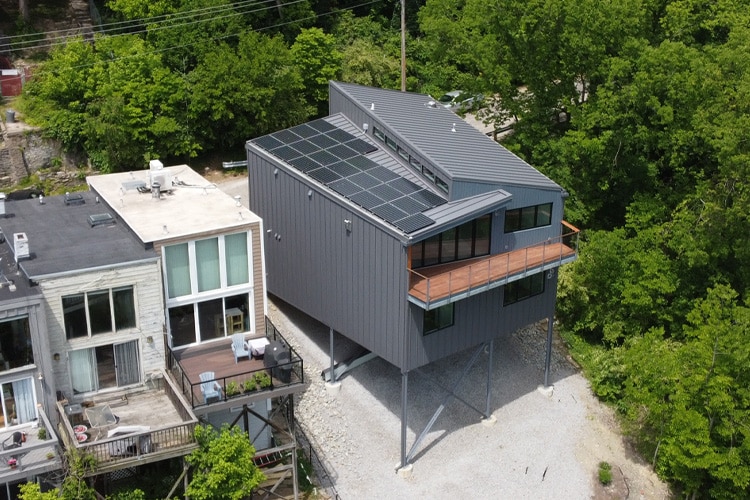
We humans spend a lot of time in buildings and surrounded by buildings, so the way they look matters. Those buildings are responsible for about 42% of annual global CO2 emissions, so the way they are built and how they function also matters. Can we have buildings that look good AND are good for the planet?
“There’s a palpable worry that buildings that prioritize efficiency have to make design sacrifices,” said Tim Nolan, AIA with emersion DESIGN. “But building owners should not feel that they need to sacrifice aesthetics or occupant comfort in order to pursue sustainable design.”
Design professionals use a variety of strategies to create comfortable spaces that improve sustainability while providing delight for people experiencing the building.
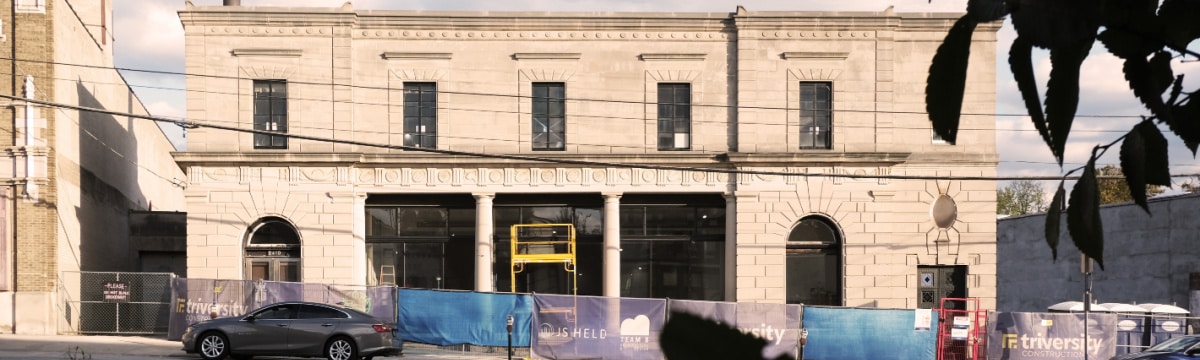
Reuse what we’ve got
Nearly 20 years ago, the architect Carl Elefante said, “The greenest building is. . . one that is already built.” His perspective is now widely shared among architects, planners, environmentalists and preservationists.
“In my mind, the most sustainable building is the one that stands the longest; reusing existing building is even better,” said Sari Lehtinen, International Associate AIA with MA Design. “I’m always hesitant to put something in a landfill.”
Existing buildings have embodied energy: the energy used to make and transport materials and the labor to build them. These buildings may need work to make them operate more efficiently but reusing them keeps all that embodied energy out of the landfill, which is good for the planet.
“There is 30 million square feet of commercial vacancies in our region, which is over twenty Carew Tower buildings,” said John Stoughton, AIA with Team B Architecture & Design. “Working with what we already have is a measurable way to do sustainable design.”
Adaptive reuse – taking an existing building and renovating it to serve a different purpose – is a creative way to save that embodied energy while maintaining the fabric of a community. Cincinnati is currently leading the nation per capita for converting vacant offices into residential. Adaptive reuse also includes turning an old church into a restaurant, an airport terminal into a hotel, or even updating an existing office to serve a new client or purpose.
“Every major sustainability certification program offers pathways for renovation or interior fit-outs.” said Nolan. “A building may have years and years of serviceable life left. Engaging with an existing structure in interesting and innovative ways can showcase design and save on the cost of materials and energy all while improving the functionality of the existing structure or adapting it to a new use.”
Bigger isn’t necessarily better
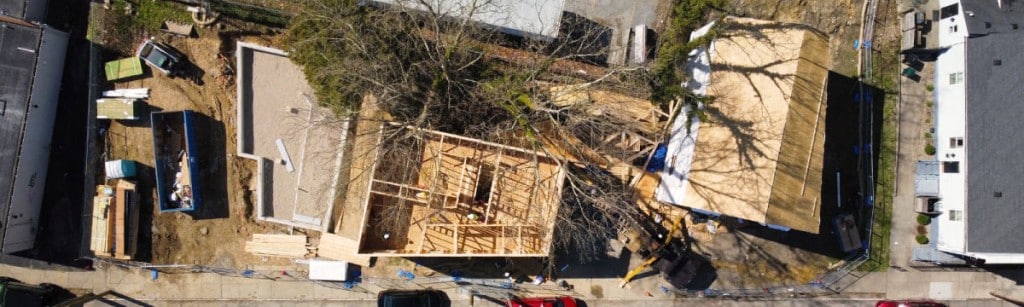
America may be known for its affinity for supersized things, but when it comes to building, bigger is not always the best solution.
“We need to build right-sized things,” said Lehtinen. “People have an idea of what they want to do in a project. The designer looks for opportunities in the layout for spaces to serve multiple uses, so they are used efficiently. Our role is to make a beautiful building that is as efficient and functional as possible.”
The size of a project impacts both environmental and financial resources. The bigger the project, the higher the cost of construction materials, finishings, and labor, as well as ongoing operational expenses.
“The architect is an advisor to the owner in terms of managing their limited resources in the most efficient way,” said Stoughton. “There’s never an unlimited budget. Through the design process we will right-size the project. Sometimes, layout changes also mean you’ll need less staff to operate your space which can save resources.”
Passive design strategies like managing storm water, adding insulation, or considering how the building is oriented to the sun, can cost-effectively improve design and sustainability. For example, the bedrooms may go on the east side of the house to make the most of morning sun or a south-facing office building may need window shading to reduce mid-day air-conditioning demands. Architects and designers talk to clients and building occupants to understand how the building will be used then shape the design to meet those needs within the budget.
The M&M metaphor
We all know the slogan for M&Ms: they melt in your mouth not in your hands. Why? Because of that special candy coating. Buildings work the same way, sort of. The building envelope (roof, walls, windows, doors and insulation) is the candy coating that keeps the spaces people use from metaphorically melting or freezing. Good design of the envelope is critical for sustainability and can free up resources for owners to apply toward fancy fillings like peanuts, or marble countertops.
“It’s about finding the sweet spot of how we insulate and protect the building shell paired with the project budget,” said Stoughton. “Retrofitting an existing building can take a lot of work to make it high performing, but when you look at the energy required to demolish a building, prep the site, lay the foundation, and start the new construction just to arrive back to a shell, there’s a lot of work and energy expended. Salvaging something and its embodied energy reduces the carbon footprint.”
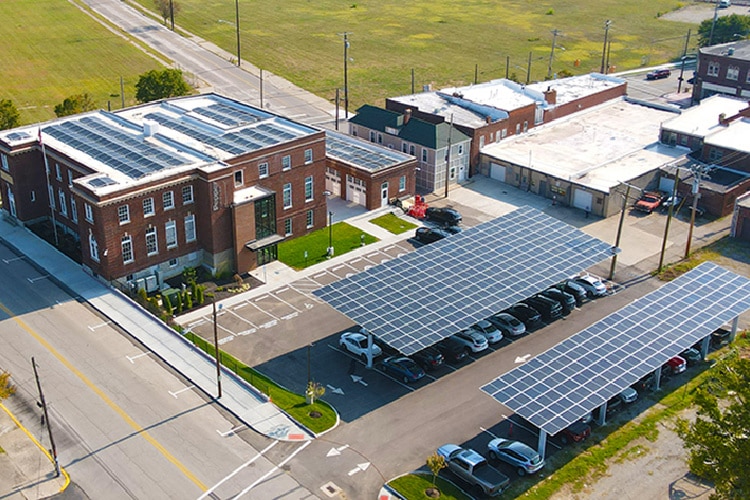
Improving the energy of efficiency for existing buildings is critical to reducing the negative impact of buildings on the environment. Buildings don’t have to go from drafty energy hogs to net-zero in one move to have value.
“You don’t have to do everything and get the plaque for your building; incremental changes are really important,” said Lehtinen. “Choosing to make things a little more energy efficient, no matter how you do it, matters. Energy keeps getting more expensive, so using less energy is good for everyone. The investment in insulation, mechanical systems, lighting, occupancy sensors, or water-conserving plumbing fixtures will come back to you.”
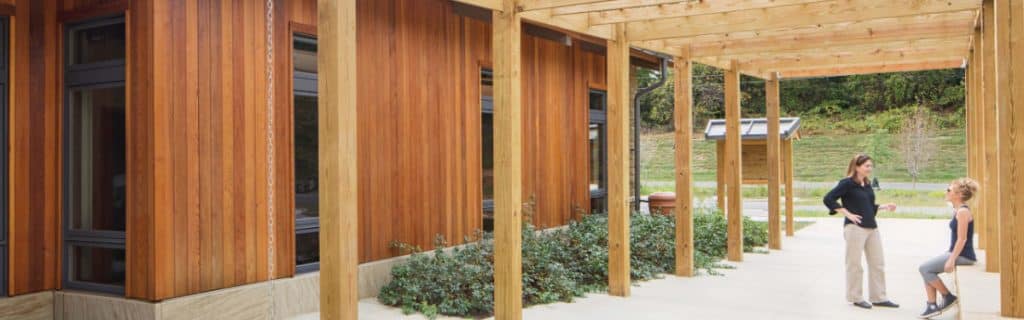
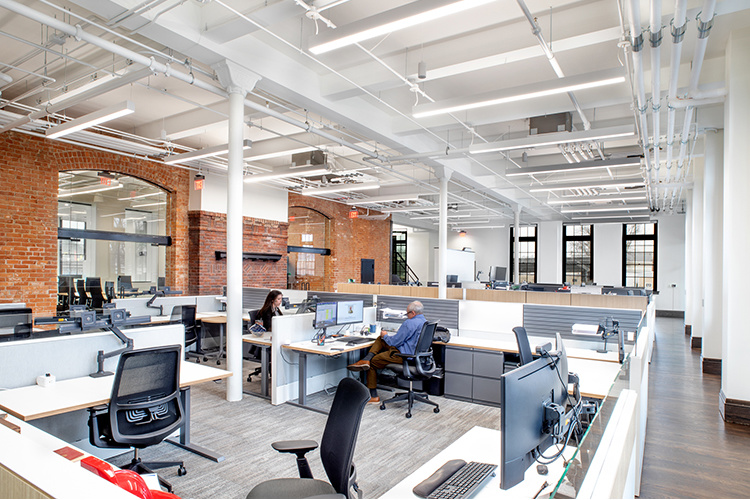
In some cases, the entire exterior of a building is replaced, like changing an M&M from red to green. The renovation of Calhoun Hall at University of Cincinnati is a local example by MSA Design that took the building down to its skeleton then rebuilt it with improved efficiency. But not every project requires that level of reconstruction to be more sustainable.
“One of the most effective things to do is increase the insulation in the roof,” said Nolan. “As lighting and mechanical equipment age out, updates are beneficial as everything developed in the interim is ultimately more efficient. For instance, the reduction in electricity required by LED light fixtures compared to fluorescent fixtures is significant.”
Choose performance over labels
From the Good Housekeeping Seal of Approval to an Oprah’s Book Club sticker, people look for labels that vouch for a product or service. Applied to buildings, those labels can include certifications or the branding of construction or finishing products. Both can be confusing. Thankfully, architects and designers are there to navigate what often becomes an alphabet soup of acronyms.
“The certification that’s most familiar is LEED, which has a broad array of criteria that emphasize general efficiency, material selection and project siting,” said Nolan. “Other certifications have more specific in focuses. WELL and FITWEL consider occupant health and comfort from both the design and operation of a building. Building performance standards, like Passive House, focus almost exclusively on minimizing building energy consumption. Others, like International Living Futures and the AIA Framework for Design Excellence look beyond the building itself to include site and social concerns.”
In some jurisdictions, pursuing credential programs can provide tax breaks, which typically offset additional costs to achieve the certification. Those costs may be part of construction but also include the consultants and systems needed to document and measure the project choices and outcomes for the credential submission.
“We use certifications as tools when appropriate but prioritize measurable performance and practical outcomes over checklists or branding,” said Stoughton. “If a building doesn’t have plaque, that doesn’t mean that it isn’t conserving energy efficiently or using high-value recycled materials. I think that for us in this region the best thing we can do is invest in our existing building stock and work with that for development.”
Navigating the labeling of materials can be even more challenging. Recycled. Post-consumer. Sustainably grown (or harvested). Low VOC (volatile organic compounds). There is no shortage of labels for everything from carpet to insulation to furniture. How is a consumer to know what is actually good for the planet versus what is industrial “green washing” to boost sales?
“Making healthy material choices is important but it can get confusing; this is where a professional comes in,” said Lehtinen. “There are many options to choose from that are reused or renewable products. A designer can help you make the right choices to get the look and feel you want, and it doesn’t have to be expensive.”
When choosing materials, what they’re made of is important to consider for sustainability, but so is their origin. Where is the material coming from and how much energy will it take to transport it? Does the manufacturing of the product negatively impact the people producing it? As with food, generally speaking the fewer ingredients, the more natural something is, the better it is for people and the planet.
Built to last
Greater Cincinnati has many exceptionally designed buildings that are 50, 100, even 150 years old. Icons like Music Hall and Union Terminal are inspiring in their beauty. Modest tenement buildings in Over-the-Rhine, arts and crafts bungalows in Clifton, Tudor homes in Hyde Park, and Sears kit houses in Madisonville delight residents and neighbors with their thoughtful details. Designing for the next century requires considering appearances and materials.
“Be thoughtful starting with the structure,” said Lehtinen. “Wood is great for embodied carbon and keeping it out of the atmosphere. Steel may be considered for something bigger and is more recyclable. If you’re thinking long term, concrete has a lot of strengths. A newer concept is the deconstructable building that can be taken down and reused in a different way.”
The materials and systems inside the building also have a lifespan. Whether it’s an existing building or a new one, everything is going to need to be repaired or replaced at some point. Thinking about that schedule can be challenging for an owner.
“There is a lifecycle cost to every decision we’re making,” said Stoughton. “It’s a conversation with each client. An owner might choose high quality materials that are extra durable, instead of those that are more cheaply made but need to be replaced frequently. As we balance limited resources we can help choose which finishes, fixtures, and furnishings are worth investing in.”
Lifecycle costs aren’t just the expense of replacement; there is also an environmental impact as those materials become waste and in the manufacturing of new materials.
“Lifecycle cost analysis can be structured in different ways,” said Nolan. “We can look at it from a cost perspective or a carbon intensity perspective. This is something that architects typically consider in an informal way because it helps meet a client’s expectations and inform key project decisions. It’s up to the design team to help the building owner figure out whether a more formalized analysis is worthwhile.”
Get the help you need when you need it
If you’re concerned about sustainability and ready to start a project, whether it’s a kitchen remodel or a new office, architects can help you get good design and efficiency within your budget.
“First look at a firm’s portfolio where you can see the balance of sustainability and aesthetics in their projects as well as whether the projects achieved any certifications,” said Nolan. “Then look for professional certifications of the staff; are they LEED, LEED AP, WELL, Passive House (CHPC or CPHD)? Finally, looking into consulting project partners can be helpful if they are provided. Those are also a good marker of experience and ability to deliver an integrated design approach.”
It’s a good idea to bring an architect on as early in the process as possible, especially if you’re dealing with an existing building.
“As a prospective tenant you walk into a space without knowing how much it will cost to build out, how long will it take, or if it will even work for your business,” said Stoughton. “We help answer those early-stage questions by working through some layouts, cost, and timeline to identify the right space. It’s a valuable service and represents a small fraction of the cost of the project.”
Want to know more? Continue this conversation on May 20, 2026, at the Civic Garden Center.
The design team serves the client by coming up with the right solution for the project and the budget, as well as helping navigate the many certifications, tax credits, and materials choices.
“Working with a design professional will help you get it done right,” said Lehtinen. “Don’t compromise the quality. In the end, the project should serve a purpose, look and feel good so it’s used and cherished for a long time.”
The series, Architecture Matters, is supported by AIA Cincinnati. Learn more at aiacincinnati.org.
The views expressed herein do not necessarily represent those of the American Institute of Architects or the members of AIA Cincinnati.
Author

Related Articles

Partner Partner Content Architecture Matters panel discussion: Good design is good for people
Your invitation from AIA Cincinnati and Soapbox to join a thoughtful community conversation about good design.

Historic properties are prime candidates for residential and mixed-use developments
The revival of legacy commercial, educational and manufacturing properties embraces sustainability, technology and adds housing.
Partner Partner Content Good design is good for people
Buildings do indeed shape us. Learn key principles to help understand, evaluate, appreciate, and advocate for good architecture and design.