Corryville

Often lumped in with Clifton, Corryville has its own special mix of residential and retail built along a business district that runs the length of Short Vine. Home to music fan favorites like Bogart's live concert hall and Mike's Music's collection of vintage guitars; the Public Library's branch in the handsomely renovated Carnegie building; and UC's Niehoff Urban Studio headquartered in a turn-of-the-century dance hall across the street.

New “Dive Bar” opens on Short Vine

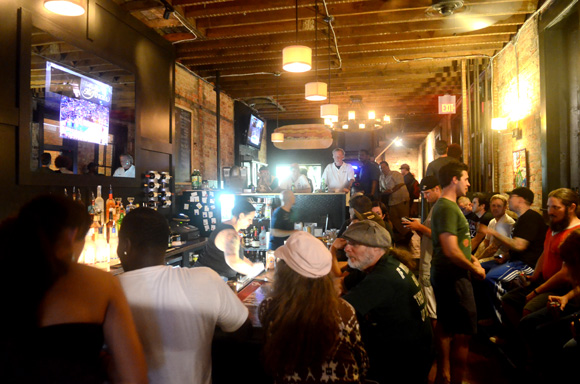
Short Vine in Corryville, once a hot spot for electic night spots, gets a a new bar and restaurant that replaces a former drug hot spot.Dive Bar owner Joe Pedro, a Columbus native and business owner of two bars near Ohio State University, said choosing the site for the Dive Bar came down to the old real estate maxim: Location, location, location."We like the proximity to the college campus and to the hospitals," he said. "There is a lot of people around the area who are good for our services. We also immediately fell in love with the history and character that Short Vine has to offer."Although in recent years this stretch of Short Vine has been known more for drug activity than business opportunities, Pedro said the past serves as a model for what the street could again become."The drug activity is a concern that we are aware of, but we are making an effort to get involved right away with the community and other business members to take hold of the street for the community and push out those elements that no one really cares for," he explained. "Over the past eight months we've seen more businesses coming through as well as more involvement with the community business association and city officials that have made changes that everyone has longed for and wants for the area."Construction of the bar took six months and involved completely gutting and renovating the whole space, leaving exposed brick throughout. Pedro also installed wood floors and new counter tops. The impetus for the work? Pedro's, and his partners', desire for the personality - and affordable cost - of an older building.Beth Robinson, President and CEO of The Uptown Consortium, is extremely supportive and thrilled about the new local hangout."We've made great strides in the past couple of years on Short Vine with continuous police control and increased activity of businesses and residents on Short Vine," she explained. "The bad image is starting to fade into the past as we start to have more businesses open in the area, which will help attract people back on the street and customers back to the area."Writer: Lisa Ensminger

UC’s DAAP, Hughes High School team for TREAD Project

Three University of Cincinnati Industrial Design students are empowering and educating students at Hughes High School through a footwear design studio as part of their senior thesis, the TREAD Project.Charley Hudak, Vanessa Melendez, and Jince Kuruvilla, are fifth-year industrial design students in the College of Design, Architecture, Art and Planning and have been networking for nearly five years to bring TREAD Project to life.The design studio was somewhat inspired by a program at Carnegie Mellon University, Sneakerology Course, which focuses on the culture and history of sneakers, not design.In its first year as a footwear design studio, the TREAD Project became part of UC's ID curriculum thanks to the support of Dale Murray, associate professor and coordinator of Industrial Design, and Phyllis Borcherding, associate professor and coordinator of Fashion Design and Development. After the success of its initial year, the design team decided to share the project at the high school across the street from UC's Uptown campus. The TREAD Project is a seven-week design student for 25 Hughes students who meet for three sessions per week. The last session each week features a footwear industry professional, including representatives from Nike, Reebok, Adidas, Jordan, Toms Shoes, Vans and more. In classes, students learn how to design with markets in mind, solve design problems and creatively sketch their concepts of the perfect shoes, which they will present to a panel of experts on the last day of the studio, May 25."It gives them a different opportunity to realize their skill sets can be applied to any problem," Melendez says. "They're using different thinking skills to solve problems instead of memorization or standardized tests."The project has particular significance at Hughes, where the dress code allows only black or white shoes. The students' shoe brands become a way for them to express their personalities.While the studio teaches students about footwear design, it also inspires them to take more active roles in their lives, including getting to school every day, applying to college or landing a job after graduation. "There are opportunities that not all of these students are aware of," Hudak says "Creative problem-solving goes beyond the education and design process." "Their skill sets can be applied to any problem," Melendez says. "They're using different thinking skills to solve problems instead of memorization or standardized tests."Hudak and his partners, all of whom are graduating this June, hope to expand the curriculum into a working non-profit model that could be replicated nationwide. Do Good:• Support the Tread Project. Donate money or supplies so tread can continue to teach inner-city students. • 'Like' Tread Project on Facebook. • Get informed. Visit the Tread Project online to learn more about the progress and see cool pictures, too!By Jayna BarkerFollow Jayna on Twitter @jaynabarker.http://www.jaynabarker.comPhoto courtesy Tread Project

Studies shows P2D Bioscience’s ADHD drug treats symptoms with few side effects

Independent studies show that an ADHD drug developed by P2D Bioscience treats core symptoms of the disorder with fewer side effects than current, comparable drugs. Two pre-clinical studies suggest the company's PD2005 is as effective as amphetamine and methylphenidate in treating ADHD. The studies show PD2005 improve both sustained attention and working memory, but has lower side effects, including risk of addiction. The studies were funded by a grant from the National Institutes of Health."The primary criticism of current first-line ADHD treatments is their side effects," P2D CEO Dr. Frank Zemlan. "The treatments are Schedule II drugs of abuse prescribed mainly to children. In contrast, a unique feature of P2D's lead ADHD compounds is that they demonstrate no abuse potential in the 'Gold Standard' of preclinical abuse liability testing."The treatment of ADHD is a $3.5 million market; Dr. Zemlan believes a drug with less side effects will appeal to parents reluctant to treat their children's symptoms.Dr. Zemlan predicted, "A new ADHD drug without the side effect burden of current first line ADHD drugs will dominate the ADHD market," he said. P2D Bioscience is a privately held P2D pharmaceutical company that specializes in developing drugs that treat a range of disorders including ADHD, obesity, anxiety, depression and Alzheimer's disease and more. The company is based in Corryville and is managed by a team with decades of experience in drug discovery, clinical research and technology transfer.Writer: Feoshia HendersonSource: P2D BioscienceYou can follow Feoshia on Twitter @feoshiawrites

Unleashing Uptown’s Inner Dynamo

A team of developers, city officials and UC administrators have big things in mind for Uptown. This week in Soapbox, key members of this visionary group speak to the motivations, aspirations and potential payoffs for the mega-development they are spearheading.

To innovate for boomers, P&G and LG are tapping… college kids?!

Procter & Gamble looks to students for design and invention ideas by working with a University of Cincinnati affiliated design non-profit organization, Live Well Collaborative. Students invented a new cap for Tide detergent to better assist the elderly, created better hospital gowns, and invented a medicine delivery system for Alzheimer's patients.Read the full story here.

New market tax credits help CDF and 3CDC revitalize

 What can $28 million in tax credits do in revitalizing Cincinnati's urban core? That's a good question to ask the Cincinnati Development Fund (CDF), which just learned that it is one of two organizations in Greater Cincinnati being awarded this amount in New Markets Tax Credits for the year 2010. The New Markets Tax Credit (NMTC), established by Congress in 2000, allows individuals and corporate taxpayers to receive a 39% credit against federal income taxes in exchange for making qualified equity investments into community development enterprises. The projects must happen in qualified low income neighborhoods and benefit those neighborhoods through job growth and community revitalization."In most cases, the NMTCs are used in larger scale development projects that are challenging to do and require large amounts of equity. These tax credits make these projects affordable," particularly in neighborhoods that need renewal, and often serve as a catalyst to jump start new development, according to Alicia Townsend, CDF loan officer and consultant.CDF has funded ten NMTR projects in the last five years, since receiving its first award of $52 million in 2005. Working then with the Uptown Consortium, CDF set up a loan fund that supported projects like the Cincinnati Herald office building and the Hampton Inn hotel and helped to fund the land banking of underdeveloped property for future use. Three notable projects using NMTCs are currently underway in Cincinnati's urban core. The historic Vernon Manor's renovation into office space is one such project. Group Health Associates' new medical office building on Good Samaritan Hospital's campus will benefit the local residents of Clifton Heights with better access to medical care and job creation. And Washington Park's rejuvenation as a modern outdoor playground and community gathering space is funded in part with $16 million in NMTCs. This year, out of the 250 applicants for this tax credit program, only 99 received funding, and two of those organizations are local: CDF and the Cincinnati Center City Development Corporation (3CDC), which received $18 million for 2010. 3CDC and CDF recently partnered on the Washington Park garage and redevelopment and are exploring other opportunities to work together in leveraging tax credits for much needed equity in deserving development projects. Because of the good these tax credits do, CDF's president and CEO Jeanne Golliher wishes for more. "We had asked for $75 million [this year] so we have to scale back" in funding projects. Still, with a five year total of $110 million in tax credit investments, Cincinnati's at-risk neighborhoods have benefitted from the program already. Because the CDF is among only three non-bank community development financial institutions to be approved for membership in the Federal Home Loan Bank of Cincinnati, it has greater access to capital to support their housing development financing. This, in combination with its NMTC loans, will give CDF even greater resources in revitalizing Cincinnati's urban core communities. Writer: Becky

Divine Inspiration: New Uses for Old Churches

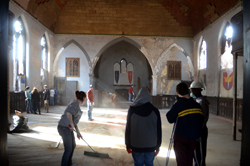
A recording studio, boutique hotel, and arts center are just some of the innovative approaches Cincinnatians are taking to preserve and reimagine our historic houses of worship.

City identifies streetcar stop locations, anticipates development along the route

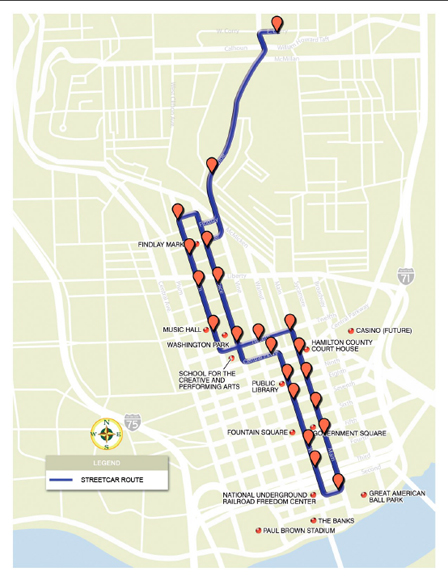
The City of Cincinnati is one step closer to beginning phase one of a streetcar system that will connect the Banks and downtown with Uptown and the University of Cincinnati. Locations of 21 stops along the 4.9 mile streetcar route have been determined and include ten stops in downtown, ten in Over-the-Rhine, and one in Uptown. City engineers and staff as well as representatives from Metro (buses and the streetcar will share several of the stops) and local business owners determined the locations. The first loop of the streetcar is expected to carry 6,000 people per day and stimulate a $3-to$1 return on investment for the local economy. The stops along the route were spaced two-to-three blocks apart for functionality, greater accessibility and to maximize economic development. Studies indicate that streetcars generally promote development 2-3 blocks from the line itself.According to City spokesperson Meg Olberding, the stops are "strategically placed to connect areas of downtown and Uptown to promote development…as development grows and other stops are needed, they can be added." That development includes rehabilitation of existing structures along the route for residential and commerical opportunities, as well as new construction."There are 92 acres of surface parking alone that could be redeveloped for a higher and better use. There are stretches of Vine up near Findlay Market especially that are also ripe for redevelopment efforts - storefronts, living spaces, and businesses," Olberding said.Findlay Market in Over-the-Rhine stands to benefit from the convenient access downtown workers will have to the Market on a weekly basis, as well as from new residents that the streetcar could bring to the neighborhood. In addition, it could also enhance the Market experience for customers by adding new and unique businesses, according to Corporation for Findlay Market President, Robert Pickford."The new and prospective vendors we're dealing with are aware of the streetcar and the positive impact it will have on the Market and there have been a couple of recent real estate transactions that I am certain were influenced by the streetcar. I think this will increase significantly if the remaining uncertainty about the streetcar ameliorates," Pickford said.In Uptown where the streetcar will reach Clifton Heights and Corryville, Matt Bourgeois, Director of Clifton Heights Community Urban Redevelopment Corporation, sees the stop at University Plaza as complimentary to the ongoing work CHCURC is undertaking in the neighborhood. The restoration of Old St. George Church and concurrent construction of an adjacent boutique hotel, and a five-story office and parking structure in the stretch of land between Calhoun and McMillan are just some of the planned developments at this important gateway to the University and Hospital community that will benefit."It is going to go right by the doorstep of two of our larger projects. How great to come up the hill and see this 130 year old church restored to its former glory? " he said. Bourgeois added that a contemplated future Uptown transit hub would also connect with development occurring further down Calhoun, and help fill available commercial space along the street."Once people see track being laid it will pick up steam," he said.Writer: Sean Rhiney

New apartments meet growing demand near UC’s campus

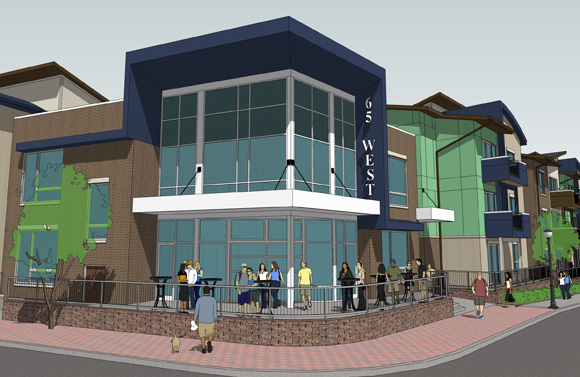
 A partnership between Uptown Rental Properties and North American Properties will add 237 apartment units near the UC campus in the next two years.The largest project, called 65 West, will open late this summer. Construction on the second project, which consists of two buildings in Corryville, will begin in 45 days. All three buildings are expected to receive LEED silver certification, Uptown Rentals' owner Dan Schimberg said.Schimberg said there is a growing demand for new, safe, energy efficient housing within walking distance to the UC Campus. 65 West is almost 50 percent leased several months before its completion.The success of 65 West led the partners to pursue the second project in Corryville. It will include one five-story mixed-use building on Short Vine at the old Benchmark site, and a larger residential complex facing Euclid Avenue and Van Street nearby. Those two buildings will add housing for 150-200 people in the Short Vine area, Schimberg said."Short Vine has had twenty years of decline, and we think the time has come for Short Vine to come back," Schimberg said. "And in order to build the vitality of the Short Vine business district, you need a critical mass of people living around it." A new hotel, a city-funded streetscape project, and new Kroger and Walgreens stores are also on the horizon for Short Vine.Schimberg began rehabbing buildings in the Uptown district in the mid-1980s, after graduating from the University of Cincinnati. Since then his business has grown to manage over 2,000 rental units.The most recent partnership began when North American Properties purchased the old Friars Club building, which was adjacent to properties that Uptown owned. The two groups decided to work together to redevelop the block, and conceived the 129-unit apartment complex called 65 West. Schimberg said the partnership will continue to look for land in the Uptown area for similar projects.Writer: Henry Sweets

Holy Grail brings homegrown business to Banks in time for Opening Day

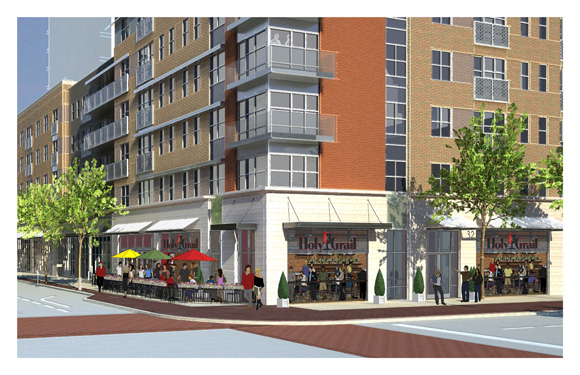
  Locally owned and operated Holy Grail Tavern & Grille will be the first business to open in the new Banks development in mid March, two weeks before the Reds' season begins at Great American Ballpark across the street. The 6,000 square foot sports bar will have a stage for live radio broadcasts, bands and other entertainment. Don Andres, one of the owners, said he hopes the location will become the centerpiece in a network of Holy Grail Tavern's around Cincinnati, with existing locations in Corryville and Delhi.Andres said he hopes the Corryville and Banks' locations - both near major sports stadiums - will build exposure with Cincinnati sports fans and momentum for expansion. The Delhi location will serve as a model for their future locations, which will be more neighborhood-oriented and family friendly, he said."It will give us an opportunity to get our name out there, and an opportunity to open gathering places for tight knight communities around Cincinnati," Andres said.Andres and his business partners, Jim Moehring, Tom Heitker and Paul Goebel, are friends who all grew up on the west side and attended Elder High School. The partners have backgrounds in finance and the food and entertainment industry.The original Holy Grail was a brew pub that opened in the 1990's under previous ownership - it closed in 2001. Andres and Moehring, both UC alumni, would walk past the shuttered bar on their way to see UC sporting events and chat with other fans about how they wished someone would re-open the business.The idle talk became reality in 2004, when Andres, Moehring and Heitker bought the place and converted it into a sports bar. After building the business for three years, they opened their Delhi location.Goebel was a consultant for the first location, but has since been brought on as a partner for the Banks and future projects.Andres said that the new location at the Banks will also cater to the downtown business lunch crowd, and visiting business travelers. He said the owners will consider expansion outside of Cincinnati if the location is successful.Writer: Henry Sweets

Our Partners

Taft Museum of Art

Common Ground Is Brewing

Support local stories and receive our signature roast straight to your door when you join at the Standard level (or above).

Drink Better, Read Local

Close the CTA

Don't miss out!

Everything Cincinnati, in your inbox every week.

Close the CTA

Already a subscriber? Enter your email to hide this popup in the future.