Clifton / CUF

Resting on a hill overlooking the north side of Cincinnati, Clifton offers a wide range of experiences from a college atmosphere with the city's largest school, the University of Cincinnati, to an international center for cutting-edge medicine featuring University, Children's and Good Samaritan hospitals. Clifton's history has been preserved in historical buildings and homes — from modest to millionaire. Trendy shops and restaurants can be found on Ludlow Avenue in the Gaslight District, along with the Esquire Theatre, yoga studios, Clifton Market and a newly renovated branch of the Cincinnati Public Library. Even though Clifton is tightly compacted with large buildings and interesting architecture, green space does exist at Burnet Woods

Clifton’s Cliqq and Sip connects communities

After 10 years of working in corporate America, Toyia Montgomery decided to follow her dream of being an entrepreneur and open up her own coffee shop. Montgomery’s café, located at 261 W. McMillan in Clifton, Cliqq and Sip, was not only created to serve coffee and pastries. It also serves as a place where the community can come together. With free Wi-Fi, laptop rentals and meeting space, C&S was designed so that people of all backgrounds to have a place to meet, create and learn. “The idea was to put people’s talents and strengths on a pedestal,” Montgomery says. “So many of us get caught up in doing something we don’t like or want to do just to pay the bills.” Montgomery sees her shop as a place where people who don’t have Internet access can go to access the world as well as a community-oriented resource. For example, she hosted meet-and-greets with new Cincinnati police chief, James Craig, judges and City Council members. C&S also hosts a group, called Connext, which meets each week to discuss how to start and run non-profits. Group members hold each other accountable for the goals they set and push each other to pursue their ideas. Montgomery’s civic-mindedness caught the attention of the YWCA. As a woman-owned coffee shop, Cliqq and Sip seemed an ideal location for a reception for a YWCA’s event October 27,which highlights the U.S. Department of Labor’s new organization, Women in Apprenticeships and NonTraditional Occupations (WANTO). WANTO aims to recruit, train and retain women in nontraditional careers, such as electricians, plumbers and carpenters. The goal is to get 100 women in Cincinnati entered into registered apprenticeship programs. By Evan Wallis

Cincinnati roads safer for cyclists

As the first phase of a 2009 plan to make the city more bike-friendly is coming to an end of its first phase this year, innovative and much-needed changes to city roads and intersections are heading in the right direction. City cyclists know the pain of sitting at a lengthy light with  no way to trigger the sensors. Some resort to pressing the pedestrian crossing buttons. Five intersections, MLK Jr. Avenue and Woodside, Pullan at Hamilton, Madison at Woodburn, Millsbrae and Woodland at Madison, now have markings painted on the roads to notify bikers where to put their bikes to trip sensors that change lights. A sixth, Knowlton at Hamilton, is being installed after construction at the intersection finishes. Melissa McVay, a planner at the city’s department of transportation and engineering, worked with Queen City Bikes and Mobo Bicycle Co-op to choose sensor locations. The sensors were reworked to detect the weight of most bikes, though bikes made out of carbon or aluminum may not be heavy enough. Mcvay will continue to research to accommodate all cyclists and decide other intersections at which to add the markings. “Queen City Bikes and the Mobo were critical in our plan to implement these markings,” McVay says. Other safety measures include signs that notify drivers that they must pass bikers by changing lanes, which will be located mostly in lengthy corridors of “shared lanes,” which include Spring Grove Avenue and Central Parkway. These signs also help police officers enforce laws that protect cyclists, by giving drivers fair warning of the rules of driving on shared roads. Louisville is the only other city in the region McVay knows of that is installing these kinds of signs “We’ve seen some other cities doing this, but there isn’t much like this being done in the Midwest,” McVay says. Beechmont Avenue along the Mt. Washington Business District will boast the first buffered bike lane, or a wider bike line for protection on the busy street. Also, new “Sharrows,” which are pavement markings to notify drivers of bikers, are being painted on Jefferson and Ludlow avenues in Clifton, since there is not room to create separate bike lanes. New phases of the plan continue through 2025 By Evan Wallis Follow Evan Wallis on Twitter

ZipCars add fast, fun transit option for all

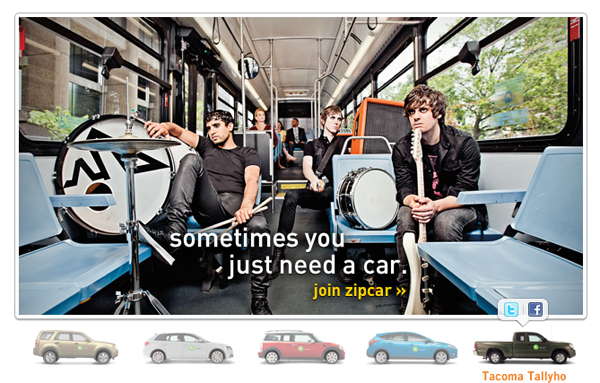
You don’t have to be a UC student or faculty member to take a spin in one of the region’s first ZipCars, convenient alternatives to owning a car in an urban setting. Now, in addition to about 300,000 people in the city limits of Cincinnati, add four ZipCars. Their names are Footsies, Iyana, Felicia and Moto. Pull up the map on ZipCar’s website, and you’ll see the East coat is full of the easy in-city rentals. They operate out of universities and cities. Even Indiana has ZipCars at four different universities. Ohio, on the other hand, has only had them available in Cleveland. Until now. The four new cars sit in two separate places on UC’s Clifton campus. But don’t let the university location fool you. ZipCars are available for public rental and while UC students and faculty get discounted prices, the cost is still reasonable for the general public. Once you sign up for and pay the annual fee, which differs based on the plans, you receive a ZipCard. With the card in hand, you can reserve a car for a couple of hours or the whole day. Walk up to the car, swipe your ZipCard past the windshield, and a new mode of transportation is open to you. With its proximity to downtown, ZipCar expects to draw users beyond the university. According to ZipCar sales operation managers Bill Connolly, many users in other cities are reporters. As a reporter without a car, I make my way around town via public transit and a bicycle. Frequently, this means I have to pass up opportunities to do in-person interviews because I can’t make it to locations outside of the city. I jumped on the opportunity to use ZipCar and rent a car for around $7 an hour, including gas and insurance. The car sharing program can replace a seldom used car, or even owning a car altogether. The benefits are enticing. Hop on a bus to UC, swipe your ZipCard and don’t ever worry about taking your car to get the oil changed or paying $400 for new tires. By Evan Wallis

Erin N. Haynes: UC professor, environmental health researcher
Time to tweducate

Urban school teachers have a daily impact on our most important community assets -- our children. When they succeed, we all succeed. Today marks the launch of Together We Educate, tweducate.org, a website dedicated to attracting, supporting and retaining the best and brightest teachers to work, live and grow in Greater Cincinnati.

Cincinnati ranks in top 100 communities for youth

In a nation where 7,000 students drop out of high school every day, Cincinnati has been recognized for its collaborative efforts to stem the tide. This month, Cincinnati achieved national recognition as one of the 100 Best Communities for Young People by America’s Promise Alliance and the investment firm, ING. Cincinnati competed with more than 300 large and small communities across the country that have been working to lower student drop-out rates through services and support to youth. The city of Norwood also received the award this year, having lowered its high school dropout rate by 13 percent in the past decade. The award competition, now in its fifth cycle, is part of the Alliance’s Grad Nation campaign, a 10-year initiative to end the high school drop-out crisis and create a healthy, 21st century workforce. One Cincinnati youth, Genine Gray, received a $2,500 scholarship from the Alliance and ING. Gray, the only student to receive this award in the nation, recognized Jobs for Cincinnati Graduates (JCG), Bethany House, Dress for Success and Bridging the Gap for supporting her journey from homelessness to high-school graduation. JCG president Barbara Seibel, in turn, credits the Southwest Ohio Regional Workforce Investment Board for financial support. “Their Workforce Investment Act grant to JCG makes it possible for youth like Genine to be in JCG.” Cincinnati, now a two-time award winner, continues to build on collaborative initiatives, like its Safe Routes to School Initiative, designed and implemented by local residents, the Cincinnati schools, the Department of Transportation and Cincinnati police.    The city’s Strive Partnership, a national model of aligning resources to raise graduation rates, provided help and technical assistance in the application process. But, again, it asks that the honors be shared. “The award itself is really owed to the hard work of our partners, including the Cincinnati Youth Collaborative, ArtsWave and Artworks, among others,” says Strive’s Ben Greenberg. Do Good: • Learn: about what Strive Partnership is doing to align resources to raise graduation rates in Cincinnati. • Volunteer: at one of the many organizations that are helping support Cincinnati youth, like Connect2Success, Jobs for Cincinnati Graduates  and Bridging the Gap • Support: America’s Promise Alliance, founded by former general Colin Powell, to prepare young people for college and promising careers By Becky Johnson          

Nature trails can improve home’s value

It turns out that living near Little Miami's Scenic Trail offers more than just natural beauty – it might also improve your home’s value. That’s the conclusion drawn by two University of Cincinnati researchers in a new report. Read the full story here.

CCM’s season-opener features Tony-nominee

The University of Cincinnati College-Conservatory of Music (CCM) launches its 2011-12 Mainstage Series with a powerful tale of a bygone era. This fascinating intertwining of drama and music runs from Oct. 26 through Oct. 30 in Patricia Corbett Theater on the University of Cincinnati campus. Read the full story here.

My Soapbox: Andrea Torrice, documentary filmmaker

In The New Metropolis, documentary filmmaker and Cincinnati resident Andrea Torrice explores how cities can recreate and reinvigorate themselves through neighborhood initiatives and thoughtful planning. This week, she talks with Emily Schneider for Soapbox.

New UC certificate launches with eye-catching symposium

After arriving on the University of Cincinnati’s campus fewer than two years ago, two instructors are creating a new certificate program for students to help them see and think differently. A two-day symposium put together by the assistant professors culminates nine months of planning, as well as the launch of the new cross-collegiate certificate program. Look Better, hosted Oct. 13 and 14 in and around the main Clifton campus, will focus on interdisciplinary visual research, practice and pedagogy. “UC is an up and coming university,” says Stephanie Sadre-Orafai, assistant professor of anthropology. “But there is no program of visual culture studies.” The new certificate program blends courses from the College of Design, Architecture, Art, and Planning and the McMicken College of Arts and Sciences. The goal is to teach students “how to effectively combine critical theory and social analysis with art, media and design practice.” The symposium will feature speakers from across the university, country and “innovative scholars” from as far away as Germany, Sadre-Orafai says. The lengthy list of presenters includes “mostly young but up-and-coming scholars and artists,” Sadre-Orafai says. About 100 people have registered for the event so far, and Sadre-Orafai, along with her co-organizer Jordan Tate, an assistant professor of fine art, anticipate a regional response by inviting students and faculty from every university within two hours of Cincinnati. “The goal of both the symposium and certificate is to generate a broad, campus-wide discussion on what is at stake in how we see and provide a platform to think about how we might develop new artistic, media and design forms and practices to intervene in dominant visions,” according to the Look Better blog. Sadre-Orafai and Tate met during a faculty orientation in fall 2010 and realized that they were both interested in studying the same topics. It wasn’t until some of their students – who were taking both anthropology with Sadre-Orafai and photography with Tate, said they were learning about some of the same things in each class that the momentum for Look Better started. “It organically came about," Sadre-Orafai says. “We asked, ‘How can we do more stuff together?' ” The entire event is free and open to the public, but Sadre-Orafai says registration is encouraged because of potential space constraints. By Taylor Dungjen

Our Partners

Taft Museum of Art

Common Ground Is Brewing

Support local stories and receive our signature roast straight to your door when you join at the Standard level (or above).

Drink Better, Read Local

Close the CTA

Don't miss out!

Everything Cincinnati, in your inbox every week.

Close the CTA

Already a subscriber? Enter your email to hide this popup in the future.