Clifton / CUF

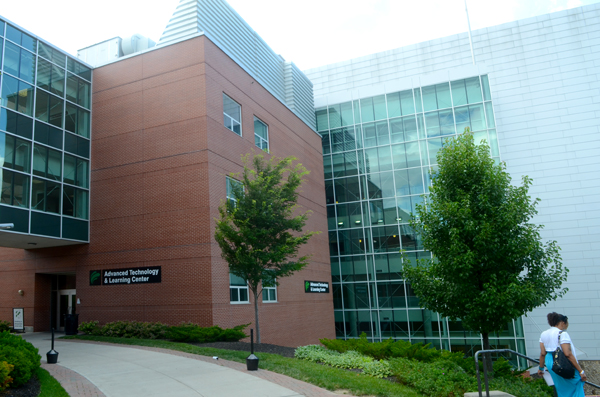
Resting on a hill overlooking the north side of Cincinnati, Clifton offers a wide range of experiences from a college atmosphere with the city's largest school, the University of Cincinnati, to an international center for cutting-edge medicine featuring University, Children's and Good Samaritan hospitals. Clifton's history has been preserved in historical buildings and homes — from modest to millionaire. Trendy shops and restaurants can be found on Ludlow Avenue in the Gaslight District, along with the Esquire Theatre, yoga studios, Clifton Market and a newly renovated branch of the Cincinnati Public Library. Even though Clifton is tightly compacted with large buildings and interesting architecture, green space does exist at Burnet Woods

Resource: University of Cincinnati’s Center for Entrepreneurship Education and Research

The UC Center for Entrepreneurship Education & Research, established in 1997, seeks to create a world-class center for entrepreneurship education, research and service. The center's vision and mission is to provide a state-of-the-art entrepreneurship curriculum not only for potential entrepreneurs, but also for people in the many organizations that interact with small, entrepreneurial and family owned businesses on a daily basis. Located in the Department of Management in the College of Business, the Entrepreneurship Center seeks collaborative efforts between students from across the University. The Entrepreneurship Center's main mission is to “…remove barriers and create gateways,” for all entrepreneurs – especially student entrepreneurs. Entrepreneurship Center programs and initiatives, including its Small Business Institute and rigorous curriculum and competitions, among others, facilitate the entrepreneurial journey. The Center's activities include: (1) a faculty-guided, student-based field case study program which provides consulting services for local businesses (Small Business Institute Program), (2) the Young Entrepreneurs Seminar (YES), a day-long event for high school seniors to meet and exchange ideas with local entrepreneurs, (3) the UC MBA Business Plan Competition, (4) the UC Spirit of Enterprise Graduate Business Plan Competition, (5) CEO Collegiate Entrepreneurs Organization, (6) the Cecil Boatright Field Study Business Plan Case Competition for undergraduate students, (7) Bearcat Bridge Fund and (8) Bearcat Launch Pad. The University is also affiliated with two local incubators, The Hamilton County Business Development Center and BioStart Technology Incubator. The University of Cincinnati Center for Entrepreneurship Education & Research is actively engaged in developing a collaborative effort with other colleges of the University, such as Engineering, Medicine, Law, and Design, Art, Architecture and Planning in order to advance the role of technology and entrepreneurship. Other future activities planned include: development of high-tech commercialization with undergraduate student teams and courses for executive education.

Video The new neighbors: a community workshop

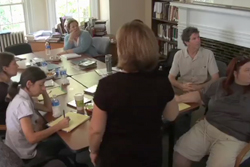
Cincinnati filmmaker Andrea Torrice has taken her latest project, The New Metropolis, to cities around the country to spark innovative dialogues about intentionally creating, and recreating, our own communities. Hear from local workshop participants in this video.

Clifton Heights celebrates local talent

Clifton may best be known best for housing UC students and drunken parties, but not this weekend. More than 60 local music acts perform at the fifth installment of the Clifton Heights Music Festival. The festival, created by Far-I-Rome Productions, has drawn more than 10,000 people to Clifton Heights since its start in 2009. What started as a one-night pub-crawl featuring music has grown into a bi-annual local music frenzy that expects to draw 4,000 people this weekend. “I feel like bigger festivals think they need a bigger national act to legitimize local acts,” says Rome Ntukogu, founder of Far-I-Rome Productions. “Those local acts are completely capable of standing on their own.” Ntukogu acknowledges that the larger festivals are great for local bands to garner fans, but the goal for his festival is to create a musically diverse weekend that never loses sight of its community. And the concept is simple: one weekend twice a year where the only focus is music and art. The entire community of Clifton Heights is engulfed by music in a carnival-like atmosphere. People come from places like Hyde Park and Covington to a neighborhood that's usually frequented by college kids. Every bar features local bands playing music varying from Ska to Hip Hop. Within minutes, a festival-goer can travel from one venue to the next to catch any act performing at the fest. With continued growth and a creator to keep it on the straight and narrow, it looks like Ntukogu and the CHMF will be helping burgeoning musicians be heard and seen in their own community for a long time. When asked what the final goal for the festival was, he says, “If I can help someone make money doing something they love, I’ve done a good deed for life.” By Evan Wallis Evan Wallis is the volunteer coordinator for Far-I-Rome Productions

Soapdish: Streetcar deja vu

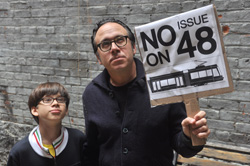
In the current panoply of referenda facing us this fall, there is probably no issue more divisive to Cincinistas, no issue more emotional or heated, no issue more misinterpreted and mangled, than the anti-rail charter amendment currently known as Issue 48.

Nation’s first Center for Environmental Genetics houses historic Fernald samples

Tucked away in Clifton on the medical side of UC's campus, researchers at the nation’s first Center for Environmental Genetics continue groundbreaking work, but with a new twist. Their latest research game-changer involves decades worth of carefully documented biological samples now available for use by their peers all over the world. If you have never heard of the Center for Environmental Genetics, you are not alone. Housed within the largest department of UC’s College of Medicine, the Department of Environmental Health, the CEG funds research on genetic (your personal script, already written at birth) and epigenetic (beyond genetics – how what you are exposed to today may impact your children’s genes and even further down the line) levels. Conducting epigenetic studies can be particularly challenging, since multiple generations and variations of exposures are involved. That’s where a long-term human cohort study, started years ago as part of a $78 million settlement at the Fernald Feed Materials Processing Center, comes into play. For years, residents around the Fernald plant had no idea that their neighbor was manufacturing uranium, not livestock feed. The long-term drama that ensued as the plant was shut down became the stuff of class action lawsuit history. What many residents wanted as much as restitution for their poisoned property was medical help and advice about how their homes might have made them, and their children, and their children’s children, sick. So the settlement included an important stipulation: the largest medical monitoring project of its kind. From 1990 until 2008, residents were monitored and samples collected from all ages and all backgrounds. The cohort included multi-generational families, with sample collections coded to reflect their relationships. At the end of the monitoring period, 160,000 biological samples from more than 9,500 participants are now stored at UC’s CEG. Not only can they be used to help examine and improve the lives of the participants and their families, but they can also be sent to researchers around the world who need stable, high-quality samples for their own genetic and epigenetic research. Locally, doctors found evidence of increased cancer risk among residents, but they also were able to suggest opportunities that might help lower residents’ other risk factors, including the incidence of diabetes and heart disease. As researchers and community members gathered on UC’s campus last month to discuss the decades-long project, participants and researchers agreed that, when done correctly and comprehensively, medical monitoring leads to both better health and better research. By Elissa Yancey

Local medical program helps patients breathe easy

Cincinnati’s VA Medical Center stands as only the second of its kind to receive a certification to help rehabilitate people who suffer from the fourth leading cause of death in the United States. The Cincinnati Department of Veteran Affairs Medical Center’s Pulmonary Rehabilitation Program for COPD (Chronic Obstructive Pulmonary Disorder) was certified by the American Association of Cardiovascular and Pulmonary Rehabilitation. COPD refers to chronic bronchitis and emphysema, two commonly co-existing diseases of the lungs that limit airflow. Cigarette smoking is the leading cause of the condition, which gets worse over time and causes difficulty breathing, coughing that produces large amounts of mucus, wheezing, chest tightness and other symptoms. While there is no cure for COPD, with medical help, it can be managed. "We educate patients about breathing during daily activities, nutrition and about ways to compensate for breathlessness, like using a chair or even using oxygen while in the shower to avoid shortness of breath,” according to Ralph Panos director of the program and professor at UC Medical college. "There is no way to improve lung mechanics, but we teach patients to optimize other body systems to reduce the sensation of breathlessness.” Panos and his team teach patients how to breathe, even when they feel breathless, and talk about how proper nutrition can help reduce breathlessness. "It’s basically about feeling in control of the illness, increasing stamina and tolerating the breathlessness associated with COPD,” says Panos. "Anxiety can lead to hyperventilation that causes dynamic hyperinflation—air trapping—causing the lungs to hold onto air and putting respiratory muscles at a disadvantage. We try to teach correct breathing techniques, such as pursed lip breathing, to prevent or reduce air trapping.” Much of the treatment is about making patients feel like in control of their breathing. Panos tells UC that while the certification will likely put the spotlight on the local VA, he hopes it also will bring more awareness about the life-threatening condition. “COPD is a huge local medical issue, and there is a significant negative stigma attached to it,” Panos says. “While we have medicines to benefit patients, we need to focus on the holistic treatment of patients for best outcomes.” By Evan Wallis

The sex book that hit the spot

Our Bodies, Ourselves was the kind of book that libraries banned and women stashed under their beds like pornography—a fixture of college dorm rooms that shocked conservatives with its candid discussion. UC's Wendy Kline even wrote a book about its influence. Read the full story here.

Radical idea uses light to trigger long-lasting smells

Some complex chemical work at UC may some day lead to better smells around your house. The research by Dr. Anna Gudmundsdottir, UC chemistry professor, revolves around radicals, which are atoms, molecules or ions that are trying to change into something else. They have a lifetime of only fractions of seconds, which usually occurs during other chemical reactions. Gudmundsdottir focuses on triplet nitrenes. They are somewhat more stable than normal radicals, and can be turned into organic magnets that can trap a fragrance and slowly release it over time. While this kind of idea has been applied to heat-released fragrance, think dryer sheets, this may well be the first time light will be used as a trigger to release fragrance. “When you mop a floor, it only smells clean for a few minutes,” Gudmundsdottir says. “If this research was applied, a cleaning solution could slowly release once contacted by light and release a pleasant fragrance over an extended period of time.” The fragrance will be kept from full release by photoprotectant, which is created by the nitrenes. They act as a cap that is slowly taken away when contacted by photons. Gudmundsdottir is now working on how to time that release and control how much fragrance is released each time photons make contact. The research may also play a part in medicine. If a drug is tethered to the nitrenes, then put in a patient’s veins, it can then be targeted with light and released exactly where, and only where, it needs to go. “Light is one of the few things you can actually control in space,” Gudmundsdottir says. “You can’t control where you have the fragrance or drug molecules, but you can pinpoint where you penetrate with light. That is why it is so useful.” By Evan Wallis

Social Media Institute expands to gain followers

Who gives a tweet? Turns out, just about everyone. That’s why Cincinnati State Technical and Community College is expanding certificate program options at the one-year-old Social Media Institute at the Workforce Development Center. The SMI combines the talents of working professionals, innovative thinkers and traditional educators in a short series of classes focusing on specific areas of social media expertise. The second class of Marketing for Social Media starts Sept. 23. The new Selling 2.0 certification launches in November. The SMI took shape as founder Dennis Ulrich, executive director of the Workforce Development Center, saw a pressing business need as more companies turned to Facebook and Twitter in search of new sales and marketing platforms. “There are no standards on qualifications to work in the social media space,” Ulrich says. “That’s exactly why I started the Institute.” Selling 2.0 will teach students how to gain referrals, manage customer concerns and build customer loyalty through two eight-hour seminars, Nov. 1 and Nov. 8. By the time students have completed the seminars, Ulrich hopes they will feel comfortable running the social media side of their businesses. “There is a lot of academic rigor in these programs,” Ulrich says. “This isn’t a lunch-and-learn. There is a heavy focus on business. You have to do pre-work, look at case studies and apply it to real-world situations. We can measure students’ performance.” The work and case studies are created by an advisory committee, which consists of recognized social media experts from trusted companies including Procter & Gamble, Boot Camp Digital and O’Keefe PR. “They provide us with input, feedback and support for the entire program,” Ulrich says. “The Institute is guided by people who are innovators in these exact areas of social media.”   Kendra Ramirez of Ascendum Solutions will help teach the Selling 2.0 seminars. Ulrich thinks by focusing on very specific areas of this rapidly changing field, the certification process is beneficial. He hopes to expand with HR Seminars, social media for educators and even research and development courses. “The Institute, just like most of the work we do, is to bolster the regional economy,” Ulrich says. “Cincinnati is becoming a marketing hub, so we believe we are in the perfect place to utilize all the great experts here.” By Evan Wallis

Clean up at Mill Creek part of ongoing progress

In 1997, the 28-mile stream was designated the most endangered urban river in North America by the non-profit American Rivers.

Our Partners

Taft Museum of Art

Common Ground Is Brewing

Support local stories and receive our signature roast straight to your door when you join at the Standard level (or above).

Drink Better, Read Local

Close the CTA

Don't miss out!

Everything Cincinnati, in your inbox every week.

Close the CTA

Already a subscriber? Enter your email to hide this popup in the future.