Cincinnati

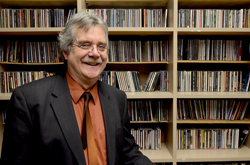
My Soapbox: Cincinnati State President, Dr. O’dell Owens

Former Hamilton County Coroner, Dr. O'dell Owens took the reigns of Cincinnati State last September. In this month's My Soapbox, he talks about the important role of technical and community colleges in sustaining innovation, cultivating economic development, and bridging the gap for non-traditional students.

Latest in Cincinnati
Corporate Partners Help Up the Hip Factor on Fountain Square

Fountain Square and the PNC Summer Music Series get a big boost from corporate partners PNC and P&G, helping put Cincinnati on the national map as an innovator in the private funding of public events.

Early results show RecycleBank collecting record numbers from neighborhoods

  Last year, the Office of Environmental Quality, City of Cincinnati, Rumpke Recycling, Cascade Engineering, RecycleBank, and Future Friendly from Procter & Gamble teamed up to bring enhanced recycling to Cincinnati by providing larger recycling carts and reward programs.The idea was to increase the amount of recycling throughout the city by providing larger and more convenient access for recycling. Sue Magness, the Recycling Coordinator at the Office of Environmental Quality, researched that the most successful strategies in the country were to change the bins to carts and to create an incentive reward program. The new carts are larger and easier to use with wheels and lids, therefore more people are then willing to recycle. The incentive program awards participants points based on their volume of recycling that can be used to get $200 worth in coupons or gift cards."We find education programs in theory work but don't change behavior," Magnesss said. "In recycling our goal is to change behavior and incentive programs have been proven to work in the commercial realm and improvement in social behaviors."By rewarding participants and making recycling more convenient, numbers have significantly increased. This past December, over 300 tons of material was collected, the most amount of material collected in one month within twenty-one years of service. In addition to the growth of material collected, the percentage of recycling participants rose from 40% to 60% this year. Final numbers concerning how much each neighborhood collects and how many participants are not yet available due to the recent finalization of distributing cans throughout the city."It is the largest infrastructure change we have made over five years by delivering 90,000 carts within five months," Magness said."There are areas of the city where carts aren't practical, but we have small carts or bins with reward tags for the elderly or for those with limited space," Magness expressed.RecycleBank hopes to hit its goal of 25,000 tons of material collected this year, further reducing amounts sent to landfills in the region. Writer: Lisa Ensminger

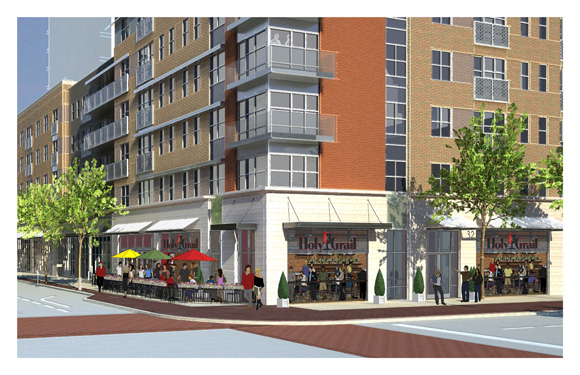
Holy Grail brings homegrown business to Banks in time for Opening Day

  Locally owned and operated Holy Grail Tavern & Grille will be the first business to open in the new Banks development in mid March, two weeks before the Reds' season begins at Great American Ballpark across the street. The 6,000 square foot sports bar will have a stage for live radio broadcasts, bands and other entertainment. Don Andres, one of the owners, said he hopes the location will become the centerpiece in a network of Holy Grail Tavern's around Cincinnati, with existing locations in Corryville and Delhi.Andres said he hopes the Corryville and Banks' locations - both near major sports stadiums - will build exposure with Cincinnati sports fans and momentum for expansion. The Delhi location will serve as a model for their future locations, which will be more neighborhood-oriented and family friendly, he said."It will give us an opportunity to get our name out there, and an opportunity to open gathering places for tight knight communities around Cincinnati," Andres said.Andres and his business partners, Jim Moehring, Tom Heitker and Paul Goebel, are friends who all grew up on the west side and attended Elder High School. The partners have backgrounds in finance and the food and entertainment industry.The original Holy Grail was a brew pub that opened in the 1990's under previous ownership - it closed in 2001. Andres and Moehring, both UC alumni, would walk past the shuttered bar on their way to see UC sporting events and chat with other fans about how they wished someone would re-open the business.The idle talk became reality in 2004, when Andres, Moehring and Heitker bought the place and converted it into a sports bar. After building the business for three years, they opened their Delhi location.Goebel was a consultant for the first location, but has since been brought on as a partner for the Banks and future projects.Andres said that the new location at the Banks will also cater to the downtown business lunch crowd, and visiting business travelers. He said the owners will consider expansion outside of Cincinnati if the location is successful.Writer: Henry Sweets

Inmates find expression, hope through art and performance

The group of women listened carefully to their art teacher, lifting fresh damp brushes and putting watercolor paints to paper, expressing thoughts and feelings through strokes and swirls of color. Many couldn't wait to take their new skills home and try watercoloring with their children. But all of the members of this class would have to wait until completing their sentences at the River City Correctional Facility in Camp Washington, which offers a diversionary program for non-violent felony offenders with substance abuse issues. For 10 years now, Inside Outside, The Prison Project (ISOS)  has engaged groups of River City inmates in eight-week sessions exploring visual, written and performing arts as an avenue to build interpersonal and life skills. Each session culminates with a performance for fellow inmates and the public. Shows mix hard truths, humor, music, movement and deeply personal revelations as inmates read poetry, act out dramas and talk about the artistic process. Fellow prisoners offer enthusiastic support -- whoops and shouts -- as they watch from perches outside their cells, while members of the public, stripped of cell phones and other accessories, enjoy the multi-media show. "We know how important the arts are," says Jefferson James, the development administrator for ISOS and the artistic and executive director of the Contemporary Dance Theater. "ISOS makes it so much more immediately obvious." James, who administrates ISOS through the CDT and coordinates the team of ISOS artist-teachers, brought the project to Cincinnati ten years ago. Since then, she has watched 13 performances that serve to narrow the gap between life inside and outside of prison. "They work very hard," James says. "They want their art to be an accurate reflection of themselves." Poem by the Women of Chrysalis Pod, December 2010: "Of What Do We Make Our Homes" Of brick. Of sheet metal. Of hope. Of disappointment.Of tears. Of truth. Of lies and deceit. A wood burning stove.A sister. A brother. Of pain. Of fire. Of siblings. Of both parents.Of cardboard. Of broken dishes.Of haylofts. Of bunk beds. Of blanket tents.A forest can be a home.A beach can be a home.Laughter can be a home.A teddy bear. A dog. A cat.Of addiction. Of stress. Of shame. Of drugs to blame.Of cats. Of chaos.A music box. A few crayons. Of silence. Of sickness.Of the dead. Of night. Of tenderness. Of leaving.Clouds can be a home.Nature can be a home.A good meal can be a home.I'll build my house of dreams.I'll build my house of roses and grass.I'll build my house with bare hands and hard work.I'll build my house of love, of leaving, of trust, of silence, of my own kind. By the Women of ISOS 2010, compiled by Carolyn Brookbank (After Jean Nordhaus) Do Good: • Donate. With no 14th session yet planned, the future of ISOS depends on financial support. Find out how you can donate via the Contemporary Dance Theater. • Watch part of the 2009 ISOS women's performance online. • Get connected. Join the CDT's mailing list, receive ISOS invitations, or contact James directly to find out more.mailFor Good News Editor: Elissa Yancey (Sonnenberg)

Sam Adams Brewing the American Dream microloan program expands out of New England into Ohio with BGV
Youth, elders learn through Council for Life Long Engagement

In an elementary school history class studying the Civil War, guest speaker Harriet Krumpleman arrives in full period costume, excited to talk with students about her family's history during the historical period. Another group of young learners gets a hands-on lesson in recycling from retiree David Lowry, whose passion for going green energizes the room. A pilot program of the Episcopal Retirement Homes, the Council for Life Long Engagement aims to eliminate the negative impact of ageism by creating opportunities for residents of their facilities to share their expertise and interests with students at Nativity Elementary School in Pleasant Ridge. "Children will learn first-hand from elders who have lived rich and rewarding lives," says Laura Lamb, vice president of residential housing and healthcare, and a Nativity parent. "They will make history, science and even math come alive through their experience and wisdom." Lamb hopes to create a model program that can be replicated in other communities around the city and around the country in an effort to enrich lives, not only of students, but of older residents. Her ultimate goal: eradicate ageism, which studies have shown can result in shortened not only quality of life, but life itself. Since class visits started last fall, residents have enjoyed the interactions. Corning Benton, a resident at Marjorie P. Lee Retirement Facility in Hyde Park, spoke with a class about one of his passions, space travel. "It has been a joy to have a renewed sense of energy," he says. Do Good: • Visit with Patch Adams. Support CLLE by attending a March 5 benefit dinner with the renowned doctor who inspired the movie. • Call bingo! Volunteer to call a game at St. Paul Village, Canterbury Court or Marjorie P. Lee Retirement Community. • E-communicate. Sign up for e-newsletters to find out more about Episcopal Retirement Homes activities and programs.For Good News Editor: Elissa Yancey (Sonnenberg)

Fisher finds fulfillment at Women Helping Women

When Kendall Fisher started college, her math skills and no-nonsense approach to life propelled her to major in accounting and finance. She envisioned a life of steady employment and better-than-average pay. Then, in her first year away from home, one of the Columbus, Ohio, native's undergraduate friends was sexually assaulted. She was outraged at the lack of support systems available to help her friend. So she helped start a campus sexual assault program. Then she trained to be a rape advocate. At 19, she began financing her education through full-time work at the Butler County battered women's shelter. The determined red-head with a mane of curls and an easy laugh had found her calling. She shifted her major to sociology and women's studies."My dad was mortified," Fisher says. "But I'd rather be broke and making a difference." As executive director of Women Helping Women, Fisher, 41, continues the quest she started more than half her lifetime ago: to stand up for the underdog and make sure people are treated fairly."We pride ourselves on being there when people need us the most," she says. In her time at Women Helping Women, Fisher has helped raised funds to place one full-time employee in the Personal Crimes Unit, the equivalent of the SVU, of the Cincinnati Police Department; two full-time employees within the Cincinnati Police's Domestic Violence Investigation Unit; and one full-time worker at Legal Aid. Fresh from a 12-plus hour day on the job, Fisher laments the 42 percent cut of city funding this year and praises the often-overlooked efforts of her staff. Women Helping Women workers are in arraignment court every morning, Monday through Saturday. As the only rape crisis program in Hamilton County, the organization ensures that advocates arrive at hospitals within 20 minutes of a call about a case. More than 60 trained volunteers log 700 hours of service a year, allowing WHW to serve more than 12,000 women each year.With the skill of an experienced negotiator and the patience to meticulously renovate a historic home in Northside, Fisher saves her biggest praise from the women her agency serves every day. "They are the ones doing the hard emotional work," she says. "They are their own heroes. We are their cheerleaders." Do Good: • Raise your cultural IQ. Attend a Sunday Salon, a series of Sunday afternoon gatherings with topics as diverse as FBI tactics and cupcakes.• Be an advocate. After 40 hours of training, you could be a court, hospital, hotline, education or clerical advocate. Background checks required.• Take a quiz. Do you know someone in an abusive relationship? Point and click to learn more.For Good News Editor: Elissa Yancey (Sonnenberg)

Inside WNKU’s Million Listener Expansion

WNKU-FM and its eclectic mix of alternative music and news has some new sonic muscles to flex after acquiring three radio stations that could expand its reach to a million more listeners. 

David Hartz, Cincinnati’s pyrotechnic Renaissance man

With a lifetime of pyro-play under his belt, UC electronic media professor David Hartz ranks among the nation's best fire sculptors.

Our Partners

Taft Museum of Art

Common Ground Is Brewing

Support local stories and receive our signature roast straight to your door when you join at the Standard level (or above).

Drink Better, Read Local

Close the CTA

Don't miss out!

Everything Cincinnati, in your inbox every week.

Close the CTA

Already a subscriber? Enter your email to hide this popup in the future.