Health + Wellness

Doctors donate services as part of Project Access

From Alaska to Alabama, physicians' professional organizations agree that providing no-cost healthcare to those in need can be life-changing, not to mention life-saving. Cincinnati's Academy of Medicine has joined those ranks by starting Project Access, an award-winning program that marshals the forces of doctors willing to see a few patients a week for free or donate time in a health clinic. According to the Greater Cincinnati Community Health Status Survey (GCCHSS) in 2008, more than a quarter million Cincinnatians, or about one in 10, do not have health insurance.Most doctors already see a few patients per month for free, albeit some not voluntarily. The goals of Project Access are to coordinate that in-office care and supplement it with labs, diagnostic services and even transportation when needed. The benefits to the doctors, who can opt out at any time and donate as much or as little time as they choose, include pre-screening of patients as well as confidence in opportunities for relationship-building and ongoing care. As it takes shape, Cincinnati's Project Access will monitor patients as well as doctors to find out what kind of difference regular access to quality healthcare can make. Do good:• Make a donation. Support Project Access by contributing to the Academy of Medicine.• Ask your doctor to help. Project Access is recruiting now, so if you are or know of a doctor who can give an hour a week, email Donna Gilliam.• Find a physician. Need a specialist or general practitioner? Use the Academy's online directory for free.By Elissa YanceyPhoto courtesy of the Cincinnati Academy of Medicine

Latest in Health + Wellness
LISC Grant bolsters services of four non-profits, aids community development

With support from the Local Initiatives Support Corporation (LISC), four non-profit service organizations in the region have opened LISC Financial Opportunity Centers (FOC), or grant-funded programs that will bolster employment, financial and public benefits counseling services offered to low-income individuals and families. LISC, a national organization, has invested more than $9 billion in cities across the U.S., including more than $32 million in the Cincinnati/Northern Kentucky Region.The FOCs underscore its commitment to enhancing Queen City communities and beyond. "Financial opportunity centers are part of LISC's Sustainable Communities approach to comprehensive community development," says Kathy Schwab, executive director of LISC Greater Cincinnati & Northern Kentucky. "We can't help communities recover from economic distress if we don't help families achieve financial stability."In 2010, LISC was awarded a $4.2 million grant from a federal initiative called the Social Innovation Fund. Cincinnati was on the list of the cities to receive a share of such funding, and, as Schwab explains, research pointed LISC GCNKY to the following four non-profits: • Brighton Center (awarded $145,000), which champions family support and services• Cincinnati Works (awarded $100,000), which champions employment services• Santa Maria Community Services (awarded $145,000), which advocates the revitalization of Price Hill• Urban League of Greater Cincinnati (awarded $125,000), which advocates self-efficiency and entrepreneurship while engaging African-American and other at-risk populations"This grant allows them to provide more services and achieve greater success," Schwab says. "These particular groups understand the concept of financial opportunity centers and are willing to adapt to this business model."She says FOCs tie into LISC's definition of comprehensive community development. "It isn't just about bricks and mortar. It's about the overall health of the community," she says. "People need jobs, people have health issues, people need good schools and green places to play … that's the comprehensiveness of it." Wonda Winkler is associate operating officer at Brighton Center. She says the LISC grant will help the center bundle its services in a more deep and meaningful way. "It's more than just helping people get a job," she says. "It's about also helping them understand their budget and understand what kind of resources are out there as they look toward financial stability."The more people are building assets - for example, home ownership - the more invested they are in their community." Writer: Rich Shivener

UC grads’ innovative, portable stroke detection headband could be a lifesaver

A team of recent University of Cincinnati grads hope to commercialize a portable stroke detection device created in the Medical Device Innovation & Entrepreneurship Program (MDIEP) at UC's biomedical engineering department. The device, Ischiban, has the potential to be a game-changer in the early detection and treatment of strokes, a life-threatening condition where minutes can make a difference in a successful recovery, disability or death.Ischiban was developed by a group of UC student biomedical and computer engineers and an industrial designer: Pooja Kadambi, Joe Lovelace, Scott Robinson and Alex Androski. They developed the device, comprised of an elastic headband connected to an electronic diagnostic device, which can quickly determine the type of stroke a patient is suffering from. This allows for quick diagnosis and faster treatment for better recovery rates, according to the developers.Ischiban relies on Impedance Spectroscopy, which can measure electrical property changes in the brain associated with strokes."We received the idea to use Impedance Spectroscopy from a group in Massachusetts General Hospital doing research in this area. We developed the device, made prototypes of the parts and built it by ourselves," explained Kadambi, a biomedical engineer. Strokes are caused by a blood clot in the brain, or bleeding in the brain. Treatment is different based on the type of stroke.Currently, such stoke differentiation is done by a CT scan, which is costly and time consuming. Ischiban can be used by EMTs at a patient's home or during the ambulance ride. Early detection is important because patients whose stoke is caused by a blood clot who are treated within three hours of symptoms are significantly more likely to survive and recover.Ischiban is one of 90 entries in the ongoing Cincinnati Innovates contest. The third annual competition offers nearly $90,000 in prizes designed to push forward groundbreaking products and services. It ends July 15, and all entries are posted online. Kadambi said the competition could help Ischiban garner attention and investment."Medical device research and development is an expensive, complicated and long drawn out process. We are a passionate team but do not have the funds to carry this forward alone. Winning this competition would open doors for us, help us make great contacts and keep our project alive and on track. Putting Ischiban on the market will help save lives and prevent disability globally and that is a fact," she said.Writer: Feoshia HendersonSource: Pooja Kadambi, Ischiban co-developerYou can follow Feoshia on Twitter @feoshiawrites

Bad Girl Ventures’ 3rd class of finalists showcases variety

Cincinnati-based micro-lending organization Bad Girl Ventures recently announced the finalists in its third class of women entrepreneurs seeking support and startup capital. The 10 finalists come from a wide range of industries and backgrounds, and Bad Girl Ventures founder Candace Klein said that the variety has her excited."We originally thought we'd be getting small mom-and-pop type businesses, but we're finding that we're also getting high-growth startup businesses applying," she said.Once selected, the finalists will complete an eight-week training session in which business leaders cover every aspect of starting a business, from developing a business plan to marketing, accounting and acquiring funding. At the end, one finalist will receive a $25,000 micro-loan to help boost her company.The finalists range from experienced businesswomen looking to expand their already-growing companies to a young entrepreneur getting a very early start on her business goals:Grace Bosworth, of Global to Local Language Solutions, LLC, offers technology-based language solutions for businesses. Likewise, Mariel Broadus-Rodriguez, of CultureSpeak Consultng, offers language services to the healthcare industry. Jocelyn Cates' Venue Agent offers an innovative means for event locations to market their space at discount rates, and Beth Robeson's Healthy Kids Fast! provides a health education program for children and their parents.Food-related businesses make up a sizeable part of the class, with Maria Walley of Daelia's Food Company seeking to expand her already-growing product distribution reach. Shalini Latour of Chocolats Latour is looking to enhance the growth of her confectionary brand, and 9-year-old Rosie Dean is seeking to expand her family's successful farm with her own boutique turkey operation.Three of the finalists' businesses focus on building and construction, fields where one might not expect to see many women-owned businesses. Toni Winston of Tiburon Energy/Tiburon Construction offers a range of energy efficiency services, while Sarah Stevenson's Emerald Construction Management offers general contractor services. Lu Anne Van Kleunen's Premium Sealcoat offers asphalt-sealing services that have been well received in the Northern Kentucky and Dayton markets.Klein said this third round of finalists comes as Bad Girl Ventures realizes a number of significant milestones. The non-profit has educated 60 businesses and financed 18 of them, helping to create 30 jobs in the region through business growth. In addition, she said the businesses involved with Bad Girl Ventures are doing something unexpected: forming a community."They're hiring each other, and working with each other, which is very exciting," Klein said. "That wasn't in my business plan, but it makes sense. It's been neat to watch that happen."Writer: Matt Cunningham

Wasson Way bike path advocates hope to transform rail spur

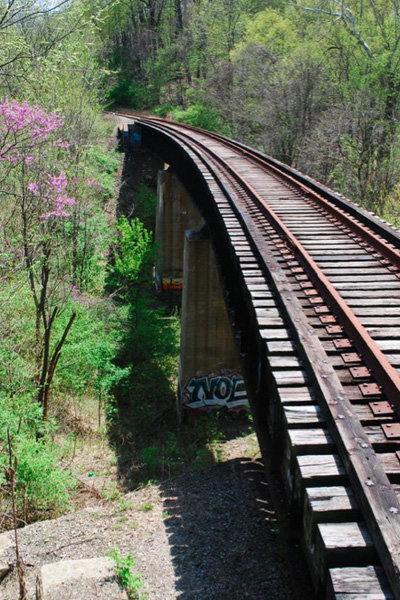
A group of residents from several Cincinnati neighborhoods spoke at the June 7 meeting of Cincinnati City Council's Quality of Life Subcommittee. Their subject? A recently closed railroad spur and a proposal to change it into a 6.5-mile cycling and walking path."This could really serve as an important connector for the many [multiuse path] projects Cincinnati has going on," said project advocate Jay Andress.The proposed project would convert a Norfolk Southern Railroad spur into a path that would connect with the Little Miami bike trail in Newtown and run into the heart of downtown. Advocates at Tuesday's meeting pointed out that the path would only cross seven roads in its entire length, making it a true rarity: a nearly uninterrupted trail running through several neighborhoods in a major urban area.But beyond the health benefits and transportation options that the path could provide, some residents at the meeting brought up another point: building the path could resolve a growing problem with the semi-abandoned line.Hyde Park Neighborhood Council President Anne Gerwin said the point where the line crosses Wasson Road has been a maintenance and safety issue for years. "We struggle many times each year to have the city and railroad maintain it," she said. The neighborhood's council passed a resolution supporting the project.Likewise, Hyde Park resident Lindsay Felder, who said her home is within sight of the track, said there's been a visible deterioration of it - and an uptick in people loitering along the weedy path - since it became inactive in 2009."We've always wondered about the tracks," she said, explaining that she began going door to door to drum up local support after meeting Andress and learning about the proposed project."We see it as a great upcycling of existing property that is underutilized," she said.Subcommittee chair Laure Quinlivan said there are a number of details to clarify before the project moves further forward, such as determining if Norfolk Southern has future plans for the line, and if an arrangement can be made that would allow the city to adapt the path into light rail if that becomes a future transit option."This is really a great proposal," she said. "The best ideas don't always come out of City Hall. If we could make this happen, it would be such a great asset to so many residents."Story: Matt CunninghamPhoto: Wasson Way Project

Writing makes for change during young women’s summer camp

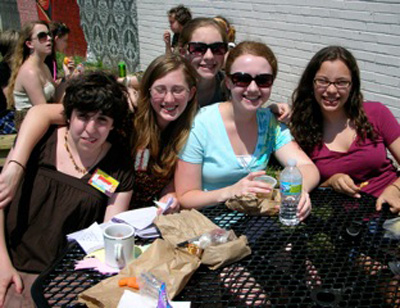
The teen's dark, fragmented poems wove a narrative of pain and isolation. "Nobody understands me," she wrote. "Nobody cares."  It was the beginning of summer camp at Women Writing for (a) Change in Silverton, and the young woman's story was all too familiar. During camp, she kept writing. She also created art, danced and gave Pilates a try. By the fall, her mother noticed a shift in the tone and depth of her poems. She expressed confidence. She communicated a sense of belonging. She had found her voice.Executive Director Emilie Davis hears stories about the impact of Women Writing for (a) Change every day. But in the summer camps, she sees a rare chance to open girls' eyes to the power they can wield with their words. "This is an opportunity for young women to write about what matters to them," says Emilie Davis. This year, the leader of the 20-year-old non-profit hopes to enroll 60 girls and young women ranging in age from fourth grade and up. In half and whole-day camps, campers find safe places to explore their thoughts, their lives and their writing abilities. The focus is on encouragement, support and empowerment. "Nobody gets out a red pen here," Davis says.An "Arts in My Own Backyard" grant from Artswave, plus support from the Haile/U.S. Bank Foundation, provides scholarships for young women from Silverton who might not otherwise be able to afford the sessions. Davis says this year one 15-year-old participant will be nine months pregnant; another is dyslexic. "Her mother says she writes beautiful poetry," Davis says. "Her teacher criticizes her spelling."In addition to writing, young women in the camp spend time creating art and moving. From Zumba classes to artwork, the program takes a holistic approach to the summer camp experience. "It's all about making movement and exercise fun," says Davis.She points to notes the students have written on "soul cards," or evaluation tools, as evidence of the camp's power:"I like knowing I'm not the only one who is lost.""I like feeling I wasn't alone. I was loved.""This class has changed the way I think."Do Good:• Sign up for camp. Sessions start June 20 and run through July 22.• Catch a podcast. Be inspired by teachers, writers and authors, including Freedom Writers' founder Erin Gruwell. • Offer support. Donations can help provide scholarships for specific programs or provide operating funds to fuel WWf(a)C's mission.By Elissa YanceyPhoto courtesy of WWf(a)C

Airway Therapeutics helps premature infants with healthy lung development

 In 2008, more than 530,000 babies were born prematurely in the U.S. That's about one in eight babies, according to the March of Dimes. Many have lungs that are not yet fully developed. That's where Airway Therapeutics comes in - the local business was created to help premature infants with their lung development and even survival rates.Based on 10 years of research at Cincinnati Children's Hospital Medical Center, Airway Therapeutics was created to develop a surfactant protein that lines the surface and airways of babies' lungs to help inflate them and keep their air sacs from collapsing. Airway's initial focus will be on the prevention of bronchopulmonary dysplasia (BPD) and also the prevention and treatment of neonatal respiratory distress syndrome (nRDS) in very premature infants. Normally, lungs mature to produce surfactant in the seventh month of gestation. Very premature infants (before 32 weeks gestation) have generally not developed lung surfactant to make the transition during birth from fluid-filled lungs to lungs that can easily expand to handle air movement. Administering surfactant to these very premature infants shortly after birth allows them to breathe. Airway's product, rhSP-D, would be added to existing surfactant prior to treating a premature newborn, and has been shown in the lab of Dr. Jeffrey Whitsett to be useful in reducing lung inflammation, a condition associated with BPD. Dr. Whitsett is chief of the Section of Neonatology, and Perinatal and Pulmonary Biology at Children's. Bringing his research into the market is CEO Steve Linberg, Ph.D., who has more than 30 years of clinical research, drug development and biologic development experience. The company recently received a seed-stage investment by CincyTech - a Cincinnati-based venture development firm that invests in technology-based startup companies - and the Cincinnati Children's Tomorrow Fund. Each has invested $250,000 as part of a projected $1.2 million seed-stage funding round led by CincyTech. The company is headquartered at BioStart, the Cincinnati bioscience startup center located in Clifton, which is a previous investor in Airway.The new investment will allow Airway to meet with the Food and Drug Administration within a few months to confirm their plans to begin developing rhSP-D in combination with an already-available surfactant, and then file an Investigational New Drug (IND) application within 15 months. Linberg estimates a total estimated cost of $25 million to bring the drug to market."This drug will save babies that don't survive today and radically improve the lives of millions of others," says CincyTech Executive-in-Residence Mike Venerable.Writer: Sarah Blazak

Turning a love of food into a career takes patience, flexibility and a good business plan

 Two local food businesses, Cooking with Caitlin and The Learning Kitchen have proven to be a success due to motivated owners, social networking, and interactive opportunities with the public.Read the full story here.

Ludlow Lagoon area may have new life

 Ludlow Lagoon, which was once an amusement park for Cincinnati in the early 1900's, may become a recreational complex with fields for soccer, track, and other sports, along with walking paths, playgrounds, and a dog park.Read the full story here.

Bike Friendly Destinations talk plans, benefits of being two-wheel friendly

Cincinnati-based cycling advocacy organization Queen City Bike kicked off Bike Month in May with the launch of a new award. The Bike Friendly Destinations program honored 41 destinations at a May 2 ceremony, granting certifications ranging from Gold to Honorable Mention.Two Gold recipients, the Transit Authority of Northern Kentucky and the Mercantile Library in Downtown Cincinnati, said the changes they made that earned the designation were relatively simple and inexpensive. And while their motivations - and response from patrons and employees - differ, representatives from both said they're seeing benefits from being bike-friendly. TANK spokesperson Gina Douthat said that the transit organization didn't just rely on its highly visible bus-mounted bike racks for the award; a number of employee-facing changes have also made bike commuting an alternative for TANK staff. "Being an organization that's into alternative modes of transportation, we continually encourage employees to look at alternatives to single-occupancy vehicles," she said. TANK offers both indoor and outdoor bike storage at its offices, and Douthat said on-site showers and the ability for some employees to flex schedules make it easier for employees to ride to and from the office. "It gives them the ability to fit workouts into their lives a lot better," she said. Cedric Rose, part of the Mercantile Library's collection staff, said that he's seen an upswing in patrons riding in. "Among our patrons, we have some younger people who, that's just the way they get around," he said. "Overall, I definitely think there's been an upswing." Queen City Bike staff helped the library acquire a bike rack for its Walnut Street entrance, and the library has opened its 11th-floor lobby to let patrons park their bikes indoors. Cincinnati Department of Transportation city planner Melissa McVay, who has worked on a number of bike advocacy issues, said the awards could play a major role in reaching out to potential riders unfamiliar with the city's bike culture. "One of the things we struggle with is the people we're able to communicate with are already cycling," she said. Many of the winning businesses conducted Bike Month campaigns and publicity drives among their patrons, she added. "That's going to reach so many more people than we could ever reach on our own." And as non-riding patrons and employees of the award-winning businesses are exposed to the city's growing bike culture, Queen City Bike Program Coordinator Jess Linz said she hopes to see a more significant shift in the way Cincinnatians think about transit. "These groups are now representing a bike-friendly transportation mindset," she said. "There's this value in the private realm for this kind of cultural change." Writer: Matt Cunningham Photography by Matt Cunningham

Our Partners

Taft Museum of Art

We want to know what's on your mind.

Close the CTA

Don't miss out!

Everything Cincinnati, in your inbox every week.

Close the CTA

Already a subscriber? Enter your email to hide this popup in the future.