Health + Wellness

Two Health IT companies setting up HQs in Newport, creating 20 new jobs

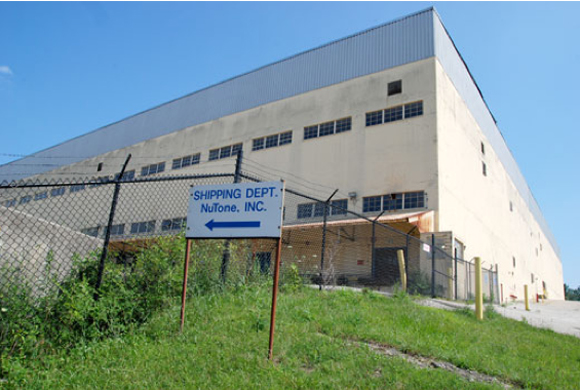
Two health IT companies - one from Korea - are setting up North American HQs in Newport, creating a combined 20 new jobs in the process.The companies - Korean-based Arcron Systems Inc. and Meaningful Use Technologies,  are moving into a 5,000 sq. ft. shared space with plans to invest $1 million in office upgrades. The companies are still working to find the most compatible space. "There is incredible opportunity in the healthcare industry and we know that Northern Kentucky - Newport, Kentucky - is strategically positioned to support the national headquarters for both companies," said Mark Morgan, chief executive officer of Meaningful Use Technologies.Arcron Systems specializes in medical IT technology, such as hospital information systems, electronic medical records, order communication systems, and enterprise resource planning systems for hospitals of all sizes. Meaningful Use Technologies also serves the healthcare sector, specializing in enterprise IT experience and providing software specification, deployment and hosting services to hospitals.The companies are positioning themselves to help hospitals comply with a component of the federal American Reinvestment and Recovery Act stimulus bill, the Health Information Technology for Economic and Clinical Health Act, and the Patient Protection and Affordable Care Act. This requires that patients' medical records be transferred to an electronic format by 2015."We know that high-tech companies like Arcron Systems and Meaningful Use Technologies will create high-paid, primary industry jobs for our residents. The presence of Northern Kentucky University's College of Informatics will help supply qualified, cutting- edge employees for these outstanding companies," said Campbell County Judge Executive and Northern Kentucky Tri-ED Chairman Steve Pendery.Writer: Feoshia HendersonSource: Kentucky Governor's officeYou can follow Feoshia on Twitter @feoshiawrites

Latest in Health + Wellness
Couple puts life on the line to find expert care at Ronald McDonald House

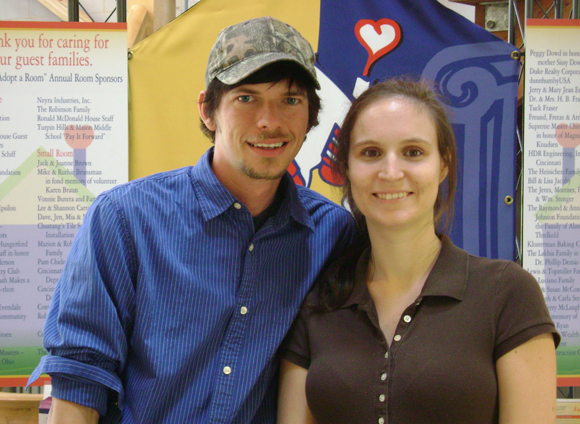
Angeline is still weeks away from being born, but she is already a miracle for her mother, LaDonna Thompson, and her father, Jared Litke. The young couple from Biloxi learned in April that their daughter-to-be had spina bifida - her spinal cord was literally growing outside of her back. They researched, consulted with experts and weighed heavy options.They could wait until her birth, then face a dangerous operation and growing odds that she might need to have a shunt inserted into her brain or spine to help drain spinal fluid. Or, they could try a risky but promising procedure available at only a handful of hospitals in the country. Fetal surgery to enclose their baby daughter's spinal cord before her birth offered the best chance that she might live a more normal life. "Only four hospitals in the country do it," says Litke, 24. "Vanderbilt and Cincinnati Children's are the top two."So Litke and Thompson, 19, who met while working at Petsmart in Mississippi, made plans to travel north. "We lost our jobs, we lost our home coming up here," Litke says. Though engaged, they don't qualify for the Family Medical Leave Act. They relied on family and friends to do what they could to help.They had three weeks to clear out their belongings and head north. It was a daunting task, but Litke and Thompson didn't hesitate. "Kids always come first," Litke says.Their stay at the Ronald McDonald House in Avondale started this spring. Thompson underwent a three-hour surgery in May to close Angeline's spine. Results looks promising so far, but because of the risks, the parents-to-be will stay in Cincinnati until Angeline's birth in September. The couple settled on the name Angeline early on, Litke explains. The word for "angel" has strong Irish and Italian roots, as do the parents.The Ronald McDonald House never withholds treatment because families can't afford it, but Thompson and Litke wanted to contribute something to offset the cost of treatment. In 2010, the facility housed more than 1,200 families from 49 states and 28 countries. Providing a room costs the agency $90 per day, but the suggested donation amount for families is just $25. Thompson and Litke could scarcely afford any additional expenses, so they decided to start a non-profit, Angeline's Hope, to raise funds for other families in similar conditions. They started collecting pull tabs from canned drinks, mostly via Facebook and friends in Mississippi, to donate to the Ronald McDonald House as well as to raise awareness of the organization's never-ending needs.Just 13 percent of its annual budget actually comes from McDonald's, explains ?Colleen Weinkam, communications manager of the Ronald McDonald House Charities of Greater Cincinnati. Cincinnati Children's Hospital Medical Center contributes 1 percent of the annual budget. But the lion's share of the funding, 84 percent, comes from donations and contributions. Last year, the organization raised more than $16,000 by cashing in hundreds of thousands of pull-tabs. Though it takes more than 300,000 pull-tabs to support a single night's stay in the house, Litke and Thompson were inspired by the House's existing pull-tab donation program. Plus, they wanted to give something back to show their appreciation and support of the people who became their family away from home. So far, they have collected more than 100,000 pull tabs. Their goal is to hit 400,000 before Angeline's birth. "It really does feel great knowing there is that there is all that support there," says Litke. "It's important to know that we are giving our little girl a better shot at living more of a normal life." Do Good:• Become a friend. Get the latest news on Angeline and fundraising on Facebook.• Sponsor a family. Pay for as little as one night for $25 or three months for $2,325 to cover costs for a family that is fighting for its life.• Be a Hero. Pick from more than a dozen options that package donations into categories including a "Basic Baker's" pack, a "Comfort" pack and a "Kitchen" pack.By Elissa YanceyPhoto courtesy Ronald McDonald House Charities of Greater Cincinnati

Hunger Walk donations still welcome to help stock Freestore Foodbank

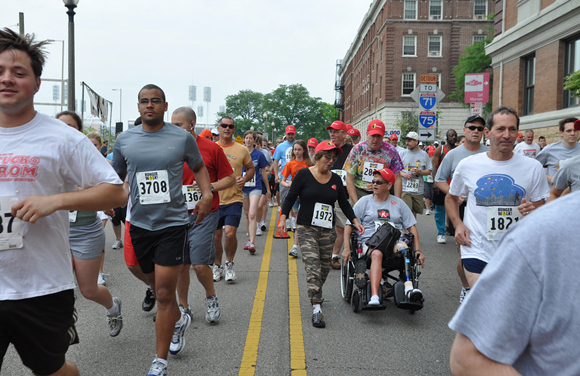
Claire Darley walked in solidarity with others working to fill the gaps of food and resources that many families and individuals experience. Walker Karl Miller recalled delivering a cake to a grandmother so that she could offer her granddaughter a birthday treat.This year's Memorial Day Hunger Walk along Cincinnati's riverfront drew thousands of supporters of programs and services around the region that give food to those who need it most. "At the Hunger Walk, you can experience yourself as part of a much larger group, working to fill the gaps of food and resources that many families and individuals experience occasionally or often," says Darley, a Northside resident and a professor at the Art Academy of Cincinnati.Darley regularly volunteers at CAIN, Churches Active in Northside. "The CAIN guests are often under great stress in handling children, unemployment, illness," Darley says. Proposed cuts to federal and state programs -- including the WIC program for Women, Infants and Children -- will only increase that stress on the thousands of residents who currently visit the Freestore Foodbank or one of its more than 300 affiliated food pantries, like CAIN. Families who live in poverty have already taken significant cuts from government support. In 2010, Ohio's federal WIC funding dropped by nearly $9 million from 2009 levels of support, according to the USDA's Food and Nutrition Service data. Cuts outlined in current legislation have gotten even hard-core foodies like New York Times food writer Mark Bittman pushing themselves away from the table in symbolic fasts to draw attention to proposed cuts in programs that provide essential help for the hungry.Do Good:• Help the Hunger Walk. Though the Memorial Day 5K is done, you can still donate online until June 20.• Seal that gap in your window. Seriously. This summer, Champion Windows will donate 50 pounds of food for every in-home call and 100 pounds of food for every project ordered by Aug. 31. It's called "Close the Window on Hunger," and it could just increase your energy efficiency while providing food for some of the 300,000 children in the Cincinnati region who don't know where their next nutritious meal will come from.• Learn about proposed federal budget cuts. The non-profit Bread for the World provides a handy online resource about hunger and the U.S. budget.By Elissa YanceyPhoto courtesy Freestore Foodbank

Bike Friendly Destinations talk plans, benefits of being two-wheel friendly

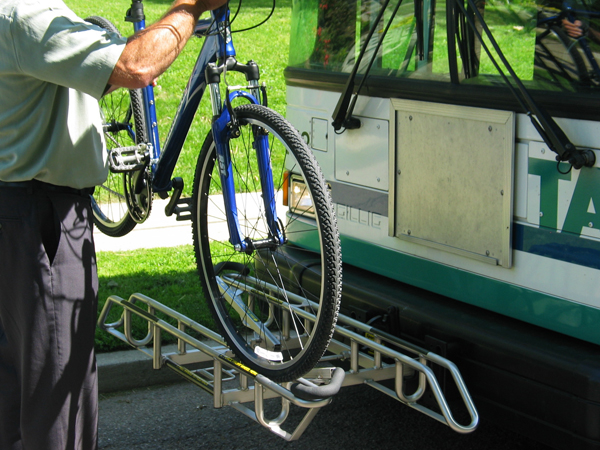
Cincinnati-based cycling advocacy organization Queen City Bike kicked off Bike Month in May with the launch of a new award. The Bike Friendly Destinations program honored 41 destinations at a May 2 ceremony, granting certifications ranging from Gold to Honorable Mention.Two Gold recipients, the Transit Authority of Northern Kentucky and the Mercantile Library in Downtown Cincinnati, said the changes they made that earned the designation were relatively simple and inexpensive. And while their motivations - and response from patrons and employees - differ, representatives from both said they're seeing benefits from being bike-friendly. TANK spokesperson Gina Douthat said that the transit organization didn't just rely on its highly visible bus-mounted bike racks for the award; a number of employee-facing changes have also made bike commuting an alternative for TANK staff. "Being an organization that's into alternative modes of transportation, we continually encourage employees to look at alternatives to single-occupancy vehicles," she said. TANK offers both indoor and outdoor bike storage at its offices, and Douthat said on-site showers and the ability for some employees to flex schedules make it easier for employees to ride to and from the office. "It gives them the ability to fit workouts into their lives a lot better," she said. Cedric Rose, part of the Mercantile Library's collection staff, said that he's seen an upswing in patrons riding in. "Among our patrons, we have some younger people who, that's just the way they get around," he said. "Overall, I definitely think there's been an upswing." Queen City Bike staff helped the library acquire a bike rack for its Walnut Street entrance, and the library has opened its 11th-floor lobby to let patrons park their bikes indoors. Cincinnati Department of Transportation city planner Melissa McVay, who has worked on a number of bike advocacy issues, said the awards could play a major role in reaching out to potential riders unfamiliar with the city's bike culture. "One of the things we struggle with is the people we're able to communicate with are already cycling," she said. Many of the winning businesses conducted Bike Month campaigns and publicity drives among their patrons, she added. "That's going to reach so many more people than we could ever reach on our own." And as non-riding patrons and employees of the award-winning businesses are exposed to the city's growing bike culture, Queen City Bike Program Coordinator Jess Linz said she hopes to see a more significant shift in the way Cincinnatians think about transit. "These groups are now representing a bike-friendly transportation mindset," she said. "There's this value in the private realm for this kind of cultural change." Writer: Matt Cunningham Photography by Matt Cunningham

Andy’s Mediterranean takes over XU eateries

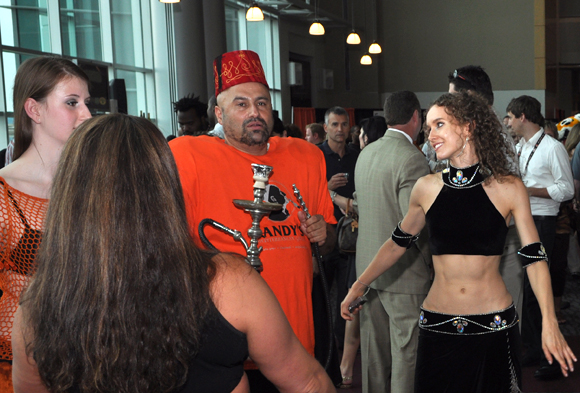
Diners at Xavier University's Gallagher Student Center now have new dining options, in some very familiar places. Local restaurateur Andy Hajar officially took over management of the university's Ryan's Pub and Fusions Café, incorporating the Middle Eastern fare of Andy's Mediterranean Grille into these popular campus restaurants."We are very excited to have Andy become part of the Xavier family," said Tom Barlow, XU's director of auxiliary services. He pointed out that Andy's, which was started 10 years ago by Hajar after he immigrated to Walnut Hills from Zahle, Lebanon, fits well with the university's commitments to both local business and creating a diverse campus culture."As a commitment to Xavier's mission to support our local community, we seek only local, family-run businesses," Barlow said.Greg George, business manager for Andy's Mediterranean, said the warm regards are mutual."Andy thought this was a fabulous opportunity to team up with an institution like Xavier," he said. "It offers him a great environment to improve on the brand, and lays the platform for expanding the brand."George noted that, although the healthy, natural ingredients in the Andy's menu may be a shift for some diners, the look and feel of XU landmark Ryan's Pub will remain mostly unchanged. The pub was built and named in honor of Steve Ryan, friend of building patron Charlie Gallagher, and the new manager intends to respect that history."Ryan's won't look any different beyond the branding," George said.Both Ryan's Pub and Fusions opened under Andy's management June 2. And George said that excitement at the restaurants remains high."This is a dream come true for Andy," he said.Writer: Matt CunninghamPhoto provided by Xavier University

Medpace moving toward physical, financial growth this summer

Cincinnati-based clinical research organization Medpace is having a year of notable changes, thanks to the continuation of a long-laid plan, and a recently announced partial acquisition.In 2010, Medpace began the relocation of its operations to a new facility on Red Bank and Madison roads in Madisonville. The move, supported in part by a 15-year, 75 percent LEED tax abatement on the first of three planned buildings, a 132,000 square-foot office building.The company has planned from the beginning to construct two additional buildings to house research labs. Construction manager Al Neyer, Inc. recently closed the bidding process for subcontractors for the new buildings, and on May 25 Cincinnati City Council approved a pair of 15-year tax exemptions for the new buildings, which are planned to be built to LEED certified standards. "Originally, when we built the headquarters, we had two labs in Norwood," said company spokesperson Mary Kuramoto. "The plan has always been to move them to the new location."But Medpace's latest news has little to do with its brick-and-mortar developments: the company announced May 23 that affiliates of the global private equity firm CCMP Capital Advisors, LLC, are in talks with the company to acquire an 80-percent ownership share. The acquisitions will allow Medpace to expand its global reach and enhance its ability to conduct phase I-IV clinical studies, said Medpace CEO August Troendle in a press release announcing the move.A spokesperson for CCMP Capital Advisors' New York City office declined to comment on the deal, but noted - as did Medpace via press release - that more news on the deal may be released in June.Writer: Matt CunninghamPhotography by Matt Cunningham

Edible Ohio Valley champions local businesses, food economy

In a time when many people are far removed from what's in their food and where it came from, there is a visible movement to get back to basics. One new local publication, Edible Ohio Valley, sets out to make the case for eating fresh, eating local, and supporting small businesses. Edible Ohio Valley is one of about 70 independently owned Edible Communities publications that promote a Locavore - or a fresh, locally based - eating lifestyle.Just over a year old, the quarterly magazine-quality publication is operated by three sisters: Jennifer Kramer-Wine, Julie Kramer and Joy Kramer-Arndts, who collectively write, design, illustrate and sell advertising for the publication (with freelance contributions). Their parents help distribute it to local businesses and some libraries.The sisters decided to start the publication after Julie and Jennifer, who previously lived in New York City, saw Edible publications in Connecticut and New York help drive a local food movement."I thought this would be great in Cincinnati, it's a city that has such an agricultural history that seems to have been lost, and it really needs this kind of support," said Julie, publisher and art director. "I thought with all of our talents combined, it was possible for us to take this on."Edible Ohio Valley covers the range of local food consumption, from farmers, retailers, vineyards, bakeries and restaurants. You can also find some book reviews and recipes, an event listing (which is updated online) and an advertiser's directory which serves as a resource for locavore-minded businesses."We really want to inform. We want people to use Edible Ohio valley as a resource for local food, and to really get people thinking about where to buy food and why they should know their growers," Julie said.The free publication is supported by advertising. Most of it is local, with the exception of Whole Foods, which advertises in all Edible publications wherever a Whole Foods is located. So you can find the publication there, as well as Findlay Market, Party Source, Anderson Farmer's Market, Pipkins Market in Montgomery and Gorman Heritage Farm in Evendale and these places. You can also read it online. Edible Ohio Valley has Facebook and Twitter pages to stay connected with readers.The publication is off to a prestigious start. Earlier this month, Edible Ohio Valley was awarded 2011 Publication of the Year Award from the James Beard Foundation, along with the suite of Edible Communities Titles. The National Award has been compared to the Oscars of the food world.Writer: Feoshia HendersonSources: Jennifer Kramer-Wine and Julie Kramer, co-founders Edible Ohio ValleyYou can follow Feoshia on Twitter @feoshiawrites

Edible Magazines win James Beard Award

 Edible Ohio Valley won the 2011 James Beard Foundation Publication of the Year Award during the Beard Journalism Awards dinner in New York City. One of 70 Edible communities publications nationwide that received the award, Edible Ohio Valley features locally grown and community based foods, family farmers, growers, retailers, chefs and food artisans, all collaborating to promote a healthy and affordable lifestyle.Read the full story here.

Thousands converge on Ohio for Midwest’s largest Paddlefest

Whether you want to learn more about the river that serves as the city's iconic postcard image or play a game of poker as you paddle from one stop to another along the Ohio, this year's 10th annual Paddlefest  is a reminder of the city's past, present and future."It's our chance to celebrate the Ohio River," says organizer Brewster Rhoads of Ohio River Way, a volunteer-led nonprofit with a mission to promote and protect the waterway that first put Cincinnati on the map.With prior year's attendance at more than 2,000, Rhoads hopes to draw 3,000 paddlers to the river this June 23 through 25. Revelers can spend the weekend learning and sailing through entertainment options, but Sunday it's all about getting more than your feet wet. From an 8.2-mile float trip to the more competitive 11-mile amateur race or the even more competitive 14-mile pro race, Paddlefest accommodates all skill and interest levels, Rhoads says.The trip down the river, starting from Coney Island and finishing at Yeatman's Cove downtown, is just one part of the three-day festival. Thursday, June 23, the festival kicks off with the Kids Outdoor Adventure Expo, which has morning and afternoon education sessions. Thousands of children learn about water safety. They practice putting on and taking off life jackets, learn how to get in and out of a canoe or boat safely. Special displays and guest speakers also help provide an up-close look at the work that happens on the Ohio. This year, young guests can get a rare glimpse into river life when they tour an authentic towboat and learn how and why it operates. Crew members will show students what jobs exist on towboats as well as discuss other river-related professions. Do Good:• Register for a chance to paddle. You can find more information and even reserve your spot online.• Do your part Make an online donation to support the work of Ohio River Way.• Prep for the big swim. Get information about the July 23 event, which is a USA Triathlon-sanctioned race. By Elissa YanceyPhoto courtesy Ohio River Way

Harmony Garden research academy trains residents to lead

This summer, a small group of residents in the West End will be part of a new kind of leadership development program. A year-long academy will train four women how to conduct research, how to identify health disparities and how to hone their own life and workforce skills.The Community Resident Research Academy, the latest programming effort by the non-profit Harmony Garden, builds on more than three years of work alongside West End residents.In that time, community researchers - all women, all mothers - have surveyed their neighbors to find out what kinds of help and support they want and need. The community research team organized a healthy, happy, hazard-free program, says Executive Director Lisa Mills. "Over the course of the past four years, they have come so far," Mills says. Resident researchers planned monthly workshops where they and their neighbors learned about high blood pressure, cholesterol and nutrition on a budget. They even started a walking club. What excites Mills the most, though, are the intangibles that women have taken from being part of the research team. "Being healthy and striving for a healthy life impacts their children, their families and their community," she says. "They have connected all of the dots."Now Mills and the rest of her all-female team at Harmony Garden want to extend the dots by giving neighborhood women a path to reach broader audiences and enhance their ability to impact community development and urban planning issues. They will also design and complete a project to benefit their community. The academy is a pilot program that she hopes will act as a kind of Leadership Cincinnati for women living in disadvantaged communities.Women accepted into the academy will be paid $8 per hour for the time they spend learning research skills, developing personal reflections and building their capacity to lead. Mills and her team have structured the program to allow the women time to continue to manage their own lives."We realized the women's lives are very chaotic," Mills says. "They are all mothers. They are doing the best they can for their kids." While Mills and her team are busy recruiting women for their first class, they are also seeking additional funding. "It's a very expensive program," says Mills, who estimates it will cost $20,000 per year to sponsor one class member. Do Good: • Underwrite good news. Harmony Gardens is on the lookout for a sponsor for their newsletter, which reaches 6,000 homes and businesses in the West End. • Fund a scholarship. Mills and her team welcome any level of support to offset the academy's $20,000 per student per year price tag.• Show your stuff. Volunteer as a presenter in the academy. "It's important to expose women to people doing different jobs, particularly around health," Mills says. She hopes to have a variety of speakers to help inspire the West End women, many of whom have not traveled far outside their neighborhood boundaries. Email Lisa Mills for more information.By Elissa YanceyPhoto courtesy Harmony Garden

Our Partners

Taft Museum of Art

Common Ground Is Brewing

Support local stories and receive our signature roast straight to your door when you join at the Standard level (or above).

Drink Better, Read Local

Close the CTA

Don't miss out!

Everything Cincinnati, in your inbox every week.

Close the CTA

Already a subscriber? Enter your email to hide this popup in the future.