Health + Wellness

Healthy Kids Fast! mixes tech, marketing and health

Beth Robeson's new venture, Heathy Kids Fast!, has been a long time coming. As a principal with Robeson Marketing and Design, she has spent much of the past decade focusing on communication, marketing and PR campaigns.But in her spare time, she's been nurturing another mission: helping families become healthier."It goes back to my passion," she says of Healthy Kids Fast! "If I didn't have the business, I would do this anyway."Robeson has been conducting seminars on nutrition and healthy cooking with parents and children for a number of years. Along with learning how best to cook with toddlers ("which can be insanity," she says), Robeson began collecting tips, suggestions and practices that could help parents address common problems: picky eaters, children who won't touch vegetables or the chaos and expense that can surround a family outing to a restaurant.She's combined these lessons into Healthy Kids Fast!, a 30-day interactive program of short, daily lessons designed to help both parents and children make better choices when it comes to healthy eating. She's developing the program to have strong interactive components, both in the form of workbook/cookbooks for families to complete together and in the use of podcasts and an online magazine to build a community of health-conscious parents."I want this to be interactive, with parents and kids learning to talk with each other," she says.The project has garnered attention: Robeson was picked as one of the finalists in micro-lending organization Bad Girl Ventures' third class of women-owned startups. After completing a series of business-skills classes, Robeson will compete with her fellow finalists for a $25,000 startup loan.Robeson says she's excited about the potential for Healthy Kids Fast! Not only does it leverage her many years of work on the subject, but she says it appears to be in line with parents' growing awareness of the implications of healthy lifestyles on their families."I think there's a wealth of information out there," Robeson says, adding that she's also excited to use a career's worth of marketing skills to make the program a reality."I've been marketing for other people for 11 years," she says. "It's been great, but to be able to do exactly what I think is the right thing to do, it's going to be exciting to see how that plays out." By Matt Cunningham Follow Matt on Twitter @cunningcontent

Latest in Health + Wellness
SparkPeople celebrates milestones, 10th anniversary

This has been a big year for SparkPeople, a Cincinnati-based online fitness community founded in 2001 by Chris Downie. The community's 11 millionth member registered in April, and Downie's book, "The Spark," landed on the New York Times bestseller list.Downie calls the success an entrepreneur's dream come true."As an entrepreneur, in your head you always dream of these things happening, and to actually see these things happen is exciting," he says.Long before the rise of Facebook, and only a few years after online forums became mainstream, SparkPeople made community interaction a key part of its design. Downie says his experience creating an auction site (that eventually became part of eBay) helped lay the foundation, but that it was mission, more than technology, that launched SparkPeople to its current status as America's largest online health and wellness community."Our goal was always to build a consumer brand that stood for authentically helping people," he says. "Really, we've just followed that mission and it's grown in some really interesting ways."SparkPeople's initial offerings such as recipe plans and forums where members could encourage each other and share fitness tips has expanded in parallel with the growth of Web 2.0 technology. Members can now create personal homepages that track their statistics, earn points for achieving healthy lifestyle goals and challenge each other to achieve fitness milestones. The site's interface has changed and evolved accordingly. But through it all, Downie says a central concept - setting achievable, progressive goals - has played a key role."One of the biggest things is the way we look at reaching goals," he explains. "We've actually figured out how to make weight loss into a fun and exciting experience." In a world full of fad diets and quick weight-loss schemes, that may sound like a raw sales pitch. But given that SparkPeople doesn't charge for membership, and that Downie says much of the new-member growth comes from personal referrals to the site, it appears to hold merit.Downie says that as SparkPeople moves into its second decade, his team is busy with a number of advances, improvements and new projects. He declined to elaborate beyond noting an upcoming cookbook and fitness DVD, both slated for release later this year. The company is also assembling a New York City-based media team to explore new ventures."Even though we've been doing this for 10 years, in some ways we could be at the very early stages of where this could go," he says.By Matt CunninghamFollow Matt on Twitter @cunningcontent
Wellthy founder joins leaders, innovators at Clinton Global Initiative America

Cincinnati native and 2008 Miami University grad James Dickerson attended the first-ever Clinton Global Initiative America in Chicago on June 29-30, representing his Cincinnati-based employee health startup company, Wellthy. Wellthy is a fun, social and simple way for businesses to get more engaged in health and wellness. Coworkers share healthy meal ideas and activities and enter into health challenges with one another to earn points, badges and rewards.Dickerson attended the Chicago summit with his Kansas City-based co-founder, Ryan Tinker, who is moving to Cincinnati this summer. The pair's company was one of only five nationwide, out of a large pool of applicants, chosen to participate in CGI America – a meeting solely dedicated to solving economic problems in the United States. The other four startups came from Boulder, Dallas and Chicago.CGI America grew out of the Clinton Global Initiative, which annually brings together hundreds of world leaders to address pressing global problems. At the end of the convention, participants pledge to contribute to change in the world with steps as simple as using CFL light bulbs or as complex and time-consuming as rebuilding a village in Haiti. The meeting in Chicago in late June focused on job growth and revitalization of workplaces, so Wellthy's approach to employee morale, health and well-being was a good fit, Dickerson says. He adds that as they met with high-ranking, successful men and women in breakout groups, Dickerson and Tinker were able to refine their company goals and processes. The five startup companies also spent a few hours at Excelerate Labs in Chicago a startup accelerator similar to The Brandery in Cincinnati. "Being accepted to the conference and being around such successful and influential people gave us the confidence we needed to keep pushing forward with Wellthy," Dickerson says.Wellthy is currently conducting private beta testing and welcoming new organizations to test its software. Follow Dickerson on Twitter at @dickersonjames or visit the website.By Sarah Blazak, CincyTech

New for aspiring doctors, the people skills test

The University of Cincinnati Medical School joins seven other top medical training programs, including Stanford and UCLA, to include nine brief interviews to test if potential medical school students have the social skills needed to survive in a field where communication is critically important and too often undervalued.Read the full story here.

Gyms build muscle in downtown locations

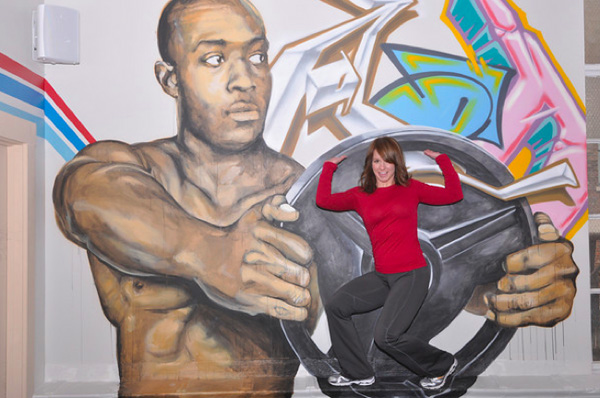
Several gyms have opened or relocated in downtown Cincinnati in the past few months, all with one goal – to pump up young working professionals.Snap Fitness 24-7, which opened in mid-April at 15 E. Seventh Street next to the former Blackfinn Saloon, is one of the gyms bypassing the suburbs and focusing fitness efforts on Cincinnati's urbanites.The 24-hour gym, accessible by key card, is within walking distance of many residential complexes, says Beth Roe, its manager."We have people coming in here at all times," Roe says. "We have people coming in here at 3 a.m. to work out. We have cops coming in at 4 a.m. after their shifts. We just believe a 24-hour gym works here in downtown."It's that type of clientele – the young professional living downtown – that encouraged another downtown gym, Sweat Training, to move from Pleasant Ridge to downtown.The gym, which offers indoor boot camp and personal training, moved into its location at 18 W. Seventh St. in October 2010, says owner Danielle Korb.It's a gym that focuses on catering to the demands of professionals who want to come in, work out hard, improve their bodies and then go play hard, she says."We're really for those people that are moving and shaking," Korb says.Korb, who is also a trainer at the gym, scouted out 20 locations throughout Greater Cincinnati before settling downtown.The open warehouse loft atmosphere of the location was a unique selling point in the gym's relocation, she adds."The gym is a big part of the atmosphere while working out," Korb says. "It's a loft with open windows and graffiti on the walls."The move downtown also spurred growth, she says."It's the perfect pairing up of brand, location and clientele," Korb says. "I just felt like my brand was the perfect match for downtown."By James Sprague

UC researcher earns NIH grant for miRNA study

A University of Cincinnati neurobiologist may soon help mental health researchers understand depression at a more effective level than ever before, thanks to an innovative research method and a nearly-quarter-million-dollar grant from the National Institutes of Health.James Herman, PhD, received a two-year NIH grant worth $248,159 in its first year to fund research into the role that microRNA (miRNA) - molecular-level controllers that help regulate the brain's chemistry - play in how the brain reacts to stress."We're attempting to develop this as a discovery platform to understand what's going on in the brain," Herman says. He explains that this research, in which scientists analyze how miRNA in mice affect the brain's mood-regulating prefrontal cortex, is very early-stage work in the exploration of the molecular process behind depression. But the ultimate implications of Herman's work could be significant. He explained that miRNA in mice function the same as miRNA in humans: identify a link between mouse miRNA and a brain dysfunction, and there's good reason to look for a similar relationship in the human brain. Beyond this tantalizing fact, though, scientists don't completely understand how miRNA works, or even how many types of miRNA exist in the brain.Herman's team is tackling this hurdle with a new analysis technique, called deep sequencing, to analyze miRNA at a high level of detail."The method is really, really powerful," he says. Processing one set of data from a sample, for example, can keep lab computers running nonstop for a weekend. Thanks to a collaboration with informatics researchers at the University of Michigan, Herman's team can spot relationships and patterns in this sea of data, results that could help scientists link certain miRNA function - or dysfunction - to the stress-processing problems underlying depression and mood disorders.These results could eventually give psychiatrists a new weapon against mood disorders. Rather than giving a patient medicine that floods the brain with mood-altering chemicals - a practice that often comes with severe side effects - physicians could one day provide treatment that fixes the way the brain controls its own chemistry. Medicine has a long way to go to reach that point, but the work Herman's team is undertaking at UC could be a major step in the right direction.By Matt Cunningham

St. Rita’s apraxia program adds dimensions to learning

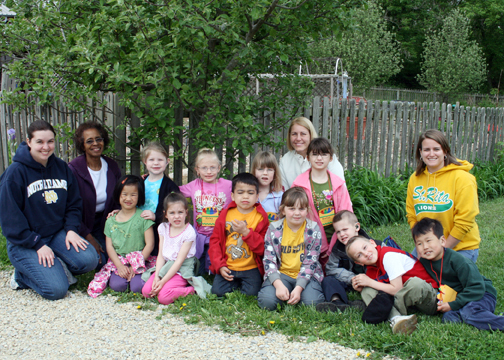
St. Rita's School isn't just for the deaf. A one-year-old non-profit within the school, St. Rita Comprehensive Communication Resources, focuses on the school's ongoing work with children who are deaf and children who have speech impairments. Both groups face similar challenges in classroom settings.Apraxia, a motor speech disorder that can be diagnosed when children are as young as 2 years old, makes it frustrating if not impossible for hearing children to learn in traditional classrooms. At St. Rita's, an innovative practice known as Sign 'n Say teaches apraxic children sign language so that they have a less-stressful way to communicate and a back-up when words literally fail them. Sign n' Say includes Montessori curriculum for a mix of preschool deaf, apraxic and typically learning students. Teachers and aides, some of whom are deaf, provide extra support and encouragement for apraxic students, who tend to have other physical or neurological challenges with which to contend. Speech therapy adds yet another layer of support, as do regular support group meetings for parents.Parents who send their children to Sign 'n Say report that their children are happier, speak more and communicate more clearly as they learn sign language and become immersed in the nurturing environment of St. Rita's, where they are always challenged and always supported. When one family moved to Indiana, they decided to have their son live with his grandparents through the weekdays just so that he could continue to make the progress he has in Sign n' Say. Do Good:• Shop Till You Drop. The school's annual fundraiser takes place Saturday, Aug. 27, from 4-8 p.m. A $5 donation will get you wine, appetizers and the first pick of choice items.• Take a tour. Whether you want to learn sign language or find out more about innovative apraxia education, St. Rita's welcomes your visit.• Be a monster. That's right -- you can volunteer to be a monster at St. Rita's famous, or infamous, haunted house this fall.By Elissa YanceyPhoto courtesy of St. Rita's School for the Deaf

Doctors donate services as part of Project Access

From Alaska to Alabama, physicians' professional organizations agree that providing no-cost healthcare to those in need can be life-changing, not to mention life-saving. Cincinnati's Academy of Medicine has joined those ranks by starting Project Access, an award-winning program that marshals the forces of doctors willing to see a few patients a week for free or donate time in a health clinic. According to the Greater Cincinnati Community Health Status Survey (GCCHSS) in 2008, more than a quarter million Cincinnatians, or about one in 10, do not have health insurance.Most doctors already see a few patients per month for free, albeit some not voluntarily. The goals of Project Access are to coordinate that in-office care and supplement it with labs, diagnostic services and even transportation when needed. The benefits to the doctors, who can opt out at any time and donate as much or as little time as they choose, include pre-screening of patients as well as confidence in opportunities for relationship-building and ongoing care. As it takes shape, Cincinnati's Project Access will monitor patients as well as doctors to find out what kind of difference regular access to quality healthcare can make. Do good:• Make a donation. Support Project Access by contributing to the Academy of Medicine.• Ask your doctor to help. Project Access is recruiting now, so if you are or know of a doctor who can give an hour a week, email Donna Gilliam.• Find a physician. Need a specialist or general practitioner? Use the Academy's online directory for free.By Elissa YanceyPhoto courtesy of the Cincinnati Academy of Medicine

St. Elizabeth’s growth includes health, wellness institute

St. Elizabeth's Hospital in Edgewood, already recognized for performing more cardiovascular procedures than any other hospital in Cincinnati, plans to expand its services, becoming a health and wellness institute over the course of the next few years. "We're already known for our cardiac services and well recognized by independent health grades," says Sara Giolando, St. Elizabeth's senior vice president and chief strategy officer. "We're already a strong program, but this expansion will give an additional opportunity to expand the services that we already offer, in addition to the clinical research program. This gives patients an option to try the latest devices and drugs monitored by one of the best programs, allowing local access to high-tech advancements." The new expansion will include two phases. Phase one involves the physical expansion of the space to create a heart hospital in one central location. Phase two will add three additional levels to the hospital, making room for a clinical research institute, universal patient rooms, additional patient beds, ICU capacity and additional exam rooms. Because St. Elizabeth is a non-profit organization, $15 million for the first phase of the project will come from hospital earnings, with additional funding coming from a capital campaign."St. Elizabeth's is really unique. We typically fund from retained earnings and employee contributions. I am always blown away to see how many people and employees give back to the hospital in a form of donation," says Giolando, who adds that the hospital has the highest contributing employee system in the region.Giolando says that the expansion is about more than physical growth; it's also a move to make more area residents aware of heart disease and the new resource taking shape in their backyard.By Lisa Ensminger

Madisonville gives urban farm project a tentative trial run

Steve Rock spoke to the Madisonville Community Council in mid-June about an update and a request. He and a team of volunteers plan to convert a derelict industrial building on Whetsel Avenue into an urban farm and education center, employing the latest technology to grow fresh meat and produce in the neighborhood.  But the response of the more than 50 people in attendance showed that innovation is not just about ideas and experiments; it's also about connecting with people and building community support."I think education is huge in this project," says Rock, an environmental engineer by trade who has taken on the urban farm project in his spare time, partly to see if some of its more unusual ideas will work. He spent part of the meeting - and much of the time afterward - explaining various aspects of the project: a system of vertical integration would grow both hydroponic vegetables and tilapia in the building (a former laundry) using waste from the fish to fertilize the plants. A classroom and community gardens would help area residents learn about agriculture and grow their own food. And a program to train at-risk youth would help staff the facility while improving the employment prospects for its participants. But questions also revolved around the building itself. Madisonville Community Council president Bob Igoe explained that the building, which has been vacant for years, is slated for demolition. "We've got to be confident Steve can make this thing work, or we're going to be stuck with [the building] for another year," Igoe says.Several Madisonville residents asked pointed questions about timelines and the likelihood of the project getting grant funding; Igoe pointed this out as an indication - the project's merits aside - that city residents wanted to see progress in their community."You have a room full of people who have had a handful of promises for decades," he says.At the end of the meeting, the community voted to place a three-month stay on the demolition. This gives Rock time to try to secure grant funding, showing the community the project can raise the $500,000 to $1 million he estimates it will take to launch. Volunteers have launched a website and have drafted handouts to help spread the word about the project, and Rock said he hopes to hear about grant funding prior to the community council's next meeting on the project, planned for September.By Matt Cunningham

Our Partners

Taft Museum of Art
Warsaw Federal

We want to know what's on your mind.

Close the CTA

Don't miss out!

Everything Cincinnati, in your inbox every week.

Close the CTA

Already a subscriber? Enter your email to hide this popup in the future.