
Health + Wellness

Shocking body-image news: 97% of women will be cruel to their bodies today

 Cincinnati psychologist, Anne Kearney-Cooke, Ph.D., helped Glamour design a survey about women and body image issues. A shocking number of 97 percent admitted to having a negative or anxious thought about their body image during one the day. Specializing in body image issues, Kearney suggests that unattainable cultural beauty ideals and habitual negative thinking play a major role in this percentage.Read the full story here.

Latest in Health + Wellness
Scientists study hand movements for ADHD clue

 Cincinnati Children's Hospital Medical Center partnered with Baltimore's Kenny Krieger Institute for research on children with ADHD. Research found that children's impulsive hand movements control ability may have insight on brain-based differences of the ADHD children. Different studies showed that ADHD children had twice the amount of unintentional extra movements showing that actions and behavior may be unintentional as well.Read the full story here.

Awe of youth circus makes My Nose Turns Red shine

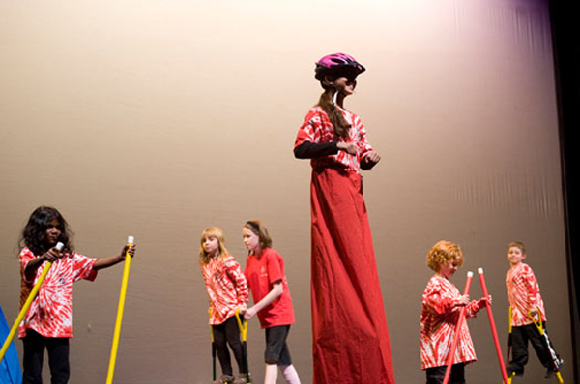
The larger-than-life-sized open metal wheel has rungs along its two rims that allow twisting, turning, spinning and climbing. A favorite Cirque du Soleil act, the German wheel features nimble acrobats who scale its rung and tumble over and under as they command every inch of the stage.Now local theatrical clowns at My Nose Turns Red Theatre have added the German wheel to an already full plate of circus skills taught in classes for ages 7 to 18.For more than 25 years, co-founders Steve Roenker and Jean St. John have taught children how to juggle, ride unicycles, walk tight-ropes and get laughs from any size crowd of any age. They believe that learning teamwork and trust in a non-competitive environment yields healthy physical and psychological benefits.But for the students, it's really about the fun. Annual performances at the Aronoff Center for the Arts culminate months of work in schools and community sites. Summer camps evolve into public performances. Young clowns work closely together to create performances that showcase individual skills as well as group dynamics. MNTR's YouTube channel features a sampling of past shows and even work by MNTR students in the 2009 American Youth Circus Festival.Roenker's gentle but determined teaching style, combined with enthusiastic advanced students, create a learning environment that is both fun and a safe place to hone new skills."Send your kids to the circus," advises St. John, who has taken her own advice for years. Her daughter, high-school senior Natalie Roenker, attended the American Youth Circus Festival after years of clown training. She heads to college next year to major in -- what else? -- theater.Do Good:• Patronize a juggler. Or is that become a juggler patron? Mark your calendar for MNTR's March 19 performance and for just $25, you can be a juggler patron and get two free tickets.• Catch a special Cirque performance. Purchase tickets to the April 29 benefit performance of Ovo at Coney Island through MNTR and 100 percent of your purchase supports local clowning.• Make a Facebook friend. Keep up with MNTR's latest news on the fan page.For Good News Editor: Elissa Yancey (Sonnenberg)

Cincinnati #7 most romantic city in America

 Cincinnati ranked number seven on Amazon.com's Top 20 Most Romantic Cities in America. Amazon based its list on sales data of romance novels, relationship books, romantic comedy movies, Barry White albums, and sexual wellness products. Read the full story here.

Using clot buster for mild stroke could save millions

 Researchers at the University of Cincinnati found that the blood-clot dissolving drug (tPA) can help reduce the number of patients left disabled after suffering from strokes, saving $200 million in annual disability costs. Strokes are the third leading cause of death in the U.S.Read the full story here.

Cincinnati Cooks and Kids Cafes satisfy city hungers

"Try the macaroni and cheese," urges the chef-in-training behind the buffet line, his white apron starched and his hair neatly tucked inside a plastic cap. "It's the best." His classmates nod as guests load up on the rich, creamy dish. The consensus is clear: guests will not leave hungry, or disappointed. Budding chefs at the Freestore Foodbank's Cincinnati Cooks program take their food seriously. They plan on making a career out of food service. Each new 10-week class that starts at the Rosenthal Community Kitchen downtown demands its members stay clean, sober and dedicated to learning the trade. In return, students receive free classes and leftovers to take home. Every day, the classes' work feeds about 1,200 schoolchildren at 20 Kids Cafes located throughout Cincinnati and Northern Kentucky. After school, students look forward to sampling chicken and noodles, beef stew, jambalaya and, of course, mac and cheese. Every school day, Kids Cafes offer free fresh food alongside tutoring, homework help and organized activities. Program Director Dennis Coskie, who has been with the Cincinnati Cooks since its inception 10 years ago, explains that the program operates as a model of efficiency. "We're utilizing donated foods so they don't go to waste. We are training people with marketable skills. And we're feeding 1,200 hungry kids every day," he says. "It's got a lot of magic to it."Coskie has overseen 94 classes and 780 Cincinnati Cooks graduates so far. "It's a thrill to watch people make a positive change in their lives," he says. The success rate for graduates continues to attract more students along with community praise. More than three-quarters of graduates find jobs within two months of graduating and 60 percent are still employed a year later. Do Good: • Spice up your next event. Try Cincinnati Cooks Catering and let professional cooks serve you top-quality foods while the funds raised support Cincinnati Cooks. And yes, they do weddings. • Join the Virtual Food Drive. Help the Freestore Foodbank serve more clients from the comfort of your computer. • Send a message of hope. Write a personal note to let people struggling in our community know they have not been forgotten. For Good News Editor: Elissa Yancey (Sonnenberg)

Fisher finds fulfillment at Women Helping Women

When Kendall Fisher started college, her math skills and no-nonsense approach to life propelled her to major in accounting and finance. She envisioned a life of steady employment and better-than-average pay. Then, in her first year away from home, one of the Columbus, Ohio, native's undergraduate friends was sexually assaulted. She was outraged at the lack of support systems available to help her friend. So she helped start a campus sexual assault program. Then she trained to be a rape advocate. At 19, she began financing her education through full-time work at the Butler County battered women's shelter. The determined red-head with a mane of curls and an easy laugh had found her calling. She shifted her major to sociology and women's studies."My dad was mortified," Fisher says. "But I'd rather be broke and making a difference." As executive director of Women Helping Women, Fisher, 41, continues the quest she started more than half her lifetime ago: to stand up for the underdog and make sure people are treated fairly."We pride ourselves on being there when people need us the most," she says. In her time at Women Helping Women, Fisher has helped raised funds to place one full-time employee in the Personal Crimes Unit, the equivalent of the SVU, of the Cincinnati Police Department; two full-time employees within the Cincinnati Police's Domestic Violence Investigation Unit; and one full-time worker at Legal Aid. Fresh from a 12-plus hour day on the job, Fisher laments the 42 percent cut of city funding this year and praises the often-overlooked efforts of her staff. Women Helping Women workers are in arraignment court every morning, Monday through Saturday. As the only rape crisis program in Hamilton County, the organization ensures that advocates arrive at hospitals within 20 minutes of a call about a case. More than 60 trained volunteers log 700 hours of service a year, allowing WHW to serve more than 12,000 women each year.With the skill of an experienced negotiator and the patience to meticulously renovate a historic home in Northside, Fisher saves her biggest praise from the women her agency serves every day. "They are the ones doing the hard emotional work," she says. "They are their own heroes. We are their cheerleaders." Do Good: • Raise your cultural IQ. Attend a Sunday Salon, a series of Sunday afternoon gatherings with topics as diverse as FBI tactics and cupcakes.• Be an advocate. After 40 hours of training, you could be a court, hospital, hotline, education or clerical advocate. Background checks required.• Take a quiz. Do you know someone in an abusive relationship? Point and click to learn more.For Good News Editor: Elissa Yancey (Sonnenberg)

CAIN builds confidence, creates opportunities with books

Forget candy sweethearts, this Valentines Day one local non-profit hopes to spark lifelong love affairs between its youngest clients and . . . books. Throughout February, Churches Active in Northside, CAIN, is accepting donations of gently used books to be given to children as part of its Choice Pantry offerings. Research scholars and educators know that reading helps children build vocabulary, as well as academic confidence. But how much does vocabulary acquisition vary, based on family income level and social status? Quite a bit. Consider the research: By age three, children from privileged families have heard 30 million more words than children from poor families, according to the American Federation of Teachers. By kindergarten the gap is even greater. Other research maintains that by age three, the observed cumulative vocabulary for children in professional families was 1,116. For working class families, the number dropped to about 740. Welfare families fared the worst, with their children's cumulative vocabulary averaging about 525 words. The National Commission on Reading puts it simply: "The single most significant factor influencing a child's early educational success is an introduction to books and being read to at home prior to beginning school." Since its official organization in 1991, CAIN has provided food, clothing, household items and emergency financial assistance for more than 300 low-income individuals and families. The non-profit, with a paid staff of just five part-time employees, relies heavily on volunteers for its ongoing programs and special monthly Food Pantry spotlights, like this month's focus on books. CAIN Executive Director Mimi Chamberlain enjoys watching former clients become volunteers for the non-profit. "In the day to day, we can see the difference we are making in the people's lives that we serve," she says. "But it is amazing to see how much it means to give people the opportunity to volunteer. It's a great affirmation of the importance of the work we do." One volunteer described CAIN, rated tops by the national Great Non-Profits review site: "This local charity is SUCH an asset to my community. They regularly bring awareness of need without guilt (for givers or receivers). I think this encourages donations and helps receivers avoid stigmatization. They also make it easy to give and have come up with some amazing ideas." Do Good: • Donate: Support CAIN's mission and its many programs by visiting the Network for Good. • Read the Blog: Keep on the latest CAIN news and tell your friends about the CAIN Blog. • Read, write, review: Visit CAIN's ranking page and read how others rate the organization.

Gateway Community awarded $8.5 million grant for Allied Health student support

Students looking for a career in allied health, who often have an uphill climb getting through college, soon will get some support thanks to an $8.5 million federal grant awarded to Gateway Community and Technical College.The grant, awarded by the Department of Health and Human Services' Administration for Children and Families, will be paid out over five years to the College's Department of Nursing and Allied Health. The allied health field includes a broad variety of healthcare jobs like medical IT, medical assisting, fitness or athletic trainer, health information technician and message therapy.The grant is geared toward low-income students, including those who qualify for Temporary Assistance for Needy Families or who meet the income eligibility guidelines for Pell grants. These students often face a barrage of challenges, including finding transportation and childcare."This is designed to offer a continuum of service for students from hearing about the program, to graduation and getting a job," said Gateway Director of Grants Amber Decker.New support services will be offered starting in January at Gateway's urban campus in Covington, and in the Nursing and Allied Health building at the Edgewood campus. Among planned service offerings are academic mentoring, English as a Second Language classes, and child care and transportation services. Dollars also will go into recruiting more students for Allied Health programs, said Dr. Gail Wise, associate provost for nursing and allied health."Low-income students have a lot of other issues to deal with besides academics. This grant will help us support those needs, and academics," Wise said.  "Some of them aren't ready (for college) with their reading, writing and math skills and we'll get them help in selected programs."The grant will pay out approximately $1.8 million each year over its lifetime, and the college expects to hire 20 new people, including a project director, to help carry out the support mission. The competitive, federal grant is the single largest one ever awarded to Gateway. "This grant will have a huge impact on our students, the college and the region's healthcare industry," said G. Edward Hughes, Gateway president and CEO. "It will enable us to improve career education opportunities for low-income students, expand Gateway programs and services and provide well-qualified workers in a broader range of occupations to healthcare providers.The grant application was developed by Gateway faculty and staff in cooperation with the Kentucky  Workforce Investment Board.Writer: Feoshia HendersonSources: Gateway College communications, Gateway Director of Grants Amber Decker and Dr. Gail Wise Gateway Associate Provost for Nursing and Allied Health Gail Wise You can follow Feoshia on twitter @feoshiawrites

Our Partners

Taft Museum of Art

Common Ground Is Brewing

Support local stories and receive our signature roast straight to your door when you join at the Standard level (or above).

Drink Better, Read Local

Close the CTA

Don't miss out!

Everything Cincinnati, in your inbox every week.

Close the CTA

Already a subscriber? Enter your email to hide this popup in the future.