Flywheel Impact Catalyst Midwest: Moving beyond conversation and into action
As Flywheel marks more than a decade supporting purpose-driven ventures, its new event aims to bring founders, funders, and community leaders into one conversation.
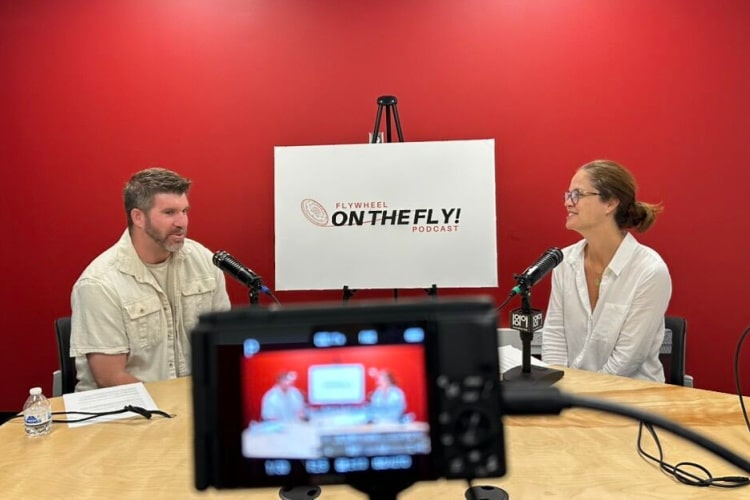
For Donna Zaring, the next step for social enterprise in the Midwest is not another program or accelerator. It is a shared table.
Flywheel Social Enterprise Hub is preparing to launch Impact Catalyst Midwest, a new convening designed to bring together founders, funders, and community leaders working at the intersection of purpose and profit.
The event represents a broader evolution for Flywheel, which has spent the past 15 years supporting social enterprises through consulting, ecosystem building, and its signature accelerator program.
“We’re a catalyst for social enterprise and social impact,” said Donna Zaring, executive director of Flywheel Social Enterprise Hub.
That work began in the early days of the social enterprise movement, when models like TOMS Shoes, Patagonia’s evolving corporate responsibility approach, and the rise of B Corps were beginning to reshape how businesses thought about impact. Five years into Flywheel’s early development, the organization launched its accelerator program, which remains its core offering today.
The nine-week program provides founders with support, structure, and funding to help launch and scale purpose-driven ventures.
“Generally speaking, we only work with founders that are addressing issues that impact our region too,” Zaring said. “The North Star is that you have to be purpose driven.”
A track record built on social enterprise outcomes
Over time, Flywheel has become a key part of Greater Cincinnati’s social impact ecosystem.
Zaring said 67 startups have gone through its accelerator program, with 80 percent still operating today. Collectively, those ventures have helped create nearly 700 jobs and generated more than $9 million in follow-on investment.
Flywheel has also supported organizations that have become familiar names in the region, including La Soupe, Recycling & Reuse Hub, and Last Mile Food Rescue, along with emerging ventures such as Greenway Innovations in Florence and Sew Valley in the West End.
For Zaring, those outcomes challenge the idea that mission-driven organizations must sacrifice growth or sustainability in order to create impact.
“I think it’s proof that there is no trade off,” she said. “Just because you’re doing business for good doesn’t mean there’s a tradeoff of the business actually doing well.”
Why Impact Catalyst Midwest is launching now
The idea for Impact Catalyst Midwest emerged from what Zaring described as a gap in regional coordination within the social impact space.
While Cincinnati and other Midwest cities have active organizations working in social enterprise, she said those efforts are often fragmented and disconnected from one another. “There’s a lot of little groups that are doing things around the region,” Zaring said.
She also pointed to differences in how social enterprise is understood across regions, noting that coastal markets and parts of Europe have more established frameworks for double bottom line investing and purpose-driven business.
“In Europe or in California, I don’t even have to explain what the double bottom line is,” she said. “There’s a ton of investment that goes into these enterprises, but it’s not as prevalent in the Midwest.”
For Zaring, that gap represents an opportunity rather than a limitation.
“We’re kind of at an inflection point where I think there’s a desire for people to return to community,” she said. “We’re saying social enterprise is a wonderful solution for tackling some of these issues in a way that is sustainable.”
Building a Midwest ecosystem for impact
Impact Catalyst Midwest is designed to move beyond conversation and into coordination.
The event will bring together national and regional voices, including leaders working in impact investing, community development, and social entrepreneurship. Programming will include panels, workshops, and a working session focused on envisioning what a more connected Midwest social impact ecosystem could look like.
Zaring said the goal is not just discussion, but alignment.
“People were saying, gosh, we’re small, we’re doing this really good work, but we don’t necessarily know what everyone else is doing,” she said. “It feels like if we pulled together, we might be able to help each other out.”
For Flywheel, Impact Catalyst Midwest is not intended to function like a traditional conference circuit stop. The speaker lineup and programming were selected to expose attendees to models already shaping social impact economies nationally while translating those ideas into practical action for the Midwest.
Leading the day’s keynote programming is Jenna Nicholas, CEO of Lightpost Capital, Co-Founder and CEO of Impact Experience, and former Forbes 30 Under 30 Social Entrepreneur whose work focuses on aligning investment with long-term community outcomes. Her keynote will challenge attendees to think differently about how capital can drive systems-level change rather than isolated projects.
Also joining the program is Michael O’Bryan, Founder & CEO of Human Nature and Director of The Wealth + Work Futures Lab, whose work centers on workforce innovation and helping communities connect economic development with human potential. His session will explore how collaboration, design, and investment can create more resilient regional economies.
Returning to Cincinnati is Suzanne Smith, who originally helped create Flywheel’s vision more than 15 years ago.
“We’re actually bringing back the original creator of Flywheel,” Zaring said. “We’re having a full circle moment with her coming back.”
Zaring said Smith’s perspective will help frame how the social enterprise movement has evolved since Flywheel’s founding and what opportunities may be emerging next.
“What’s so cool is she’s doing so much in the space,” Zaring said. “I’m excited to hear from her on where this space has evolved over the last 15 years.”
Beyond the keynotes, the summit agenda expands into workshops and breakout sessions designed around the mechanics of growing a stronger impact economy.
One session, “From Vision to Action: Advancing Regional Priorities in the Midwest,” brings together regional leaders including Moira Weir, Robert Killins Jr., John Yung, and Brendon Cull to discuss how public, private, and philanthropic sectors can align around shared priorities.
Sessions such as “Funder Engagement 101” and “Intro to Impact Investing” focus more directly on founders and investors, offering practical guidance on fundraising, due diligence, and how impact capital is structured and deployed.
Another breakout, “Capital and Community: Investing in Place for Lasting Impact,” mirrors themes Zaring emphasized throughout the interview and brings together leaders in real estate, philanthropy, and community development to explore how place-based investment can create both financial return and stronger local outcomes.
The day also includes sessions on youth investment, corporate social impact strategy, and a founder-focused conversation highlighting social enterprises emerging across the region.
Place-based thinking and regional ownership
A key theme throughout the event is place-based investment, or the idea that social impact work should be grounded in the communities it is meant to serve.
Zaring said that focus has shaped Flywheel’s approach from the beginning, including its selection of accelerator participants.
“It’s not just real estate,” she said. “It’s how are you thinking about who’s participating in the community and who has a stake in the outcomes.”
She added that building strong local ownership is essential for long-term impact. “If you really want lasting change, you need people that have ownership and a stake in it,” Zaring said.
That philosophy also extends to the next generation of entrepreneurs, many of whom are increasingly interested in building ventures that combine purpose with business sustainability.
“They want to be a part of their future,” she said. “It’s our responsibility as a community to give them a launching pad to do that.”
Impact Catalyst Midwest is ultimately about participation. Zaring said the goal is to bring together people who are ready to engage in shaping the future of the region’s social impact ecosystem.
“If you have a sense for purpose and you believe in innovation and you’re excited about ideas and working with other people, join us,” she said. “There’s infinite possibilities for what we can do.”
What: Flywheel Impact Catalyst Midwest
When: Tuesday, June 23, 2026, from 8 a.m. to 5 p.m.
Where: Memorial Hall, Cincinnati
Who should attend: Social entrepreneurs, nonprofit leaders, investors, community organizations, and impact-focused professionals
More: For details and to register for Impact Catalyst Midwest, visit here.
Author

Related Articles
Madisonville’s renewal has been decades in the making
A long-term effort to revive Madisonville’s business district is taking shape through community planning, new development and local entrepreneurs investing in the neighborhood’s future.
StartupCincy Week marks a decade of building Cincinnati’s startup community
The event returns in October with a bigger footprint, more programming, and proof that Cincinnati’s startup ecosystem has grown without losing community-driven spirit.

Non-conventional by design: A new conference puts scaling entrepreneurs at the center
Non-Con brings entrepreneurs, creatives and small business owners together in Northern Kentucky to share practical lessons on growing businesses outside traditional pathways.