
Youth are at the center of this strategy to improve mental health
With the traditional systems that support teen and young adult mental well-being in danger of breaking down, maybe it’s the youth themselves who hold the keys to creating a better future.
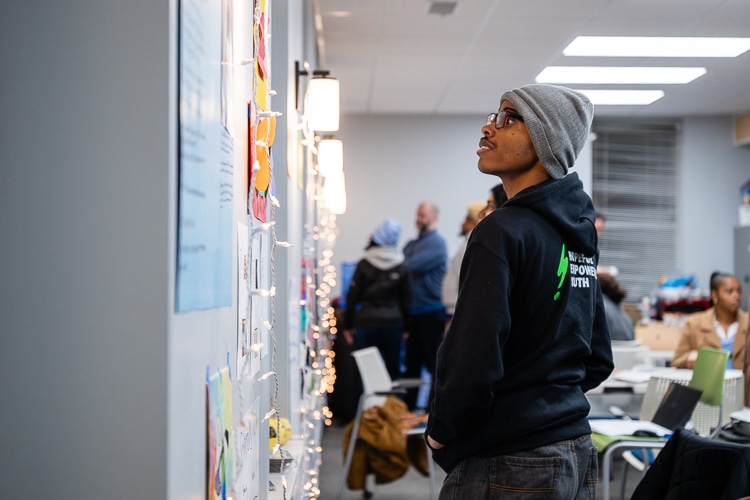
People who feel their voice matters are healthier and empowered. As divisions nationally appear to become deeper, this series, part of the larger Health Justice in Action project, examines efforts to make voices heard and improve community connections.
In the midst of an invisible crisis in youth mental health, a disturbing question arises: What if we’re going about it all wrong?
What if the grownups have been too focused on “fixing” the kids? What if the doctors are prescribing too much medication? What if our schools are part of the problem? What if what suffering young people really need is someone they trust to talk to?
That’s the idea behind putting youth at the center of the conversation on mental health. With the traditional systems that support teen and young adult mental well-being in danger of breaking down – due to long wait times to see a professional, inadequate insurance coverage for care, overworked school counselors, exhausted parents – maybe it’s the youth themselves who hold the keys to creating a better, brighter future.
About two years ago, a coalition of organizations put together a long-term strategy to improve the mental health of the region’s youth. At the center of that strategy is a new organization called Hopeful Empowered Youth, or HEY!, a name and abbreviation suggested in part by youth members, who play central roles in the effort.
Since then, the youth, stakeholders and funders involved have flipped the script on traditional mental health care, taking steps to address what they see as the big problem: a social and cultural environment that lacks genuine connections and actually promotes isolation.
“The overriding problem is our systems,” says Marina Hopkins, the executive director of HEY! “We think that we are providing safe spaces; we think that we are trusted adults. But we’re not doing it in the way that the youth have expressed.”
Parents, schools, treatment professionals – though they may be well-meaning – are often viewed by the young as the sources of stress and anxiety, and not as refuges from those problems. HEY’s effort is bringing young people into the effort to change, empowering them and building the connections that may lead to new approaches to care.
“We want to move from asking ‘What’s wrong with you’ to asking ‘What happened to you.’” — One HEY! participant
This rethinking to move from a top-down paternalistic notion of care and support to one where youth are shaping decisions and solutions comes as Greater Cincinnati and the nation experience a crisis in youth mental health.
The crisis has been building for years:
- From 2009 to 2019, the percentage of high school students seriously considering attempting suicide increased by 36%.
- The percentage reporting persistent feelings of sadness or hopelessness increased by 40%.
- In just four years, from 2011 and 2015, youth psychiatric visits to emergency departments for depression, anxiety, and behavioral challenges increased by 28%.
- Over the ten-plus years between 2007 and 2018, suicide rates among youth ages 10 to 24 increased by 57%.
These statistics are taken from U.S. Surgeon General Vivek Murthy’s 2021 advisory “Protecting Youth Mental Health.” They show what was happening before the Covid-19 pandemic became a nearly all-consuming part of life in 2020.
The pandemic only magnified those trends.
Symptoms of anxiety, depression, and other mental health disorders doubled during the pandemic, with 25% of youth experiencing depressive symptoms, and 20% experiencing anxiety symptoms. In early 2021, emergency department visits for suspected suicide attempts were 51% higher for teen girls and 4% higher for teen boys compared to just two years earlier.
It’s a national problem that calls for local solutions.
In Greater Cincinnati, several hundred community leaders, health care providers, educators, policy makers, parents, and youth spent a year examining the state of mental health among the region’s young people. That effort resulted in a comprehensive assessment of the state of youth mental health and the environment, including schools and treatment providers, that they live in.
HEY! is a response to what they found. The program has a 10-year strategy and funding from a group of grantmaking organizations that include bi3, Interact for Health and United Way of Greater Cincinnati.
“One of our key priorities has been focusing on behavioral and mental health, and for many years, we focused on increasing access,” says Jill Miller, president and CEO of Bethesda Inc. and its bi3 Fund. “It’s been in the most recent years where we said we need to move upstream and invest in prevention, because this mental health crisis that we’re in is going to take decades to build a workforce to meet the demand for services.”
Working with adult leaders, the HEY! youth have organized four working groups. The treatment group convenes providers and caregivers with youth to work on redesigning treatment systems. The community and caregivers group works with adults to teach them about providing safe and supportive environments. The data group focuses on research and is working on a survey to establish baseline information on youth well-being. The schools group works with educators to help them assess their schools for wellness.
Ariel Steele is a senior at Mount Notre Dame Academy, a member of the schools working group and a paid intern with HEY! When she was a middle schooler during the pandemic, “I just was going through a lot, and I didn’t know how to balance what I was going through or really understand it,” she says. Traditional paths for support and care didn’t help. “I wanted to be helped, but I didn’t know where to go or who to talk to. So I did start going to therapy and things like that, but it just wasn’t really for me.”
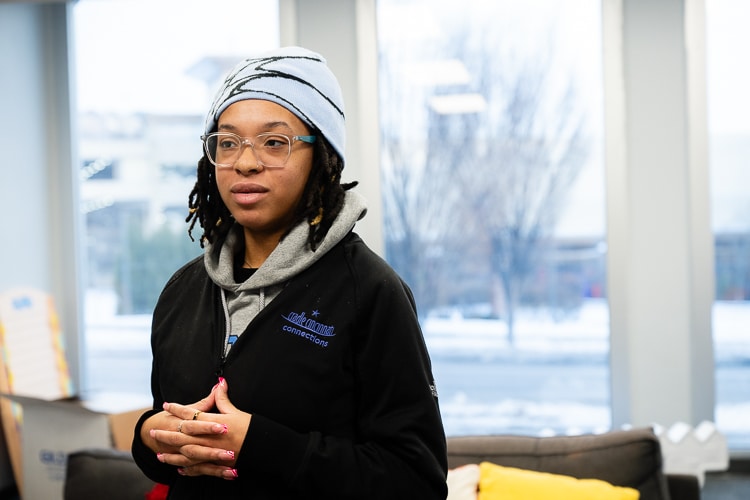
She found HEY! through the Talbert House, the Cincinnati-based nonprofit that provides a range of social services. “I started being around people who also went through the same experience as me, and we kind of grew together and helped each other out, because we knew what we were going through together, and we just uplifted each other.”
At its essence, that’s what HEY! is about. When parents, schools, and even church can’t provide the support needed, their peers can. “We can provide a community where our youth feel like they can see change,” Hopkins says. “They can see people growing and responding.”
Ariel started with HEY’s fellowship program, a competitive program whose members help guide the organization’s direction. The schools working group she participates in has enlisted more than 40 “schools of wellness.” These schools complete a self-assessment to better understand the health of their overall environment as it applies to mental wellbeing.
The work with schools is one of the group’s priorities, as schools are meant to be safe, protective environments, but too often are scenes of bullying, stress, and unfair discipline. Teachers, counselors and staff are not always well-equipped to protect and support students.
As one HEY! participant says: “School was one of the reasons I went to therapy.”
Godspeed David is a 17-year-old student at University of Cincinnati and a graduate of Loveland High School who found HEY! through a school counselor. “A lot of youth feel like they don’t have a third space they can go to where they can be themselves, be safe, be free,” he says. “They also feel like sometimes adults are not safe or they don’t feel comfortable with certain adults.”
He is a paid intern with HEY! and acts as a liaison between the working groups and the HEY! team. “We’re trying to make the people feel safe in their communities and wherever they are,” he says. “I just love being part of whatever we’re doing, like decision making and policy making stuff, or just doing outreach and helping out in the community.”

That work will soon be informed by a first-of-its-kind survey that will assess youth well-being, not through its symptoms of decline but through the lens of discovering what promotes youth well-being. The HEY! team is working with a Washington, D.C.-based consulting firm to discover what promotes youth mental wellness locally. That information should be available sometime this summer, Hopkins says.
The effort will survey people like Delaney Pennington, a 20-year-old UC student and graduate of Walnut Hills High School. She found HEY! through Youth at the Center, a not-for-profit that is a key partner the new organization. “I am using my lived experience to make an impact on systems and communities that don’t always listen to youth,” she says. “We want to make it possible and ensure that adults are listening to youth in ways that they haven’t before.”
In less than two years in existence, the HEY! effort has made a lot of progress, and perhaps its biggest achievement so far has been aligning the many organizations and partners that work with youth, and getting youth involved in tangible, meaningful, purposeful projects to improve the region’s mental health systems. But the system didn’t get out of whack overnight, and it won’t be adjusted that quickly either, which is why HEY! works from a 10-year strategy.
“This work is not for the faint of heart,” Hopkins says. “It takes a long time to see change when you’re working in systems and with systems.”
This series is made possible with support from Interact for Health. To learn more about Interact for Health’s commitment to working with communities to advance health justice, please visit here.
Author

Related Articles
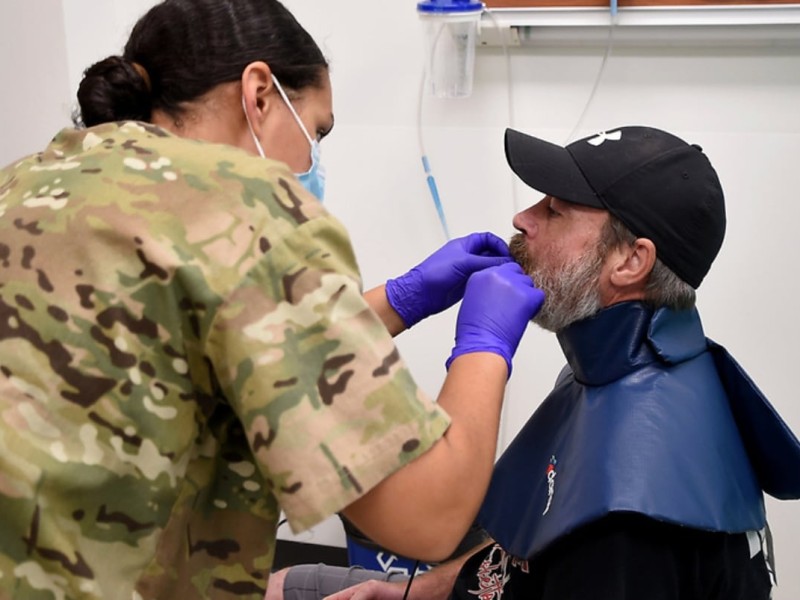
GuardCare partnership brings free healthcare to Ohio Appalachian residents
GuardCare provided free health services to nearly 500 Ohio residents, highlighting both collaborative solutions and persistent gaps in dental care.
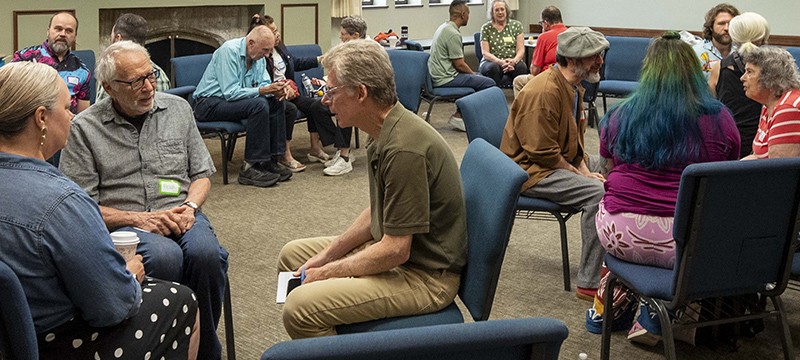
A not-so-radical idea to build healthy communities: Talk to the neighbors
Social capital – those connections that create and empower communities – is on the decline. But neighborhoods can restore it.
Primary care providers help expand oral health access through national training initiative
The 100 Million Mouths Campaign trains primary care providers to identify oral health concerns, expanding access and improving patient care beyond dental offices.