
Who lives in our communities is changing. Housing needs to change with them.
The housing picture is complicated by changing demographics in the first-ring suburbs.

Cincinnati’s first-ring suburbs face unique challenges. Changing demographics, economic stability, and issues regarding resources and security are common threads among these jurisdictions.
The ways the 49 Hamilton County cities, villages, townships, and municipal corporations not only adjust but thrive is the focus of this series, First Suburbs—Beyond Borders. The series explores the diversity and ingenuity of these longstanding suburban communities, highlighting issues that demand collective thought and action to galvanize their revitalization.
Many of the small towns, villages and townships in Hamilton County share a common problem – a stagnant or declining population. Without the revenue that new residents and jobs provide, it’s harder to maintain public services, let alone innovate or fund new community initiatives.
The solution to the population problem seems obvious – build housing. Not the million-dollar housing favored by homebuilders in the outlying suburbs. But housing that the kinds of people who live in these communities — working people, senior citizens, first-time buyers, and Gen Z — can afford.
There’s a well-documented shortage of affordable housing in Hamilton County. Much of the effort to expand the supply has been focused on the city of Cincinnati. But the older suburbs outside the city could hold the keys to making progress on closing the housing gap. With their stock of older homes, many of these towns already enjoy built-in affordability. Some are also finding ways to build new. They could help satisfy a need for housing that working people can afford.
The affordability problem has been building for years
For a long time, the housing in Cincinnati and Hamilton County was considered affordable when compared to other cities. It still is. But “Over the years things have changed,” says Liz Blume, a local community development expert and principal of Blume Community Partners consulting firm.
The foreclosure crisis and the Great Recession of 2008 and 2009 made home ownership less affordable. The construction industry suffered and retreated, with some companies going out of business. Years of slower-than-normal housing production followed. The pandemic of 2020 led to extremely low interest rates, which sparked a demand for housing. Without an adequate supply to meet the demand, prices rose steeply.
“We’re not San Francisco and we’re not Boston, but we absolutely have a problem,” Blume says. “Middle-class households in Hamilton County right now are having more trouble finding housing that they can afford to purchase in the places they want to live.”
That’s backed up by a study done for the Ohio Realtors trade group, which found that the affordable housing shortage is a long-term problem. “The potential future new housing supply will be unaffordable to the majority of households in Ohio, especially given the types of jobs projected to be added to the statewide economy between 2021 and 2031,” the study concludes.
The county’s housing picture is complicated by changing demographics and by outdated notions of who lives in the first-ring suburbs. “We have a narrative about what our neighbors look like — they’re homeowners, they have children, they’ve been in the community forever. That’s not true as much as you may think,” Blume says.
While the numbers will vary from community to community, countywide only 15% of the households are composed of married families with children, says Blume, citing census data compiled by Local Initiatives Support Corp. (LISC). The number of people living alone is growing: 35% of the households in the county — more than 120,000 — are single-person households. “They could be seniors, could be somebody young, could be somebody middle-aged, but they don’t have kids and they are living alone,” Blume says.
Much of the housing in the first-ring suburbs was built 60 to 100 years ago for a different kind of population, the classic household of four. That’s created a disconnect between the housing supply and the people who need homes today. Sixty-three percent of the dwellings in Hamilton County are single-family homes designed for families with children, a demographic that now represents only 15% of the housing market in the urban county.
These shifting tides are essential to understanding the housing puzzle, says Kristen Baker, executive director of LISC Greater Cincinnati. “Our first suburbs are changing,” she says. “The demographics are changing; the home ownership rates are changing.”
Local and elected officials who understand this shifting landscape will be able to respond to the needs of their communities into the future.
“When I think about a housing strategy in a community, the questions that come to mind are: Who lives here, what kind of housing do they need, does the community have that kind of housing, and can they afford it?” Blume says.
But small towns and villages often lack the expertise and money to pursue new affordable housing, which usually demands a tax subsidy or special financing to get off the ground.
Expertise and other resources are available from a variety of sources, including LISC, which can provide access to financing, as well as data and research to create a housing strategy. The Cincinnati Development Fund provides financing and technical assistance for affordable housing. Hamilton County government also has access to grants and other funding. “We really want to be a partner with the community to figure out what sort of support for housing projects we can help make happen,” says Angela Rahman, the county’s community development administrator.
Building affordable housing can also be stalled by the perception that it will bring a low-income clientele to neighborhoods. But the rising cost of housing is making it a stretch to make the monthly rent or mortgage for many who have steady jobs – young teachers, health care workers, service employees, government workers, and many others. The median household income in the county in 2024 was just over $72,000. The median price of a single-family home is $320,000. That’s unaffordable for a family making $72,000 a year. Working people need housing they can afford, which has given rise to the term “workforce housing,” a sector of the housing market that in Ohio refers to households that earn between 60% and 120% of the area median income. For a family of four that’s roughly $66,000 to $120,000.
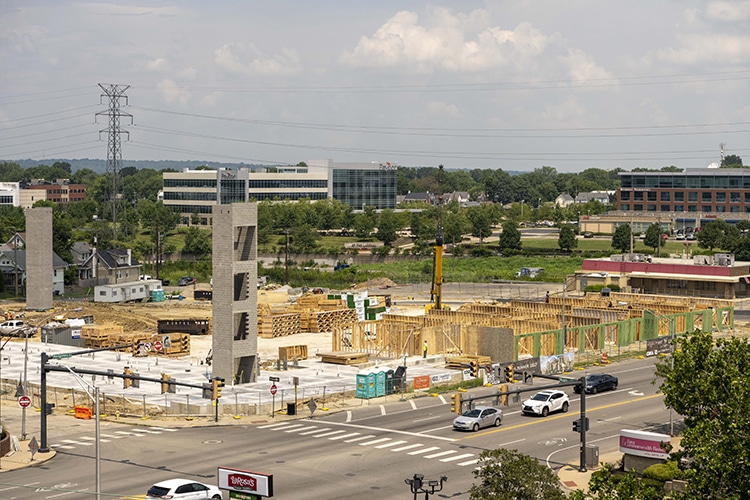
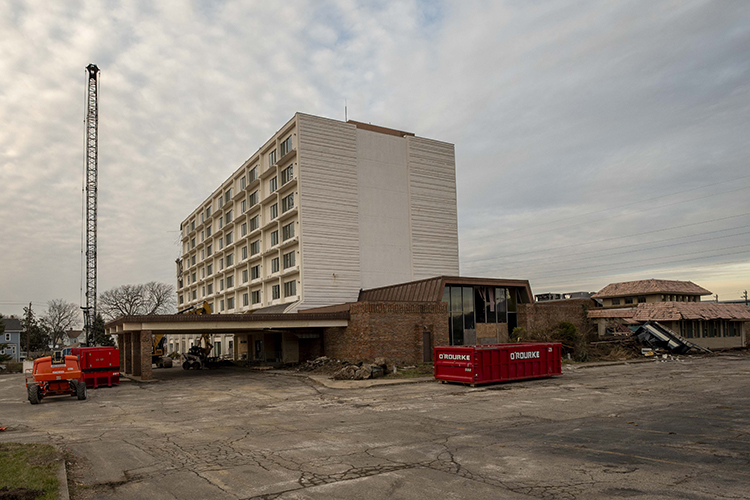
Affordable senior housing is another sub-sector that is needed for the county’s aging population. That’s the demographic for a project now under construction in the central Hamilton County city of Norwood. On the site of the now-demolished Quality Inn in the heart of the city of 20,000, two developers are collaborating to build a 178-unit apartment community for people 55 and over. It will be restricted to those earning roughly $44,000 to $63,000 for a household of two.
“These are people who worked to raise a family,” says Norwood Mayor Victor Schneider. “These aren’t doctors and lawyers. These are the people who kept this city humming and this country humming for years and years, and they deserve to have a place like this that they can afford to move into.”
Cincinnati-based PLK Communities is collaborating with Indianapolis-based developer Birge & Held to complete the project. It’s partly financed with help from the Cincinnati Development Fund and with low-income housing tax credits.
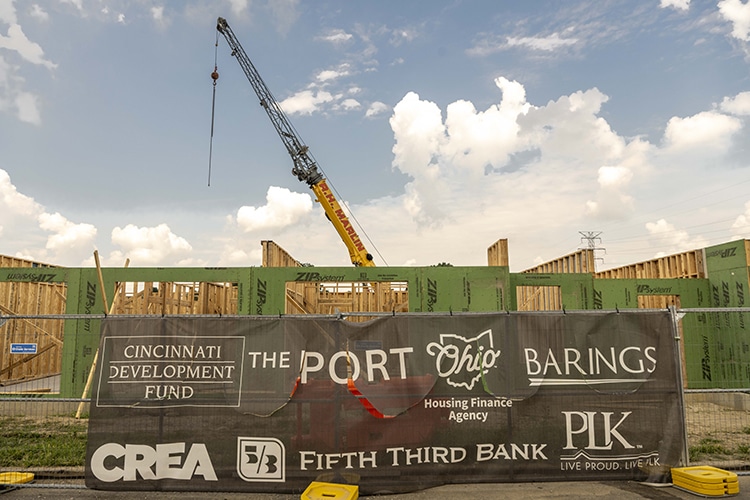
In the west side community of Delhi Township, an affordable senior living community, Pedretti Place, opened in 2025. The construction of 48 new apartments was financed partly with a grant and a loan made through Federal Home Loan Bank’s affordable housing program. The housing is owned and operated by the nonprofit Episcopal Retirement Services. It is restricted to people 55 and older who earn roughly $26,000 to $54,000 for a household of two.
Affordable housing for seniors can help communities keep people who may be longtime residents in their neighborhoods and by potentially opening up their previous homes, which may be old and in need of repair, to new owners.
“Building senior affordable is a really good thing for everybody,” Blume says.
The county’s first-ring suburbs appear to be a natural site for building affordable housing. There’s a ready market of buyers looking for a first home or who are ready to downsize. Government leaders and community groups need to be ready to reach out to developers and do the initial preparation to discover financing possibilities and sites. “We’ve talked with a lot of developers who have said, Sure, we’d be happy to do projects in Hamilton County, but we don’t know who wants this,” says LISC’s Baker. “It’s very helpful if a community has already done some of the groundwork and is welcoming.”
The First Suburbs—Beyond Borders series is made possible with support from a coalition of stakeholders including the Murray & Agnes Seasongood Good Government Foundation: The Seasongood Foundation is devoted to the cause of good local government; Hamilton County Planning Partnership; plus First Suburbs Consortium of Southwest Ohio, an association of elected and appointed officials representing older suburban communities in Hamilton County, Ohio.
Author

Related Articles
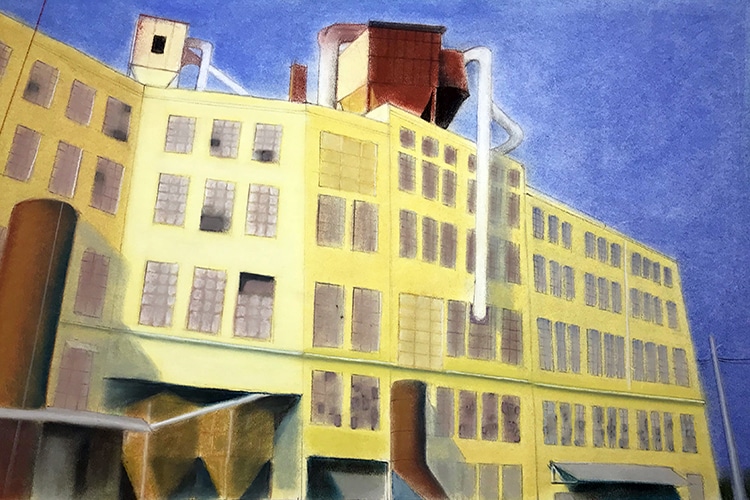
Historic properties are prime candidates for residential and mixed-use developments
The revival of legacy commercial, educational and manufacturing properties embraces sustainability, technology and adds housing.
Restoring Sedamsville one historic home at a time
An $8.4 million investment is bringing homeownership and a renewed sense of possibility to one of Cincinnati’s smallest neighborhoods.
In Middletown, data indicates a steadily improving housing market
An historic-home restoration specialist, a new-construction homebuilder, and a rental landlord offer their perspectives on housing opportunities.