Walnut Hills / E. Walnut Hills

Walnut Hills was the first Cincinnati neighborhood to participate in Soapbox's On the Ground series, an embedded journalism approach to learn what's happening in the underrepresenting neighborhoods that are being transformed. Stories covered everything from business and community development, arts and culture and education to health and wellness, crime and food insecurity. A community newsroom was held at Caffé Vivace hosted by the champion of 45206, Kathryn Gardette. 

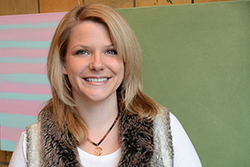
My Soapbox: Cate Yellig, Art Director, City of Covington

Cate Yellig knows how to build things. And how to use a blowtorch. The City of Covington's new art director talks economic development, world travels and how the region has become a magnet for talented, smart entrepreneurs and artists.

URBtank brings aquaponics to warehouse on McMicken

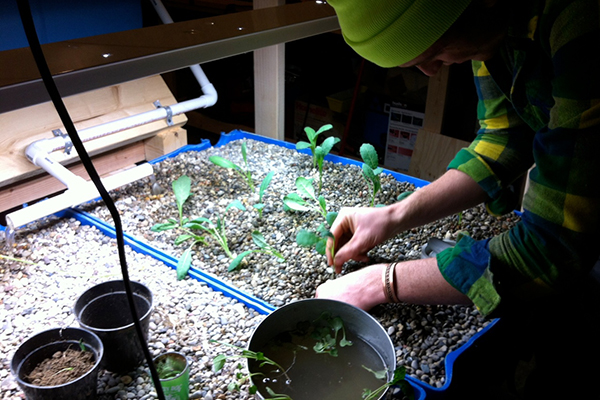
For URBtank, it’s all about the cycle. Kyle McGrath, 23, and Brad Ostendorf, 22, are the brains behind URBtank, an urban aquaponics system. The team, who both studied architecture at the University of Kentucky, worked on proposals and plans for the River Cities Project, which addresses ecological and economic conditions and tries to bring people back to the water. McGrath and Ostendorf couldn’t stop thinking about aquaponics all summer, and soon they found themselves building a system in Ostendorf’s garage in Cold Spring, Ky. Aquaponics uses fish to fertilize plants, typically of the edible kind and can function in any kind of climate, indoor or outdoor.  “Fish need nutrients, we feed the fish, they excrete waste, that fish waste can be turned into nitrates, which fertilize the plants themselves, so the plants then clean the water for the fish, and it gets returned back to the fish," says McGrath. "And it’s a close-loop cycle, so the water flows throughout the whole system." The pair is in the process of moving their system to a warehouse at 111 W. McMicken Ave. There, they have plans for massive expansion. “There thousands upon thousands of unused acres inside of old buildings, so why not tap into that?” Ostendorf says.  Space isn’t the only advantage. “There’s no interruption; it just keeps going. You take out the seasons, and you’re providing for the whole year." With no plans to stop, URBtank is currently growing microgreens, mizuna and watercress. Immediate plans include growing lettuce and other leafy greens. Both McGrath and Ostendorf are interested in fine dining, and they want to develop a community aspect to their business by allowing chefs to choose what they grow and hand-pick items for menus. “They have complete control over what they grow," says McGrath. "If they want Asian cress or mizuna or wasabi pea chutes, we can do that for them. For updates, follow URBtank on Twitter. By Gina Gaetano

Thinking outside the box: Home bakery turns Gail Yisreal into cake boss

Going on maternity leave changed Gail Yisreal’s life in more ways than having a new baby to take care of.   When she returned to work, Yisreal says she learned her position was no longer there, so she began to look for a different job. As wife and mother to a blended family of nine children, she might bake up to 11 birthday cakes in a year. But she hadn’t considered turning her knack for kneading dough into earning dough until she baked a wedding cake for a couple from her family’s place of worship. Not only did they like the cake, they suggested she start selling them.   Listening to her fans, Yisreal founded A “Mother’s Touch” Cakes with the nurturing tagline, “Making fresh homemade cakes when you don’t have the time.” Celebrating her two-year anniversary as a registered business in August 2012, A “Mother’s Touch” features signature and custom made flavors of fresh, savory gourmet, organic and vegan cakes and cupcakes that are good—and good for you.   “I didn’t know anything about decorating, so I took a class to learn more decorating skills," Yisreal says. "And I was shocked to find out that 95 percent of the cakes you buy are box cakes—because everybody wants the decoration. I started doing some research about the trans-fats and artificial ingredients, and I vowed that everything I baked would always be natural and from scratch.”     After working as a waitress for two years and in management at Starbucks for six years, Yisreal developed a love for coffee. She jokes that most ex-Starbucks managers feel they know enough about coffee to create their own line, which she actually did for A “Mother’s Touch.”   Having tried organic coffees with weak flavor profiles, she researched and found Dean’s Beans, a fair-trade pioneer that allowed her to design her own custom blends. Her signature A “Mother’s Touch” blend is made with Mexican and Indonesian beans and pairs with her carrot cake as an after-dinner coffee.   “I’m really proud of my coffee and the fact that it really was custom blended for what I wanted to complement my desserts,” Yisreal says. And, true to her mission to serve natural, sustainable goods, she says that her blends are 100 percent organic, fair-trade certified and are shade grown.   Being on the scene without a storefront hasn’t stopped Yisreal. Instead, she’s building her brand as the “cupcake lady” who networks everywhere and invites people to taste samples of her creations. Yisreal also tapped into hidden markets by hosting deals through social media.   “I did a Living Social promotion last year, which was huge,” Yisreal says. “That first day, I think I got 1,500 hits on my website, and probably about 85 deals, which I thought was really good for people who didn’t know who I was.”   And even though she sells more cakes today, the ease of transporting cupcakes built her clientele.   “When I first came out, because of my financial situation, literally, cupcakes were paying my rent,” she says. After she and her husband separated, she remembers what it was like to go from making an annual salary of $60,000 to less than $20,000 a year. But she doesn’t do it all alone.   “I have three almost-teenage girls; 12, soon to be 15 and 17, so they are my preppers,” Yisreal explains. “It’s hilarious because we’ll be in the kitchen and everybody has their big bonnets on, and they’re scraping carrots, mashing fruit, lining the liners. I have a girlfriend who I’ll sometimes sub-contract out to do deliveries. And if it’s a huge event—like for the Autism Foundation, I had to knock out 40 dozen cupcakes—I have two sisters, and at the time I had just split up with my husband so we were in literally an 800-square-foot apartment. The kitchen was all of maybe 150-square-feet, we put out six-foot tables and we were like an assembly line! It was hilarious, but we got it done. It was like an I Love Lucy episode!”   By Mildred Fallen  

Cincinnati Develop Funds’ Create Jobs for USA campaign targets Walnut Hills, Pendleton

Funding will allow building owners to improve vacant storefronts

Vegan Roots translates Cincinnati’s culinary favs

The hardest thing about being vegan, according to Caitlin Bertsch, isn’t figuring out where and what to eat; it’s other people’s reactions. “They’re worried I’m judging them, or think they don’t eat correctly.” Bertsch, the founder of Vegan Roots, launched her business with the creation of a vegan goetta that has garnered a lot of incredulous responses, but, Bertsch says, is loved by vegans and omnivores alike. “What I’m trying to do with Vegan Roots is to address that and say, 'Hey, there’s a lot of good stuff out there that can be made vegan.' Just because it’s vegan doesn’t mean it’s not tasty.” Bertsch is a Xavier University grad who studied math and sociology before earning her master’s degree in anthropology. A travel addict, she’s studied abroad and worked in international development overseas and in Washington, DC. When she moved back to Cincinnati and settled down in East Walnut Hills, she set out to find a job locally. “It’s hard to find international-related work in Cincinnati, so I needed to find another creative outlet,” Bertsch says. She enrolled in ArtWorks’ Springboard program, which helped her settle on goetta as her first product. She’d developed the recipe by gathering pork-based recipes, raiding her spice cabinet for just the right combinations and testing, testing, testing. When she brought her final creation in for Springboard classmates to taste, the vote was nearly unanimous: this could be the foundation of her business. Bertsch hopes to expand her footprint, and is anxiously searching for rentable, commercial kitchen space that would allow her to crank out larger batches. She currently supplies vegan goetta to the Brew House in Walnut Hills, which offers it as a salad topping, and Bella Vino in West Chester, which plans to add mini vegan goetta sandwiches to its menu. By Robin Donovan

Vegan Roots translates Cincinnati’s culinary faves

The hardest thing about being vegan, according to Caitlin Bertsch, isn’t figuring out where and what to eat; it’s other people’s reactions. “They’re worried I’m judging them, or think they don’t eat correctly.” Bertsch, the founder of Vegan Roots, launched her business with the creation of a vegan goetta that has garnered a lot of incredulous responses, but, Bertsch says, is loved by vegans and omnivores alike. “What I’m trying to do with Vegan Roots is to address that and say, 'Hey, there’s a lot of good stuff out there that can be made vegan.' Just because it’s vegan doesn’t mean it’s not tasty.” Bertsch is a Xavier University grad who studied math and sociology before earning her master’s degree in anthropology. A travel addict, she’s studied abroad and worked in international development overseas and in Washington, DC. When she moved back to Cincinnati and settled down in East Walnut Hills, she set out to find a job locally. “It’s hard to find international-related work in Cincinnati, so I needed to find another creative outlet,” Bertsch says. She enrolled in ArtWorks’ Springboard program, which helped her settle on goetta as her first product. She’d developed the recipe by gathering pork-based recipes, raiding her spice cabinet for just the right combinations and testing, testing, testing. When she brought her final creation in for Springboard classmates to taste, the vote was nearly unanimous: this could be the foundation of her business. Bertsch hopes to expand her footprint, and is anxiously searching for rentable, commercial kitchen space that would allow her to crank out larger batches. She currently supplies vegan goetta to the Brew House in Walnut Hills, which offers it as a salad topping, and Bella Vino in West Chester, which plans to add mini vegan goetta sandwiches to its menu. By Robin Donovan

More bike lanes, early planning for cycle track highlight city’s Bike Plan

Some of the city's biggest bike-related projects in the works for 2013 are still in the planning stages, but a few will continue and build on the momentum from last year.  This year, the city's Bicycle Transportation Program includes plans to finish more than two miles of bike lanes along Riverside Drive, a project that was started in 2009. Plans are also in the works to extend the Spring Grove bike lanes from Hopple to Bank Street downtown; proposals have been drafted for rehabilitation projects along Dalton Street, Bank, Western Avenue and Langdon Farm Road.  The City also hopes to continue its design work on the Ohio River Trail, extending bike-friendly paths from Salem Street to Sutton Road and Collins Avenue to Corbin Street.   The City is also in the early stages of looking to put Ohio’s first cycle track on Central Parkway between Ludlow Avenue and Liberty Street. “Cycle tracks aren’t mainstream yet, but New York City and Washington, D.C., have quite a few,” says Melissa McVay, senior city planner in the Division of Transportation & Engineering. “They’re the most family-friendly bike facility you can build.”   A cycle track is like a bike trail or shared path, but it’s in the street, for bikes only and separated from cars by a physical barrier, such as planters, trees or a curb. Cycle tracks are meant to keep cars from veering into bicyclists’ paths.   “A typical bike lane is usually enough to encourage cyclists to try them, but sometimes, they don’t make everyone feel comfortable,” says McVay. “The physical barrier of a cycle track is meant to make cyclists feel safe.”  One of the most exciting developments for bicyclists last year was the addition of a green bike lane on Ludlow last year. “It started the conversation among people who don’t ride bikes, and they’re beginning to see the infrastructure,” McVay says. “I feel like the bike community has grown, and there is now a growing city-wide awareness.” Approved by the City in 2009 and put into action in 2010, the Bike Plan outlines bicycle-related projects over the next 15 years. In all, the plan recommends 445 miles of on-street and off-street bike facilities, such as bike lanes, bike racks and multi-use trails.   In 2009, there were about seven miles of bike lanes and sharrows in Cincinnati, says McVay. In 2010, 2.3 miles were added; in 2011, 4.5 miles; in 2012, five more miles were added, for a total of 19 miles.   Since 1993, many bike-friendly projects have been implemented, including striping 12 miles of bike lanes, creating 21 miles of shared-use paths and trails and installing six miles of sharrows, or shared lane markings, throughout the city.   The bulk of the Bicycle Transportation Program's focus is on developing on-street and off-street bike facilities as outlined in the Bike Plan, but it also organizes bike-related events, proposing policy and zoning changes, and working on advocacy projects with Queen City Bike and Mobo Bicycle Co-op.   The public played a huge part in developing the Bike Plan by utilizing online tools to show the City where bike facilities were needed.   Even though there has been an outpouring of public support for bike facilities, there are still issues when it comes to removing parking. The City proposed a project along Spring Grove Avenue this past summer that would consolidate on-street parking to one side of the street, but businesses liked having parking available on both sides of the street.   “The project will be successful if the community comes together and rallies around the project, and the trade-off of on-street parking for a bike lane will ultimately benefit both business owners and bicyclists,” McVay says. The City wants to hear from you! Take the survery and grade Cincinnati on different bike-friendly aspects around town.   By Caitlin Koenig Follow Caitlin on Twitter

Former educators open Kitchen 452 in Walnut Hills

Kitchen 452’s small dining room only holds six tables, but the restaurant is going to pack a big punch. Its menu is full of comfort food, such as sandwiches and soups, all delivered with fun twists.   Kitchen 452 will open from 6 to 9 p.m. on Jan. 25 during Walk on Woodburn, but the restaurant’s official grand opening is Feb. 1, when it will begin its regular lunch hours, from 11 a.m. to 2:30 p.m.   Jen Lile, 39, and her business partner, Leah Joos, 29, began looking for restaurant space last May. Neither went to culinary school—they were academic advisors at the University of Cincinnati’s honors college, and through helping their students follow their dreams, they realized what their own was.   “After doing some research, we found out about SpringBoard Cincinnati,” says Joos. “We enrolled in courses there, then found the space on Woodburn, solidifying our idea.”   Joos’ interest in food started in her grandmother’s kitchen. She and her sister considered it a playground, and their grandmother let them make whatever they wanted.   But she didn’t really start cooking until graduate school. “I wasn’t good at it, but it gave me a good sense of focus and a creative outlet when my brain was drained,” she says.   Lile spent time in Europe and saw a difference between how food was appreciated and prepared that she didn’t see in the United States. When she came back, her idea of food changed and she became interested in learning about food. “Before my trip to Europe, I considered boiling water cooking,” she says. “My kitchen became the space where I really wanted to be.”   Joos and Lile designed Kitchen 452’s menu around traditional comfort food. “We like to play around with different flavors and try different flavor combinations together,” says Lile.   For example, their turkey sandwich is on bread fresh from the bakery, with a cranberry and orange chutney, which is balanced with crispy shallots on top; Kitchen 452’s tomato soup is topped with a parsley and garlic gremolata. Joos and Lile also wanted to focus on foods that feel like the seasons, so when it’s dark and wintry outside, there will be warm and hearty dishes on their menu.   “We want people to feel like they matter,” says Joos. “We want to get to know our customers, because we know that people make a decision when they go out to eat, and we want them to choose Kitchen 452 and keep coming back.”   Joos and Lile want to do things that can connect them with people on different levels as well. They plan to offer themed dinners at Kitchen 452, and possibly offer educational classes. One of their ideas is an oil and vinegar tasting that will teach customers how to incorporate different oils and vinegars into dishes they cook on a daily basis.   Kitchen 452 will also offer catering for business meetings and special events, with menus tailored to customers’ needs.   “It’s exciting for us and for our customers to try out different recipes that aren’t necessarily on our menu,” says Lile. “We want to help create custom menus and be part of important events in other people’s lives.”   By Caitlin Koenig Follow Caitlin on Twitter

SpringBoard grads infuse city with creative startup energy

Laura Chenault took an abandoned garage on Spring Grove Avenue and transformed it into a space for everything from filming indie documentaries and music videos to hosting cooking classes, dinner parties and dance parties, too. But she didn’t do it alone.

ESCC helps nonprofits maximize output

In 1995, a small group of retired business executives came together with the intent of giving back to their community by investing their time and talents in work that would assist nonprofits. Now, nearly 18 years later, Executive Service Corps of Cincinnati is the recipient of an $85,000 award that will help more than 130 volunteers provide low-cost, high-quality strategic thinking, planning, training and coaching to other nonprofits in need.  The recent funding will help the ESCC implement its Community Benefit Business Model, which, according to Andy McCreanor, executive director and CEO of the organization, is a model that has essentially always existed within the nonprofit, but has now been refined and strengthened. The model helps nonprofits maximize results so that they may receive additional funding to better fulfill their missions, which ultimately works to improve the communities they serve. “It enables investors to get more out of the nonprofits that they’re investing in, and secondly, it helps the nonprofits because we’re affordable," says McCreanor. "We’re merely a vehicle so that the community gets the benefit that they’re trying to get." The ESCC has worked on long-term projects with more than 500 nonprofits in Cincinnati, Northern Kentucky and Southeast Indiana since 1995, including most recently the Jewish Federation of Cincinnati. ESCC also offers a 10-month program at its Nonprofit Leadership Institute each year; and at its culmination in June, more than 100 nonprofit leaders from Cincinnati will have graduated.  McCreanor says that because of the recent economic downturn, nonprofits have suffered and organizations are reevaluating and assessing their goals and missions. “We’re here to help,” he says. “If you’re struggling out there, it really doesn’t cost anything to talk about what you’re dealing with, and if in fact there is a way for us to help, it’s going to be done at a very low cost, so it’s kind of the best of all worlds.”  Do Good: • Sign up to attend classes at the Nonprofit Leadership Institute. • Volunteer your business skills and experience to serve other nonprofits. • Reach out to the ESCC if you are a nonprofit that could benefit from its services. By Brittany York  Brittany York is a professor of English composition at the University of Cincinnati and a teacher at the Regional Institute of Torah and Secular Studies. She also edits the For Good section of SoapboxMedia.

Our Partners

Taft Museum of Art

Common Ground Is Brewing

Support local stories and receive our signature roast straight to your door when you join at the Standard level (or above).

Drink Better, Read Local

Close the CTA

Don't miss out!

Everything Cincinnati, in your inbox every week.

Close the CTA

Already a subscriber? Enter your email to hide this popup in the future.