Price Hill

Price Hill is on Cincinnati's western edge overlooking the downtown basin. Locals love long-standing family-owned business like Incline Public House, Primavista and Somm Wine Bar. Once home to Pete Rose and the headquarters of Slush Puppies, Price Hill still houses a major food manufacturing plant for hometown-based Kroger. Mt. Echo Park offers sweeping views of the Cincinnati skyline, and Cincinnati Christian University resides along Glenway Avenue, attracting young students from all over the world to this unique and historical area of town. Groups like Price Hill Will and Cincinnati Landmark Productions are helping to revitalize the area with new entertainment options, local businesses and neighborhood restorations.

Price Hill Will acquires St. Lawrence property to turn into public square

The East Price Hill Improvement Association was awarded $107,500 from the city through the 2013 Neighborhood Business District Improvement Program for the development of the St. Lawrence Corner Public Square. Price Hill Will, an independent organization that focuses on comprehensive community development, will administer the project.   Price Hill Will purchased the property in early 2012. The property was home to a three-story Tudor-style building that burned down in 2010 and has been vacant since.   “Before it burned down, the building was an anchor for the area,” says Matt Strauss, director of marketing and neighborhood promotion for Price Hill Will. The organization had had its eye on the building, and Strauss is now looking forward to turning the land it used to sit on into something great.   The property will become a public square, which will include a stage and water feature. Once completed, the square will be a gathering place for the neighborhood and a place for events such as the Price Hill Cultural Heritage Fest, says Strauss.  Construction on the square began last week, and will be finished in the next few months. Price Hill Will worked closely with Price Hill residents on the plans for the square.   “We wanted to reflect the people of the neighborhood, and their dreams and aspirations for the area,” says Strauss. Residents were able to provide feedback on what they wanted for the square, and even what they wanted it to look like.   The property sits near the edge of East and West Price Hill and acts as a gateway for the neighborhood. Strauss hopes that like the building, the square will become an anchor and point of pride for Price Hill and its residents.   By Caitlin Koenig Follow Caitlin on Twitter

Twelve neighborhoods receive $1.65 million for projects

The City of Cincinnati Economic Development Division and Cincinnati Neighborhood Business Districts United (CNBDU) recently allocated $1.65 million to 13 projects for the 2013 Neighborhood Business District Improvement Program.   John Price, then-president of the Clifton Business Association, started CNBDU in 1992. He gathered all of the business association presidents in Cincinnati because he wanted to figure out a way to get funding for those neighborhoods that weren’t downtown, says Mike Wagner, president of CNBDU.   Over the years, CNBDU has appropriated about $33 million between federal and city money, and leveraged more $350 million in private money, to support non-downtown neighborhood projects.   CNBDU awards money annually to Cincinnati neighborhoods through the NBDIP, which receives federal money from the City’s Community Development Block Grant and city capital funds. Neighborhoods can use the money for a variety of capital improvements and other uses to promote economic development in their business districts.   Each neighborhood is allowed to apply for one major and one minor ask, says Bill Fischer, division manager of economic development for the City. The maximum amount for a minor ask is $30,000; there isn’t a maximum amount for a major ask. There are generally more minor-ask projects accepted because more projects can get done.   This year's process began in June when 29 neighborhoods submitted their initial proposals, which totaled $3.1 million in requests. A 28-member peer advisory group of community members who had submitted proposals and representatives from neighborhood business districts reviewed the proposals. In September, the reviewers took a bus tour of the project sites.   “There wasn’t much to look at when we first started CNBDU,” says Wagner. “But now we can see what has been accomplished in the past 17 years.”   In October, the peer group made recommendations to the City’s Economic Development Division after hearing presentations from the different neighborhoods. Neighborhood groups were notified at the end of November if their proposals would be turned into a project through NBDIP.   “Each neighborhood has a different approach to the project proposals,” says Fischer. “Some are looking to maintain what’s already there, whereas others are looking to create new business.”     CNBDU funding is in addition to the Focus 52 program, a combination of bond and casino revenues, which will create a pool of $54 million for neighborhood projects throughout the city.   The neighborhood projects that were awarded money through the NBDIP are: Walnut Hills: Park-Kemper Streetscape Design, $30,000West Price Hill: Covedale Center Marquee/Community Message Board, $79,145Roselawn: Business District Feasibility Study, $30,000Clifton: Ludlow Avenue Storefront Improvement Program, $77,500Westwood: Parking Lot Renovation, $30,000Northside: Hoffner St. Garden, $80,000Northside: Dhonau Garden, $30,000Corryville: Façade Improvement Program (continuation), $236,397Bond Hill: Bond Hill Identity Project, $30,000East Price Hill: St. Lawrence Corner Public Square, $107,500Pleasant Ridge: 6025 Montgomery Acquisition & Redevelopment, $150,000Avondale: Reading, Rockdale & Forest Streetscape, $400,000Mt. Adams: Streetscape Completion, $375,000By Caitlin Koenig Follow Caitlin on Twitter

Breaking the cycle of bad eating, one banana at a time

The Nutrition Council of Greater Cincinnati is working to break the cycle of unhealthy eating habits, one banana, one yogurt parfait and one recipe at a time.   And, they are doing it one family at a time.  The Council, in its 35th year, just wrapped up its latest series of "What’s Cooking?" classes for parents and caregivers of kids in Camp Washington and Winton Hills.  The classes, offered each fall and spring, are a four-part series that meet for about an hour after the school day ends at schools with Head Start programs. They are designed to show parents how to make quick, affordable and healthy meals for their families. Each week is themed, and participants receive take-home tools like measuring spoons and grocery cards. Parents also get multiple recipes that encourage cooking at home, rather than relying on packaged and processed foods.  The classes and the Council’s work come at a time when the nation—and Cincinnati—is getting fatter. Childhood obesity has more than tripled in the past 30 years, according to the Centers for Disease Control and Prevention. Currently, one in four Cincinnati Public School kindergarten students is overweight (13.9 percent) or obese (11.7 percent).   “I think what strikes me is that things I am aware of and take for granted, not everyone does,’’ says Tracy Wilking, the nonprofit’s special project manager, who worked at the Winton Hills location this fall.   In 2011, nearly 100 families participated in the cooking sessions. And of those, according to the Council’s web site:  • 85 percent reported they changed one action to improve a targeted health behavior.• 67 percent of families increased their consumption of fruits and vegetables.• 67 percent said they decreased their child’s sweetened beverage intake.  Wilking says it is not uncommon to hear parents share how the instruction really does change cooking habits, from eating as a family to introducing fresh fruits and vegetables at meals. One recent participant told one of the Council workers that she had completely changed how her family was eating.   The Council targets very young children, before habits are established and before they start kindergarten. Wilking says many parents may not have been taught how to eat healthy, and the earlier the Council and others can share information with parents, the more likely the cycle of poor food choices can be broken.   In addition to the cooking series, the Council also visited 38 Early Childhood Education classrooms in the Cincinnati area over 17 days to teach parents and their kids how to make healthy snacks. Recently, they made fruit and yogurt parfaits.   “A little education really can go a long way,’’ says Wilking. “This work is reaching individuals and those with the power to reach someone else.”  Do Good: •  Make a donation •  Volunteer your time or skills. • Like the Council on Facebook.• Follow the Council's news on Twitter.  By Chris GravesChris Graves, assistant vice president of digital and social media at the Powers Agency, is using several of the Council’s recipes at home with her two teens.  

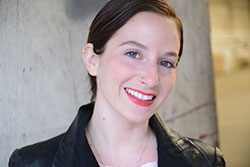
My Soapbox: Duru Armagan, organizer, Rise of the Cool Kids

You may know Duru Armagan as the owner of OTR's Sloane Boutique. This month, she styles Rise of the Cool Kids (ROCK), a projection fashion show and performance that highlights streetwear and Cincinnati's growing fashion scene. She shares the details with Soapbox's Robin Donovan.

Spun Bicycles gearing up for 2013 opening

Judi and Dominic LoPresti met in a bike shop. Their first date was a bike ride. They even got married at an international bike show in Las Vegas. Next year, the Cincinnati natives will fulfill a lifelong dream to open their own bike shop when they welcome customers to Spun Bicycles in Northside, at 4122 Hamilton Avenue in the storefront space of historic Hoffner Lodge. They've leased the storefront space and are already busy planning for the space, which will have a 60-inch TV screen pumping BMX videos and music and a bench constructed out of skateboards. "Cincinnati hasn't seen anything like this," says Judi LoPresti, who worked as a bicycle messenger in San Francisco and raced for three years before deciding that the traditional riding scene was not for her. "We just want to have a bike shop that's going to be really cool." With her background in bikes of all sorts and her husband's history as a sponsored BMX rider, the couple spent countless hours volunteering for MoBo, the city's only bicycle co-op. She spent most of her time volunteering with youth programs, including summer initiatives that provided bikes for neighborhood kids. What she noticed, over and over again, were people who didn't want to work on their own bikes, which MoBo supports, but just wanted their own bikes fixed. "The neighborhood needs a bike shop," she says. While it won't be a focal point of Spun, the couple does plan on selling locally crafted skateboards by Fickle Boards. But the shop's main focus will be restoring and repairing bikes, selling bikes and supporting the local biking community. Judi LoPresti says that he shop's location next to The Listing Loon will make it easy for customers to drop of their bikes for repair, stop next door for beer or wine, then come back to pick up their fixed wheels. She sees a symbiotic relationship with MoBo and the newly opened Wrong Brothers bike shop in nearby Northside International Airport. "I'm really excited," says Judi, who currently spends days tending the coffee bar at Sidewinder. "There are ton of people looking forward to it." The LoPresti's get occupancy next month and hope to have their logo on the windows soon. Inside, though, they have lots of renovation and design work to do. Still, Judi LoPresti hopes to have the doors open by late March 2013. Currently, We Have Become Vikings is designing Spun's logo, which should be unveiled this month, and the shop's website, which will launch next year. By Elissa Yancey Follow Elissa on Twitter

Vacant CPS schools recently sold at auction

On Nov. 8, Cincinnati Public Schools auctioned 13 school buildings and four land parcels, valued at more than $27 million, according to the county auditor's office. Eleven of the buildings sold, along with one piece of land. Bidding opened on Nov. 5 at $50,000; at the close of the auction, CPS made $3.5 million, which was more than enough to complete the district's Facilities Master Plan.   The FMP was part of a bond levy that was passed in spring 2003 that combined state and other funds for a $1 billion build-out of the district. In the next 18 months, every school currently in use by CPS will either have been renovated or rebuilt to create a better environment for students, faculty and staff.   As part of the FMP, many of the schools that were sold at auction were “swing” schools, which means they were used for classes while other schools were being renovated. After renovations, CPS no longer had a need for the schools, but wanted the buildings to have second lives.   “As part of the plan, we knew we couldn’t overbuild, and we didn’t want to under-build,” says Janet Walsh, director of public affairs for CPS. “The consequence of that was that there were some beautiful buildings that we weren’t able to use as school buildings, but could be used by the community in other ways.” The district's approach, as it has been before, was to put the buildings up for auction.   CPS held a successful auction about three years ago, but this one included more buildings and raised more money than expected, says Eve Bolton, board president of CPS. Some of the schools that didn’t sell in the 2009 auction sold this time around.   “The reality is that the economic upturn in this region and the interest in Greater Cincinnati leaves a stock of historic, well-built schools empty,” says Bolton. “We want to see our buildings reused and recycled so that they can be beneficial to the neighborhoods they are a part of.”   State law allows CPS to auction off unused buildings, but only after they have first been offered to local charter schools. Those left after auction can be sold on the public market as pieces of real estate. Buyers have no legal restrictions regarding what the school buildings can be used as—some of the buildings will become other schools, residential housing or office buildings; others will be torn down and something else will be built in their places.   CPS schools and land included in the Nov. 8 auction:Burton Elementary School, 876 Glenwood Street, North Avondale: sold for $305,000; built in 1966, last class in 2008Central Fairmount Elementary School, 2475 White Street, South Fairmount: sold for $310,000; built in 1900, last class in 2012Heberle Elementary School, 2015 Freeman Avenue, West End: sold for $60,000; built in 1929, last class in 2007Hoffman Elementary School, 3060 Durrell Avenue, Evanston: sold for $200,000; built in 1922, last class in 2011Kirby Road Elementary School, 1710 Bruce Avenue, Northside: sold for $230,000; built in 1910, last class in 2005Lafayette Bloom Middle School, 1941 Baymiller Street, West End: sold for $60,000; built in 1915, last class in 2006Linwood Fundamental Academy, 4900 Eastern Avenue, Linwood: sold for $75,000; built in 1927-29, last class in 2005Losantiville Elementary School, 6701 Elbrook Avenue, Amberley Village: sold for $525,000; built in 1954, last class in 2008Old SCPA, 1310 Sycamore Street, Pendleton: sold for $1.3 million; built in 1910, last class in 2010Old Shroder Junior High School, 3500 Lumford Place, Kennedy Heights: sold for $150,000; built in 1956, last class unknownParadrome Street parcel, Mount Adams: sold for $135,000Winton Montessori School, 4750 Winton Road, Winton Place: sold for $265,000; closed in early Nov. 2012George F. Sands School, 940 Poplar Street, West End: not sold, valued at $1.89 million; built in 1912, last class in 2007North Fairmount Elementary School, 2001 Baltimore Avenue, North Fairmount: not sold, valued at $2.2 million; built in 1954, last class unknownE. Apple Street parcel, Winton Hills: not sold, valued at $485,628Terry Street parcel, East Price Hill: not sold, valued at $13,400Site of old Millvale school building, 3277 Beekman Street, Millvale: not sold, valued at $135,550By Caitlin Koenig Follow Caitlin on Twitter

Faces Without Places founder wants to see homeless program expand

Karen Fessler has a message she wants you to hear loud and clear: Faces Without Places is alive, well and kicking.  For years, the nonprofit, grassroots organization that has provided nearly $1.5 million in educational support for homeless children in Greater Cincinnati was affiliated with the Cincinnati Public Schools. But about two years ago--and for a variety of reasons--the organization split with the school system, says Fessler, who is a board member and a founding member of the 17-year-old group.   But its mission remains intact, says Fessler.  “The most important part of the program is that we get kids out of shelters, we get kids off the streets and we show them that education is a way to experience a larger world,’’ says Fessler. “We want to broaden our reach. We want to broaden our horizons.”  Fessler declines to discuss what led to the parting of ways, but adds the founders of the program all left their jobs at CPS as well.   “But none of us lost our passion for the kids and the mission of Faces Without Places,’’ she adds. “I want people to know that we are here, and we are committed to providing services. We are toughing it out through thick and thin--for the kids.”  The nonprofit helps about 3,000 school children annually in Greater Cincinnati. Last year, the group provided 7,702 services to 3,013 children, according to its website. Those services included providing taxi services to school for 112 students, uniform vouchers for 777 students, backpacks and supplies for more than 839 students and Payless gift cards for 320 students so they could get a new pair of shoes, a luxury for many, Fessler says.  The nonprofit is best known for its Yellow Bus Summer Camp, which completed its 15th year this past summer. Last year, 152 children attended the eight-week camp that focuses on reading and day trips.  Earlier this month, the group’s biggest fundraiser--the Yellow Bus Ball--raised more than $23,000, most of which will go to fund the camp.   “The ball is critical because we have to have money to pay teachers and buy supplies,’’ Fessler says. “We can get grant money for field trips, but the fundraiser really helps us be able to put on the camp to the degree we have always done it.”  Fessler has worked with thousands of homeless children over the years, and she readily admits she is biased toward teens.   “A lot of people don’t realize this, but these kids are completely out on their own; they are either staying at friends' or living eight, nine, 10 kids piled up in an apartment,’’ she says. “They are squatting and some are living on the streets trying to negotiate life … they are all living life on the edge. I am most impressed by their sheer tenacity and their desire to find a better life.” Do Good:  • Register for the Mt. Adams Yellow Bus Pub Crawl on Saturday, Nov. 17.  • Attend the 5th annual Chili Taste Off on Dec. 9 at Northside Tavern.  • Contribute to Faces Without Places' wishlist of school and personal hygiene supplies.  • Sign up for the monthly email newsletter.  • Give back while you shop.  By Chris GravesChris Graves is the assistant vice president of digital and social media at Powers Agency

Chaitkin shares music, appreciation through rec center concerts

Nathanial Chaitkin, 42, wants to spread his love for classical music with the $6,000 grant awarded to him by the Cincinnati Arts Ambassador Fellowship.  At age 11, he started playing cello. He continued his studies at the Juilliard School, the University of Michigan and at University of Maryland, where he received his doctoral degree. Chaitkin worked as a freelancer for a few years after college and then played with the orchestra of the United States Marine Band in Washington D.C. for eight years. After teaching at Michigan State, he and his wife moved to Cincinnati, where he currently teaches at CCM prep and privately. With the grant money from the City, Chaitkin plans to hold concerts at Cincinnati Recreation Commission centers in underserved neighborhoods in Cincinnati. Specific locations have yet to be determined. Chaitkin says he has wanted to stage these kinds of performances for about 20 years now. When he was in college, unlike many of his music school peers, he spent time with students involved in other disciplines. It helped that he lived in a dormitory with football players and was also a history major. Most of the music students, he says, were segregated from the rest of the school, and he wanted to bridge that gap. Therein evolved his idea to show people who have not been exposed to classical music that they can enjoy it, too. He wants his new concerts to be interactive so that he can engage the audience in a discussion about music. Chaitkin plans to incorporate a piece composed by his college roommate, Evan Hause, who wrote several original songs for Chaitkin.  In addition to traditional classical pieces, like Bach and Hindemith, he will play songs that most people won’t expect a celloist to play, like something by The Beastie Boys or “Impossible” by Shontelle.  “I don’t think that everybody feels comfortable getting past those assumptions they have about it [classical music],” says Chaitkin. “For me, the goal is to sweep that aside and put the music in a place and a context where they feel comfortable.” The artist also hopes that the concerts will spark the appreciation of classical music and encourage people to become active members of the performing arts community. The benefits are many, including to the city’s economic status. Chaitkin’s other goal is for his project is to inspire people to create art programs in underserved neighborhoods, like MyCincinnati in Price Hill. Currently, Chaitkin is also considering creating a string quartet to accompany him at one of these concerts. Do Good: • Donate to MyCincinnati, an after school arts program for children, which shares the power of music with children in underserved schools. • Learn more about the CRC centers in Cincinnati. • Find out about art programs and events going on in Cincinnati. By Stephanie Kitchens

Big plans in the works for Cincinnati

As many areas of Cincinnati are being rejuvenated, including OTR and Washington Park, the City of Cincinnati approved a comprehensive approach to focus on development in the city as a whole, not just targeted neighborhoods.  Last Friday, the City Planning Commission approved and adopted Plan Cincinnati, which was designed with input from residents. The Plan is an opportunity to strengthen what people love about the city, what works and what needs more attention, says Katherine Keough-Jurs, senior city planner and project manager.   The idea is to re-urbanize suburbanized Cincinnati; in a sense, to return to the strengths of the city's beginnings. Cincinnati was established just after the American Revolution in 1788 and grew into an industrial center in the 19th century. Many of those industries no longer exist in the city, which is part of why Cincinnati has become more suburbanized in the past 50 years. One of the long-term goals of the Plan is to bring new industries to Cincinnati.   With a new approach to revitalization, Cincinnati is blazing the trail for other cities. With a focus on building on existing strengths rather than tearing down structures and creating new ones, the Plan aims to capitalize on the city's “good bones” and good infrastructure.   Cinicinnatians had a huge role in developing the Plan. The first public meeting for the Plan was held in September 2009, when residents offered their insights into “what makes a great city?" and "what would make Cincinnati a great city?” A steering committee of 40 people representing businesses, nonprofits, community groups, local institutions, residents and City Council helped develop the Plan. The Plan also got support from a grant from the Partnership for Sustainable Communities, which the City received in 2010. The grant allotted $2.4 million over three years to support the Land Development Code, which combines and simplifies Cincinnati's codes, reviews the development process, implements Form-based Codes and considers more creative uses for land. The grant allowed the city to start implementing some of the ideas voiced in public meetings.   Visionaries included youth, too. City staff worked with community centers and Cincinnati Public Schools to develop an art project for children. They were given clay pots and asked to paint their fears for the city on the inside and their dreams for the city on the outside. The children saw the big issue was quality of life, just like the adults did.   “It was an interesting way to get the kids involved and thinking about the future,” Keough-Jurs says.   The Plan aims to strengthen neighborhood centers—the neighborhoods’ business districts. It maps out areas that people need to get to on a daily basis and found that most are within about a half-mile of the business districts. But in some neighborhoods, residents can’t access their neighborhood centers. The accessibility of a neighborhood center is based on walkability—not just for pedestrians, but also about how structures address walking. For exampke, if a pedestrian can walk from one end of the neighborhood center to the other without breaking his or her pattern (the window shopping effect), the area is walkable; if he or she has been stopped by a parking lot or vacancies, it’s not walkable, Keough-Jurs says.   The neighborhood centers are classified in one of three ways in the Plan: maintain, evolve or transform. Some neighborhoods have goals to maintain levels of walkability, whereas others need to gradually change or evolve. Still others need to completely transform in order to strengthen their business districts.   “Cincinnati is at the heart of the region,” Keough-Jurs says. “If we strengthen Cincinnati, we strengthen a region.” The next step for the Plan is to go before the Cincinnati City Council, specifically the Livable Communities Committee, which is chaired by Vice Mayor Roxanne Qualls.   By Caitlin Koenig Follow Caitlin on Twitter

Go West: Broadhope Art Collective inspires new thinking in Cheviot

Five artists share one vision in Cheviot: work together to share inspiration and build a creative community on the West Side. The result? The Broadhope Art Collective, which opened last week. 

Our Partners

Taft Museum of Art
Warsaw Federal

Don't miss out!

Everything Cincinnati, in your inbox every week.

Close the CTA

Already a subscriber? Enter your email to hide this popup in the future.