
Metro now offers stored-value cards to riders
Many city-dwellers are continuously faced with the arduous task of budgeting their quarters between two priorities: bus fare and laundromats.
For those seeking an urban environment with a funky blend of Victorian homes, eclectic and traditional businesses, a long tradition of community activism and one of the most diverse neighborhoods in Cincinnati, you can't go wrong with Northside. Home to the legendary 4th of July parade, the Northside Farmer's Market, Shake It Records, the Gay and Lesbian Community Center of Cincinnati, popular watering holes like the Comet and Northside Tavern and an active community council, Northside is all about preserving its strong grassroots heritage. One of Cincinnati's most walkable neighborhoods, Northside also features multiple green spaces, including Hoffner Park, the central site of numerous festivals.
Many city-dwellers are continuously faced with the arduous task of budgeting their quarters between two priorities: bus fare and laundromats.

The project is titled “MUST LOVE CATS,” and it will be an album of five compositions.

This week marks the launch of a new Soapbox series: Demand Better Cincinnati. We'll explore a new issue each week and sift through what's been done, what's being done and how we can push our current and future leaders to, well, demand better.

As election day approaches, we'll be re-running our four-part Demand Better series in an effort to spark conversations and provoke thought about how we can demand more from our city's leaders. This week, we take a look at the topic of architecture.
On July 24, the City of Cincinnati adopted Nextdoor, a free, private social network for you, your neighbors and your community. The goal is to improve community engagement between the City and its residents, and foster neighbor-to-neighbor communications. Each of Cincinnati’s 52 neighborhoods will have its own private Nextdoor neighborhood website, which is accessible only to residents of that neighborhood. City administrations and several city departments will also use Nextdoor to share important news, services, programs, free events and emergency notifications to residents, but they won’t be able to see who is registered to use the site or the conversations among residents. Founded in 2010 in San Francisco, Nextdoor’s mission is to bring back a sense of community to the neighborhood. The site was tested in 175 neighborhoods across the country, and results showed that neighborhoods had some of the same issues, plus a variety of different issues. “We all remember what our neighborhood experience was like as kids, when everyone knew each other, looked out for one another and stayed in the community longer," says Sarah Leary, co-founder of Nextdoor. “We want to invoke that nostalgia for neighborhoods.” To date, Nextdoor is being used by about 17,000 neighborhoods across the country. In June, Nextdoor partnered with New York City and Mayor Bloomberg to communicate with the city’s 8.3 million residents. The site plans to roll out in other major cities like Cincinnati over the course of the next several months. Nextdoor also recently released its iPhone app. “We’re really putting the lifeline of the neighborhood into the palm of the residents’ hands,” says Leary. “The common thread is an interest in using technology to make connections with neighbors. But it doesn’t stop there—once people have an easy way to communicate, they’re more likely to get together in the real world.” You can sign up for Nextdoor on its website, or download the app in the App Store. By Caitlin Koenig Follow Caitlin on Twitter
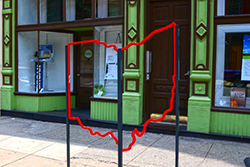
As Managing Editor Elissa Yancey moves on, she reflects on two years of inspiring people and great stories.
Although Huit doesn’t have a physical restaurant location yet, its ribs are already making a big splash with Cincinnati foodies. Owners Jennifer Eng, Tobias Harris and Trang Vo have taken their ribs to food festivals around town—most recently, they were at the Asian Food Festival. “We sold out by about 75 percent the first day,” says Harris. “People really liked our food and kept asking where they could get it.” Eng, Harris and Vo hope to bring a taste of international flavor to Cincinnati, but they don’t want to be thought of as an Asian restaurant or a rib place. They hope to carve their own niche in the restaurant scene. Harris, who has lived in the Cincinnati area for 10 years, wants to expose diners to new experiences at Huit. The menu at Huit—which means “eight” in French—will be small, but will pack a flavorful punch. The three owners of Huit have grown up in families that love to eat, but they all went to college for design. Harris attended architectural school in Asia and began designing hotels. He came to the United States for graduate school—since then, Harris has designed restaurants and even worked for one of the biggest restaurant designers in Chicago. “I’ve traveled all over the world and am always eating,” he says. “In restaurants, I’m all about the taste of it, the soul. If the restaurant doesn’t feel yummy, there’s no point.” At Huit, Trang will be responsible for everything from the design to the build-out; Eng is in charge of creating unique food and drinks; and Harris as the chef is going back to his childhood when he helped his mother and seven aunts cook. By January 2014, look for Huit either downtown or in Covington or Northside—they’re still in negotiations for a space but have several options. Harris hopes to have the restaurant’s grand opening next spring. By Caitlin Koenig Follow Caitlin on Twitter
Need something quick, cheap and yummy for dinner? Stop by the Kitchen Factory in Northside tomorrow for Meatball Kitchen’s pop-up dinner. It’s from 6 to 9 p.m., and will feature a simple menu of meatballs and a special, a bacon cheddar meatball burger. Meatball Kitchen doesn’t currently have a storefront, but owner Dan Katz says that in about four months, he’ll be opening a location in Clifton on Vine Street. It’s going to be like an upgraded Chipotle, he says, with counter service and an inexpensive menu. The physical restaurant will also serve liquor “It’s amazing to be part of the foodie scene here,” says Katz. “The food is great, and I really want it to be the future of fast food one day. I feel like eating well isn’t a luxury, and it’s nice to be able to go somewhere and spend less than $10 for a whole meal. We shouldn’t be making a big deal out of wanting to eat well.” Katz’s meatball recipe is something he’s been working on for a while. His concept is that you can take any recipe and turn it into a meatball. For example, he served a gyro-style meatball sandwich at one of Meatball Kitchen’s pop-up dinners. Right now, Katz gets all of his ingredients at Jungle Jim’s, but he wants to eventually bake his own bread and get his meat from a butcher at Findlay Market. “My approach is a bit different, and it’s a little bit of a surprise,” says Katz. By Caitlin Koenig Follow Caitlin on Twitter
Graduating high school students of the class of 2014 will be the first group in Ohio that is required to learn financial literacy. “So many teens were graduating high school without basic knowledge of financial literacy, like avoiding high-interest credit cards—scams that are so present on college campuses,” says Jennifer Korn, TeenSpot manager at the Public Library of Cincinnati and Hamilton County. “And there have been a number of studies that say students who don’t have the basic knowledge are likely to end up in serious debt as very young adults and are unable to get ahead and unable to save money as they go into adulthood.” To fill that void and to encourage more teens to be conscious of their finances, the library is offering a series of workshops for teens between the ages of 12 and 18. The workshops will teach the students how to create a budget and open a savings account. Thanks to a grant from the Financial Industry Regulatory Authority Investor Education Foundation, PLCHC is one of just 14 public libraries nationwide to offer the workshop. “I think a majority of teens across the board don’t have a very good understanding of the importance of saving or of budgeting your money, so maybe they get an allowance or have a job or babysit, but it’s mostly for entertainment purposes,” Korn says. “But there’s not a lot of consideration for the future and the long term—that if you start saving your money now and that money starts to build, then in 15 or 20 years, you can be in a much better position than if you would not have started saving.” Korn says all the activities in the series are teen-focused and engaging, so students might be given a sample scenario where they have a set amount of money and want to go to the movies, but also need to consider the fact that their best friend’s birthday is coming up. “Anything that reinforces what they’re doing in an interactive or a social way,” Korn says. “The hope is that once they graduate high school and enter their postsecondary education or the real world, they feel confident, can handle their money and are savvy consumers and savvy savers.” Do Good: • Learn about the financial literacy workshops, and sign up to attend. • Keep up with teen programs at the library, and attend an upcoming event. • Like the PLCHC on Facebook. By Brittany York Brittany York is a professor of English composition at the University of Cincinnati. She also edits the For Good section of SoapboxMedia.
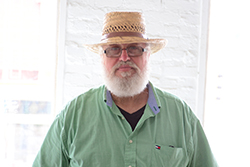
On one long-empty, hotly contested corner lot in Northside, neighbors and business owners look for hope, inspiration and potential for thoughtful growth and development.
Our Partners