Women veterans reflect on life before, during and after serving in the military
Q&A with five local women veterans about military service, challenges faced, support services and American Legion Post 644.
Editor’s note: Earlier in October, Soapbox reported on the forthcoming Veteran’s Day unveiling of a women’s veterans memorial to be built by Toledo-based sculptor Austen Brantley and installed in Eden Park on Women’s Veterans Day in June 2027. The following local women veterans talked about the challenges experienced during active service and after the military as a veteran. Additionally, find data from national women’s veterans organization, WoVeN, on the impact these challenges have on their lives.
A national perspective issues impacting former servicewomen
Women’s Veterans Network (WoVeN) is a Boston-based organization founded in 2017 that helps veterans access educational, healthcare, and employment resources that are often difficult to access through traditional channels. According to an organization-published report, WoVeN supports more than 3,000 women who have served in all military branches.
Its diverse membership comprises veterans whose service spanned from 11 months to 30 years, with two-thirds of them having been deployed abroad. Roughly 35% served in a combat zone.
One of WoVeN’s most essential programs to support women who’ve served include nationwide, eight-week support programs led by organization-trained peer leaders that direct 90-minute meetings to support small groups of six to eight veterans. The programs focus on issues impacting former servicewomen on often-neglected issues such as transitioning to civilian life, building and maintaining self-esteem, and managing stress and work-life balance. The groups’ focal points are supported by evidence-based data provided by sponsors and partners such as the Oak Foundation, the Bob Woodruff Foundation, and the Boston University Chobanian & Avedisian School of Medicine.
According to 2022 published paper from WoVeN, respondents to an organization-provided survey noted that 75.61% of those surveyed said a positive impact on mental health was an essential factor of groups participation; 74.7% of respondents noted that social life was a key benefit of group involvement, and 55% prioritized the group’s activities.
These types of services are invaluable to women who have served, and it’s important for organizations that provide them to be responsive and versatile. The Greater Cincinnati women who responded to queries about their military service, personal experiences and the manner in which they’ve impacted their perspectives vary greatly.
Q&A Interviews with five local women veterans
Soapbox: Describe your military service.
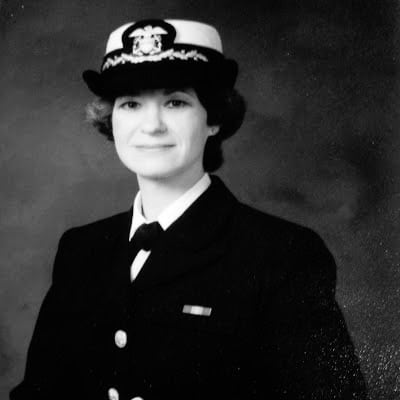
Retired Navy Reserves Commander Peg Albert: I’m a proud Navy veteran! I entered the service through the Nurse Corps Candidate Program. Two years of college paid were for, so I was required to serve three years of active duty. I was commissioned as an ensign six months before graduation. Following Nurse Corps Candidate School, I was assigned to the National Naval Medical Center in Bethesda, Md. When I left active duty I had just been selected for lieutenant junior grade.
Several months after leaving active duty, I joined the Navy Reserves and served with Navy and Marine medical units. I retired from the reserves as a commander.
SB: What was most difficult about your service? What support was available, and what was lacking?
Albert: The most difficult aspect of active duty was being away from home and family. After I was discharged, I don’t recall what services were available to me. I didn’t think about the need for support services because I worked as a nurse in civilian life and I am still involved as a reservist.
SB: How has the American Legion Greater Cincinnati Women’s Post 644 enriched your life?
Albert: 644 is a wonderful place to share military experiences. We understand each other. Our families and friends don’t understand unless they have served.
SB: What do you think about the forthcoming Women’s Veterans Memorial?
I am thrilled about the planned women’s veteran’s memorial in Eden Park. Women have been serving our country since the American Revolution. We love our Country and will fight for our country. The general public needs to know what we’ve done. The memorial will greatly help with that. We can’t be silent anymore!
SB: Tell us about your military service.
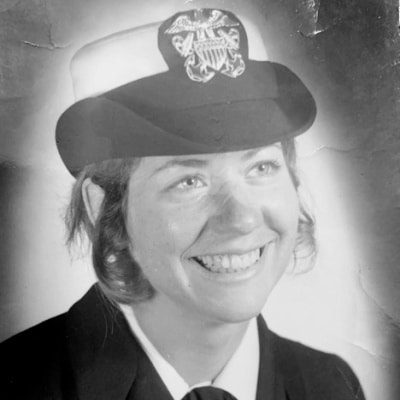
Retired Navy Lt. Sandra Hostler: I was stationed at Great Lakes Naval Base from 1972 until July 1974. I was a nurse on the neurosurgery ward and later the surgical ICU and recovery, finishing my service as a lieutenant.
SB: What was the most difficult aspect of your service?
Hostler: I took care of many young men from boot camp who, while willing to serve their country, were fearful of being in the service.
SB: What support services were available to you?
Hostler: None was discussed with me, but my training did enable me to go to work in the surgical ICU when I returned to Cincinnati.
SB: What were the most important benefits provided for your service?
Hostler: I was able to continue my education using the GI bill and bought my first home with assistance from a VA loan.
SB: How does the American Legion Greater Cincinnati Women’s Post 644 help you?
Hostler: The support of other female veterans and the fellowship they provide is important to me.
SB: What do you think about the planned women’s veteran’s memorial for Eden Park?
Hostler: I support the acknowledgement for women in the service for veterans and for women now serving. And hoping that the recognition will encourage other women to consider the military.
Soapbox: Tell us about your time in military service.
Retired Army Nurse Corp. Capt. Michelle Huntley: I was in the Army ROTC and the Army Nurse Corp. I started as a 1st lieutenant and honorably discharged as a captain. I spent my entire active duty at Walter Reed Army Medical Center in Washington, D.C.
SB: What support services were you available to you?
Huntley: My ROTC scholarship paid my full tuition for my training. I had no idea the ROTC scholarship existed until two male friends joined ROTC and suggested I apply because of my good grades and athleticism. I was able to use the military version of COBRA, the Continued Health Care benefit, after leaving the service, though I paid the premiums.
SB: Did you experience any incidents during your service?
Huntley: I had an incident in officer basic training where I had heat sickness during field training in Texas. The summer months were very hot, and I could no longer continue an exercise and was “evacuated” by one of my commanders, who picked me up in the field in a military vehicle.
Instead of taking me to be treated, he drove into the desert to an overlook and told me to drink from a large container of air temperature lemonade. He pursued a romantic encounter. My adrenaline kicked in and I threatened him into driving me back to my platoon. I arrived back at the field exercise and told my platoon members what happened. I was assisted onto a chopper and taken to another location. They took care of me. I reported the incident but am unaware of any disciplinary action taken on the commander.
I was an Army nurse when we had high numbers of dead and injured military given “rules of engagement” that were dangerous to those who served under these rules. The mostly 18–22-year-olds I took care of at WRAMC supported one another and had time to talk about what they endured. We made the most of it and encouraged this interaction.
SB: What services that the government could provide would make the most impact for females on active duty or veterans?
Huntley: I left the military because I was pregnant and didn’t want to leave my family or have a paid caretaker raise my child. I was also jobless when I left and in no condition to seek other employment, so I would say the military could allow a mother to have a break from the threat of deployment for at least two years after giving birth to allow time without this threat hanging over their heads.
SB: What do you think about the planned Eden Park women’s veteran’s memorial?
Huntley: I think it’s terrific. There are so many female veterans who are historically ignored.
Soapbox: Tell us about your military service.
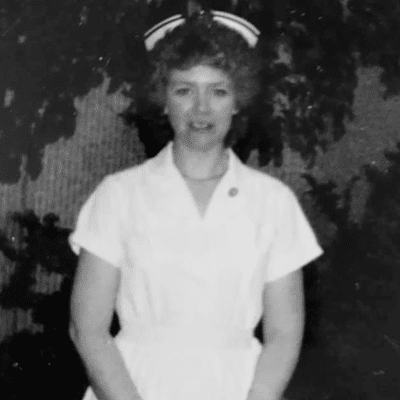
Retired Army Nurse Corp. Capt. Nancy McDermott: I joined the Army Nurse Corp Reserve in 1989 and was sworn in as a 2nd lieutenant. My unit was based in Sharonville, where we met for one weekend per month. We were designated as a station hospital in Germany, with operating-room nurses, surgeons, and anesthesia personnel. Enlisted members provided supported hospital functions. During Operation Desert Storm, we were placed on 24-hour notice to be deployed. I was honorably discharged in 1993 as a captain.
SB: What was the most difficult aspect of military service?
McDermott: It was difficult leaving my two young children for one weekend each month and two weeks away each year, where I primarily served at Fort Knox in Kentucky and Fort Sam Houston in Texas.
SB: What support was available during your service?
McDermott: Support service services were not available without serving 90 consecutive days. I did not feel a lack of support or discrimination as an officer and registered nurse. Medical divisions were highly respected. The discrimination impacts female field soldiers more. I feel, to this day, that there is a lack of respect for them.
SB: What do you think about the forthcoming Women’s Veterans Memorial?
McDermott: The memorial is a step in the right direction. I don’t think the lack of such memorial is a lack of respect from the public or male veterans, but more a result of disinterest from our government. I loved my time in the military and met so many interesting and highly educated people.
Soapbox: Tell us about your military service.
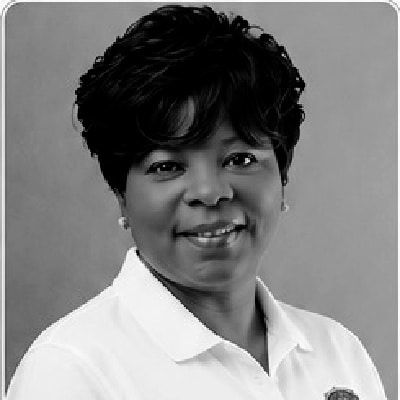
Commander Melanie Veal, American Legion Post 644: I enlisted in the Air Force and reported to basic training 12 days after graduating from high school in 1981. I did my basic training at Lackland AFB in San Antonio and then went to tech training at Lowry AFB near Denver. Once I completed my tech training I was stationed at Kadena Air Base in Okinawa, Japan and was Cannon AFB in Clovis, NM. My final rank was E-4. I currently serve as commander at American Legion Post 644.
SB: What were the most difficult aspects of when you were active in the service?
Veal: Women were regarded as equals to our male counterparts. However, while serving active duty, there was an incident with my superior. He attempted to sexually assault me. Upon reporting the event, I experienced very harsh treatment from my male coworkers. It made serving very stressful and mentally challenging, and I experienced bouts of depression and fear.
I also recall a session during tech training where they showed a video on pararescue. They asked for volunteers to change their specialties to pararescue. Three female soldiers, including me, raised their hands. We were told that women weren’t allowed to do pararescue.
Because of the attempted assault, I decided to end my career in the military in September 1985 and was honorably discharged.
SB: What support services do you think were lacking?
Veal: Available services should match those offered in the civilian world. I didn’t have an opportunity to talk through the traumatic event I experienced and wasn’t offered any counseling. I had to brush it aside as a soldier. The incident supposedly paled in comparison to having fought in any war and was something that “just happens”.
SB: What role does American Legion 644 play in supporting its female veterans?
Veal: It’s time for women to be recognized for their contributions to this country as soldiers and not regarded as “Betsy Ross” gals. We are fighter pilots, admirals and generals. We are only one of three American Legion posts that serve all-women veterans. It’s an important place for us to share experiences and provide one another with support.
SB: What do you think about the planned women’s veteran memorial for Eden Park?
Veal: I think the memorial is well deserved, much needed and appreciated. I was upset when I visited D.C a few years ago. I took a tour bus ride through Arlington National Cemetery where the only references to the women’s memorial was when the tour guy said “to our right is the Women’s Memorial” with no invitation to learn about or appreciate how they served.
I was very upset, stood up, and said, “Countless women have served this country just as those dead soldier’s headstones we just toured. We deserve the recognition just as much as our male counterparts and a simple, ‘oh, to the right is the Women’s Memorial,’ is and will continue to be a slap in the face. Go visit the memorial, you might learn something about the women who have and continue to serve our country.”
That turned a few heads.
Author

Related Articles
Madisonville’s renewal has been decades in the making
A long-term effort to revive Madisonville’s business district is taking shape through community planning, new development and local entrepreneurs investing in the neighborhood’s future.
New bronze sculpture in Eden Park will honor Women Veterans who served our country
The artist will reveal the monument design this coming Veteran’s Day with an installation planned for June 2027.
In search of the inaugural cultural journalism fellow
Wave Pool and Soapbox partner to support innovative journalistic coverage of culture in Cincinnati.