Madisonville

Offering an eclectic array of businesses, Madisonville is home to deeply rooted residents and newcomers attracted by unique homes in a reasonable price range. This family-friendly neighborhood offers hike/bike trails, an emerging arts scene and a burdgeoning CBD that's just months away from a complete overhaul, thanks to the Madisonville Community Urban Redevelopment Corporation.

Medpace moving toward physical, financial growth this summer

Cincinnati-based clinical research organization Medpace is having a year of notable changes, thanks to the continuation of a long-laid plan, and a recently announced partial acquisition.In 2010, Medpace began the relocation of its operations to a new facility on Red Bank and Madison roads in Madisonville. The move, supported in part by a 15-year, 75 percent LEED tax abatement on the first of three planned buildings, a 132,000 square-foot office building.The company has planned from the beginning to construct two additional buildings to house research labs. Construction manager Al Neyer, Inc. recently closed the bidding process for subcontractors for the new buildings, and on May 25 Cincinnati City Council approved a pair of 15-year tax exemptions for the new buildings, which are planned to be built to LEED certified standards. "Originally, when we built the headquarters, we had two labs in Norwood," said company spokesperson Mary Kuramoto. "The plan has always been to move them to the new location."But Medpace's latest news has little to do with its brick-and-mortar developments: the company announced May 23 that affiliates of the global private equity firm CCMP Capital Advisors, LLC, are in talks with the company to acquire an 80-percent ownership share. The acquisitions will allow Medpace to expand its global reach and enhance its ability to conduct phase I-IV clinical studies, said Medpace CEO August Troendle in a press release announcing the move.A spokesperson for CCMP Capital Advisors' New York City office declined to comment on the deal, but noted - as did Medpace via press release - that more news on the deal may be released in June.Writer: Matt CunninghamPhotography by Matt Cunningham
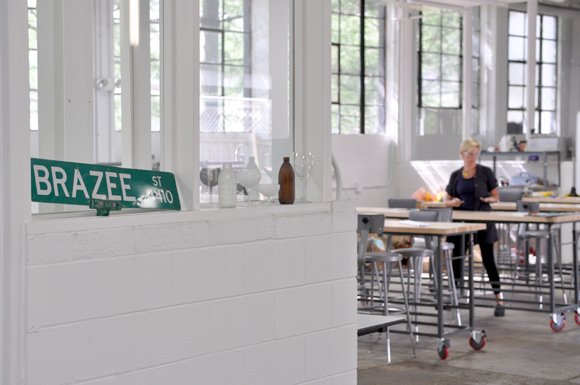

Brazee Street Studios and arts consortium bring life to Oakley arts scene

Brazee Street Studios is a driving force behind efforts to raise awareness of art happenings in Oakley and surrounding neighborhoods. The resource center houses the Brazee Street School of Glass, Gallery One One and more than 20 artist studios. Now it's looking to expand on those efforts and reach out to art businesses beyond Oakley. Let's start with the most immediate effort: Oakley After Hours, which was rescheduled to avoid conflicts with other art events in the Cincinnati area. Happening 6 p.m. to 10 p.m. Friday, April 8, the event highlights businesses in the neighborhood, mainly along Madison Road and Oakley Square. It's organized by the Oakley Community Council and happens the second Friday of each month through August. Brazee and other art houses such as Redtree Art Gallery and Coffee Shop and The Brush Factory will stay open later than usual."Brazee has been really excited about the support we've received in Oakley from families and artists," says creative director Leah Busch. "It's a nice eastside vantage point. We're just trying to be a bulls eye for art here." Collage artist Sara Pearce, a former arts editor at the Enquirer, rents a studio space at Brazee. She had approached Oakley Community Council about moving Oakley After Hours, formerly happening the last Friday of each month, to the second Friday. The move was inspired by Redtree, which had been keeping its doors open then. The "2nd Friday" concept works, she says, because it doesn't conflict with Final Fridays in Over-the-Rhine or First Fridays in Covington. "It just seemed like an opportunity to carve a new niche on a different weekend," Pearce says.Councilmembers Lindsay Hooks and Gina Brenner are planning After Hours. Hooks says places like Brazee, Country Club art gallery and Voltage furniture are developing the neighborhood's identity as an arts district. "I'm really hoping that (After Hours) brings more awareness to what we have here," she says. Brazee will open its artist studios from 7 to 9 p.m. April 8. It's previewing a new concept, too. Called "Art Between the Lines," an outdoor market for artists, designers, food vendors, event organizers and non-profits. They can purchase a nine foot by eight foot space outside the studios. Busch says Brazee is in the "infant stage" of organizing an art walk that weaves through Oakley, Hyde Park, Madisonville, O'Bryonville, or "pinpoints eastside art destinations on (and around) Madison Road." The visionaries behind this effort include Busch, Pearce, and Lisa Merida-Paytes and Tom Funke of Funke Fired Arts, based on Wasson Road. "It seems like there is a lot of going on in eastside art, but there's no unifying thread," Busch says. "There's no web site you can go to; there's no postcard that says 'Here are the hotspots where you can see.' We want to make it a 'You can make a night out of it' idea."Writer: Rich ShivenerPhotography by Scott Beseler.

Modifications open doors for neighbors in need

The military veteran, confined to a wheelchair, hadn't left his Madisonville home in six years. Most days, he watched videos and depended on others to bring him food and other household needs. He couldn't afford to have a ramp added to his home, a job that can cost about $5,000. Then he learned of a service called Modifications for Mobility, part of the non-profit People Working Cooperatively. PWC constructed a ramp for his home, where he could then live more comfortably and with more stability. "It opened up the world to him," says Kim Sullivan, PWC's manager of marketing communications. Sullivan says Modifications for Mobility works with people of all ages, from children born with disabilities to seniors trying to remain independent. She notes one young client who was born with defects that will keep him in a wheelchair for his entire life. Modifications to his home included turning the first-floor family living room into his bedroom, adding a washer and dryer to the first floor and installing a wheelchair-friendly shower. The job made it possible for the family to function with less stress on a single floor. Modifications for Mobility jobs also include changes to bathrooms and kitchens so that family members with disabilities can function. Costs for these kinds of renovations can range up to $10,000 for a single bathroom, Sullivan says. A bathroom may need a wider door to accommodate a wheelchair, a higher toilet seat and grab bars for independent transfers. In kitchens, residents may need counters and cabinets lowered, appliances rearranged and floor plans reconfigured for maneuverability. "This keeps the most fragile neighbors in their homes," says Sullivan. "It helps the entire neighborhood." She notes that an aging population means that more low-income residents are in need of changes to their homes that they can't afford. The average PWC client earns $13,000 a year. "There's not much left over for utility bills or home repairs," Sullivan says.In 2010, PWC completed 13,000 home modifications, an increase of more than 11 percent from the year before. As demand continues to grow, PWC continues to provide emergency and critical home repairs, as well as free weatherization, for the region's most vulnerable residents. Do Good: • Buy a brick. Celebrate PWC's 35th anniversary and be a part of the walkway to their Bond Hill offices for as little as $50. You can even use PayPal. • Learn a skill. Attend one of PWC's monthly training sessions or apprentice with a pro, then use your skills during a PWC volunteer project. • Connect on Facebook.

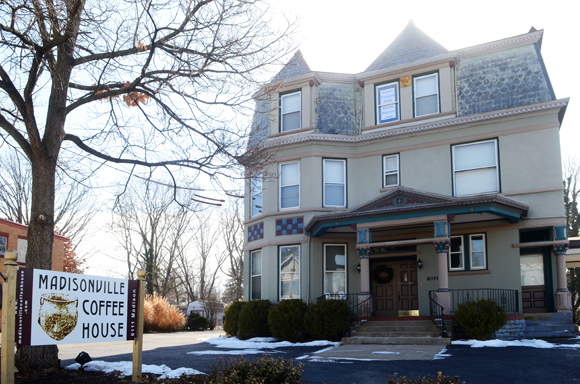
Madisonville Coffee House blends history, revitalization

Madisonville takes another positive step towards redevelopment with the new Madisonville Coffee House. Started by former Community Council president, Bob Mendlein, the Coffeehouse takes advantage of a vacant historic building along the neighborhood's main drag. Mendlein decided it was time to make a change in his neighborhood."I live in an area with little redevelopment in the old business district," Mendlein said. "I want to make something happen and show people that there is potential like back in the 1950's when it was a phenomenal town."Originally a payday lender was going to take the place of the vacant building, but Mendlein took the initiative to make sure that did not occur. He felt a coffee house would be more conducive to the redevelopment efforts occurring throughout the neighborhood. "It will be a start to change the character of the neighborhood. The character is shaped by what you see as you drive through," Mendlein said. "If we have something that is more welcoming to the neighborhood, then residents can take pride in this development and enjoy it."Currently the coffee house is open 6-9pm, Fridays and Saturdays, with plans to open on Sundays in the near future. Plans are also in place to use the space for entertainment and meetings.Connecting the neighborhood back to it's history, Mendlein is using the first archeological object found in the area, the Effigy Face pot, as its logo. The community has recently been the focus of design plans crafted by the Niehoff Urban Studio at the University of Cincinnati. Writer: Lisa EnsmingerPhotography by Scott Beseler.

The Year In Photos

Managing photographer Scott Beseler takes a look back at the photos from our top stories of 2010, showcasing some of the people, places and things that define our region.

Our Partners

Taft Museum of Art
Warsaw Federal

Don't miss out!

Everything Cincinnati, in your inbox every week.

Close the CTA

Already a subscriber? Enter your email to hide this popup in the future.