
Beyond the runway: Goodwill and UC DAAP explore fashion’s circular future
A cross-sector collaboration between Cincinnati organizations turned discarded textiles into a conversation about fashion’s future.
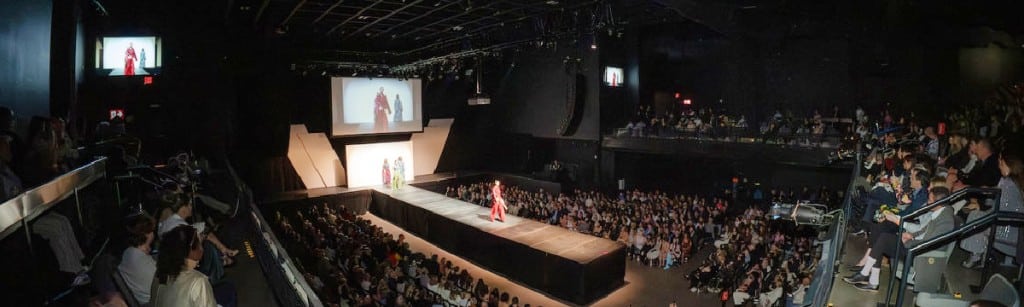
When the University of Cincinnati’s annual DAAP Fashion Show returned this spring, the spotlight naturally fell on the garments making their way down the runway. But some of the event’s most thought-provoking designs never took a single step.
Instead, three students displayed their unique designs on mannequins. These were created not from newly purchased fabric but from repurposed textiles sourced through a collaboration involving Ohio Valley Goodwill Industries, Standard Textile, Sew Valley, Flywheel Social Enterprise Hub, and the University of Cincinnati. What appeared to be a small installation inside one of Cincinnati’s most celebrated fashion events represented something much larger: an experiment in how fashion, sustainability and community partnerships might reshape the industry’s future.
For Sherwood MacVeigh, VP of Marketing for Ohio Valley Goodwill Industries, the project was never simply about sponsorship or designs on a runway.
“I didn’t want to just do a fashion show,” MacVeigh said. “What we really homed in on is that the designers and students that are starting at UC are getting more and more stressed out about designing for a future where all their clothes are ending up in these landfills.”
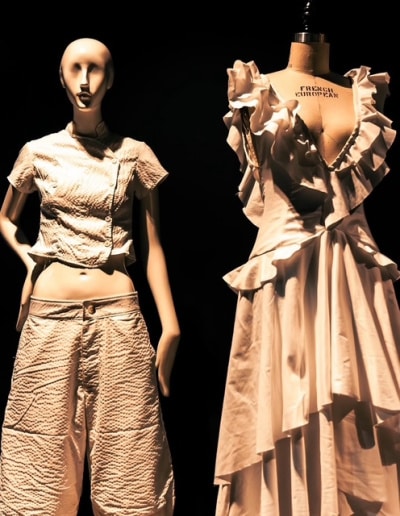
Students participating in the project received materials that had already served another purpose. Instead of beginning with fresh bolts of fabric, they were challenged to imagine something new from what had been discarded. The resulting pieces explored circularity in different ways, emphasizing movement, form and the relationship between the body and the materials surrounding it.
According to MacVeigh, the display represented more than a creative exercise. It served as a proof of concept.
The goal is not simply one-off designs, but to begin building systems that make reuse scalable. Through partnerships with organizations like Sew Valley and Standard Textile, collaborators hope to expand what circular fashion can look like in practice.
Confronting fashion’s waste problem
To say the challenge facing the fashion industry is massive is an understatement. In the United States, an estimated 5,000 pounds of textiles are discarded every second. While one person reads a headline or scrolls through social media, tens of thousands of pounds of material are being thrown away, burned or forgotten.
MacVeigh said between 85 and 90 percent of clothing ultimately ends up in landfills. Ohio Valley Goodwill alone moved 43 million pounds of textiles last year, while Goodwill organizations nationwide handled 4.6 billion pounds. Those numbers are difficult to ignore, especially for a generation of designers entering an industry built around consumption.
“We have to think before we even make a garment,” MacVeigh said. “What are we willing to use?
Questions like this are becoming increasingly important across the fashion industry. Brands, manufacturers and nonprofit organizations are all searching for ways to extend the life of materials and rethink what happens after a garment reaches the end of its first use.
For organizations like Goodwill, the challenge is too large for any one group to solve alone. That reality has prompted a growing number of partnerships aimed at creating a more circular economy, where textiles are reused, repaired and repurposed instead of discarded.
Building a circular ecosystem
The mannequin display was the product of a broader effort known as CIRCLE (Creative Initiative for Recycling, Circular Living, & Eco-Design), a collaboration bringing together organizations with very different missions but a common interest in keeping textiles out of landfills.
Standard Textile, the Cincinnati-based company known for supplying hospitality and healthcare linens around the world, contributed discarded materials. Sew Valley brought expertise in repair and small-batch production. Flywheel Social Enterprise Hub provided connections to Cincinnati’s growing social enterprise ecosystem. UC DAAP supplied the creativity and design talent.
Together, the group began exploring what happens when waste is viewed not as a problem to dispose of but as a resource waiting to be repurposed.
“Sew Valley does a lot of mending classes, and we’re providing the spaces to do it,” MacVeigh said. “It’s these little steps and really understanding what this means to the region. It means we’re all thinking differently together.”
The collaboration also reflects a growing trend across Cincinnati, where organizations are increasingly crossing traditional boundaries in search of solutions.
“We can’t do it alone,” she said. “There’s no way you can deal with billions of pounds of textiles year after year and not have people trying to solve it with you.”
Why collaboration matters
At Goodwill, sustainability is about more than the environment. MacVeigh describes the organization’s approach as a “triple bottom line” built around people, purpose and prosperity. Revenue generated through donated goods helps fund workforce development and employment programs throughout the region, creating a cycle where reuse benefits communities as much as it benefits the planet.
“When you can reuse materials in a new way and create fashion that is accessible and reusable, we’re looking at people, purpose and prosperity,” she said. “We’re creating a better community at the end of the day.”
That philosophy extends beyond textiles. MacVeigh pointed to organizations like La Soupe and Last Mile Food Rescue as examples of what happens when community partners build around shared missions rather than operating in isolation.
“This plus this equals something greater,” she said.
The rise of resale culture
Consumer habits are changing as well. Younger generations are embracing secondhand shopping in ways previous generations did not.
“Gen Z, their first thought for retail is resale,” MacVeigh said. “They already know how they’re going to resell what they buy.”
That mindset has helped fuel thriving thrift communities across Greater Cincinnati. Among them, the Oakley Goodwill store has become a particularly active center for vintage and resale culture, while Goodwill’s newer Princeton Road location in Hamilton and nearby locations continue to attract strong support from shoppers and donors.
For many younger consumers, thrifting has become less about saving money and more about discovering unique pieces while extending the life of existing materials.
Thinking beyond the next garment
Researchers and innovators are also exploring what comes after traditional textiles. Partnerships involving Goodwill organizations are investigating ways to recycle polyester fibers and even experimenting with alternatives such as mycelium, or mushroom-based materials. But MacVeigh believes the industry’s future depends on asking questions much earlier in the process.
Instead of focusing solely on disposal, designers and manufacturers must begin considering sustainability before a garment is ever made. The students whose work appeared alongside the DAAP Fashion Show represent part of that shift.
By approaching fashion through the lens of reuse, they are entering the industry with different assumptions about materials, waste and responsibility. This year’s DAAP Fashion Show celebrated the work of graduating students and marked another chapter in one of the university’s longest-running traditions. Yet, some of its most meaningful ideas never appeared beneath the lights of the runway.
They stood quietly on mannequins, reminding visitors that innovation does not always begin with something new. Sometimes it starts with something left behind.
MacVeigh said changing the conversation around textile waste begins with changing habits.
“Just put a little box by your closet and put stuff that you don’t wear in the box. Don’t think about throwing it away. Just put it in the box.”
In a world producing mountains of textile waste, fashion’s next great idea might not stem from creating more. Maybe it is learning to see value in what already exists.
Learn more about the CIRCLE initiative here.
Author

Related Articles
Interfaith coalitions drive sustainability across region with climate action
Cincinnati initiative “Faith Communities Go Green” allies with houses of worship to put diverse religious teachings into practice.
Greater Cincinnati Society of Professional Journalists and Ohio’s Best Journalism recognize Soapbox for excellence in 2025
Solutions journalism reporting about health, social justice and environment earn top honors.
Equine therapy and fly fishing find common ground to support children dealing with trauma
New Day Ranch in Verona, Kentucky, and the Northern Kentucky Fly Fishers partnered for the greater good.