Clifton / CUF

Resting on a hill overlooking the north side of Cincinnati, Clifton offers a wide range of experiences from a college atmosphere with the city's largest school, the University of Cincinnati, to an international center for cutting-edge medicine featuring University, Children's and Good Samaritan hospitals. Clifton's history has been preserved in historical buildings and homes — from modest to millionaire. Trendy shops and restaurants can be found on Ludlow Avenue in the Gaslight District, along with the Esquire Theatre, yoga studios, Clifton Market and a newly renovated branch of the Cincinnati Public Library. Even though Clifton is tightly compacted with large buildings and interesting architecture, green space does exist at Burnet Woods

City identifies streetcar stop locations, anticipates development along the route

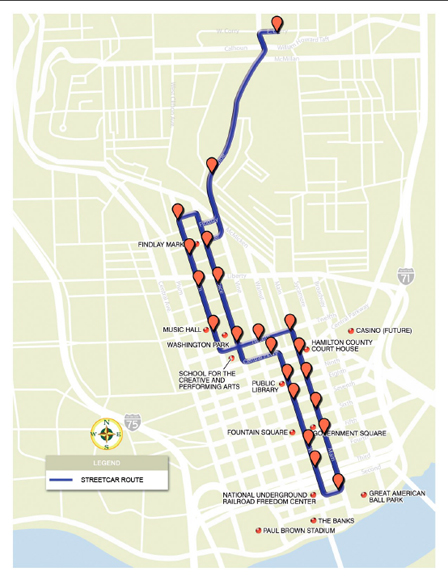
The City of Cincinnati is one step closer to beginning phase one of a streetcar system that will connect the Banks and downtown with Uptown and the University of Cincinnati. Locations of 21 stops along the 4.9 mile streetcar route have been determined and include ten stops in downtown, ten in Over-the-Rhine, and one in Uptown. City engineers and staff as well as representatives from Metro (buses and the streetcar will share several of the stops) and local business owners determined the locations. The first loop of the streetcar is expected to carry 6,000 people per day and stimulate a $3-to$1 return on investment for the local economy. The stops along the route were spaced two-to-three blocks apart for functionality, greater accessibility and to maximize economic development. Studies indicate that streetcars generally promote development 2-3 blocks from the line itself.According to City spokesperson Meg Olberding, the stops are "strategically placed to connect areas of downtown and Uptown to promote development…as development grows and other stops are needed, they can be added." That development includes rehabilitation of existing structures along the route for residential and commerical opportunities, as well as new construction."There are 92 acres of surface parking alone that could be redeveloped for a higher and better use. There are stretches of Vine up near Findlay Market especially that are also ripe for redevelopment efforts - storefronts, living spaces, and businesses," Olberding said.Findlay Market in Over-the-Rhine stands to benefit from the convenient access downtown workers will have to the Market on a weekly basis, as well as from new residents that the streetcar could bring to the neighborhood. In addition, it could also enhance the Market experience for customers by adding new and unique businesses, according to Corporation for Findlay Market President, Robert Pickford."The new and prospective vendors we're dealing with are aware of the streetcar and the positive impact it will have on the Market and there have been a couple of recent real estate transactions that I am certain were influenced by the streetcar. I think this will increase significantly if the remaining uncertainty about the streetcar ameliorates," Pickford said.In Uptown where the streetcar will reach Clifton Heights and Corryville, Matt Bourgeois, Director of Clifton Heights Community Urban Redevelopment Corporation, sees the stop at University Plaza as complimentary to the ongoing work CHCURC is undertaking in the neighborhood. The restoration of Old St. George Church and concurrent construction of an adjacent boutique hotel, and a five-story office and parking structure in the stretch of land between Calhoun and McMillan are just some of the planned developments at this important gateway to the University and Hospital community that will benefit."It is going to go right by the doorstep of two of our larger projects. How great to come up the hill and see this 130 year old church restored to its former glory? " he said. Bourgeois added that a contemplated future Uptown transit hub would also connect with development occurring further down Calhoun, and help fill available commercial space along the street."Once people see track being laid it will pick up steam," he said.Writer: Sean Rhiney

UC Psychology students to present on cheaper textbook alternatives at national conference

 Eleven University of Cincinnati psychology students will present their research on educational technology alternatives to purchasing college textbooks at the national EDUCAUSE Annual meeting in Washington D.C. Their research is a part of the Digital Bookshelf Project, which is an initiative to develop flexible and affordable systems for educational purposes. Students found that free e-textbooks, lower cost print materials, and Wikipedia all provided similar learning support.Read the full story here.

Reimagining the Urban Grocery

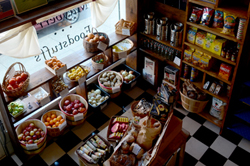
Urban areas with limited access to healthy food are commonly referred to as "food deserts." Learn how local entrepreneurs and leaders are making efforts to improve access to healthy, sustainable food options in Cincinnati through innovation and legislative incentives.

WAY builds relationships for youth success

They have been diagnosed as bi-polar or ADHD. They have schizo-affective or reactive attachment disorder. And they are 12 to 16 years old. All of the 99 youth involved in Lighthouse Youth Services Work Appreciation for Youth (WAY) program have diagnoses that qualify them for mental health services. Many live in either foster or group homes. Many have been kicked out of traditional schools. The WAY program, a non-traditional effort to provide stability and critical life skills for young clients, launched five years ago, says program director Shannon Kiniyalocts. "Some of it is just advocating for the client," she says. "Some of it is communication skills, problem-solving and decision-making skills."Young WAY participants' case managers are called "life coaches." They meet at home and in communities, not mental health facilities. Teens learn how to choose the right Metro route to get where they need to go. They learn how to prepare for a job interview.The five-step program, adapted from a model in New York City's Children's Village, focuses on keeping some of Hamilton County's most challenging youth in environments where they can develop lasting relationships. Life coaches can stay with participants up to three years through five phases of accomplishments."We provide services  and skill-building activities to assist them in breaking down mental health barriers," says Kiniyalocts.Whether it's learning how to navigate public transportation, how to prepare for a job interview or how to manage medications, WAY includes practical lessons in responsibility and independence. Kiniyalocts notes that youth in the program may never have had a relationship with an adult that lasted three full years.As youth move through the program, they begin to complete monthly community service projects and have opportunities to practice new skills. They earn nominal salaries for completing chores, open their own bank accounts (with Lighthouse support) and then gain experience with bigger jobs within the program.Advanced participants create art at Essex Studios in Walnut Hills two to three times a week. They learn about photography and Photoshop, painting and drawing. Tasks range from creating art for note cards to baking dog biscuits. In spring, they oversee a garden plot in Northside, sell their harvest and take home leftovers. They sell their garden products, along with their other creations, at Northside and Findlay markets. "They are generally the ones selling to the community members," says Kiniyalocts. Interacting with the public, as well as seeing the impact and popularity of their work, goes a long way toward building self-esteem and creating a sense of hope and possibility for bright, productive futures.Do Good:• Write a letter to your friend. Use WAY artist note cards to share news about your world.• Give your dog a treat. Bags of WAGS start at just $1.50. Email to reserve your treats.• Clean your closet. Lighthouse Youth Services has a never-ending wish list, including furniture, household items and much more.For Good News Editor: Elissa Yancey (Sonnenberg)

New apartments meet growing demand near UC’s campus

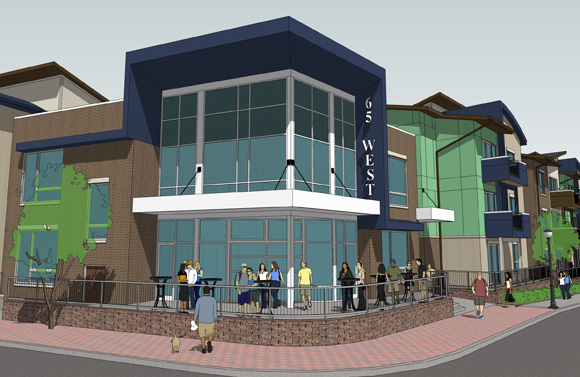
 A partnership between Uptown Rental Properties and North American Properties will add 237 apartment units near the UC campus in the next two years.The largest project, called 65 West, will open late this summer. Construction on the second project, which consists of two buildings in Corryville, will begin in 45 days. All three buildings are expected to receive LEED silver certification, Uptown Rentals' owner Dan Schimberg said.Schimberg said there is a growing demand for new, safe, energy efficient housing within walking distance to the UC Campus. 65 West is almost 50 percent leased several months before its completion.The success of 65 West led the partners to pursue the second project in Corryville. It will include one five-story mixed-use building on Short Vine at the old Benchmark site, and a larger residential complex facing Euclid Avenue and Van Street nearby. Those two buildings will add housing for 150-200 people in the Short Vine area, Schimberg said."Short Vine has had twenty years of decline, and we think the time has come for Short Vine to come back," Schimberg said. "And in order to build the vitality of the Short Vine business district, you need a critical mass of people living around it." A new hotel, a city-funded streetscape project, and new Kroger and Walgreens stores are also on the horizon for Short Vine.Schimberg began rehabbing buildings in the Uptown district in the mid-1980s, after graduating from the University of Cincinnati. Since then his business has grown to manage over 2,000 rental units.The most recent partnership began when North American Properties purchased the old Friars Club building, which was adjacent to properties that Uptown owned. The two groups decided to work together to redevelop the block, and conceived the 129-unit apartment complex called 65 West. Schimberg said the partnership will continue to look for land in the Uptown area for similar projects.Writer: Henry Sweets

Using clot buster for mild stroke could save millions

 Researchers at the University of Cincinnati found that the blood-clot dissolving drug (tPA) can help reduce the number of patients left disabled after suffering from strokes, saving $200 million in annual disability costs. Strokes are the third leading cause of death in the U.S.Read the full story here.

My Soapbox: Cincinnati State President, Dr. O’dell Owens

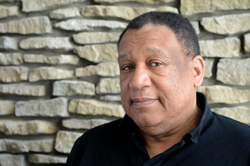
Former Hamilton County Coroner, Dr. O'dell Owens took the reigns of Cincinnati State last September. In this month's My Soapbox, he talks about the important role of technical and community colleges in sustaining innovation, cultivating economic development, and bridging the gap for non-traditional students.

West MLK Drive improvements include enhancements for pedestrians, cyclists

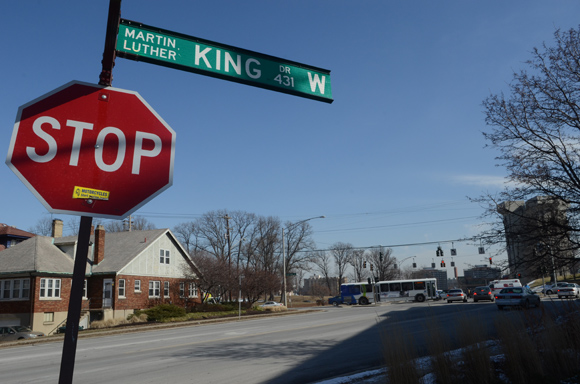
Plans to reconstruct a stretch of Martin Luther King Jr. Drive between Camp Washington and Clifton will drastically change the landscape there while improving safety for motorists and access for pedestrians and bicyclists.Thirty buildings on the north side of MLK between McMicken Ave. and Dixmyth Ave. will be razed to make way for wider lanes and a bike path. The on-street parking currently available in front of the homes, which cause numerous accidents every year, will be removed. Construction is expected to begin in the summer of 2014.The MLK West improvements, which run from McMicken to Clifton Ave., will include a new median, sidewalks and wider lanes in areas. A 12-ft-wide off-street "multi-use" path will run the complete length of the project, and will connect with a path planned as a part of ODOT improvements near the I-75 Hopple Street interchange at the bottom of the hill. When both projects are completed, bicyclists and pedestrians will be able to travel from Clifton to Camp Washington on a path separated from the road by several feet of grass. The intersection of MLK and Clifton will be reconstructed to improve pedestrian safety and traffic congestion there.The plans were selected from several different options that had been floated to the community in past public forums. At a recent public comment meeting on the project, the public left no comments. Project manager Andrea Henderson from the City's Department of Transportation and Engineering took that as a sign that the right option was chosen, she said."This was the most cost effective and actually the most desired option, so we were very happy we didn't have to force this alternative on anyone," she said.Between Dixmyth and Clifton avenues - the eastern portion of the project - property on both sides of MLK is owned by the park system and Henderson said a median and lane expansion were not planned for that area, just the bike path.Residents of the buildings who must be relocated by the City of Cincinnati include University of Cincinnati Students and elderly residents, Henderson said. The process of relocation could prove difficult for some, she said."I suspect that UC students renting there will have no problem finding another place, but it's the older people, or people with some sort of issues, that might need a lot of help and its our obligation to help them," she said.Writer: Henry SweetsPhotography by Scott Beseler.

Homeless, but not hopeless at the Cincinnati Zoo

  Antonio lingers at the elephant house, taking pictures and marveling at the size - and the smell - of the creatures before him. UC undergraduate Zach Koons laughs as he watches his 10-year-old charge snap photo after photo before the two move on to the Reptile House, where snakes hold the charm for the wide-eyed Bond Hill Academy student. The elephants and snakes have a serious if invisible advantage over Antonio, though. They have permanent night-time addresses. Antonio is homeless. Koon meets with Antonio every week as part of Zoo-Mates, a partnership between Project Connect, the University of Cincinnati's Center for Community Engagement and the Cincinnati Zoo and Botanical Garden. "Zoo-Mates enables UC students to bridge the gap between childhood and adulthood," says Koons, 21, who changed his major from Business to Middle Childhood Education as a result of his work with the program. "We can touch the lives of inner-city youth, and they can remind us of what is truly important in life." When it began, Zoo-Mates was a once-a-month program, with UC students meeting their young partners at the zoo, where they toured and talked. Now in its sixth year, Zoo-Mates pairs meet weekly, including regular visits to UC's Clifton campus. The success of the program has exceeded its organizers' expectations, according to Center for Community Engagement Director Kathy Dick. "The a-ha moment for me was when two families decided to keep their children in their home school so that they could continue to be a part of Zoo-Mates," she says. For families without homes, maintaining stability at school is a major challenge that can lead to academic problems for kids. Koons started volunteering because he needed to log community service hours to maintain a scholarship. But that's not why he stays. "Time can be worth more than any amount of money you can spend on someone," he says. For Antonio, any time he can spend away from worry is particularly sweet, even when it's laced with the smell of elephant. Do Good: • Donate: Make a financial contribution to the non-profit Faces without Places, which provides local homeless children with a wide range of services. Specify that you want your donation to support Zoo-Mates. • Cast your vote: Visit True Hero and vote for Zoo-Mates to receive additional funding. • Follow the blog: Find out the latest program activities at the Zoo-Mates' blog.

UC prof, former J&J exec says innovative thinking can be learned

Innovative thinking isn't something a privileged few are born with, it's something that can be taught, said Drew Boyd assistant professor of Marketing and Innovation at the University of Cincinnati."Innovation is a skill, not a gift. It is something you can be trained to do like learning a new sport or new hobby," Boyd said.He should know. Boyd is a recently retired Johnson & Johnson executive who spent 17 years in marketing, mergers and acquisitions and international development. He's now the Executive Director of the MS-Marketing program, and teaches a class on innovating thinking that's quickly becoming popular at UC.The graduate level course, Systematic Innovation Tools, teaches five techniques that foster innovative thinking.  "There are five patterns that help you take a product or service and morph it into something innovative," Boud said. "These patterns have a structure that allows us to be more creative."For instance, one technique Boyd teaches involves tying together two aspects of a product. One feature of the product changes as another feature of the product or the environment changes. A recent example from his class involved using this technique (called attribute dependency) to innovate in the athletic shoe arena. A student invented to COLOR EX, where the user's exertion is tied to the color of the shoe. With this innovation the fabric color of the shoe changes based on how hard the athlete works. For example, as an athlete's heart rate rises, the shoe may turn red. As it lowers, blue.You can see the COLOR EX, and several other athletic shoe innovation in a blog entry Boyd wrote  here. About 45 students take his class each semester, and though its designed for business students, students outside the business world find it useful xx. Students innovate around a set of categories including xx.Though the athletic shoe and other innovations are academic, the Boyd's class will be partnering with international well known companies including P&G, GE and L'Oreal to develop innovative product ideas."All the ideas are turned over to the companies, and they are meant to be used. They are meant to be real ideas," Boyd said.In the past several class ideas have been put to use by local businesses and organizations, including the Cincinnati Art Museum," he said.Writer: Feoshia HendersonSource: Drew Boyd, Drew Boyd assistant professor of Marketing and Innovation at the University of CincinnatiYou can follow Feoshia on twitter @feoshiawrites

Our Partners

Taft Museum of Art
Warsaw Federal

Don't miss out!

Everything Cincinnati, in your inbox every week.

Close the CTA

Already a subscriber? Enter your email to hide this popup in the future.