Clifton / CUF

Resting on a hill overlooking the north side of Cincinnati, Clifton offers a wide range of experiences from a college atmosphere with the city's largest school, the University of Cincinnati, to an international center for cutting-edge medicine featuring University, Children's and Good Samaritan hospitals. Clifton's history has been preserved in historical buildings and homes — from modest to millionaire. Trendy shops and restaurants can be found on Ludlow Avenue in the Gaslight District, along with the Esquire Theatre, yoga studios, Clifton Market and a newly renovated branch of the Cincinnati Public Library. Even though Clifton is tightly compacted with large buildings and interesting architecture, green space does exist at Burnet Woods

One-woman play tells MS story at UC’s Waddell Center benefit

Nancy Jones always wanted to write a play. But the Cincinnati born and bred English teacher and communications professional never thought that living with multiple sclerosis for 20 years, and working her way through a closet full of shoes, would give her the opportunity to do just that. Jones’ one-woman performance art production, Above the 37th Parallel, tells a story filled with hard truths and laughter, frustration and courage. And shoes. The kind she once coveted, then, frustrated by the limitations of the disease, had to throw away. The title of the play refers to our region’s place on the globe, and Jones’ research showing that MS more often plagues those living north of the 37th parallel. For the performance, Jones teamed with Ensemble Theatre of Cincinnati and Cincinnati Shakespeare Festival’s Sherman Fracher, who stars in the one-woman piece. Fracher’s husband Drew directs the show, which mixes education, entertainment, humor and heartache, giving audiences a glimpse into an unfamiliar, yet not uncommon, world. Proceeds from this month’s performances benefit the Waddell Center for Multiple Sclerosis at the University of Cincinnati Neuroscience Institute, where doctors provide the latest treatments and therapies, and conduct research to find more answers, and someday a cure, for people living with the disease. “MS is a complex disease that is often difficult to diagnose,” says Dr. Brendan Kelley, MS specialist and director of the Memory Disorders Center at UC. “The Waddell Center makes an important contribution to the study of the disease by, among other things, cultivating a better understanding of MS and its many symptoms, leading to timelier diagnosis and better treatment options for patients.” Founded in 2002 through a $5 million gift from retired US Bank chairman Oliver Waddell as a tribute to his wife Virgilee, the Waddell Center serves as the preeminent referral center for the region. “The Waddell Center is a place where people coping with MS can turn for care and treatment – and a place where important research is conducted to advance the field,” Kelley says. Funded partly through donations from the community, the Waddell Center acts an important research and treatment hub. Currently there are six clinical trials underway at the Waddell Center. According to the Center for Disease Control, MS affects more than 1 million people worldwide. This month, Jones’ one-woman play takes shape on stage at UC’s College of Medicine, on Sept. 17-18 at the Krege Theatre in the Medical Arts Building in Clifton. All proceeds benefit research conducted at the Waddell Center for MS. The performances are dedicated to the memory of Virgilee Waddell. Do Good: •    Attend a performance of Above the 37th Parallel, Sept. 17-18. Call 513-558-6112 for tickets or order them online. •    Donate to the Waddell Center for Multiple Sclerosis. •    Learn how you can help someone living with MS. By Deidra Necco Wiley

UC one of top 10 most inspiring campuses

The University of Cincinnati was named one of the most inspiring campuses in the world by Delta Sky Magazine. Read the whole story here.

UC’s FETCH-LAB research helps pets, people

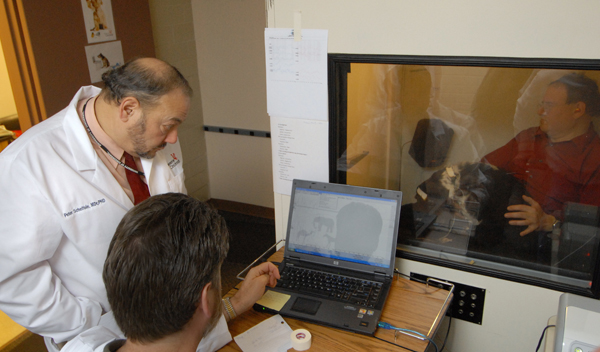
The idea of putting hearing aids on a dog may, to the uninitiated, seem like an extravagant splurge, the kind of move reserved for those with money to burn. But not to a team of researchers at the University of Cincinnati. It's one of several innovative projects designed to better understand how animals hear and communicate, with the hope of making the world more comfortable for both humans and our animal counterparts. "This research has been going on for some time," says Pete Scheifele, PhD, head of UC's Facility for the Education and Testing of Canine Hearing and Lab Animal Bioacoustics (FETCH-LAB). "However, the noise impacts on animals have not been on the forefront, especially on animals that are domestic or captive." Scheifele explains that, for years, vets and animal researchers paid little attention to hearing loss in animals such as domestic dogs. Owners who brought in their pets with concerns over hearing loss often saw vets use primitive tests, such as jingling keys or snapping and looking for reactions. When researchers started using pediatric hearing-test equipment to study dogs, however, an alarming trend surfaced: About 60 dog breeds showed a tendency toward congenital deafness, due in part to inbreeding. "The awareness kind of shot up, because everyone's worried about having a deaf dog," he says. "It's had a domino effect." Now, vets and researchers are working to identify causes of animal deafness, especially in service animals such as police and rescue dogs. "Your job, perhaps your life, may depend on your working partner," Scheifele says. FETCH-LAB scientists have also explored ways to combat excessive noise in places supposed to meet physical and mental needs. Kennels, for example, often have highly reflective walls and ceilings that bounce barks and yips into an annoying - and potentially harmful - cacophony. "Kennels are made to be washed, not for hearing safety," he says. The FETCH-LAB team recently installed sound-dampening panels at the League for Animal Welfare's kennel in Batavia, and is studying their effects on the sound levels and the health of both canine inhabitants and employees. And although Scheifele says testing is still underway, LFAW Director Mary Sue Bahr says that the panels are having a significant effect. "Our goal for all of the dogs in our care is to provide a clean, healthy, friendly, stress-free environment for them,” says Bahr in a UC press release. "Having these sound panels helps us to fulfill that goal—and it’s also nice for our staff and volunteers. In reducing the sound levels, it helps them have a more enjoyable time here.” Scieifele says FETCH-LAB also studies hearing and hearing loss in horses and marine animals, and is in the process of publishing a paper on optimizing aquarium design to provide stimulating - but not overwhelming - amounts of noise for captive inhabitants. The work, he explains, could both improve lives for animals, and could effect the way human hearing and noise control takes shape in the future. "We often come back with information that's useful and say, 'we never thought about this in humans,'" he says. "We help the animals, and they help us." By Matt Cunningham

GE Foundation Grants $5.3M to Cincinnati Public Schools

This month, the GE Foundation announced that it will donate $5.3 million to Cincinnati Public Schools. This donation is a three year extension grant to help students reach the goals set by the Common Core State Standards to make certain that they are prepared for college. Read the full story here.

Greentree opens up world of science

After several years in the making, a $7.6 million multi-faceted health science education facility opened its doors to students. Greentree Academy is part of a five-partner private-public project who include the city of Middletown, Atrium Medical Center, Miami University, Warren County Career Center, Warren County and Cincinnati State Technical & Community College. Read the full story here.

True Joy Acoustics mixes ukeleles, philanthropy

Gone are the days when Tiny Tim strummed a ukulele and warbled his signature rendition of “Tiptoe Through the Tulips.” The tiny instrument is making a mighty comeback thanks to Israel “IZ” Kamakawiwo’ole’s poignant rendition of “Somewhere Over the Rainbow” and YouTube favorite Jake Shimabukuro’s inventive pop song adaptations on the instrument. Cincinnatian Greg Huntington understands the appeal. His company, True Joy Acoustics, has been selling ukuleles for the past year. Yet this is far more than an online business venture. Since the company’s launch, it has donated one ukulele for every nine sold to Cincinnati Children’s Hospital Medical Center’s Music Therapy program. And every ukulele kit is packaged by the Clovernook Center for the Blind, which pays visually-impaired workers through its Contract Packaging department.  “Unique is sort of an understatement; no one is doing what Greg is doing,” says Brian Schreck, Music Therapy Coordinator in the hospital’s Division of Child Life and Integrative Care. “He’s taking into account the business side of things and the community at large.” So far, True Joy Acoustics has donated seven ukuleles to the hospital, an instrument that Schreck finds very useful in his therapy. “It’s the perfect size for anyone from a toddler to an adult, and it’s easy to play in a hospital bed.” Huntington’s ukuleles, made by a Connecticut manufacturer, also have a flat bottom, so they stand up easily on a night stand. Because these ukuleles are professional-grade, “there is such a difference when someone gets to play a real musical instrument rather than a toy or a lower-quality instrument,” says Schreck. Including the instrument, picks, instruction books and a custom case made locally, ukulele kits called “Music Makers” offer “the basic skills for a lifetime of enjoyment of this instrument,” says Huntington. With increased efforts to accelerate the hospital’s donation program, Huntington hopes to put ukuleles in more people's hands. “It’s all about maximizing your success,” he says. By Becky Johnson

Plans tonight? Join Soapbox for ‘arts lessons’

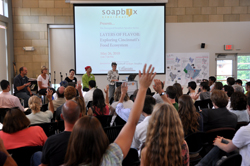
We know you don't have plans for after work tonight, right? This is your last chance to register for our Soapbox Speaker Series sponsored by the Niehoff Urban Studio, tonight! When: Tuesday, Aug. 30, 5:30-7:30 p.m.  Where: Niehoff Urban Studio

State of the arts

Steel drums and sculpture. Photography and modern dance. With passionate, eclectic leaders and a host of talented supporters, Cincinnati's local community arts centers deliver an array of classes and concerts designed to bring neighbors together. Soapbox tours a few of our region’s growing, vibrant cultural gathering spots.

Profile: Jason Heikenfeld of Gamma Dynamics

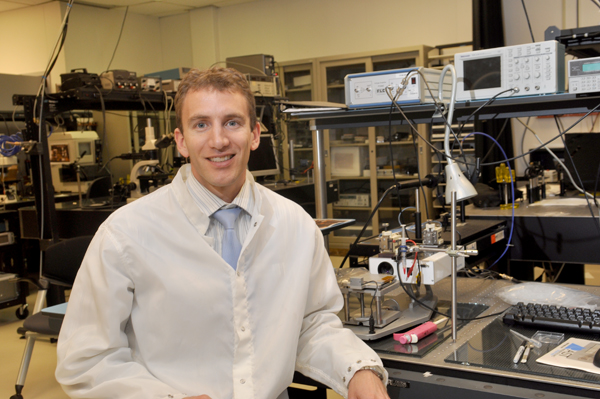
Founder Profile: Jason Heikenfeld of Gamma Dynamics How did you come to be an entrepreneur?  As a grad student in engineering I was always very applied in my research. My research was successful enough that my Ph.D. advisor at the time (Andrew Steckl) and I started a company right after my graduation. Now I am a professor at UC, where I am involved in novel device technologies, with focus on industry-partnered research and new entrepreneurial ventures. Why did you start your business?  There are many reasons to start a business. For me it is about the potential for local job growth and the chance to introduce disruptive technologies that beat out the new technologies in development by the electronics giants like the Samsung's of the world. I guess I am a big fan of the 'underdog' startup that takes on the world (foolishly, or not). How did you come up with the idea?  Through partnership with industry (Sun Chemical, here in Cincinnati) and PolymerVision (The Netherlands). We did NOT start out with the invention, rather, we started by all parties defining the problem and the opportunity. About one year of discussion with industry experts led to my invention of the electrofluidic display. Where did you find your first employee?   People at UC were after me to get involved with a second startup for some time, but I would not do it until I felt I had a good jockey (team) to run the horse (the company), since I love my day job as a professor. I was lucky to be in constant communication with two display industry experts/veterans, John Rudolph (Corning/3M) and Ken Dean (Motorola), and then in 2009 the timing was right for the both of them. What resources here did you take advantage of and how did they help?   The University of Cincinnati has been a terrific supporter of Entrepreneurship, IP development, R&D and Tech Transfer. Budgets are tight, and UC IP and commercialization office is running on a budget which is far lower than what it should be, but they have an incredibly dedicated and hard-working set of folks doing everything they can to support entrepreneurial efforts at UC.

2012 Creative Writing Doctoral Programs: The Top Fifteen

The University of Cincinnati ranks eighth among creative writing doctoral programs in the country.Read the full story here.

Our Partners

Taft Museum of Art

Common Ground Is Brewing

Support local stories and receive our signature roast straight to your door when you join at the Standard level (or above).

Drink Better, Read Local

Close the CTA

Don't miss out!

Everything Cincinnati, in your inbox every week.

Close the CTA

Already a subscriber? Enter your email to hide this popup in the future.