
2012 Creative Writing Doctoral Programs: The Top Fifteen
The University of Cincinnati ranks eighth among creative writing doctoral programs in the country.Read the full story here.
Resting on a hill overlooking the north side of Cincinnati, Clifton offers a wide range of experiences from a college atmosphere with the city's largest school, the University of Cincinnati, to an international center for cutting-edge medicine featuring University, Children's and Good Samaritan hospitals. Clifton's history has been preserved in historical buildings and homes — from modest to millionaire. Trendy shops and restaurants can be found on Ludlow Avenue in the Gaslight District, along with the Esquire Theatre, yoga studios, Clifton Market and a newly renovated branch of the Cincinnati Public Library. Even though Clifton is tightly compacted with large buildings and interesting architecture, green space does exist at Burnet Woods.
The University of Cincinnati ranks eighth among creative writing doctoral programs in the country.Read the full story here.

Fifteen years after opening its doors, BIOSTART, Cincinnati's life sciences start-up center, is changing the way it does business. In order to remain competitive in a fast-changing business market, it is closing its lab space and moving from its location near the University of Cincinnati.BIOSTART President Carol Frankenstein says the organization will focus exclusively on business services, making the hard shift as its closes its current facility at the Hoxworth Blood Center in September. She says the change was both a business and a strategic decision."Today, companies, even at the very early stages, are outsourcing their commercialization and development activity. That includes clinical and preclinical work, development and manufacturing," Frankenstein says. "That increase in outsourcing reduces the cost of getting a product to market. That makes lab space less necessary. Because of the economy, there is so much low-cost and even free space available; our companies have the ability to benefit from that."BIOSTART serves life sciences entrepreneurs in health care service and product development. Since 1996, it's helped 125 companies launch their business and raise $180 million. Three-fourths of those businesses have had successful exits or are currently in business, the organization reports.BIOSTART is working with local business advocates, including the Hamilton County Business Center, Uptown Consortium and CincinnatiUSA Regional Chamber to help its 18 tenant companies (which occupy about 65 percent of its space) to relocate. Frankenstein said BIOSTART is looking for a new space downtown. She will remain with the organization as will three entrepreneurs in residence. The organization has received $500,000 in funding, half from the Ohio Department of Development and half from private sources, to aid in the transition."We're using the grant for the next 12 months to explore new service delivery models," she says.BIOSTART's current business services include helping companies put together a management team and connecting with and applying for funding sources.By Feoshia HendersonYou can follow Feoshia on Twitter @feoshiawrites
A sensor chip developed by researchers at The University of Cincinnati is small enough to be covered by a matchbook. But this little device offers huge potential for making medical care faster, easier and less painful.UC researchers Erin Haynes, DrPH, and Ian Papautsky, PhD, are in the early stages of testing a sensor that can measure the level of manganese, a potentially toxic metal, in a blood sample. Excessive manganese exposure can cause a range of symptoms, including behavioral changes, balance problems and nervous system damage. Haynes, an environmental medicine researcher, initially began studying manganese exposure after she was contacted by residents of Marietta, Ohio, who worried that a manganese processing facility in that city was releasing dangerous amounts of the metal into the air.Haynes says that current testing practices, which involve periodic blood testing among participants, can take up to six months or more as her team collects a batch of samples, ships them to a lab, and then waits for results."Families are anxious," Haynes says. "They want to know the results immediately or in a short amount of time."Haynes says she approached Papautsky with the idea of developing a so-called lab-on-a-chip: a single-use device that could quickly test a small blood sample for manganese and provide a near-instant result. Papautsky says this type of point-of-care testing is a hot topic in biomedical engineering. And the subject at hand presented a unique challenge, he says."It turns out manganese is very challenging to detect in an electrochemical approach," he says.The researchers' prototype chip uses an electrical current to pull manganese out of the blood sample, and measures how much energy it takes to do that - the amount of energy required correlates to the amount of manganese in the sample. The electrodes normally used in this kind of device are often made from mercury, but the team found that making the electrodes out of less-toxic bismuth produced a more sensitive sensor, and one that's more environmentally friendly.Papautsky says the chip is still in the early phases of lab testing - it has shown promise detecting manganese in blood serum, and his team hopes to test it using whole blood in the near future. It could be several years before a consumer-ready version of the chip can be deployed to Marietta, thanks to the long process of verification and testing that goes into ensuring any medical device is ready for use.But both Papautsky and Haynes are excited about the chip's potential. Its high sensitivity could trickle down into making other tests, such as that for lead exposure, more effective. But patients young and old may better appreciate another fact: the lab-on-a-chip could one day conduct a range of front-line lab tests with only a finger-prick's worth of blood, rather than the vials required today."These type of systems are changing the way medicine is practiced and can be delivered," Papautsky says.By Matt Cunningham Follow Matt on Twitter @cunningcontent
Cincinnati State Technical and Community College is nearing a deal that could bring a branch campus to city-owned buildings in downtown Middletown. The college plans to offer a variety of programs including hospitality, allied health and associate degrees in a market Miami has dominated for decades.Read the full story here.
Work by University of Cincinnati researchers to create a sensor that provides fast feedback related to the presence and levels of heavy metals—specifically manganese—in humans is published in the August issue of the prestigious international journal, Biomedical Microdevices.Read the full story here.
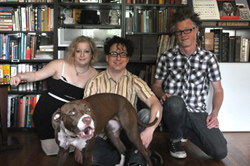
For literary journal devotees and their posses of word nerds, Cincinnati is rich with talent and deep with possibility. Through their efforts, new generations of writers and readers continue to fall in love with a fresh turn of phrase, an undiscovered poet or a story that embodies truth and light in a compelling way.
A soon-to-be homeless shelter in Corryville will focus its efforts on serving vulnerable, homeless young adults in Cincinnati.The Lighthouse on Highland homeless shelter, located at 2522 Highland Avenue and part of the Lighthouse Youth Services organization, was conceived as part of the city of Cincinnati's plan to move individuals out of homelessness, increase permanent housing and target homeless services specifically to the individual's age, says Tamara Sullivan, media director for Lighthouse Youth Services."This initiative grew out of the recommendation made by the Homeless to Homes Steering Committee to have Lighthouse expand current services offered to the 18 – 24 year-old homeless population as part of the city's comprehensive homeless plan," Sullivan says. The facility will offer a 28-bed shelter to homeless young adults on the second floor and will relocate Lighthouse's existing day program, known as Anthony House, to the first floor of the building, says Geoff Hollenbach, director of Lighthouse's Runaway and Homeless Youth Division.The impetus behind the new shelter is to treat the unique needs of homeless young adults, many of whom are vulnerable in part because they are experiencing homelessness for the first time, Hollenbach says.Bob Mecum, president and CEO of Lighthouse Youth Services, echoes Hollenbach."We know that youth who age out of the foster care system are at a much higher risk of becoming homeless, so this new shelter will target a population of young people we know are in need of this type of community resource," Mecum says.The shelter, on target to open this fall, will serve 40 to 60 homeless youths per day.Do Good:• Walk the walk. Register for the 2.4 mile walk to raise funds for items such as shoes, socks or bus tokens for the homeless. Call Lindsay Schoeni, 513-487-7151, to register.• Volunteer your business for a group community service project with Lighthouse. • Volunteer your time by tutoring a youth in math or reading, or be a general office assistant. Volunteer schedules are flexible to fit your lifestyle. By James Sprague
A recent find by a University of Cincinnati archeologist Gisela Walberg, professor of classics, suggests an ancient Mycenaean city was well protected from outside threats. Read the full story here.
The Cincinnati Development Fund has been a financial resource for affordable housing development in the city's neighborhoods for 23 years. And that long track record of helping spur development -- and redevelopment -- in some of Cincinnati's underserved areas recently earned the CDF a $1.5 million federal grant to support its mission.The grant comes from the U.S. Treasury's Community Development Financial Institutions Fund (CDFI). The CDFI awarded $142,302,667 to 155 community development financial institutions -- like CDF -- nationwide. CDF received $750,000 from the fund in 2010, making this year's award a very pleasant surprise, says CDF president and CEO Jeanne Golliher."We were really expecting something along the lines of what we got last year," she says.The $1.5 million sum is the maximum any single organization could receive from the CDFI. Golliher credits CDF's long-standing role in the community as reason for the high award."We're really in touch," she says. "We know where the needs are."A main focus of CDF's efforts, she explains, are smaller developers -- sometimes individual homeowners, sometimes development companies focusing on one or two buildings -- who wish to revitalize property in parts of the city suffering from high foreclosure and vacancy rates. The smaller developers fit a niche that complements larger development organizations, such as the Cincinnati Center City Development Corporation (3CDC), which is in the midst of redeveloping a large portion of Over-the-Rhine. Golliher refers to many of CDF's borrowers as "urban pioneers:" people willing to be early redevelopers in areas that have yet to see widespread revitalization."We've had so much activity with our small loan program," she says. "There are a lot of cases where people want to buy and fix up a building on their own, and they come to us."Golliher says her team is in the process of planning how to best use the grant funds. Some of it may be used as matching funds for $3.3 million in low-interest funding CDF has requested from the U.S. Treasury to help fund small business development in the city. She plans to present a proposal for how the funds will be used at CDF's August board meeting. In the meantime, she says she and her team are thrilled by this recent show of federal support."I think it speaks to our track record," she says.By Matt Cunningham Follow Matt on Twitter @cunningcontent
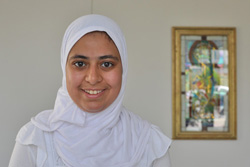
Cincinnati is home to more Muslims than you might think. Members of the Clifton Mosque look forward to Ramadan and reflect on what it means to practice this pillar of Islam in Cincinnati.
Our Partners









We want to know what's on your mind.

