Move to Cincinnati

Then and Now: The evolution of summer

 Coney Island, the sixth-oldest amusement park in the U.S., celebrates its 125th anniversary this year. Compare pictures from the 1920s and 1960s to now, and see how differently (or not so differently) people used to enjoy themselves and relax in the heat of the summer. Read the full story here.

Latest in Move to Cincinnati
Paddlefest fills river with kayaks, canoes

 With more than 2,000 Paddlefest participants in kayaks and canoes on the Ohio River this weekend, organizers say it's the largest paddling event of its kind in the country. Read the full story here.

Cincinnati’s Latino Community Goes National

While Cincinnati may not typically be considered an enclave for Latin American emigres on par with Miami or Los Angeles, the city has its fair share of Latino ties. Hispanic professionals, artists, university students, and workers are making their mark in a city that was handcrafted by waves of immigrants. This June, the City and its Latino community will celebrate this latest wave as proud hosts of the national LULAC convention.

Energy assessments offer layers of savings for homeowners

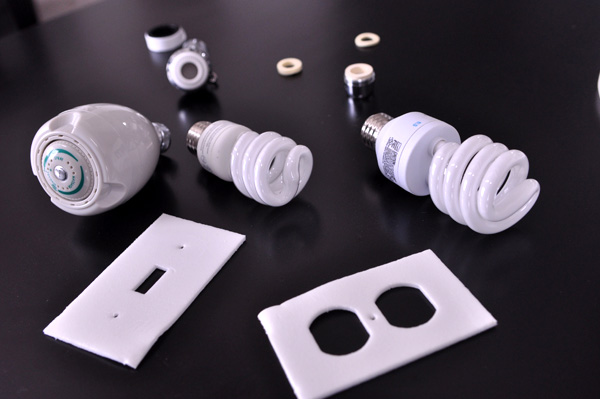
For a limited time, homeowners in Hamilton, Boone, Campbell and Kenton counties can spend just $50 for a $400 to $500 review of potential energy inefficiencies in their homes, and then apply that $50 toward improvements that will help lower their energy bills.An initiative of the non-profit Greater Cincinnati Energy Alliance, the discounted three to five-hour energy assessment includes an in-depth examination of how well your home's heating and air conditioning are working, as well as trouble-shooting for potential leaks and gaps in insulation. "It doesn't matter if a home is five years old or 105 years old, there are cost effective energy upgrades in almost every home we've ever looked at," says Andy Holzhauser, GCEA's executive director. "It's our job to make the process easy and affordable for everyone in our community."Holzhauser believes connecting homeowners with local contractors who have been trained to find affordable, environmentally sustainable ways to retrofit homes creates a powerful motivation for living green. So, after the energy assessment, the GCEA will discount up to 35 percent of the cost of projects that assessors recommend. "We make the retrofit more affordable," Holzhauser says. "In the case of a $5,000 retrofit, we will put $1,700 to $1,800 of our dollars on the table right alongside the homeowner's investment."Best of all, there are no income restrictions on the discounted assessments and retrofit projects, both of which can lead to lower monthly living costs and better environmental stewardship. "The notion of an investment on a home actually generating a cash return back to you is something that is new," Holzhauser says. "It's at the heart of what we do."Do Good:• Watch a home energy assessment in action.• Find out how much you could save. Sign up to learn your potential savings and request an audit of your own.• Tweet and learn. Follow GCEA on Twitter.By Elissa Yancey Photo by Scott Beseler

10 Years Later, a Corner of Cincinnati Sees a Brighter Future

 The New York Times praises Over-the-Rhine for its new reputation. Over the past ten years since the riots erupted, efforts by non-profit and corporate entities have encouraged revitalized efforts, bringing a large amount of new, independent businesses to the area.Read the full story here.

Bike Friendly Destinations talk plans, benefits of being two-wheel friendly

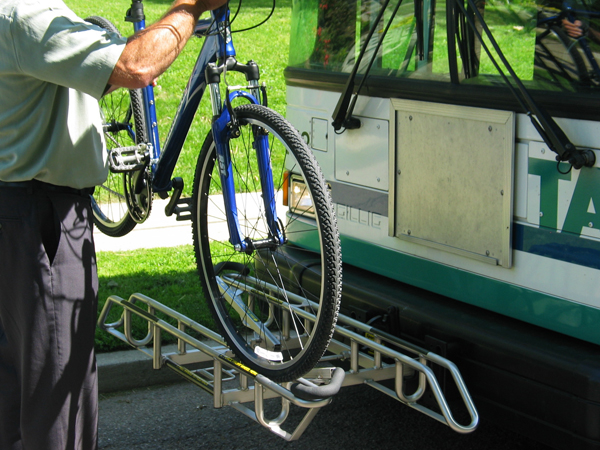
Cincinnati-based cycling advocacy organization Queen City Bike kicked off Bike Month in May with the launch of a new award. The Bike Friendly Destinations program honored 41 destinations at a May 2 ceremony, granting certifications ranging from Gold to Honorable Mention.Two Gold recipients, the Transit Authority of Northern Kentucky and the Mercantile Library in Downtown Cincinnati, said the changes they made that earned the designation were relatively simple and inexpensive. And while their motivations - and response from patrons and employees - differ, representatives from both said they're seeing benefits from being bike-friendly. TANK spokesperson Gina Douthat said that the transit organization didn't just rely on its highly visible bus-mounted bike racks for the award; a number of employee-facing changes have also made bike commuting an alternative for TANK staff. "Being an organization that's into alternative modes of transportation, we continually encourage employees to look at alternatives to single-occupancy vehicles," she said. TANK offers both indoor and outdoor bike storage at its offices, and Douthat said on-site showers and the ability for some employees to flex schedules make it easier for employees to ride to and from the office. "It gives them the ability to fit workouts into their lives a lot better," she said. Cedric Rose, part of the Mercantile Library's collection staff, said that he's seen an upswing in patrons riding in. "Among our patrons, we have some younger people who, that's just the way they get around," he said. "Overall, I definitely think there's been an upswing." Queen City Bike staff helped the library acquire a bike rack for its Walnut Street entrance, and the library has opened its 11th-floor lobby to let patrons park their bikes indoors. Cincinnati Department of Transportation city planner Melissa McVay, who has worked on a number of bike advocacy issues, said the awards could play a major role in reaching out to potential riders unfamiliar with the city's bike culture. "One of the things we struggle with is the people we're able to communicate with are already cycling," she said. Many of the winning businesses conducted Bike Month campaigns and publicity drives among their patrons, she added. "That's going to reach so many more people than we could ever reach on our own." And as non-riding patrons and employees of the award-winning businesses are exposed to the city's growing bike culture, Queen City Bike Program Coordinator Jess Linz said she hopes to see a more significant shift in the way Cincinnatians think about transit. "These groups are now representing a bike-friendly transportation mindset," she said. "There's this value in the private realm for this kind of cultural change." Writer: Matt Cunningham Photography by Matt Cunningham

CPS green building projects attract national attention

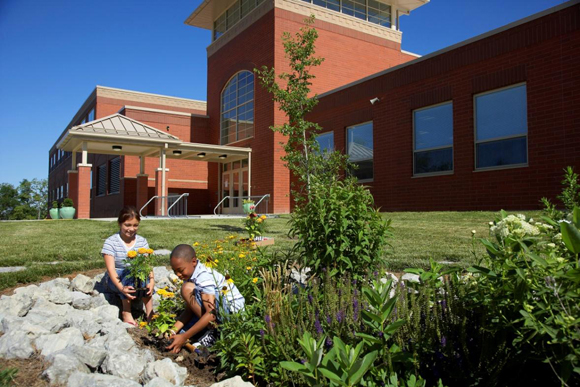
 Cincinnati City Council's Quality of Life Committee received an update Tuesday on Cincinnati Public Schools' progress on its facilities master plan. This system-wide construction and renovation project has garnered national attention, not only for its scope but also for its emphasis on green building. The project's 23 LEED certified or registered schools have CPS on track to be one of the nation's most environmentally sustainable school systems, and is playing a key role in some of Cincinnati's key goals, said council member and committee chair Laure Quinlivan."The most important thing [council] can do as politicians is try to get more people and businesses into the community. One of the big questions I hear again and again is, 'how are the schools?'" she said. "The better our schools, the more people we retain in our urban core."CPS Director of Facilities Planning and Construction Michael Burson reported that the project has completed construction and renovation on 36 of its 51 planned and current schools. Ten more are under construction, and five are in various stages of the construction bidding process.But the master plan, which was initially approved in 2002, is already showing results, he noted. The biggest change comes from 'right sizing' the system, he said."We were operating 80 schools, a legacy of the 90,000 students we had in the 60s," he said. "A lot of the old buildings didn't consume a lot of energy, but they were not that functional and their environment wasn't that great."The master plan, he explained, changed in 2007 to mandate LEED Silver certification or better, meaning that CPS would had the potential to become one of the greenest school districts in the nation. Burson reported at the meeting that CPS has already achieved a number of noteworthy marks, including the first LEED Silver certified school in the state (Pleasant Ridge Montessori). And the sustainable construction is more than a bragging point; he explained that CPS is on track to operate its upgraded facilities - complete with new technology, security features and modern air conditioning - for the same cost per square foot it spent to operate the outdated, inefficient schools with a fraction of the amenities."I was really surprised at all I heard CPS is doing," said Quinlivan. "They're really on the cutting edge of facilities, and it's great for students to be in buildings that are healthy as well as new."Burson went a step further, noting that the green building features are becoming a hands-on part of curricula throughout the system. And therein, he said, lies the biggest contribution CPS is making to the city through its facility upgrades. "For us, I think we're able to influence the younger generation, and we're instituting this into the culture," he said. Writer: Matt Cunningham


My Soapbox: Bill Cunningham

In the startup community, Bill Cunningham is known as a man of action. The founder of five startups has spent the past 20 years as an advocate, teacher and mentor to budding entrepreneurs. Soapbox asked next generation startup leader, Elizabeth Edwards, to talk with Cunningham about his past and offer advice for future entrepreneurs.

America’s 100 best and worst cities for moms

 Cincinnati ranked number three of the 100 largest cities in the U.S. that are the best for 'mom'. Ranking categories included mothers-per-capita, quality of education in public schools, the number of child-care workers per child at age five, the availability of maternity specialists, and Mother's Day pampering options.Read the full story here.

Main Street’s newest design district taking shape

 Cincinnati has a well-established design district. Major design and branding firms such as Marsh Inc, KZF Design and Reztark Design Studio all sport stylish offices along 8th Street northwest of downtown. But a few minutes' walk north of this district lies another stretch that appears to be on its way to becoming a design district of a different type. The storefronts along Main Street in Over-the-Rhine are rapidly filling up with ventures spearheaded by young design professionals, and the neighborhood appears to be welcoming them with open arms."It's a nice new energy on the street," said Julie Fay, owner of Urban Eden contemporary crafts and fine art, partner in Iris Book Café and one of the founding trustees of Merchants of Main Street. She estimated that most of the non-restaurant businesses that have opened on Main Street in the past year have been design or design-related businesses, many owned and founded by industrial and fashion design graduates from UC's College of Design, Architecture, Art and Planning (DAAP).DAAP graduate and Losantiville Design Cooperative co-founder John Dixon said a combination of factors are drawing design-, art- and craft-oriented professionals to Main Street. For one thing, the rent's pretty cheap."Our whole purpose was to have a transparent studio," he said, nodding to the studio's tall storefront windows. "You can rent a warehouse for cheaper than this, but you're a little cloistered. "The affordability and knowing things are going on down here makes it really cool."Those 'things going on' include Final Fridays, monthly events where the art studios along Main Street open their doors into the night for an arts-focused block party. Dixon said Losantiville sees a lot of foot traffic from Final Friday gallery visitors who stop in to investigate the collective's furniture, lighting and sculptural work. "It's cool to see people who are generally into this kind of stuff coming in here," he said. Now, the design-friendly makeup of Main Street appears to be maturing. Rather than purely client-facing design businesses or studios, the district is starting to attract businesses aimed at serving the designers themselves.Alisha Budkie plans to open Smartfish Studio and Sustainable Supply on Main Street later this summer. While the DAAP graduate does plan to include studio space in her business - she designs and fabricates a line of women's footwear - she also intends to provide fellow designers with access to sustainable, high-quality material for their work."I've seen how hard it is to source materials," she said, noting that as a design student, she spent a good deal of time finding the right materials for her work.And based on Budkie's experience as she prepares to open her business, the other tenants of Cincinnati's new design district will welcome their new neighbor. "I've just found that whenever I've asked for help I've received it," she said. "Whether it's advice or support, I've received it."Writer: Matt Cunningham

Our Partners

Taft Museum of Art

Common Ground Is Brewing

Support local stories and receive our signature roast straight to your door when you join at the Standard level (or above).

Drink Better, Read Local

Close the CTA

Don't miss out!

Everything Cincinnati, in your inbox every week.

Close the CTA

Already a subscriber? Enter your email to hide this popup in the future.