Health + Wellness

lululemon athletica gets hip on Hyde Park Square

Yoga practitioners, runners, dancers and sweaty types of all varieties understand the value of a beautiful tank, tee or capri to make any workout more fun. Starting this Friday, Hyde Park Square shoppers can get an even bigger dose of the newest, hippest exercise wear at the expanded new lululemon athletica store on Michigan Avenue. Offerings include tops made with silverescent fabric, fabric that inhibits the kind of stinky that stays with garments after they have been worn during, um, strenuous workouts. That’s right. Stink-proof workout wear! With more than 150 stores throughout the U.S. and Australia, the brand continues to post strong earnings, in part because of its focus on the life part of lifestyle. Lululemon, known for technical fabrics and functional designs, consults with yogis and athletes in local communities for research and feedback. They call their very fit focus group members “ambassadors,” and the ranks in Cincinnati include a wealth of multi-tasking fitness gurus. Examples: a law student/ironman competitor, a two-time breast cancer survivor/triathlete/biological anthropologist, and a certified Pilates instructor/Rhythm & Motion dance teacher. With a mission “to elevate the world from mediocrity to greatness,” the staff of lululemon athletica  approaches their work with energy, passion and wit. And free yoga. That’s right, every Saturday the Hyde Park store will offer free yoga from 9 until 10 am. Customers can sample different styles of yoga during the weekly sessions, then cool down with a good dose of retail therapy. Sunday morning Run Club starts at the showroom at 8:30 am, and allows runners of all levels to learn and work together toward common fitness goals. You can reach the store at 513-321-1656. ?By Elissa Yancey

Latest in Health + Wellness
Cincom’s Eloquence helps insurance companies provide targeting, personal communications

Have you ever gotten a letter from your insurance company reminding you of preventative tests to take by your 50th birthday? But you're 28? More than likely that and other irrelevant health information goes straight into the garbage can, a waste of time and money: both yours and your insurance provider. Springdale-based Cincom is working to make health communications between you and your insurance plan provider better through a new software program called Eloquence. The software is geared toward large providers offering coverage to hundreds of thousands or millions of people with unique plans, lifestyles and health needs. Cincom has been around for more than 42 years, but has relied on innovation in developing software that improves business operations and customer communications. The company's technologies include: application development, contact center, database management, document automation, healthcare and manufacturing ERP software. Eloquence is Cincom's latest offering, and is a response to a wider industry movement to communicate with plan members in a more useful way, especially in the area of managed and preventative care. The software can handle everything from letters and enewsletters to welcome kits and text messages, all targeted to specific member needs. It was designed to be intuitive and work with company's existing data. Elegance takes the messaging from the design stage, to the delivery platform into document management.   "What we have seen in the past year, due to the (healthcare) reform movement, is there has kind of been an awakening in healthcare community. They realize the value of engagement," says Troy Gross, Cincom Senior Marketing Manager. "Doctors, insurance companies and members themselves are getting more proactively engaged in the care management space." The software works with companies' existing data, culling demographic and claims information that allows the insurer to more effectively communicate health messages to customers. For instance, diabetics could get a newsletter on the importance and a healthy diet and regularly testing their blood sugar. Parents with young children, who haven't submitted claims for vaccinations, could get a reminder letter personally addressed to them. Companies could also use Eloquence to reach out to members who rarely submit claims to help stay healthy. "Companies are beginning to reach out proactively to keep their healthier members out of (the system), making sure they are doing the right things to keep healthy," Gross said. "This is a way to help plans that are beginning to reach out to members to improve health outcomes. When that happens we all win." By Feoshia Henderson

Northern Kentucky organization provides hospitality for families in need

Families with children are one of the fastest-growing segments of the homeless population today. The Interfaith Hospitality Network (IHN) of Northern Kentucky knows that it can’t change those statistics alone.    IHN already partners with over fifty churches, a thousand volunteers and several social service agencies to provide temporary housing and support for homeless families. By keeping the entire family together, IHN is unique among local services aiding the homeless; other agencies are forced to separate fathers and older boys from mothers and small children. IHN host churches open their doors weekly to house families overnight, providing homemade dinners and breakfasts, games and relaxation for all members of a family. And with 98% of IHN’s work being done by volunteers, fund-raising dollars go directly to support the guest families IHN serves.   But in a downturn that just won’t let go of the economy, IHN is seeing many more children and their families in homelessness today. “The shelter is completely full,” states Warner Allen, executive director for IHN of Northern Kentucky. “And we have over 60 families on our waiting list.  Of those, 145 are children.”  Those waiting may be staying with relatives, but many are in their cars or on the streets and in critical need of help. So IHN has developed new programs recently that share social workers and resources between agencies, partner with local colleges for training and education, and offer job coaching and resume building at the Day Center, where families go during the day to plan for their future. Sharing resources is the only way to give each family the intense case management necessary for them to rise out of homelessness. Allen understands first-hand the fears and worries these families face.“I was homeless as a child.  I know what these families are going through.” The key to success is keeping the entire family together, he believes.  By supporting mom and dad in their job search and training, by mentoring youth and by offering education in life skills and financial literacy to everyone, many families can and do rise out of homelessness at IHN, never to return.       Do Good: Attend: “A Taste of Homelessness,” a fundraising event for the Interfaith Hospitality Network of Northern Kentucky with wine tastings and hors d’oeuvres, Oct. 27th from 6-8pm at The Ascent at Roebling’s Bridge, Covington, www.nkihn.org Volunteer: to mentor a youth, help with financial or life skills counseling or serve a meal at one of the many churches who host IHN families around the year. Support: IHN with donations of furniture and other household items to establish a new home for families who have lost everything and are starting over. By Becky Johnson  

Resource: TechSolve

Over the past 25 years TechSolve has helped small to mid-sized companies implement business-building process improvement solutions that deliver measurable, top-line and bottom-line results. TechSolve consultants have in-depth business and engineering experience across a wide range of industries (manufacturing, healthcare, aerospace, etc) that enable them to identify and quickly prioritize the best improvement opportunities. TechSolve's work is celebrated by large OEM’s and supply chain programs that have worked closely with TechSolve to optimize their supply chain and we are unique in having an Advanced Machining Lab on site and machining consultants on staff.  TechSolve, formerly the Institute of Advanced Manufacturing Sciences, Inc. (IAMS), was founded in 1982 by the City of Cincinnati, the Greater Cincinnati Chamber of Commerce, the University of Cincinnati and large manufacturers in the region with the objective of assisting local manufacturing suppliers to improve efficiency in the newly competitive global market. TechSolve continues to serve the manufacturing community and has a third party measure the impact of our results ensuring that our results return significant ROI for our clients.  In 2005 the group began offering consulting services to the Healthcare community. Its services continue to be in high demand across a wide range of hospitals who have seen the dramatic results our experts, process and tools can have. Unlike other consulting firms that seek to dominate organizations, TechSolve’s approach is dramatically different-- by working collaboratively and teaching teams how to implement the improvement tools and processes for themselves.

Strive Partnership in Cincinnati achieves better results in schools

In Greater Cincinnati, leaders of the education, nonprofit, community, civic and philanthropic sectors are working together to tackle some of our most pressing challenges, and to take advantage of some of our biggest opportunities to achieve these results for every child, cradle to career. Read the full story here.

Nern Ostendorf, Queen City Bike
Red Tree offers coffee, art, philanthropy

If you’re in the mood for a cup of coffee, to see local art or do your part to support the American Cancer Society, a local gallery has you covered. Artists for a Cause Silent Auction, held at Oakley’s Redtree Gallery for four weeks in October and November, benefits both the American Cancer Society and the local artists who have donated special pieces.   The mission of Redtree, a combination art gallery and coffee shop, is to encourage both emerging and established artists, with an emphasis on the local arts community. Local artists create over 90 percent of the art featured at Redtree, which features all mediums styles and expressions.     With six open-call shows a year, the gallery actively supports emerging artists who may never have shown before. Alison Lee, marketing and development director for Redtree, sees that as one of the gallery’s main missions: “to get people to submit art, to have the courage to do that.”    The coffee shop, with its fair-trade coffee, specialty drinks and relaxed seating, offers opportunities to continue this conversation about art every day. “I feel it breaks down barriers, maybe the idea of art galleries being stuffy or unapproachable,” Lee says. Visitors who come for a cup of coffee may never have visited an art gallery before. “This exposes them to artwork and inspires a sense of community” with the art world.   The ongoing Artists for a Cause is one of Redtree’s group shows. Suggested by local artist Bruno Zabagilo, the silent auction has more than 30 local artists’ work, on which customers can submit written bids through an entire month. Proceeds benefit the cancer society. Gallery owner Wendy Smith sees this as another extension of Redtree’s mission. “Bruno and I have both had relationships with people with cancer, as so many people do,” she says. “And we’re always excited and happy to support an artist who is passionate about something like this.”   Do Good: • Attend: Opening Night of Artists for a Cause, Friday, Oct. 14, 6-9 p.m. • Support: the American Cancer Society anytime. • Visit: Redtree to grab a cup of coffee and bid on silent auction items. The auction ends Saturday, Nov. 5, at 9 p.m. By Becky Johnson

Red Cross takes gold and opens Green Umbrella

At the latest gathering of 140 local sustainability advocates, members of the newly forming group known as the Green Umbrella shared best practices, brainstormed ideas for the future and experienced fellowship in the first Gold LEED certified Red Cross headquarters in the country. Located in Keystone Park in Evanston, and clearly visible from I-71, the Red Cross headquarters has a rooftop garden that, along with a bioswale, helps the nonprofit reuse 90 percent of the water that falls on the property. “They also add beauty to our building,” says Sara Peller, CEO of the Cincinnati Area Chapter of the American Red Cross. The building, which came in $1 million under budget, was a joint project between the Red Cross, Neyer Properties and emersion DESIGN. “It’s functioning extremely well for us,” says Peller, who notes that 120 volunteers helped with the building design process. In addition to energy-efficiency elements and minimizing construction waste, the building allowed for the Red Cross to incorporate a Disaster Operations Center, a long-time community need that could not be met at the old headquarters downtown. Now the Cincinnati area Red Cross, which services 36 counties, can serve as the information hub in case of emergency or disaster. “Many ills have been cured by this building,” Peller says. As for the Green Umbrella, the ongoing initiative to create a comprehensive network of sustainability initiatives around Greater Cincinnati and Northern Kentucky continues to gain steam and support. Working groups focus on areas as diverse as urban agriculture and corporate sustainability. The ultimate goal, to create a single resource from which all sustainability-minded residents can learn, moves ever closer to reality with website development and continued cooperation between local businesses, nonprofits and educational institutions. By Elissa Yancey

Bioscience matches made in heaven, via local labs

Jan Rosenbaum creates bioscience matches made in heaven. As an executive-in-residence with Cincinnati-based seed-stage investor CincyTech, Rosenbaum matches up physicians with medical-device engineers, therapeutics companies with molecular pharmacologists, and diagnostics makers with target markets. Rosenbaum’s role is to look for opportunities to create companies – or commercialize research – out of health care and biotechnology work being done at local research institutions. For the last 12 months, that work has included three trips to Israel to form connections with its dynamic and prolific medical research and biotechnology industries. Rosenbaum’s work comes as the Cincinnati USA Regional Chamber makes a big push to create strong business relationships with Israel. A delegation of about 30 business leaders led by the Chamber traveled to Israel last November to learn how the Israelis fund, promote and advance high-tech startups. Rosenbaum’s trips have provided a deeper dive into medical technology and biotech. Among other things, she has found a potential distributor for a CincyTech portfolio company’s product and helped form a medical device development and commercialization program between Cincinnati Children’s Hospital Medical Center and Ben Gurion University in Israel. She also has helped create a collaboration with a medicinal chemistry company based in Israel. The goal is to further develop compounds that have been identified by one of Children's leading oncology researchers, who has taken a novel approach in the treatment of leukemia and Crohn's disease. “All of these are examples of opportunities that lead to economic development in both Israel and Cincinnati through creation of startup companies, driven by the attraction of Cincinnati Children’s,” says Rosenbaum. “The impetus for relocation to our region occurs once the company reaches the point of needing clinical development, market penetration, and sales and marketing distribution through a U.S. presence.” Rick Schottenstein, the managing director for the state of Ohio’s Eastern Mediterranean Regional Office in Tel Aviv, calls Rosenbaum “an extraordinary asset to the state”. “It takes someone of Jan’s caliber to analyze these very sophisticated opportunities,” he says. “She has the business background and the scientific background to do that.” A native of Buffalo, New York, Rosenbaum came to Cincinnati in 1986 after a post-doc fellowship at Stanford University School of Medicine doing cardiovascular research and clinical pharmacology. For 23 years, she worked as a principal scientist at Procter & Gamble Pharmaceuticals, evaluating licensing opportunities, helping to take internal research to the marketplace, and conducting and coordinating internal and external pre-clinical research. Since joining CincyTech in January 2009, Rosenbaum has worked closely with Nicole Robinson, executive director of the Center for Technology Commercialization at Cincinnati Children’s, and Dr. Dorothy Air, associate vice president of entrepreneurial affairs and technology commercialization at the University of Cincinnati. Rosenbaum delves into research underway at both institutions and pairs researchers and opportunities with strategic partners. She has been instrumental in the formation of a number of CincyTech client companies, including Airway Therapeutics, which is based on 10 years of research at Cincinnati Children’s and will develop surfactant proteins to help premature infants’ lung development; and CardioCeption, a University of Cincinnati spinout that is creating non-traumatic heart therapies. In Israel, Rosenbaum finds cultural affinity as well as professional affinity: prolific researchers aggressively looking for Ohio expertise on taking products to market. “They are hungry to create and eager to innovate,” she says. “It is an extremely entrepreneurial culture. I absolutely love the work we are doing there.” By Sarah Blazak for CincyTech

Nation’s first Center for Environmental Genetics houses historic Fernald samples

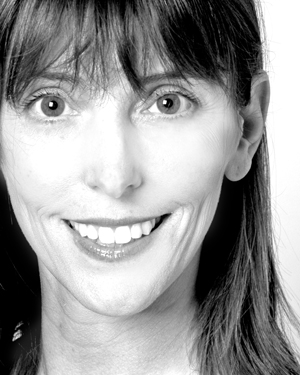
Tucked away in Clifton on the medical side of UC's campus, researchers at the nation’s first Center for Environmental Genetics continue groundbreaking work, but with a new twist. Their latest research game-changer involves decades worth of carefully documented biological samples now available for use by their peers all over the world. If you have never heard of the Center for Environmental Genetics, you are not alone. Housed within the largest department of UC’s College of Medicine, the Department of Environmental Health, the CEG funds research on genetic (your personal script, already written at birth) and epigenetic (beyond genetics – how what you are exposed to today may impact your children’s genes and even further down the line) levels. Conducting epigenetic studies can be particularly challenging, since multiple generations and variations of exposures are involved. That’s where a long-term human cohort study, started years ago as part of a $78 million settlement at the Fernald Feed Materials Processing Center, comes into play. For years, residents around the Fernald plant had no idea that their neighbor was manufacturing uranium, not livestock feed. The long-term drama that ensued as the plant was shut down became the stuff of class action lawsuit history. What many residents wanted as much as restitution for their poisoned property was medical help and advice about how their homes might have made them, and their children, and their children’s children, sick. So the settlement included an important stipulation: the largest medical monitoring project of its kind. From 1990 until 2008, residents were monitored and samples collected from all ages and all backgrounds. The cohort included multi-generational families, with sample collections coded to reflect their relationships. At the end of the monitoring period, 160,000 biological samples from more than 9,500 participants are now stored at UC’s CEG. Not only can they be used to help examine and improve the lives of the participants and their families, but they can also be sent to researchers around the world who need stable, high-quality samples for their own genetic and epigenetic research. Locally, doctors found evidence of increased cancer risk among residents, but they also were able to suggest opportunities that might help lower residents’ other risk factors, including the incidence of diabetes and heart disease. As researchers and community members gathered on UC’s campus last month to discuss the decades-long project, participants and researchers agreed that, when done correctly and comprehensively, medical monitoring leads to both better health and better research. By Elissa Yancey

Our Partners

Taft Museum of Art
Warsaw Federal

Don't miss out!

Everything Cincinnati, in your inbox every week.

Close the CTA

Already a subscriber? Enter your email to hide this popup in the future.