Health + Wellness

Design Impact raises funds to fight child hunger

When a Northside couple, Ramsey Ford and Kate Hanisian, started Design Impact, they wanted to create a social design company that creates lasting change in low-income communities around the world. As they investigated existing social design companies, Hanisian and Ford learned that most similar non-profits do their work and then leave communities. They spend short periods of time on the ground and often create solutions that don’t take community needs and cultures into account. “If you’re designing the next Pantene bottle, our culture is similar enough that a lot of the assumptions made will be correct,” Hanisian says. “When you’re crossing economic and geographic borders, assumptions can be wrong, and it can alienate the community from the process.” Hanisian and Ford charted a new path for Design Impact. They wouldn’t arrive in a community with a pre-fabricated plan to “fix” it; instead, they would become a part of the community. By living and working with community members, they would find the best ways to help create deep and lasting change. The mission began with the couple spending 16 months in India and then sending six fellows into communities around India. Each community will be served in three phases and after six months, Anisha Shankar, has developed her plan to improve health for malnourished children. The solution is Ladoo, a low-cost snack packed with nutrition. Currently, Design Impact is running a fundraiser on indiegogo.com, a crowd-sourced fundraising website. The goal is to raise $10,000 to assist in phase two of the fellowship program. The next fellow will spend 10 months in Pune, India, creating a business plan to help local women create a sustainable business making the Ladoos, while simultaneously helping solve the problem of malnourishment. The long-term goal is to create a sustainable business model based around the ladoo and expand it exponentially with the goal of helping lower childhood malnourishment not just in Pune, India, but everywhere.  Do Good:  • Donate to the indiegogo campaign and help Design Impact raise $10,000. • Donate to Design Impact as a whole organization and help fund other programs. • Visit Design Impact's website and learn about the programs and help spread awareness.  By Evan Wallis 

Latest in Health + Wellness
Swimmers prepped for 5th Great Ohio River Swim

An off-the-cuff conversation over a cocktail between a National Geographic journalist and a local river enthusiast inadvertently launched the annual Great Ohio River Swim five years ago. “It was really a lark,’’ said Brewster Rhoads, who recounted the conversation he had with Boyd Matson. “Boyd was in town with his wife and he was looking for something fun and unique to do and he said: ‘Who wants to swim the Ohio with me?”’ That’s the question Rhoads and race director Jonathan Grinder have asked each year since. This Saturday will mark the fifth annual swim, which has grown to the largest swimming event on the Ohio River. Last year, 131 swimmers competed in the nearly 900-yard event. The timed race, sponsored by Ohio River Way, Inc., and managed by Tucson Racing, Inc., begins at the Serpentine Wall and crosses the river to Kentucky before ending at the Public Landing. Grinder, President of Tucson Racing, also organizes the Cincinnati Triathlon, reached out to Rhoads that first year – after seeing a photograph in the Enquirer of Rhodes and Matson getting out of the river. Grinder wondered if Rhoads would like to do the swim annually, on the day before the triathlon, so triathletes could acclimate to the river. Triathletes and regular swimmers have been involved since. For Rhoads, the river’s most vocal cheerleader, the swim is the best way to introduce people to the beauty of the river and to dispel the myth that it is unsanitary. “Nothing beats providing a personal experience – an immersion experience – where people are able to experience the beauty and wonder of this,’’ he says. Participants effuse delight recounting prior swims. Many are surprised by the water quality, the tranquility of the swim and how energized they felt after the event. Rhoads said the river quality is exceptional this year, noting he can see at least four feet down. Jennifer Mooney is no stranger to open swimming, but last year was her first Ohio River swim. She plans to participate Saturday. “The city is very still in the morning,” says Mooney, 49, of Wyoming.  “The view from the water is peaceful.” John Finnigan, whose first river swim also was last year, says it wasn’t difficult to complete, but noted that he had to adjust to the river’s current. Rhoads said swimming in the river is different than in a swimming pool. Anyone contemplating joining will be required to sign a waiver saying they can steadily swim 1,000 yards. “This is not something someone should just jump in and do,’’ he says. Swimmers will be required to participate in a 20-minute safety review at 7 a.m. They will need to wear a provided swim cap and a chip around their ankle that will track their time. Swimmers will not be allowed to wear wet suits. The river will be closed to barge and power boat traffic from 7:30 to 8:30 am. Certified lifeguards and a legion of safety boats – including 20 safety kayakers and three personal watercraft, will be on the river during the race, Rhoads says.   This year an oil spill boom will also be provided to help with safety. Rhoads, who is in charge of safety and does not participate in the race, says there has never been a safety issue, and all participants have completed the swim. Proceeds from the swim benefit the non-profit Ohio River Way, Inc., to support its work to promote, protect and celebrate the river. Greg Landsman is eager to make the swim again this year. “I plan to do it every year,’’ said Landsman, 35, of Mt. Washington. “It’s an exceptional way to start a Saturday morning: Good exercise, a refreshing swim, the vitality of the group and the sense of accomplishment – ‘I swam across the Ohio River and back today!’” Do Good: • To join the swim: You can register online. Swimmers can only register Saturday beginning at 6:30 a.m. at the Serpentine Wall. Parking is free. Cost is $45 per swimmer and $35 for member of USA Triathlon. • Look at photos from the 2010 swim. • View a video from the 2010 swim. By Chris Graves Chris Graves is the assistant vice president of Digital and Social Media at the Powers Agency.  

Local cyclists, architects team for bike storage competition

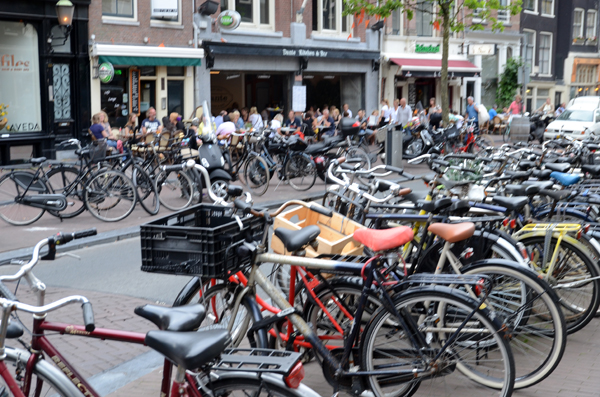
Queen City Bike, led by Nern Ostendorf, rallies for cycling in the city with regular initiatives like May’s Bike Month celebrations, classes and advocacy forums, a continually updated list of local Bike Friendly Destinations and even nighttime BRIGHT Rides. The most recent dazzled World Choir Games-goers with a parade of bikes decked out in multicolored lights. (More BRITE Rides are in the works. Stay tuned.) Next up on QCB’s to-do list: a bike shelter/storage design competition created by the local chapter of the American Institute of Architects (AIA). The contest, which is free and open to the public, challenges entrants to choose a location in town that is ideal for bike storage and create an affordable, accessible concept that can house at least eight bicycles at one time. For the average city-dweller, the need for increased bike storage might not seem pressing, but for passionate cyclists it could move Cincinnati in the direction of alt-transportation hubs like Portland and Chicago. “Bicyclists [in Cincinnati] often feel like an afterthought when it comes to getting their parking needs met,” Ostendorf says. “Only after the parking lot has been paved do many designers think about maybe squeezing a bike rack into an unused corner (if anything).” That means public bike racks are scarce. “Most of the time bicyclists automatically go for the nearest parking meter or fencepost or whatever they can find (tree, gas meter),” Ostendorf says. She adds that change is happening, albeit slowly. The city responded to at least one public bike storage request, installing a corral on Knowlton Avenue in Northside in front of the Mobo Bicycle Cooperative. Andreas Lange—the AIA representative who contacted QCB about the contest—says there has already been considerable buzz about the design competition. Similar competitions in other cities “are often very complex or restricted to the initiated few,” Lange says. “We wanted this to be short and sweet and at a level that everyone could participate. It's an ideas competition, so everyone can share something.” In addition to potential inclusion in future bike-sharing programs, Lange says designers shouldn’t limit their concepts to downtown and OTR. “We’d love to see some smart proposals for the ‘burbs,” he says. Ostendorf and Lange both hope the competition—and initiatives like it—will help increase community dialog and support for investing in bicycling infrastructure. “The more we make urban bicycling easier and more fun, the advantages of cycling will just keep increasing,” Ostendorf says. Submissions for the design competition will be randomly sorted and reviewed by a small team of architects and cyclists. The winning submission—to be announced Aug, 6—will receive a bike storage system courtesy of the cycling gurus at Saris. Deadline for submissions is 5 pm, Friday, July 27. All submissions should be sent to cincinnatibikeshelter@gmail.com. By Hannah Purnell Follow Hannah on Twitter.

Maribelle’s open kitchen in Oakley invites inquiry in comfy setting

Comfy. Transparent. Energetic. That’s how Leigh Enderle, owner of Maribelle’s eat + drink, describes the new location in Oakley. Maribelle’s, which used to be located on Riverside Drive, reopened late last June in the space that formerly housed Hugo restaurant on Madison Road. The restaurant’s newly remodeled space is based on the idea of transparency and comfort. “Transparency is the concept we’re going for,” says Enderle. “We want people to know where their food comes from and how it’s made. We want them to understand the sourcing and we want them to understand how much work goes into the restaurant, too.” The restaurant kitchen is completely exposed, so guests in the dining area can watch chefs prepare their food. And the staff at Maribelle’s invites diners to sample food or ask the staff questions pertaining to their meals and drinks. “The open kitchen has brought awareness to our guests,” says Enderle. “They really get to see how a restaurant kitchen operates, it’s almost like watching a show.” The menu items at Maribelles run from $8-15, and include both vegetarian and non-vegetarian options. Chefs use local vegetables when in season, and source all chicken and turkey products from Gerber Farms in central Ohio. Maribelle’s beer list includes domestic porters, lagers and IPAs. Enderle, who is originally from North Carolina, says she wanted to create an atmosphere not unlike a kitchen at home. She says that at home, she’s never afraid to ask questions, and that’s how she wants guests to feel. And although she admits that it’s tough to get fresh local ingredients in an urban area, she agrees that it’s worth the extra effort. “I care about what I eat. Not all the time, but I do care,” says Enderle. “I care about where things come from, and I care that the animals are treated well. At Maribelle’s, we want to make sure we know the story behind the ingredients that we’re getting, and we want to make sure it fits into our concept of transparency.” By Jen Saltsman Follow Jen on Twitter.

ViableSynergy joins Health Data Consortium to harness, unleash massive healthcare data

Cincinnati-based startup ViableSynergy, a health IT commercialization firm, recently joined a new federal initiative aimed at liberating massive amounts of government-stored healthcare data to create new products and services designed to improve healthcare delivery. The newly-formed Health Data Consortium, spearheaded by the U.S. Department of Health and Human Services, is an effort to get data housed in various government programs like Medicaid or the Department of Veteran's Affairs into the hands of health innovators. The data, scrubbed of personally identifying information, could be used to create more effective healthcare services and help providers make better care decisions. "In Medicaid services, you can look at claims data like the distribution of race and the types of claims," explains Sunnie Southern, founder and CEO of ViableSynergy. "You could look at that information across a map and visualize it. "You could see if more African-Americans have heart attacks in a certain area, or more Caucasians have back surgeries, and make a decision based on that. If there is a high concentration of Asians who have heart attacks in an area, maybe you could put a clinic in that place. You could help reduce health disparities." As an affiliate of the Health Data Consortium, ViableSynergy will work to communicate the needs of the region to the consortium. "What does the community need, in the broad sense? What tools and resources do we in the real-world need -- NKU, business incubators or UC -- to liberate these massive data sets that are released? We'll be working as a conduit to answer those questions," Southern says. Other members of the Consortium include California Health Care Foundation, Consumer Reports, Mayo Clinic Center for Innovation, Robert Wood Johnson Foundation and Gallup/Healthways. "(Health and Human Service CTO) Todd Parks, whose brainchild was the open government initiative, really wants to use health data to spur innovation and entrepreneurship," Southern says. By Feoshia Henderson Follow Feoshia on Twitter

Literacy Network receives funding for kids’ reading program

With a focus on raising the literacy rates in Greater Cincinnati, the non-profit Literacy Network of Greater Cincinnati (LNGC) was founded almost 30 years ago—new funding from the Greater Cincinnati Foundation (GCF) aims to help make progress toward that goal.  LNGC was awarded $18,000 to help fund its Children's Basic Reading Program. The two-year program has been held once and engaged 75 first through fourth graders who suffer from severe reading difficulties, such as dyslexia. The free program focuses on students who need more intensive intervention. “The improvements you see in the students over two years are inspiring,” says Kathy Ciarla, president of LNGC. “It is imperative to intervene with children who struggle with reading at an early age. "If a child is reading below grade level in fourth grade, there is a 75 percent chance they will remain poor readers their entire life. This amazing program is life-changing for the students.” LNGC doesn't just work with children. Through training volunteers to act as one-one-one tutors for adults and connecting people to educational resources, the organization works to cut down the number of people who lack basic literary skills. The LNGC reports that more than 250,000 people in Greater Cincinnati lack basic literacy skills.  Do Good:  • Donate: to the LNGC and help raise the literacy rates in Cincinnati.  • Become: a tutor at LNGC and work one-on-one with children and adults. • Donate: to the GCF and help a cause that will benefit the community. By Evan Wallis

Downtown on the farm

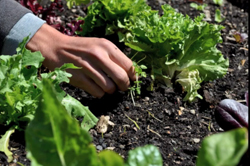
You can find Dylan Tennison's rainbow chard, French breakfast and cherry belle radishes, six varieties of lettuces, arugula, fresh garlic and Tot soy—all grown in a plot in Over the Rhine—in groceries, markets and restaurants throughout the city. The Cincinnati native bikes and harvests his way to a sustainable, and inspiring, life filled with delicious benefits.

Birth photographers share the emotions of labor

Lifelong west siders Melanie Pace and Kelly Smith may have grown up in the same neighborhood, but the two photographers met online. After realizing they lived only about a mile apart, the two met in person, and found themselves chatting about natural lifestyles, yoga, raising kids and their work. They didn’t decide to open Beautiful Beginnings Birth Photography on a whim. Rather, after photographing the births of friends and family members, they started receiving requests from friends of friends. The business idea suggested itself, and with the help of referrals from a local OB/GYN office, the Bowen Center, they now accept up to five clients at a time. Women typically contact Pace and Smith when they’re between six and nine months pregnant. After an in-person meeting, they’ll update the duo on their progress, typically texting when they go into labor. “We typically go to the hospital when she’s pretty well-established in labor, and is about 6 centimeters dilated,” Smith says. And if the phrase “birth photography” conjures nudity or gore, consider that almost all of the photographs are modest enough to share with children. “It’s more about the emotion and the experience,” Smith says. Sample photographs on the Beautiful Beginnings website depict moms stretching, hugging friends, squeezing a spouse’s hand and, of course, snuggling newborns. Melanie agree. “People think birth is bloody and icky and painful, and to some moms it might work that way, but if you understand how your body works and that it was designed to do this, it’s beautiful.” Beautiful Beginnings charges by the session, which typically lasts about six hours.  By Robin Donovan

Organizations help fathers back into families

If after leaving prison, a man can successfully re-enter his family, he can successfully re-enter society. This is the first and greatest hurdle for a father leaving behind prison walls. The RIDGE Project, a fatherhood program that has partnered with a number of Ohio prisons and faith-based organizations to successfully integrate fathers with their families and communities, is now joining hands with the Avondale Community Pride Center and the Avondale Comprehensive Development Corporation (ACDC) to help. “Fatherlessness is a chronic disease in our neighborhood,” states Ozie Davis III, executive director of ACDC. The program offers community members effective training that helps integrates men within their families and supports their efforts to face adult responsibilities through personal development, communication, job skills, readiness training, and even subsidized employment opportunities. ACDC will provide locations for fathers and families to receive this training and will find at-risk families to participate in the program. RIDGE’s nationally acclaimed “Keeping FAITH” program emphasizes effective communication between couples and has discovered that most couples lack even basic skills. Fathers learn to accept responsibility for their actions and prepare to overcome obstacles in their transition back into their homes and communities. Fathers and couples also learn to surround themselves with others who share their goals and hold themselves accountable to new, healthy lifestyles. The RIDGE Project is the only program developed by a formerly incarcerated father who, with his wife, successfully kept their family together through 15 years of prison time. Now Ron and Catherine Tijerina, co-executive directors of the RIDGE Project, will work with staff at ACDC to coordinate activities and programming in Avondale to achieve good results with the community’s re-entering fathers and at-risk families. Do Good: • Read About: RIDGE’s nationally acclaimed program, “Keeping FAITH." • See: what the Avondale Comprehensive Development Corporation is doing to improve the lives ofAvondale citizens with thoughtful economic development and the encouragement of arts, culture,health care and safety. • Like the Avondale Community Pride Center on Facebook. By Becky Johnson

Cincinnati Council looking to create re-entry task force

Cincinnati Council could vote this week to set up a task force to study re-entry services for ex-offenders. The Public Safety Committee approved the idea last week. Read the full story here.

Our Partners

Taft Museum of Art

We want to know what's on your mind.

Close the CTA

Don't miss out!

Everything Cincinnati, in your inbox every week.

Close the CTA

Already a subscriber? Enter your email to hide this popup in the future.