
My Soapbox: Honour Pillow revisits Fringe
Addyston-born playwright, comedienne and cancer survivor Honour Pillow has stories to tell. She gives Soapbox's Becky Johnson a glimpse behind the inspiration of her Fringe-encore performance at the Know.
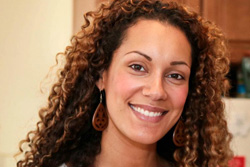
Addyston-born playwright, comedienne and cancer survivor Honour Pillow has stories to tell. She gives Soapbox's Becky Johnson a glimpse behind the inspiration of her Fringe-encore performance at the Know.

Steve Deal has one problem with the infusion of technology into today’s healthcare model: it leaves out the patient. “We have the government pouring money into health IT on the providers’ side, but patients don’t have anything,” he says. Along with co-founders Rene Raphael Vogt-Lowell and David Pingleton, Deal launched IFG Health, which is now in the beginning stages of launching a host of apps aimed at helping patients and families work more efficiently with their physicians and other healthcare providers. Their first app, the IFG Provider Journal is available in web and mobile versions, and has a Facebook-like interface that allows users to track vital statistics, such as height, weight or blood pressure, record details of care plans during appointments and note progress via text and photos. In many ways, the app is an electronic version of the notebook many people take to their physician’s office, and may be especially useful for caregivers who help a loved one manage complex conditions. Unlike a physical notebook, the app has search and sort functions for ease. Deal says that having information available – even basics that should be in a provider’s electronic medical record – helps appointments flow smoothly when time is limited. Also, not every physician or nurse is comfortable with EMRs, Deal points out. A video on the company’s website says physicians wait an average of 10 to 15 seconds for the answer to a question before they move on, with or without the necessary information. Deal has experienced this firsthand as a caregiver for his father and mother-in-law, but doesn’t fault physicians. Today’s primary care providers, he points out, “go from one life crisis to another every 15 minutes,” facing burnout along the way. He hopes that organized patients will be able to partner better with their doctors, and plans to unveil a host of new web and mobile apps to help. By Robin Donovan
Steve Deal has one problem with the infusion of technology into today’s healthcare model: it leaves out the patient. “We have the government pouring money into health IT on the providers’ side, but patients don’t have anything,” he says. Along with co-founders Rene Raphael Vogt-Lowell and David Pingleton, Deal launched IFG Health, which is now in the beginning stages of launching a host of apps aimed at helping patients and families work more efficiently with their physicians and other healthcare providers. Their first app, the IFG Provider Journal is available in web and mobile versions, and has a Facebook-like interface that allows users to track vital statistics, such as height, weight or blood pressure, record details of care plans during appointments and note progress via text and photos. In many ways, the app is an electronic version of the notebook many people take to their physician’s office, and may be especially useful for caregivers who help a loved one manage complex conditions. Unlike a physical notebook, the app has search and sort functions for ease. Deal says that having information available – even basics that should be in a provider’s electronic medical record – helps appointments flow smoothly when time is limited. Also, not every physician or nurse is comfortable with EMRs, Deal points out. A video on the company’s website says physicians wait an average of 10 to 15 seconds for the answer to a question before they move on, with or without the necessary information. Deal has experienced this firsthand as a caregiver for his father and mother-in-law, but doesn’t fault physicians. Today’s primary care providers, he points out, “go from one life crisis to another every 15 minutes,” facing burnout along the way. He hopes that organized patients will be able to partner better with their doctors, and plans to unveil a host of new web and mobile apps to help. By Robin Donovan
Cyclists in the Queen City don't want any more "ghost rides," to commemorate fallen peers like Ronald Richardson, who died after being hit by a Metro bus. So as they ride tonight to honor him, supporters will also launch a new version of a proactive program they hope will raise awareness of the importance of sharing our roadways. Queen City Blinkies, an initiative to provide free front and rear bicycle lights to riders, revives an effort started in 2008 by 7 Hills Racing. In its new incarnation, QC Blinkies, supported by Queen City Bike and the local cycling community, serves as a way to express the importance of safe riding, and safe driving, especially in the wake of recent deaths. "This has been a really trying time for bicyclists in Cincinnati," says Nern Ostendorf, executive director of Queen City Bike. "The urgency for safer roads has never been more apparent. Bicyclists across the city are grieving, organizing and supporting one another." Adding lights, often more than one or two, is one way cyclists can make their presence known on city streets. But no matter how conspicuous the rider, a sense of conflict remains. (Just read the comments section of any story about cyclists and drivers and you will see it.) She notes that while Queen City Blinkies and other educational efforts, such as billboards, are important, the bigger issue involves how we, as a community, want to live. "Right now, most of our streets are designed to move cars across the city as fast as possible, with the greatest volume possible," Ostendorf says. "Of course that will create problems between cars and cyclists." That speed-focused design, she contends, does little to increase quality of life for any citizen. "I want my city, my neighborhood, and my street to be a place to visit and enjoy rather than somewhere to move through, and I believe that most people, cyclists or not, want those things for their communities, too," she says. One simple, though challenging, answer is to lower speed limits—as with pedestrian accidents, high-speed collisions with cyclists tend to be more serious and more often fatal. And it turns out that slowing down may help more than cyclists. A pilot project study in Philadelphia showed that lowering speed limits not only made streets safer for motorists and cyclists to co-exist, it lowered the rate of car accidents overall. "We need to be creative and experimental even in how we understand and move traffic," Ostendorf says. She advises neighborhood groups to take action on their own, to request lower speed limits and speed bumps when necessary to make streets and sidewalks safer for all residents, whether they are 8 or 80. Do Good: • Support Queen City Blinkies by donating to buy lights. • Obey the law. Driving a car? Remember, it is illegal for cyclists to be on the sidewalk, so give them time and space as they share the road. Cycling? Remember, if you coast through a red light, you're reinforcing the kind of stereotypes that can hurt your riding peers. • Enjoy good food and conversation at the Hyde Park Farmers Market Bikegarten. By Elissa Yancey Follow Elissa on Twitter
Cincinnati ranks fourth in Time's calculations of most sexually satisfied cites. Do you doubt it? Read on.
Pellé Medical Skin Care products aren’t prescription strength, but neither are they drugstore pick-up items. They have a higher level of active ingredients than drugstore brands, and must be sold from a physician’s office, but no prescription is required. Chris Klueh, who co-founded the business with partner (and fellow nurse) Debbi Gittinger, says Pellé’s products cost roughly the same amount as department store cosmetics, but are formulated to penetrate deeply into the skin, addressing issues like dryness, acne, premature aging, rosacea and even skin damage caused by chemotherapy and radiation treatments. Klueh says she always recommends three core products: a vitamin-C serum to protect skin, a sunblock to moisturize and prevent sun damage and a retin-A cream for nighttime use. She also offers treatments, sometimes called “peels,” though she warns the term is misleading; most of her treatments require little time away from the sun or normal activities. “We have a microexfoliation treatment that can be done every five to six weeks, and that’s what patients mostly come in for,” she says. Nurses at Pellé schedule consultations for patients, keep track of appointments and recommendations on medical charts, and often refer those in need of additional help to local dermatologists. Because her services are cosmetic, they are not covered by standard health insurance plans, but the staff treat consultations like any other medical appointment and maintain charts to track patients’ progress. “We see so many people get frustrated with the way their skin looks. It looks dull or they don’t like the crepe-y skin around their eyes,” Klueh says. “The beauty of medical skincare is that we can correct the premature aging process. Everyone’s going to go through the natural aging process, but we can correct some of the early onset wrinkles and damage.” By Robin Donovan
Pellé Medical Skin Care products aren’t prescription strength, but neither are they drugstore pick-up items. They have a higher level of active ingredients than drugstore brands, and must be sold from a physician’s office, but no prescription is required. Chris Klueh, who co-founded the business with partner (and fellow nurse) Debbi Gittinger, says Pellé’s products cost roughly the same amount as department store cosmetics, but are formulated to penetrate deeply into the skin, addressing issues like dryness, acne, premature aging, rosacea and even skin damage caused by chemotherapy and radiation treatments. Klueh says she always recommends three core products: a vitamin-C serum to protect skin, a sunblock to moisturize and prevent sun damage and a retin-A cream for nighttime use. She also offers treatments, sometimes called “peels,” though she warns the term is misleading; most of her treatments require little time away from the sun or normal activities. “We have a microexfoliation treatment that can be done every five to six weeks, and that’s what patients mostly come in for,” she says. Nurses at Pellé schedule consultations for patients, keep track of appointments and recommendations on medical charts, and often refer those in need of additional help to local dermatologists. Because her services are cosmetic, they are not covered by standard health insurance plans, but the staff treat consultations like any other medical appointment and maintain charts to track patients’ progress. “We see so many people get frustrated with the way their skin looks. It looks dull or they don’t like the crepe-y skin around their eyes,” Klueh says. “The beauty of medical skincare is that we can correct the premature aging process. Everyone’s going to go through the natural aging process, but we can correct some of the early onset wrinkles and damage.” By Robin Donovan
It’s a familiar problem for runners, especially distance runners. You’re about to embark on a long run, and you want your credit card, a tissueor a house key. But with your arms swinging and feet slapping the pavement, where exactly is this stuff supposed to go? Women tend to tuck small items against their back, held in place by a sports bra, and both genders can be observed tugging damp, just-in-case cache out of sweaty socks. Cliftonites Bev Perrea and Beth Koenig, chatting at their sons’ sports events, decided there had to be a better way for athletes to carry essentials. Starting with the fanny pack in mind, they came up with a few ground rules: no zippers, no Velcro, no trim. In other words, a more chic way to carry essentials while working up a sweat. The pair launched BANDI, offering its signature sleek, stretchy brands without Velcro, zippers or trim to ladies (and some guys) on the move. “We were determined not to have any of those bulky, cumbersome trims on our product, and we wanted something very low profile," Perrea says. "That’s what makes our product so unique.” The product – now available as a waistband or headband in a number of solid and print patterns -- took some 18 months to develop, including sourcing a manufacturer. “We had looked in many different places,and we had found somebody in New York who would work with us. She sent samples out to the Dominican Republic, and we had some samples sent to China and different places in the U.S., but when it came down to it, we got the best price and quality here in our backyard,” Koening says, reporting that BANDI is fabricated at a factory in Kentucky. BANDI is currently available online, as well as at Findlay Market on Saturdays, and during the 2012 Columbus, Ohio and Chicago marathons. By Robin Donovan
It’s a familiar problem for runners, especially distance runners. You’re about to embark on a long run, and you want your credit card, a tissueor a house key. But with your arms swinging and feet slapping the pavement, where exactly is this stuff supposed to go? Women tend to tuck small items against their back, held in place by a sports bra, and both genders can be observed tugging damp, just-in-case cache out of sweaty socks. Cliftonites Bev Perrea and Beth Koenig, chatting at their sons’ sports events, decided there had to be a better way for athletes to carry essentials. Starting with the fanny pack in mind, they came up with a few ground rules: no zippers, no Velcro, no trim. In other words, a more chic way to carry essentials while working up a sweat. The pair launched BANDI, offering its signature sleek, stretchy brands without Velcro, zippers or trim to ladies (and some guys) on the move. “We were determined not to have any of those bulky, cumbersome trims on our product, and we wanted something very low profile," Perrea says. "That’s what makes our product so unique.” The product – now available as a waistband or headband in a number of solid and print patterns -- took some 18 months to develop, including sourcing a manufacturer. “We had looked in many different places,and we had found somebody in New York who would work with us. She sent samples out to the Dominican Republic, and we had some samples sent to China and different places in the U.S., but when it came down to it, we got the best price and quality here in our backyard,” Koening says, reporting that BANDI is fabricated at a factory in Kentucky. BANDI is currently available online, as well as at Findlay Market on Saturdays, and during the 2012 Columbus, Ohio and Chicago marathons. By Robin Donovan
In 2000, after considering options for the empty space, Northside Community Council (NCC) members proposed turning the space between Colerain and Kirby into a skatepark as a way to welcome visitors to the neighborhood and reflect the interests of its residents. Backed by the City of Cincinnati and with grant funding, that never-forgotten project is now in motion. “The idea was that we had to come up with something that we wanted people to see when they come into the neighborhood,” says Tim Jeckering, former president of the NCC. “Whatever we decided on needed to set the tone for what we want this neighborhood to be.” The Council enlisted the help of the international consulting firm Action Sports Design, which has designed parks in Denver, Santa Fe and St. Cloud, MN. The company recently completed the initial designing phase of the Northside project. Next, members of the NCC plan to raise funds for park construction. The proposed skatepark will cover 2,300 square feet and will include a skating area, a community garden, a space for small children and a walking trail. Action Sports Design constructed the layout of the new park with multiple uses in mind: the skate platforms can also double as stages for performances; hiking trails and a garden provide other outlets for visitors in and from the community. “We want it to be a positive place for youth for physical activities, exercise and recreation,” says Jeckering. “The idea is to make it a destination skating place; it’s something Cincinnati lacks.” Jimmy Love, who has been skating Cincinnati for 10 years, says he’s excited to see the project move forward. “I can't wait to have a spot with new ramps and rails to shred,” says Love. “As a local skater, I realize we damage a lot of the architecture in the city. Now that we’ll have a legitimate place to skate, it's a win-win situation." By Jen Saltsman Follow Jen on Twitter
Our Partners









Common Ground Is Brewing
Support local stories and receive our signature roast straight to your door when you join at the Standard level (or above).
Drink Better, Read Local
