Health + Wellness

Prepare Affair gets homes in the Tri-State area ready for winter

People Working Cooperatively’s largest volunteer event, the Prepare Affair, brings together 3,000 volunteers from across the Tri-State to get PWC clients’ homes ready for winter. The Prepare Affair began in 1987 to serve the disabled and elderly clients of PWC. It started out small, with about 30 homes and 70 volunteers. It has grown to about 1,000 houses and 3,000 volunteers per year. PWC hopes to set a record this year and help 1,200 homeowners, says Jock Pitts, president of PWC. During the Prepare Affair, volunteers do everything from cleaning gutters and raking leaves to installing storm windows and putting new batteries in smoke detectors. The tasks might seem small, but they make a big difference to the homeowners. After the Prepare Affair, they have renewed pride in their homes and neighborhood morale increases, says Pitts. “The volunteers are great,” he says. “Many church and neighborhood groups volunteer, and they’re usually sent to the same houses year after year. Eventually, those groups ‘adopt’ homeowners and take care of them throughout the year.” The 25th Annual Prepare Affair is Saturday, Nov. 10, and there’s still plenty of time to sign up to volunteer. Anyone can volunteer; there is a $10 donation per individual and a $20 donation per family to cover Prepare Affair expenses. PWC’s Prepare Affair is sponsored by the City of Cincinnati, Duke Energy, Hubert, Toyota, Citi, Time Warner Cable, Viox Services, Church of the Redeemer, Deltec, Earlham College, ESTAnalytical, First Bank Richmond, Scripps Howard Foundation and UBS. Do Good: • Sign up to volunteer for the Prepare Affair. • Call 513-351-7921 to find out what else you can do to help. • Get friendly with PWC on Facebook. By Caitlin Koenig Follow Caitlin on Twitter

Latest in Health + Wellness
Sprout Insight hones in on multi-ethnic consumers

“People always say, ‘Be careful working with your best friend,’ but we’ve never had those negative experiences. Our relationship and the way we know each other has been such a strength,” says Lisa Mills, a psychologist, and co-founder of research consultancy Sprout Insight, of her 22-year friendship with co-founder Kathy Burklow. Mills and Burklow became friends as graduate students in psychology, working together first at the Cincinnati Children’s Hospital Medical Center. In 2006, frustrated by the disconnect between scientific advancement and community engagement, they left Children’s to launch Harmony Garden, a nonprofit community research center focused on improving the health of Cincinnati girls. Building on the idea of helping community members be heard and understood, the duo pivoted last February, launching Sprout Insight, a market research and insight consultancy. These days, the leverage decades of clinical and research experience while work closely with companies, hospitals, nonprofits and branding firms that target African American, Latino and Asian shoppers. “Unless [companies] get better at collecting information about racial and ethnic minorities, they’re going to continue to miss opportunities in their industries,” Mills says. “There are a lot of consumer insight and market research companies, but very few are looking at consulting with businesses and corporations about gathering insights from racially and ethnically diverse populations.” Accordingly, the women help organizations identify what types of data they need and how to gather it, both quantitatively through customized surveys and qualitatively, often through focus groups that allow the pair to gain deeper insight into consumers. In practice, that might look like tweaking an existing survey to avoid leading questions or to gather more specific data. It could also mean setting up focus groups at a church or recreation center (rather than the typical observation room) to allow meaningful feedback and insight to flow. “Taking [people] out of their community, you may get answers, but they may not be relevant answers,” Mills says. And so Mills and Burklow keep bringing new voices to the conversation between companies and consumers, hoping for the same goal sparked their friendship decades ago. “Kathy and I are really about the bridging of the gaps,” Mills explains. “For our society to work together, everybody needs to be knowledgeable on some level so that they can sit at the table, and communicate.”    By Robin Donovan

High-tech, health care will grow jobs in NKY through 2020

The Greater Cincinnati / Northern Kentucky region ranks in the top 5 in terms of expected total employment by 2020. We take a  close look at the 2020 Jobs Outlook report and discuss what's needed for NKY to realize its potential for growth.

MedCity News reports on Innov8 For Health accelerator class

A Cincinnati accelerator for health IT startups that models itself on groups like Rock Health, Blueprint Health and Healthbox has named its inaugural class of companies. Read more here.

Big plans in the works for Cincinnati

As many areas of Cincinnati are being rejuvenated, including OTR and Washington Park, the City of Cincinnati approved a comprehensive approach to focus on development in the city as a whole, not just targeted neighborhoods.  Last Friday, the City Planning Commission approved and adopted Plan Cincinnati, which was designed with input from residents. The Plan is an opportunity to strengthen what people love about the city, what works and what needs more attention, says Katherine Keough-Jurs, senior city planner and project manager.   The idea is to re-urbanize suburbanized Cincinnati; in a sense, to return to the strengths of the city's beginnings. Cincinnati was established just after the American Revolution in 1788 and grew into an industrial center in the 19th century. Many of those industries no longer exist in the city, which is part of why Cincinnati has become more suburbanized in the past 50 years. One of the long-term goals of the Plan is to bring new industries to Cincinnati.   With a new approach to revitalization, Cincinnati is blazing the trail for other cities. With a focus on building on existing strengths rather than tearing down structures and creating new ones, the Plan aims to capitalize on the city's “good bones” and good infrastructure.   Cinicinnatians had a huge role in developing the Plan. The first public meeting for the Plan was held in September 2009, when residents offered their insights into “what makes a great city?" and "what would make Cincinnati a great city?” A steering committee of 40 people representing businesses, nonprofits, community groups, local institutions, residents and City Council helped develop the Plan. The Plan also got support from a grant from the Partnership for Sustainable Communities, which the City received in 2010. The grant allotted $2.4 million over three years to support the Land Development Code, which combines and simplifies Cincinnati's codes, reviews the development process, implements Form-based Codes and considers more creative uses for land. The grant allowed the city to start implementing some of the ideas voiced in public meetings.   Visionaries included youth, too. City staff worked with community centers and Cincinnati Public Schools to develop an art project for children. They were given clay pots and asked to paint their fears for the city on the inside and their dreams for the city on the outside. The children saw the big issue was quality of life, just like the adults did.   “It was an interesting way to get the kids involved and thinking about the future,” Keough-Jurs says.   The Plan aims to strengthen neighborhood centers—the neighborhoods’ business districts. It maps out areas that people need to get to on a daily basis and found that most are within about a half-mile of the business districts. But in some neighborhoods, residents can’t access their neighborhood centers. The accessibility of a neighborhood center is based on walkability—not just for pedestrians, but also about how structures address walking. For exampke, if a pedestrian can walk from one end of the neighborhood center to the other without breaking his or her pattern (the window shopping effect), the area is walkable; if he or she has been stopped by a parking lot or vacancies, it’s not walkable, Keough-Jurs says.   The neighborhood centers are classified in one of three ways in the Plan: maintain, evolve or transform. Some neighborhoods have goals to maintain levels of walkability, whereas others need to gradually change or evolve. Still others need to completely transform in order to strengthen their business districts.   “Cincinnati is at the heart of the region,” Keough-Jurs says. “If we strengthen Cincinnati, we strengthen a region.” The next step for the Plan is to go before the Cincinnati City Council, specifically the Livable Communities Committee, which is chaired by Vice Mayor Roxanne Qualls.   By Caitlin Koenig Follow Caitlin on Twitter

At Oyler, keeping an eye on students’ eyes

Walk into Oyler School in Cincinnati and take a right, past the office and through a set of double doors, and you’ll find what basically looks like a LensCrafters. Read more.

Twenty-one Cincinnati groups get more than $800,000 for health care programs

The Health Foundation of Greater Cincinnati recently awarded 21 Cincinnati organizations with more than $800,000 to pursue programs designed to improve people’s health. The Foundation also granted an additional $290,000 for 22 other projects that fit better with some of the Foundation’s other funding programs. In all, 44 proposals were funded for a total of more than $1.1 million.   The grants are round one of the Foundation’s “Launching Solutions: Seizing New Opportunities in Health” initiative that focuses on providing the public with access to health and prevention services.   The Health Foundation opened its doors in January 1998, not as a health care provider, but as a provider of services to nonprofits that have needs for education, consultation and technical assistance in addition to grant money.   The “Launching Solutions” grant process began in February when the Foundation received 126 letters of intent from organizations in Indiana, Ohio and Kentucky. Twenty-six of those organizations were asked to submit grant proposals; last week, 21 of those projects were approved for funding. The approved projects range from integrated care and prevention to healthy eating and health care reform.   “There are a lot of wonderful health care providers out there that would like to do things differently,” says Dr. Pat O’Connor, VP and chief operating officer of the Foundation. “The Health Foundation is here to serve as a catalyst for change and improvement for the providers.”   The Foundation awards grants to nonprofits through different initiatives, so a few of the new grantees have received assistance from the Foundation in the past. But many of them are new recipients, and there are more new recipients this year than before. Churches Active in Northside, Gabriel’s Place and Family Promise of Northern Kentucky are new grantees. In the next six months or so, the organizations will begin their projects and implement them in the community, says O’Connor.    The Foundation has worked with organizations on prevention projects, but it is now emphasizing three National Prevention Plan areas : preventing tobacco use, drug abuse and excessive alcohol use; healthy eating; and mental and emotional wellbeing. Health care providers don’t traditionally do prevention, in part because others organizations and programs play a much bigger role, says O’Connor.   The second round of “Launching Solutions” began in September. It emphasizes prevention and creating new Cincinnati area primary care treatment capacity by 2014. There will be a lot of people who didn’t have coverage before the Affordable Care Act who will want health care services, and getting appointments will be an issue, says O’Connor. In the second round, the Foundation will be able to work with nonprofit health care providers and help them expand their capacity for primary care treatment.   “Launching Solutions” grantees: Advocates for Ohio’s Future (Public Children Services Association of Ohio), $25,000Big Brothers Big Sisters of Greater Cincinnati, $60,000Center for School-based Mental Health Programs Miami University, $50,000Children’s Home of Cincinnati, $50,000Churches Active in Northside, $35,700Cincinnati Health Network, Inc., $50,000Community Mental Health Center, $39,250Family Promise of Northern Kentucky, $10,000First Step Home, $75,000Gabriel’s Place (Diocese Southern Ohio), $12,000Greater Cincinnati Behavioral Health Services, $49,070Hamilton County Mental Health and Recovery Services Board, $100,000Henry Hosea House, $35,000Legal Action Center, $47,500LifePoint Solutions, $25,000Ohio Citizen Advocates for Chemical Dependency Prevention & Treatment & Ohio Alliance of Recovery Providers, $17,200PARACHUTE: Butler County CASA, $25,500Santa Maria Community Services, $25,000Sidestreams (Green Umbrella), $17,000St. Joseph Orphanage, $35,000Urban Appalachian Council, $30,000By Caitlin Koenig Follow Caitlin on Twitter


Groundbreaking vision center opens at Oyler School

Even before it publicly opened last week at Oyler School, doctors at the nation’s first school-based, self-sustaining vision center discovered a fifth-grade boy who has been living virtually blind.  Doctors detected the boy’s acute vision problem while testing equipment to prepare for the public opening and dedication of the OneSight Vision Center inside the Lower Price Hill school last week. The self-sustaining vision center also outfitted the boy with glasses, as it is expected to do for hundreds more children.  “If you grow up in a world where you don’t know any different, you think this is the way it is,’’ says Craig Hockenberry, Oyler's principal. “You can imagine the impact on learning when a child cannot see the board or a read a book. The vision center will help us get these kids the vision care they so desperately need.”  The full-service vision center will provide comprehensive eye exams, glasses, fittings, adjustments, medical eye care and vision therapy with an onsite optometrist, ophthalmic technician and optician. It is expected to serve about 2,000 students per year.  A group of public and private partners spent the last two years working to open the center: • Oyler School, at 2121 Hatmaker St., donated the space and will provide for its ongoing maintenance. • The Cincinnati Health Department will operate the center.  • The Ohio Optometric Association and American Optometric Association provided expertise, guidance and funding. • OneSight, which is a leading global vision care charity sponsored by Luxottica, provided all exam equipment, eyewear, operational expertise and $300,000 in start-up funding to support the staff.  Dr. Marilyn Crumpton, director of the Cincinnati Health Department’s School and Adolescent Health Division, says that the year-round center will be completely self-sustaining through insurance payments, primarily through Medicaid.   The issue for many children who need vision services is a barrier to access – not a lack of insurance, she says. About 90 percent of Oyler students are Medicaid recipients. The center now will provide that access and will handle all the insurance filings. In addition, Dr. Crumpton says, the center will provide transportation to other students who do not attend Oyler but are in need of services. They will also deliver glasses to students so they don’t lose learning time in their home schools.   Hockenberry says the center fits into the holistic approach to education at Oyler, which is one of the leading community learning centers in the city. Oyler provides medical and psychological services in the school, which is open from about 6 a.m. to 10 p.m. year-round.   “We never stop. The whole concept is that we want to be the central hub of activity in our community,’’ says Hockenberry. “The vision center fits perfectly into that.”  Hockenberry says that at the same time the center was being dedicated, a team of about 70 educators, politicians and others from New York City were visiting Oyler to see what they're doing and model it back in New York.  “I can’t be more proud of what we are doing,’’ he says.   Crumpton agrees: “This shows the kids that the community – the whole community – is investing in them to succeed. They are our future. It really makes me proud to call Cincinnati home.” Do Good:  • Like Oyler School on Facebook.  • Read more about OneSight and its mission.  • Read and listen to National Public Radio’s ongoing series “One School One Year” series, which focuses on Oyler. By Chris Graves Chris Graves is the assistant vice president of digital and social media at the Powers Agency.    

Video Transforming lives

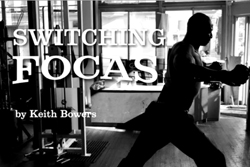
FOCAS — the Foundation of Compassionate American Samaritans — has been a bedrock of support and hope in OTR since 1993, when it opened the Lord’s Gym, where men can lift weights and their spirits. Photos and audio courtesy Keith Bowers, the University of Cincinnati's New Media Bureau.

Clovernook offers opportunities, programs for visually impaired

If you’ve heard of the Clovernook Center for the Blind and Visually Impaired, then you may already be familiar with the many ways they assist disabled Cincinnatians. But it might surprise you to learn what else is happening at the center’s North College Hill campus. Did you know, for example, that Clovernook is home to the nation’s second largest Braille print house? Its annual output currently includes 26 magazines—Braille versions of household names like Rolling Stone, Martha Stewart Living and National Geographic—as well as 168 book titles.  Clovernook also contracts with various government and private entities to produce everything from IRS file folders to packaging for items available at stores like Target. Founded in 1903 on land procured by William Procter, Clovernook served as Cincinnati’s first home for blind women, and continues to maintain strong business ties with P&G. Visitors can schedule a guided tour of the grounds, which feature the historic Cary Cottage. In keeping with its mission, Clovernook’s staff—42 percent of whom experience some level of visual impairment—work to inspire self-sufficiency by offering art and recreational activities, youth services, independent-living and vocational training as well as counseling and job placement. A longstanding practice of employing from within has resulted in jobs for some patrons, but the overriding goal is placement within the larger community, says Jessica Salyers, Clovernook’s manager of development and media relations.  “Kroger is one company that makes [hiring disabled individuals] a priority,” Salyers says. “But some companies don’t realize or forget that you can make jobs accessible for people with disabilities or impairments. Our employment specialists have had success working with local companies to get them to think about providing those opportunities.” Taking advantage of Clovernook’s services starts with a brief evaluation to gauge the level of visual impairment as well as personal goals and skillsets. Trained social workers then help to identify potential solutions for clients’ needs.  “Sometimes we’re able to provide a short-term solution, but then if the individual’s eyesight becomes worse later, we reopen their case,” Salyers says. “Some individuals work with our specialists for quite a long time.” Salyers notes key differences between Clovernook and area organizations like the Cincinnati Association for the Blind. For example, many of Clovernook’s youth services are available to children 8 years and older.  “If we know a family that has an infant that’s been diagnosed with visual impairment, we’ll do everything possible to refer them to another organization,” Salyers says. “And they’ll refer older kids to us for our youth services, which are very focused on summer camps. It’s not at all competitive; it’s about serving as many people in the community as possible.” Clovernook’s calendar routinely features art exhibits, fundraisers and special events.  “We love to have people on-site here,” Salyers says. “We have events coming up, as well as a lot of volunteer opportunities. We love to be more connected to people in our community.” Do Good: • See paintings and pottery this month by Lynn Jansen, a Clovernook artist and board of trustees member who is visually and hearing impaired. “Candelite Terrace” explores Jansen’s memories of light and color in the neighborhood where she grew up. The exhibit will remain open Monday-Friday, 8 a.m. – 5 p.m. until Oct. 26. • Donate or volunteer by contacting 513-728-6261 or csevindik@clovernook.org. • Celebrate “White Cane Safety Day,” Oct. 15, which kicks off with a City Hall rally at 10:45 am, followed by a walk to Fountain Square. By Hannah Purnell Follow Hannah on Twitter.

Our Partners

Taft Museum of Art

Common Ground Is Brewing

Support local stories and receive our signature roast straight to your door when you join at the Standard level (or above).

Drink Better, Read Local

Close the CTA

Don't miss out!

Everything Cincinnati, in your inbox every week.

Close the CTA

Already a subscriber? Enter your email to hide this popup in the future.