Madisonville’s renewal has been decades in the making
A long-term effort to revive Madisonville’s business district is taking shape through community planning, new development and local entrepreneurs investing in the neighborhood’s future.
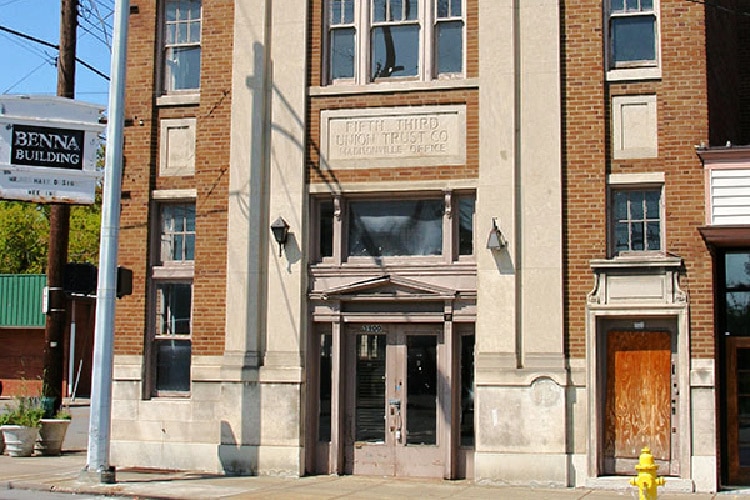
At the intersection of Madison Road and Whetsel Avenue, new mixed-use buildings occupy two corners in the heart of Madisonville. On the northeast corner, a remnant of the neighborhood’s historic past remains: a grand entrance to a facade with “The Fifth and Third Bank” etched in stone above the door. It reflects what Madisonville’s business district has become, a merging of old and new. What visitors see today represents decades of work.
The Madisonville Community Urban Development Corporation (MCURC) was formed in 1975 long before the current influx of business and new builds. The city of Cincinnati has plans which date back to that time to buy property for redevelopment. MCURC’s original purpose was to address the decline of the once vibrant community as its population decreased, businesses closed and crime increased. According to MCURC’s website, from the 1970s through 1990, Madisonville’s population fell from 17,000 to 9,000 people.
MCURC’s original mission also addressed land on Duck Creek Road along the I-71 corridor which had been designated for housing for returning veterans. In 1980, it became an office park and complex for U.S Shoe. After U.S. Shoe closed in 1995, Fifth Third Bank operations, the Coca-Cola Bottling Co., and Shroder High School located to the property.
When MCURC turned their attention to the central business district in the 1990s, community members still wanted to recreate the past when people shopped at the shoe store and butcher shop on Saturdays. Feasibility to return to a time of a walkable business corridor appeared to have passed. The advent of Hyde Park Plaza and Kenwood Towne Center had brought new opportunities for retail shopping while businesses in Madisonville suffered with declining sales.
Establishments such as Holtmeier Plumbing, Overbeck Auto Services, and Barnes Barber Shop weathered business ups and downs. Some buildings turned to rubble which ultimately became vacant lots alongside vacant, boarded-up storefronts. Although crime rates were high and streets were empty, the visible deterioration of buildings was not reflected in the people of Madisonville. There was still a belief in the community as a whole.
The city of Cincinnati and MCURC refocused attention to the key intersection of Madison Road and Whetsel Avenue at the start of the 21st century. Little was accomplished until property for redevelopment was purchased by the city.
Community planning and engagement help to make revitalization possible
In 2008, Sara Sheets got involved with MCURC as a volunteer lending her expertise as an urban planner. Sheets saw a need for the community to show the city they were able to manage properties and have a say in redevelopment. She advised MCURC to buy one house through HUD and restore it. This would prove to the city of Cincinnati that MCURC was capable of successful property management.
A quality-of-life study was conducted with hundreds of residents and dozens of business owners to learn what people wanted for Madisonville. The resulting community-driven vision helped attract new investment.
The quality-of-life plan states that “Madisonville is a diverse community with a deep sense of pride and appreciation for its rich history. The people of Madisonville recognize complex and abiding social, cultural, faith-based, and familial connections.” The plan acknowledged that successful development and restoration will occur when the past is recognized and the future is embraced requiring longtime residents and newcomers to come together. In January 2013, MCURC hired staff for the first time in the organization’s history.
Madisonville was one of four city of Cincinnati neighborhoods that signed on as pilot communities to develop a form-based code. In addition to Madisonville, Walnut Hills, Westwood, and College Hill instituted form-based code for their business districts. Business owners involved with changing the code were excited about allowing buildings to be built up to the sidewalk with parking in the back. They envisioned sidewalk seating, ample parking and people walking on well-lit streets.
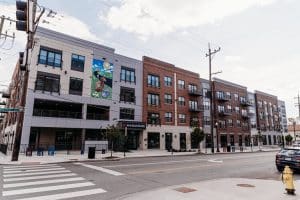
During this process, the community defined a Community Entertainment District. Boundaries were drawn around an 8-acre area where these establishments could be located. Eight low-cost liquor licenses were issued, which gave incentive for investment.
Challenges remained. MCURC acquired five buildings along the stretch of Madison just east of Whetsel including the post office, a Chinese restaurant, and a Jackson Hewitt office. The intent of MCURC was to attract developers, but unless there were 100 housing units possible in a dedicated area, investment on a large scale would not happen. There wasn’t population density to support these businesses, and the buildings were demolished to create a three-city-block area which made it more attractive for redevelopment.
New businesses invest and put down roots
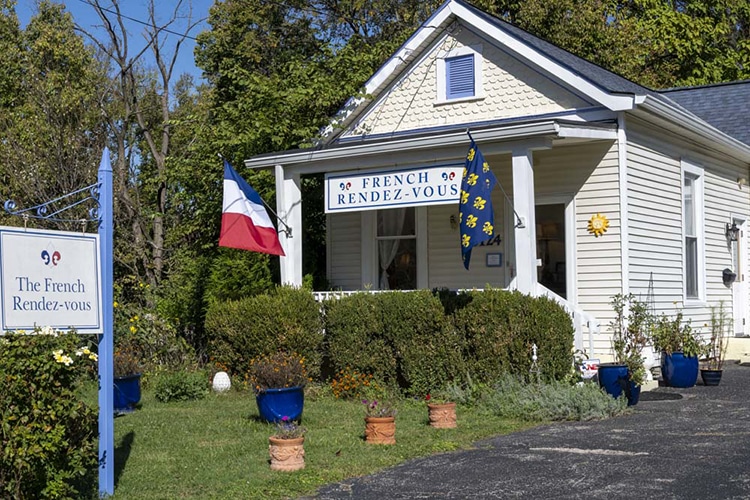
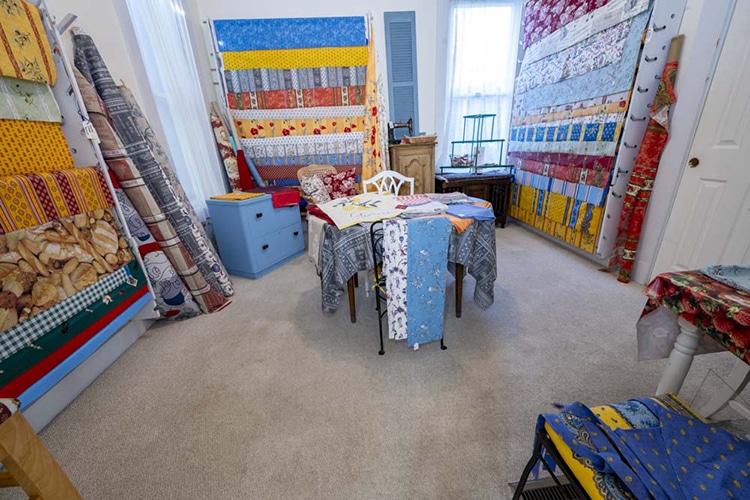
Entrepreneurs and businesses from outside the area began to show interest in being part of the Madison Road corridor. A French flag flew a few blocks away as the French Rendez-Vous migrated from Montgomery, Ohio, to their 1878 cottage next to the Korean First Methodist Church. The cottage houses the authentic French retail store with a storefront and an apartment either behind or above for the owners to live in, like many of the mixed-use properties in Madisonville.
Ann Human, co-owner of the French Rendez-Vous with her husband Sylvain Acher, recalls visiting the property with a real estate agent 14 years ago. Then, it was a vacant, blighted building. What happened during the visit solidified the desire to be a part of the Madisonville community.
Human, Acher and the real estate agent were going through the house when there was a knock at the door. The police appeared reporting a call from a neighbor who had alerted them to activity in the boarded up, ramshackle building. Human remembers thinking that neighbors are watching. “When the police showed up. I took that as a sign that, okay, this is a well-protected neighborhood. People are watching. It’s a solid neighborhood because people are able to call the police when they see activity in a vacant building. They want their neighborhood to be a good neighborhood.”
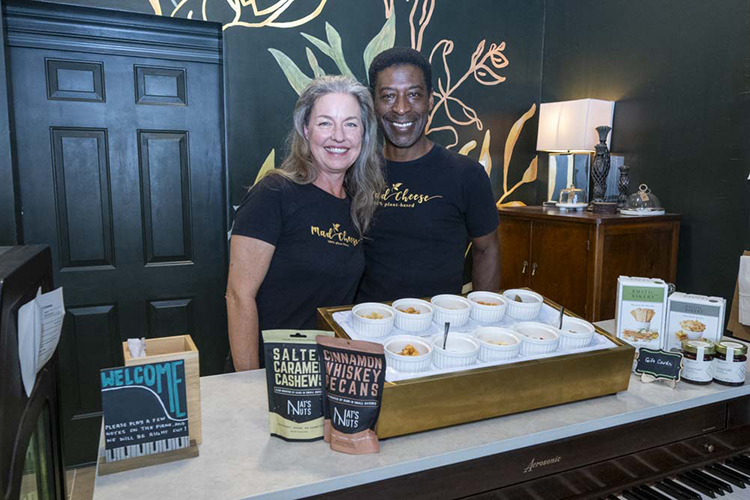
Heather Donaldson, and husband Reginald Donaldson, are owners of Mad Cheese at 5903 Bramble Ave. They returned to Reginald Donaldson’s hometown to open their vegan cheese shop after adopting a plant-based diet in 2019. Their “Mad Cheese” branding concept reflects and connects them to the neighborhood. Donaldson says, “Madisonville has a business chamber that is incredibly welcoming and supportive. Chamber members routinely support the other businesses and there are often grants and funding available.”
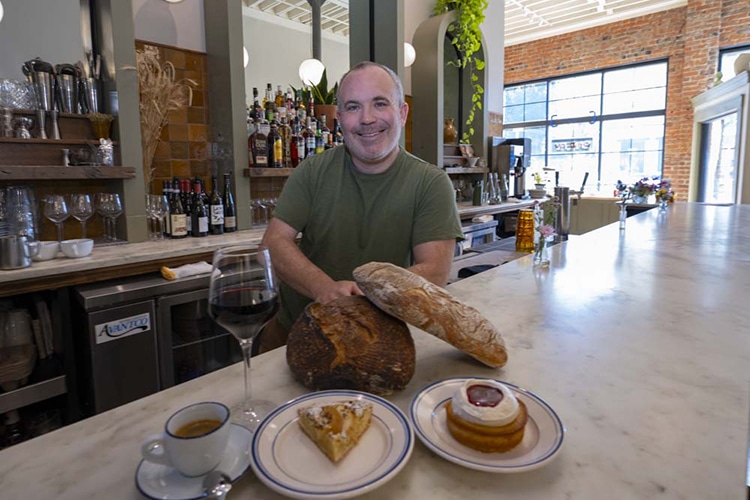
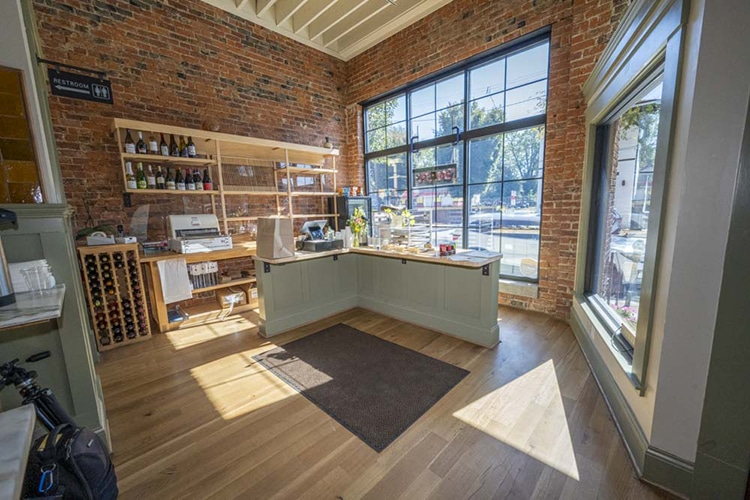
Allez Bar (& Bakery) is another example of the next generation boomeranging to their hometown neighborhood. The building located at 6102 Madison Road had gone into disrepair with talk of demolition. Filling the space with a new building would be a challenge. With the help of MCURC, owners Patrick Hague and Thomas McKenna applied for historic tax credits and cobbled together other funding to develop both a restaurant and a baking production facility. Now, on any given day, you can visit Allez Bar (& Bakery) and see dough being kneaded, ovens opening and closing, and loaves of fresh-baked bread lined up in the window.
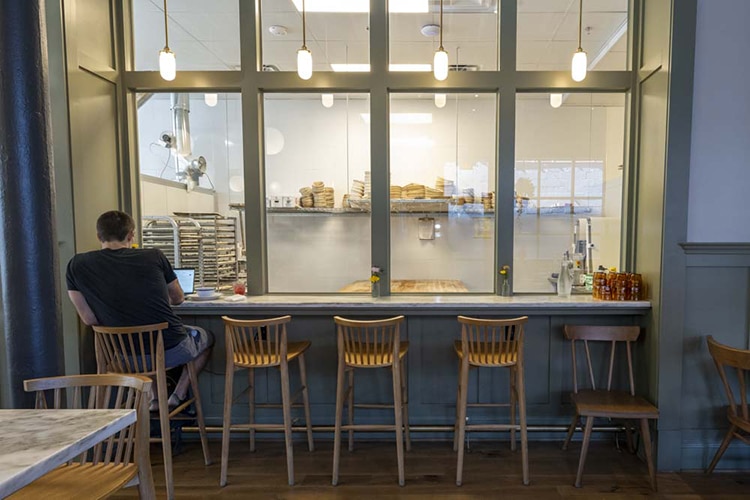
Hague is one of many people who grew up in Madisonville and have returned to invest in the neighborhood. Hague, along with his brother, Brendon Hague, founder of Bee’s Barbeque, both have locations in Madisonville and Over-the-Rhine.
Patrick Hague said, “Opening our new location in Madisonville meant that I could give back to a place that had provided so much to me in terms of building the foundation of who I have grown up to be. I learned to swim at Stewart Pool, play basketball in the driveways and backyards of my neighbors, how to drive in the parking lot behind Bramble School and even how to ‘get into and out of’ a fight at Bramble Park! And, more recently, how to be a good neighbor when my wife and I bought our first home here in 2017. I’ve taken so much and grown from the lessons offered to me by this place that it feels like I’m obligated, in the best way, to begin to pay back into this place. Hopefully we can create something here that can help anchor sustainable development of other small businesses along this corridor.”
MCURC, business owners, and citizens of Madisonville look to a future with continued investment in small business opportunities and development site cleanup. Still ahead are questions about affordable housing, particularly for seniors, traffic calming and better connections between the Medpace corporate campus and Madisonville’s business district.
The Resilient Neighborhoods series is made possible with support from a coalition of partners including The Port of Cincinnati, Warsaw Federal Bank, and the Common Good Alliance. Ongoing Resilient Neighborhoods coverage will report on community-building in the city of Cincinnati and Hamilton County neighborhoods spreading good ideas across the region.
Author

Related Articles
New bronze sculpture in Eden Park will honor Women Veterans who served our country
The artist will reveal the monument design this coming Veteran’s Day with an installation planned for June 2027.
In search of the inaugural cultural journalism fellow
Wave Pool and Soapbox partner to support innovative journalistic coverage of culture in Cincinnati.
Restoring Sedamsville one historic home at a time
An $8.4 million investment is bringing homeownership and a renewed sense of possibility to one of Cincinnati’s smallest neighborhoods.