Cincinnati

OTR Rec Center and neighborhood get 90 day makeover

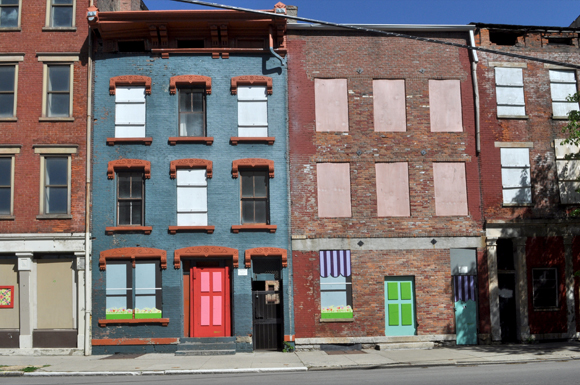
 Over-the-Rhine gets a makeover with the 90-Day Neighborhood Enhancement Program. A unique collaboration between the city, local organizations, and citizens, the goal is to make OTR cleaner, safer, and more attractive to the public within 90 days.The NEP program focuses on enforcement efforts, enhancement, and sustainability. Funding for the program comes from US Bank and community contributions which will be used for a wish list created by residents that includes new signage and a streetscape plan for Vine Street north of Liberty. Keep Cincinnati Beautiful will also play a major role in this project by conducting litter analysis and sweeping up streets and parks in the area.The first priority is redevelopment of the OTR Recreation and Community Center. Peter Hames, a trustee of the OTR Community Council, said the center currently is not an inviting place. It will be a step forward to make it more accessible and inviting to residents in the area.Although the 90-day project represents an immediate positive impact for OTR, sustainability is the most important aspect. The NEP program requires community council members to meet regularly to review progress."It gives us a way to focus our energies. It provides a forum for all of these agencies to come together when they might not have otherwise in the past," Hames explained. "If we are effective we will not only participate successfully, but also build relationships within the area and continue to work together beyond NEP."Enforcement efforts are one of the most important aspects of the program. Cincinnati Police already started addressing hot spots within the area in order to control crime and make OTR a safer place."This is an area that can make or break a city and the Police Department will be at the forefront of being part of the effort that is going to make the city a much greater, much more beautiful, and much more tolerable city than it ever has been before," said Cincinnati Police Chief Tom Streicher.Writer: Lisa Ensminger

Latest in Cincinnati
Ten best cities for commuters

 Kiplinger selected its 10 Best Cities for Commuters, ranking Cincinnati at number seven. These cities have the easiest and most affordable commutes, while taking into consideration the population and low congestion costs.Read the full story here.

Targeted donations put workers Back on Track

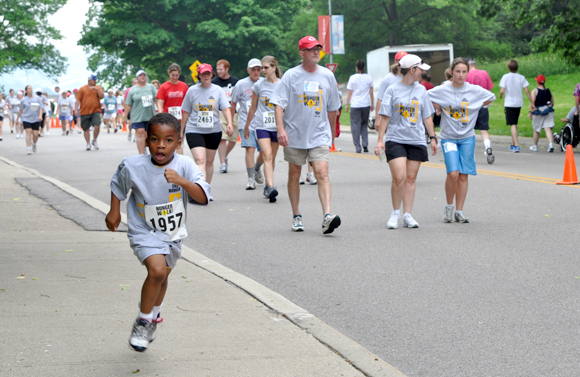
In its Liberty Street location, past the Freestore/Foodbank's lime and pumpkin walls, its cheery plant-laden offices, spic and span floors and smiling faces sits a needy rack of men's shoes. The FSFB's massive capital campaign leaves footprints as solid as the steelcase filing cabinets that buffer cubicles on every floor. It marks the welcome/waiting area, the portal of social services, the food pantry that resembles a tiny-scale Jungle Jim's, and more private office areas for clients in need of homelessness prevention and money management help. Friendly staff members, sometimes only distinguishable by their green and yellow lanyards and nametags, add to the feeling that the agency has constructed an ideal setting for maximum effectiveness and respectful service delivery.FSFB renovation's decorator/client services manager Bernice Cooper first mentions the Back on Track program - home of the aforementioned shoes - as she begins a new tour. She explains the program is an on-site endeavor to provide donated clothing to all qualified comers for no cost. In order to visit the shop, clients must have completed a job training or work-readiness program and be on their way back to employment. They can visit two times a year, with at least six months between visits.Donations must be clearly tagged for the program; otherwise, they will be sold at low prices through the St. Vincent DePaul Society, which collects drive-by donations at the FSFB Liberty Street warehouse.Back on Track volunteers staff the one-and-a-half room space filled with neatly stocked racks that line the perimeter, and divide the room into clear-cut departments - men's, women's and children's. Tall cardboard boxes filled with donations yet to be sorted sit tucked away in corners and behind the makeshift counter.Despite the large quantity of merchandise in the room, it's hard not to notice the shoes. During one visit, there were 12 pair, neatly displayed on a wire rack that could have held at least four times as many loafers, sneakers and boots. They were all men's shoes, all in good condition, mostly gym shoes. Men's suits hang neatly just a few feet away, but which lucky suit-wearers will be able to find acceptable shoes to dress for a job interview or church? How many men will find a barely worn suit, carefully measured and labeled by a retired Procter & Gamble chemist-turned-volunteer, then be left grateful to snag a pair of sneakers? In the Back on Track store, the shoes tell a powerful story through worn laces, scuffed heels and a stretch of empty wire that conveys, in a very concrete way, the depth of gaps in services for those in need throughout the community. Do Good:• Give some goods. Back on Track donations must be clearly labeled, clean and in good enough condition to be helpful to a hopeful job-seeker.• Get the news. Sign up for the FSFB's email newsletters.• Join the Hunger Walk and 5K. Create a team today for the Memorial Day events.By Elissa Yancey

Cincinnati State students win 11 ADDY Awards

Cincinnati State students were dominate players in the 2011 ADDY Awards announced by the Cincinnati ADCLUB last month.The school's students won five Gold and six Silver local ADDY Awards. The nationwide advertising competition, sponsored by the nonprofit American Advertising Federation, pits 60,000 professionals and students from 200 advertising clubs in 15 districts against each other. Winners will go onto district competition.In Greater Cincinnati, students from AIC College of Design, the University of Cincinnati, and Gateway Community and Technical College also competed.Among Cincinnati State winners were the team of Lorelei Buescher, Nicholas Fields, and Dariea Shorter, all graphic design majors, who received a Silver ADDY for the "Chrysalis Interactive Stationery" they designed as part of their end of term spring Capstone project.Their winning design incorporated the concept of transformation through a see-through, die-cut logo that changed depending on whatever the stationary sits on, Buescher said.Buescher, of Newport, is a non-traditional student who returned to college after working in the mortgage company industry with her husband. She's a second-year student with a double major in graphic and web design who'll graduate in June. Last year, she won three local and one regional ADDY. An intern at Curiosity Advertising, Buescher is seeking a second internship once the current one wraps up. She plans on staying in Cincinnati after graduation and go into advertising or branding."I actually think the opportunities here are really good. I think a lot of the (local marketing and branding industry) was driven by P&G being here, but Cincinnati competes pretty well with the larger markets," she said.The Cincinnati State ADDY award recipients include:• Kevin Adams-Jones, Kevin Meyer, and Ryan Lulg, all Audio/Video Production majors, who earned two Gold and two Silver ADDY awards for work on behalf of CincyDance, an educational program of the Cincinnati Ballet that provides dance training at no cost for third grade students.• Jillian Ball, a Graphic Design major, received a Gold ADDY award for a logo created as part of Cincinnati State's Digital Studio 2 class.• Sarah Haun, a Graphic Design major, received a Gold ADDY award and a Silver ADDY award for photography. She received a second Silver ADDY award for a logo created as part of the Digital Studio 2 class.• Ron Smedley, a Graphic Design major, received a Gold ADDY for a poster created in the Digital Studio 1 class.• Dariea Shorter, a Graphic Design major, received a Silver ADDY for an illustration titled "Happiness is Hazardous."Writer: Feoshia HendersonSources: Cincinnati State Communications and Cincinnati State student Lorelei BuescherYou can follow Feoshia on twitter @feoshiawrites

Life with Redwood mixes love and opportunities

Kristine Jones didn't mean to fall in love. The Ohio native admits she never thought she'd end up moving to Kentucky to be closer to the object of her affections. But for the health and well-being of her daughter Taylor, who was born with multiple handicaps, Jones discovered that she could not find any better support and encouragement than at Redwood in Ft. Mitchell. Jones, a Procter & Gamble retiree, first learned about Redwood when she ran out of options for summer care for Taylor. Her daughters needs were too great for traditional camps, and Jones didn't know where to turn. Redwood, which serves more than 700 children and adults with severe and multiple disabilities, from age six weeks and up, had summer programs where Taylor found a welcome home. After two successful summers at Redwood, Jones needed little convincing to enroll her daughter in the non-profit's school age program, especially since it offered her afterschool care as well as classrooms that were split 50-50. Half of the students in each class have disabilities; the other half does not. "It's a place where her special needs are seen, not as obstacles, but just part of every day living," says Jones, who joined Redwood's Board in 2005 as a way to give back. "She is encouraged to become the best that she, as an individual, can be." The Jones' school move included a physical family move across the river. In 2006, Taylor graduated into Redwood's Adult Independence Program, which she still attends every day. Adults in the program work with mentors to learn computer skills, exercise and practice daily living skills. "My daughter gets up in the morning eager to go to Redwood," Jones says. "Taylor has become the self-assured young lady she is today due to the staff at Redwood." From a nursery to job training, Redwood's depth of services reflect its mission since its founding in 1953: To empower and improve the quality of life for people with disabilities. Do Good: • Take a trip on the Redwood Express. The March 4 fundraiser includes food, bourbon-tasting and Mardi Gras-style fun. • Care for a Kid. Support Redwood's scholarship program for kids in need and help young ones with disabilities access Redwood's top-quality care. • Donate. And find out plenty of other ways to help when you visit Redwood online.

Video There’s A World Going On Underground

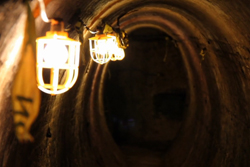
History is often hidden right before our eyes and no where is this more apparent than in Over-the-Rhine. Follow Soapbox and Seven/Seventy-Nine as they go underneath OTR's churches and former breweries to discover that the history of Over-the-Rhine is the history of the Greater Cincinnati region.

Artswave designs fresh iPhone app: iSpyArt

 A fresh new application for iPhone is available designed by Cincinnati's ArtsWave. This free application called iSpyArt combines social networking, iPhone photography, and art application under one source. Users can upload photos showcasing everyday life to the ArtsWave website, where other visitors can view these photos.Read the full story here.

Petraeus pins Silver Star on special forces soldier in Kandahar

  Sergeant and member of 1st Battalion, 3rd Special Forces Group (Airborne) Chad Lawson from Cincinnati, received the nation's third highest medal for his heroics during combat operations in southern Afghanistan. He and his team members were caught in an ambush and Lawson exposed himself twice to save fellow comrades. Lawson received the Silver Star with gratitude and accepted it on behalf of his team.Read the full story here.

Comprehensive plan asks kids “what kind of city do you want to live in?”

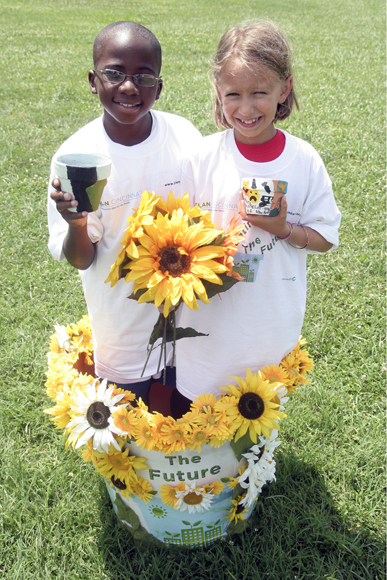
  Plan Cincinnati, the city's ongoing comprehensive plan process, is involving young people in a creative way. A program called "Planting the Future" asks children to voice their fears, hopes and dreams about the future of the city and its infrastructure. What they're telling city planners is providing helpful insight that planning officials say will guide the city's growth, protect the environment, and influence the future.The city's Department of Planning and Buildings initiated a contest for Cincinnati Public School students to paint flowerpots, write essays, create multimedia presentations, or create a visual art project that reflects their ideas about the type of city they want to live in."They are the people we need to hear from because they are the future," said Margaret Wuerstle, the Chief Planner of Cincinnati and leader of Planting the Future. "In 10 or 20 years, they are going to be in the position of living in the city, raising families, and opening business. Sometimes they seem to be the overlooked part of the comprehensive plan, but they think very different from a 45 year old person."Children expressed concerns through their projects, including the importance of transportation, cleanliness, creation of more parks, safety, and diversity. The pictures and words depicted on the flowerpots varied from project to project. Some students even managed to create solutions to their fears."We had a child paint pollution on the inside of the flowerpot and he then painted solar panels, trees, and wind turbines on the outside of the flowerpot," Wuerstle explained. "He came up with a solution to his fear, which was very impressive."In order to get the children to understand how to think about the city, Planting the Future used the analogy of a vacation. Students were asked to answer questions about different components of a vacation. For example, how will one travel, how much money will be needed, and what type of lodging does one desire? This allowed the students to start thinking about the city they desired, Wuerstle explained.Planting the Future hopes that the children will remember this project in the future and see some of their comments incorporated into the comprehensive plan. Wuerstle said that the city plans to exhibit the flowerpots with a milk and cookie reception. Future projects include involving the elderly by taking the project to assisted living residents and see the other side of the spectrum. Writer: Lisa EnsmingerPhotgraphy provided.

Boys find help through horses at Campbell Lodge

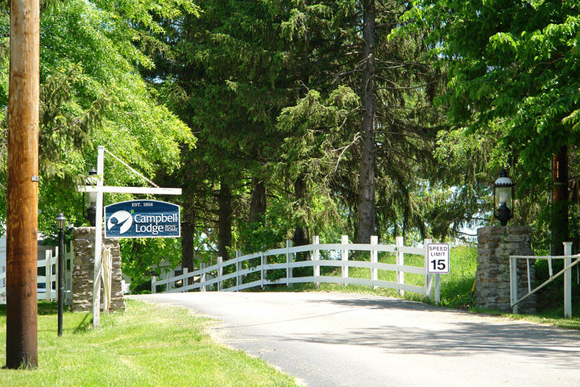
Steven was 11 years old when his emotional outbursts at school and at home led to a stay at Campbell Lodge Boys' Home, a 115-acre, year-round, residential treatment facility in Northern Kentucky. "He came in not able to trust adults or peers," says Barry Jones, executive director. Before he could learn to trust anyone else, Jones knew, Steven needed to trust himself. So, like every other young man at Campbell Lodge, Steven went to the stables. There, he encountered 1,200-pound horses, integral members of the facility's equine-assisted counseling program. After seven months, Steven learned to lead, ride and groom horses. At the same time, he learned to trust himself and his family. Now back home with his parents, Steven is one of hundreds of young men learning how to relate to people by working with other herding animals, horses. "It's experiential," Jones says. "Your feelings and thoughts come out within the exercises." As they lead horses through obstacle courses, young men deal with fear, frustration and issues of personal space. Working through problems with horses provides a model for working through problems in life outside the lodge's boundaries. Jones explains that equine therapy has been the primary focus at Campbell Lodge for six years, though last summer marked the groundbreaking of the equine center, which allows for year-round interaction between youth and horses. Residents learn quickly which of the six horses is most laid-back--that would be Buddy--and which is prone to bite--usually Scooter. "Traditional talk therapy was not always as effective as we wanted it to be," Jones says. Horses provide powerful physical metaphors for many problems that face residents, many of whom must confront a variety of mental health issues during their stay. Residents have to communicate with the horses and with each other to be successful at the Lodge, whether they are in equine therapy sessions, learning grooming techniques or volunteering to help children with disabilities enjoy time with the horses. Jones says the experiential therapy builds confidence and skills that residents carry with them once they leave the lodge. Do Good: • Fill a need. Whether you have a spare pool table no longer in use or the ability to donate lots of personal care items, Campbell Lodge will put items on its wish list to good use. • Have dinner out. The Lodge's annual Springfest, a fundraiser dinner and silent auction, happens March 5, 2011. • Donate online or join the e-mail list. Find out how you can best support this 53-year-old regional resource that now serves up to 25 young men at a time.

Our Partners

Taft Museum of Art
Warsaw Federal

Don't miss out!

Everything Cincinnati, in your inbox every week.

Close the CTA

Already a subscriber? Enter your email to hide this popup in the future.