Cincinnati

Time traveling at the Cincinnati Observatory

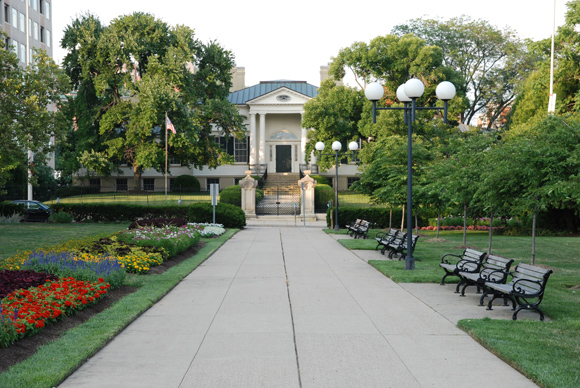
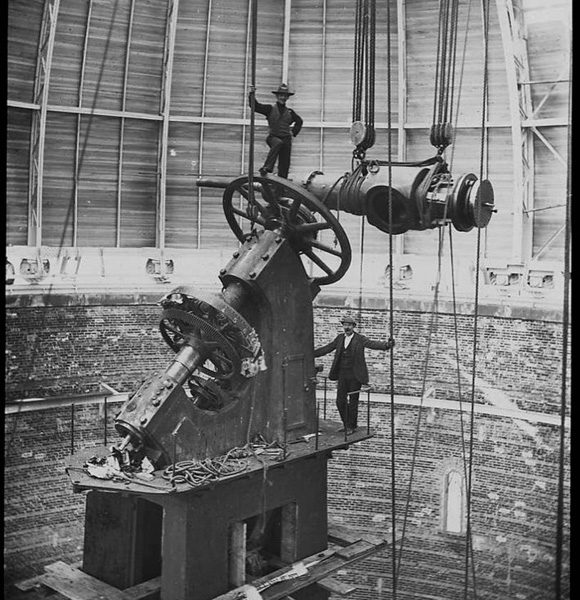
At the Cincinnati Observatory Center in Mt. Lookout, you can see the oldest professional telescope in the country any day. But March 26 offers an opportunity to see rare images, some of which no one has glimpsed for more than 100 years."Through the Looking Glass," an old-fashioned slide show presented via a period projector, offers a look back in time to earlier night skies, telescope construction, humor and history. The glass plates have weathered decades - some show key figures of the observatory's past while others reflect events long gone by, including Halley's Comet.It's a good excuse to visit the observatory, known nationally at the birthplace of astronomy, and its two historic buildings. The main building, an 1873 Samuel Hannaford design, houses the newer 16-inch Clark telescope. The smaller building dates from 1904 and holds the older 11-inch Merz and Mahler telescope. The smaller building's cone-shaped dome is part of a room specially designed for comet-hunting.Do Good:• Reserve your spot for the slide show. Shows are scheduled for Sat., March 26 at 7 and 8:30 p.m., and Mon., March 28 at 7 p.m., with an additional show possible if demand is great. Call Dean Regas, 513-321-5186, to reserve your seats.• Plan a visit. Whether you stop in during the day to see the sun or on a public tour night, you're likely to discover something new and interesting at the Cincinnati Observatory Center. • Keep the observatory strong. Every donation helps keep entrance costs low and maintenance levels high.By Elissa YanceyPhoto courtesy Cincinnati Observatory Center

Latest in Cincinnati
Bike, Mobility and Visitors Center gets Chicago based operator

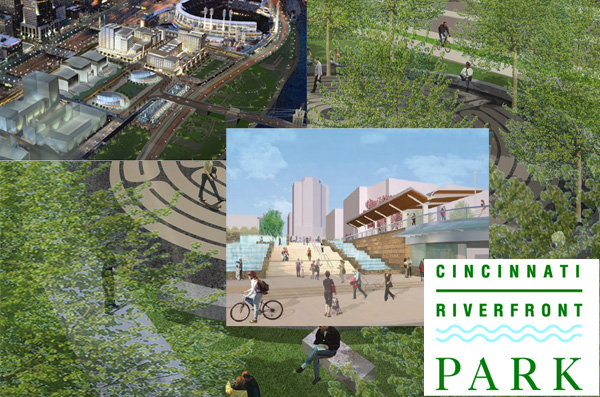
 Cincinnati residents have one more reason to park their cars and enjoy the developing outdoor-friendly spaces along the Ohio River. This month, the Cincinnati Park Board announced that Chicago-based Bike and Park will operate the new Bike, Mobility and Visitors Center in Cincinnati Riverfront Park, an urban recreational area over ten years in the making.In 1998, the Park Board created a master plan for a new park to be incorporated into the urban design plan for the riverfront. With the acceptance of that master plan, work began to find funding - federal, state, and local - to support the project and develop a park that would meet the needs of the Cincinnati community. Later plans for The Banks fully supported the Park Board's riverfront park as both a destination and a neighborhood park for future tenants and visitors. "As the plan evolved, we wanted to include a bike center as this seemed an ideal use for the park," recalls Steve Schuckman, Superintendent of Planning and Design for Cincinnati Parks. With the park located on the Ohio to Erie and Ohio River trail systems, the bike center would be well-positioned to serve recreational cycling. The Park Board envisioned a place that rented bikes to families and visitors and also offered storage space and services for commuters cycling to work. The McDonald's Cycle Center in Chicago's Millennium Park was a good model for what planners envisioned in Cincinnati. Located downtown, it encourages a greater acceptance of cycling to work among the business community by offering convenient services for commuters. Cincinnati Riverfront Park's Bike, Mobility and Visitor Center will offer many of the same services when it opens in the fall of 2011. Tucked beneath the Walnut Street steps of a new garage, the Bike Center will have showers, lockers, bike repair and supplies and secure storage space for around 150 bicycles. Most of that storage space will be available for bicycle commuters. 'Rental bikes typically get displayed outside, so we don't plan to take much of the commuter racks," says Josh Squire, owner of Bike and Park. "We will not sell new bikes at the facility; we want to work with local bike shops. We will offer guided bike and Segway tours along the riverfront and also through some neighborhoods."Like the McDonald's Cycle Center, which Bike and Park also staffs and operates, Squire plans for the riverfront Bike Center to be self-sustaining and generating revenue for the park from rentals, tours, and memberships. And the facilities aren't just for cyclists. "Whether you're commuting downtown or running at lunch, you can use those showers," clarifies Schuckman. "Trying to make the city more sustainable [and healthy] is what the parks are all about." Writer: Becky Johnson

Gourmet Food Truck Smackdown

Cincinnati's Café de Wheels, serving burgers, sandwiches, and deserts, is one of sixteen mobile food trucks across the nation selected for their use of social networking and creative marketing and, of course, on their foodie quotient.Read the full story here.

Twitter Towns, USA: Men’s Health finds the most socially networked cities in America

Men's Health looked at the number of users and traffic generated on various social networks and ranked Cincinnati 11 out of 100 cities.Read the full story here.

Rockfish launches new brand ventures division

Rockfish, a Cincinnati full-service digital innovation company, launched Rockfish Brand Ventures. The new brand will focus on the latest digital innovations in consumer Internet, Mobile, and Retail. Read the full story here.

Coming together to give schools a boost

Cincinnati's Strive Together partnership represents a successful collaboration of numerous organizations- government, civil society, and business - to make a difference. Strive Together focuses on helping children in Cincinnati and Northern Kentucky achieve success from "cradle to career" to remain competitive in the global economy. Read the full story here.

Tour of the University of Cincinnati DAAP

Michael DiTullo, a member of frog design - a global innovation firm - toured the University of Cincinnati's DAAP and interacted with students through conversation and critiques. Having worked with DAAP grads in the past, DiTullo's impression was validated as he was impressed by the hardworking students and professors.Read the full story here.

Soapbox’s Commercial Challenge Ups the Ante

If you could make a cool commercial for Cincinnati, what would it look like? Take the Soapbox Commercial Challenge and you might see your idea in an upcoming issue.  

Cincinnati collections make impression on Taft Museum

American Impressionists didn't have to travel to Europe to find scenes worthy of their loose brushwork. Some followed the masters of the form and visited Giverny and Barcelona. But Lewis Henry Meakin found inspiration in Cincinnati's Mt. Auburn.One of his paintings, Mt. Auburn Above Hunt Street, Cincinnati, is part of a unique supplementary show currently on display at the Taft Museum of Art downtown, American Impressionism from Cincinnati Collections.A supplement of sorts to the museum's featured traveling exhibition, American Impressionists in the Garden, the show of pieces borrowed from local collections reinforces the notion that great works of art can be integral parts of daily living. Collectors from around the region, from Northern Kentucky to Hyde Park, lent pieces for the exhibit. The American Impressionists in the Garden exhibit features 40 works by artists including John Singer Sargeant. The show from Cincinnati collections not only features the Mt. Auburn piece, but also works by Paul Ashbrook and Dixie Selden. Together, the shows tell the story of American artists inspired by European counterparts, but striving to make their own mark on the Impressionist style. Being showcased in the former home of Anna Sinton and Charles Phelps Taft makes the connection with local collectors even more appropriate."This is a nice reminder that there is really great art in people's houses," says Tricia Suit, marketing and communications manager. The show of works from Cincinnati collectors runs through April 24. The American Impressionists in the Garden show runs through May 15.    Do Good:• Join the cause. The Taft Museum Facebook cause, that is. You can log on to give time, money or share the beauty of this local treasure with friends from around the world.• Get hip on YouTube. Learn more about the Taft and its programs via the museum's YouTube channel.• Make an origami bunny. Visit the Taft for free April 10, courtesy of ArtsWave, and enjoy a day of programming that includes an origami session from noon until 2 p.m.By Elissa YanceyImage courtesy of the Taft Museum of Art 

Building the Banks from the underground up

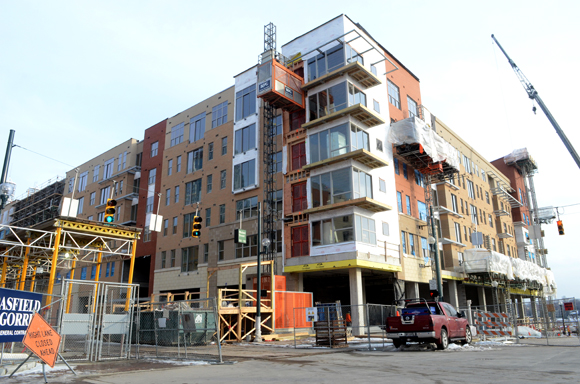
  Cincinnatians see the buildings along The Banks rise and think that, finally, the project talked about for over ten years is underway. Few, however, understand the massive effort and behind-the-scenes work that was required to lay a lasting foundation for the area's largest mixed-use land development project in recent history. When Hamilton County and the City of Cincinnati committed to the Cincinnati Central Riverfront Master Plan in 1997, a plan created by public input and an open process, the two governments also agreed to, together, leverage local, county, regional, state and federal resources to bring about that vision in as comprehensive and efficient a way as possible. That unprecedented sharing of resources and cooperation became The Banks Public Partnership. The Partnership's job was to lay the foundation infrastructure, that network of transportation and hidden communication and utility lines which connect parking to sports stadiums and the National Underground Railroad Freedom Center. This infrastructure would become, literally, the platform upon which The Banks neighborhood would be built.The old infrastructure on site was ancient, installed decades ago to serve the old produce warehouses and railroads along the riverbank. Pulling in funding from federal, state, and local sources, the Partnership engineered the revitalization of power grids, water and sewer lines and communication cables that will meet the needs of future restaurants, shops, offices and residents of The Banks. When the Holy Grail, The Bank's first restaurant, opens later this spring, "[it] can cook a hamburger on a gas grill and not over an open fire," John Deatrick, the Project Executive quips.According to Deatrick, one of the largest projects undertaken by the Partnership has been the creation of a new Transit Center. "Transit Center came together because we wanted to make sure that the central riverfront was an intermodal transfer and connector point for the city's business district and the…riverfront," explains Deatrick. The Transit Center can support every type of rail and bus service, from light rail and commuter rail to downtown shuttles and the proposed streetcar system and connects efficiently to the surrounding highways and roads. The new garages under the building complex fill dual purposes. "Constructing the parking garages was critical to the development of the area because we needed to raise the site out of the flood plain," says Deatrick. Now, with the buildings standing 515 feet above sea level, flood waters are not troubling. And the 6000 planned parking spaces will make it easy to find a spot on busy shopping or festival days downtown and on the riverfront. At a time when all levels of government are being scrutinized for waste, The Banks Public Partnership shows the success of cooperation between a city and a county. Once the public weighs in on The Banks, this partnership might portend a new era of collaboration as governments realize that working together brings the best results and the greatest public satisfaction. Writer: Becky Johnson

Our Partners

Taft Museum of Art
Warsaw Federal

Don't miss out!

Everything Cincinnati, in your inbox every week.

Close the CTA

Already a subscriber? Enter your email to hide this popup in the future.