Cincinnati

Fashion design project includes medical innovation

When you think “compression garments,” you normally think “grandma hose,” not “high fashion.” But a team of fashion designers at UC have joined with medical professionals that treat a genetic disease that affects connective tissue to change not only those perceptions, but the lives of those suffering from the condition.  Ehlers-Danlos Syndrome (EDS) affects hundreds of thousands of Americans, limiting their mobility and endurance. The multi-system disease creates joint instability, dizziness and unrelenting severe pain. Even pulling on jeans can cause someone with EDS to dislocate a shoulder. When physical therapists approached Margaret Voelker-Ferrier, of UC’s College of Design, Architecture, Art and Planning, with the problems that people with EDS experience when simply putting on clothes, she knew she could put her 30 years of bodywear design experience to good use. "I started as bra designer," says Voelker-Ferrier. "That has always been a passion for me, engineering things to solve a problem. Making things that are both beautiful and functional." She gave the project to fashion design students in her bodywear class, explaining the challenges of EDS sufferers as well as the basics of clothing design. "The students loved the project and I think they did a marvelous job," she says. Voelker-Ferrier worked with Brooke Brandewie on design solutions, which have been highlighted as part of the Cincinnati Innovates competition. The clothes they designed – from dresses and pants to an evening gown -- support and stabilize body joints and ligaments. Made from high-tech materials, they provide comfort and style simultaneously. One shirt, for example, has adjustable straps that help hold shoulders in place.  “The fact that they are designing clothing that is functional and therapeutic and beautiful and doesn’t look like a medical device is exciting,” says Candace Ireton, MD, who suffers from EDS. She saw the clothes during the Ehlers-Danlos National Foundation Learning Conference, which was held in Cincinnati this month.  Both Brandewie and Voelker-Ferrier attended the conference to gather measurements of EDS patients and collect data as they continue to develop their designs. While designed for EDS, the same fashions could be adapted for use by people with autism, MS and arthritis.  "It was really wonderful to be able to meet people and talk with them about this," Voelker-Ferrier says. "It’s kind of amazing."  For now, she's working on collecting more data, finding some popular sizes to work with and eventually leading an interdisciplinary studio at UC to design prototypes. Eventually, the design maven hopes to turn her problem-solving fashion sense into a small business that will target the needs of people with chronic medical conditions as well as Baby Boomers.  Fashion, after all, can provide a mental, as well as physical, boost, says EDSer Ireton. “Some of the clothing is sexy,” she says. “You can feel better, keep your ribs in place and look cute, too.”   For more information about the design project, visit their Cincinnati Innovates submission. By Elissa Yancey Follow Elissa on Twitter


Latest in Cincinnati
Share the road: A bike-friendly guide for non-bikers

Did you know that in the state of Ohio, bicycles are considered vehicles and are supposed be treated as such? Or that cyclists can be given tickets for riding on the sidewalk, and are urged, for safety reasons, to take up the entire lane while riding? As Cincinnati's bicycle infrastructure grows, it's more important than ever for everyone on the road to know how to share it safely. Soapbox cyclist-in-chief Evan Wallis shares some basic tips.  

Camp Washington artist salvages, creates stained glass

Whether you realize it or not, Cincinnati is full of stained glass. It's part of our German heritage, says Gillian Thompson, the proprietor of Gillian Thompson Glass. She meets with property owners throughout the Cincinnati area, restoring old glass designs, repairing age-damaged leading and designing new stained glass projects. Stained glass can encompass either colored or clear designs and projects can be artistically complex or as simple as a clear patterned glass that provides privacy. Repairs to stained glass are typically needed to salvage old pieces or repair cracks. After decades, window bowing, called deflection, can occur as the soft light between glass disintegrates as it is exposed to moisture. Thompson says this deflection can be mistaken for an artistic style; actually, it's just damage. Thompson began her career as an apprentice for Architecture Art Glass in Pleasant Ridge (now located in Milford) and worked her way up, eventually launching her own studio a little more than four years ago, when a Camp Washington studio space opened up. She says the neighborhood's old factory buildings offer her the perfect combination of natural light and space. "My style is all over the place," she says. "I really love traditional styles, but also have fun with contemporary work." Although Thompson took advantage of a SCORE mentor, she raves most about the entrepreneurial support she gained through the SpringBoard program. "Springboard focused me," she says of the ArtWorks-sponsored business development program. "(What) I really got from them, was learning to turn on the knowledge base in my community, just looking around at the people I know. Through friends, I've just got a web developer.” Her next stop, she says, is using that website to grow her client base. By Robin Donovan

Camp Washington artist salvages, creates stained glass

Whether you realize it or not, Cincinnati is full of stained glass. It's part of our German heritage, says Gillian Thompson, the proprietor of Gillian Thompson Glass. She meets with property owners throughout the Cincinnati area, restoring old glass designs, repairing age-damaged leading and designing new stained glass projects. Stained glass can encompass either colored or clear designs and projects can be artistically complex or as simple as a clear patterned glass that provides privacy. Repairs to stained glass are typically needed to salvage old pieces or repair cracks. After decades, window bowing, called deflection, can occur as the soft light between glass disintegrates as it is exposed to moisture. Thompson says this deflection can be mistaken for an artistic style; actually, it's just damage. Thompson began her career as an apprentice for Architecture Art Glass in Pleasant Ridge (now located in Milford) and worked her way up, eventually launching her own studio a little more than four years ago, when a Camp Washington studio space opened up. She says the neighborhood's old factory buildings offer her the perfect combination of natural light and space. "My style is all over the place," she says. "I really love traditional styles, but also have fun with contemporary work." Although Thompson took advantage of a SCORE mentor, she raves most about the entrepreneurial support she gained through the SpringBoard program. "Springboard focused me," she says of the ArtWorks-sponsored business development program. "(What) I really got from them, was learning to turn on the knowledge base in my community, just looking around at the people I know. Through friends, I've just got a web developer.” Her next stop, she says, is using that website to grow her client base. By Robin Donovan

GOOD ideas: Art on the move

Cincinnati's arts leaders posed a challenge for creative thinkers: how can the city's vibrant arts scene be maximized to attract and retain talent? Twenty-somethings doing something offer an exciting new approach during the GOOD Ideas for Cities event held downtown this fall. Take a listen and see how you can keep the conversation going. Video courtesy The Queen City Project.

Gigit’s local job search targets tech-savvy creatives

Jay Hopper originally got involved in web design through a journalism job in the newspaper business. He eventually left his career as a newsman to join a local startup, Trivantis, as a web editor. He eventually became the company’s vice president of product management. Then, he launched a social network for automotive enthusiasts before finally deciding it was time to get what he calls "a real job." After failing at the traditional avenues, like Monster, CareerBuilder and LinkedIn, and doing some networking, Hopper says, “I just found that process really frustrating. I was looking for companies that would fit my skill set, passion and personality. I just started thinking, ‘Where are all these companies – the agencies, the software companies, the tech companies?’ I wished there was one place I could go and see all that.” He set out to create a website to meet those needs. The result, Gigit Jobs, lists tech, start up, creative and design job openings in the Cincinnati, Dayton Northern Kentucky and tri-state regions. The Gigit team manually reviews jobs that are posted, and while any company will be considered, positions posted must either come from a company that fits Gigit’s criteria or be a good fit in themselves. That means a web design job at the bank could work just as well as a business development position with a creative agency. The site is aggregator-friendly, which means that jobs posted there will also show up in job-search aggregators. The site's landing pages are currently active, with a full launch planned this fall. Hopper says he hopes the site will encourage techies and creatives to stay in Cincinnati rather than flee to stereotypically tech-friendly locales on either coast. By Robin Donovan

Gigit’s local job search targets tech-savvy creatives

Jay Hopper originally got involved in web design through a journalism job in the newspaper business. He eventually left his career as a newsman to join a local startup, Trivantis, as a web editor. He eventually became the company’s vice president of product management. Then, he launched a social network for automotive enthusiasts before finally deciding it was time to get what he calls "a real job." After failing at the traditional avenues, like Monster, CareerBuilder and LinkedIn, and doing some networking, Hopper says, “I just found that process really frustrating. I was looking for companies that would fit my skill set, passion and personality. I just started thinking, ‘Where are all these companies – the agencies, the software companies, the tech companies?’ I wished there was one place I could go and see all that.” He set out to create a website to meet those needs. The result, Gigit Jobs, lists tech, start up, creative and design job openings in the Cincinnati, Dayton Northern Kentucky and tri-state regions. The Gigit team manually reviews jobs that are posted, and while any company will be considered, positions posted must either come from a company that fits Gigit’s criteria or be a good fit in themselves. That means a web design job at the bank could work just as well as a business development position with a creative agency. The site is aggregator-friendly, which means that jobs posted there will also show up in job-search aggregators. The site's landing pages are currently active, with a full launch planned this fall. Hopper says he hopes the site will encourage techies and creatives to stay in Cincinnati rather than flee to stereotypically tech-friendly locales on either coast. By Robin Donovan

On a roll: Euro Cargo bikes mix art, sustainability

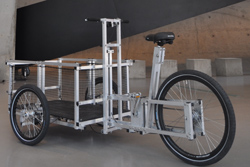
What happens when a European designer lands in Cincinnati to create a new breed of Cargo Bike? Farmers, and artists, take note.

Keep Cincinnati Beautiful wins national kudos for green initiatives

Some might say that the City of Cincinnati gets more beautiful every day, what with the continued development of its urban core and riverfront, an ever-expanding “green” construction movement and a treasure trove of amazing parks and public spaces. Keep Cincinnati Beautiful (KCB) works to ensure that the surrounding environment keeps pace by creating innovative and award-winning programs that encourage recycling and conservation practices among schoolchildren, and make it easier for folks to save the old VCR in the basement from a landfill. KCB earned notable recognition in July when Keep America Beautiful recognized the organization’s Sustainability in Action and One Stop Drop programs at its annual assembly of Ohio affiliates in Columbus. While many public schools strive to set environmentally friendly “green” goals, KCB noticed that schools struggle to meet them. “There is a misperception out there that ‘green’ programs create more work for school staff and faculty,” says Brooke Romaniw, KCB public awareness and volunteer coordinator. “We wanted to find a way to reverse this perception and help Cincinnati Public Schools educate both students and adults.” As a result, Sustainability in Action (SIA) was born. Funded by partners including P&G, Hamilton County Recycling and Solid Waste District and the City of Cincinnati Office of Environmental Quality, SIA is a three-year program that engages students in hands-on activities that work to forge “green” habits. Launched in January 2012, the SIA program focused first on waste reduction in school lunchrooms. Each day at lunch, students were taught to sort the waste on their trays, identifying items that could be recycled or composted. Students at Dater High School, Rees E. Price Academy, Roselawn Condon, Rockdale Academy and Silverton Paideia were part of the pilot year. “The students saved tons of waste from landfills during the pilot and benefitted from hands-on experience,” says Romaniw. Some students took it a step further by creating their own compost bins and gardens. As the recipient of Keep America Beautiful’s Civic/Nonprofit Award, SIA is set to begin its second phase, focusing on energy conservation during the upcoming school year. The idea is that by year three, participating schools should be ready to take over the programs themselves. “We’ve found that schools really see the value in this program,” says Romaniw. “It is exciting to see children building sustainable habits that have the potential to change the future for the better.” KCB won more national recognition for its One Stop Drop event, which launched in November 2011. It won the America Recycles Day Award from Keep America Beautiful. Romaniw spearheaded the development of One Stop Drop to make recycling unusual items convenient. While curbside recycling saves many items from the landfill, it does not accept things like electronics and number 5 plastics. During the One Stop Drop, you can drop off these types of items, drive-thru style, with free refreshments available. By partnering with 2TRG, the Cincinnati Zoo, Hamilton County, the City of Cincinnati and Whole Foods, the One Stop Drop program reached hundreds of people in just a few hours. Items like old cell phones, batteries, dried-out pens and markers, plastic bags and number 5 plastics were collected. “We are pioneering the way for schools and our community, and are proud to lead the pack,” says Romaniw. What are you doing to keep Cincinnati beautiful? Do Good: •    Help students learn to sort recycling in the Sustainability in Action program. Email Brooke Romaniw. •    Mark your calendar for the 2012 One Stop Drop coming in November. •    Find out what Keep Cincinnati Beautiful has in the works; like the group on Facebook. By Deidra Wiley Necco

Downtown Cincinnati library named busiest on continent

Ask Greg Edwards what made the downtown branch of the Public Library of Cincinnati and Hamilton County the busiest in North America last year and you might think you were talking to a large retailer. He refers to library patrons as customers and books and other materials as the library’s product. He talks frequently of using library data to anticipate trends, primarily in the exploding digital world. “We haven’t cut our materials as some libraries have done to cut costs. We’ve made every effort to keep our product on our shelves,’’ says Edwards, library services director. “It makes sense to us to provide what our customers need and want. “We listen to customer demand.” The Public Library Association survey ranked the Cincinnati Library’s downtown branch, at 800 Vine St., the busiest in terms of materials borrowed in 2011. About 6 million books and other materials – or about 34 percent of the system’s 17.6 million items - were borrowed from the downtown branch alone.   The total system was ranked the eighth busiest in terms of circulation in North America, Edwards says.   The Cincinnati Library was compared with 1,300 public libraries that included the largest in the United States and Canada. Last year was the busiest year in terms of circulation since the library’s founding in 1853, and circulation was up 8 percent year over year, Edwards says. “This shows us that people value the library and this particular library branch,’’ Edwards says. “This demonstrates the support, trust and the need people have for their library … It makes you feel good.” Continual changes and upgrades to products and services the main branch offers also helped fuel the high circulation. Consider: •    Just last week, the Library launched a new “Google-like” catalogue system that allows users to search and find exactly the materials they are seeking for. The system also lets users both leave and read reviews and recommendations. •    In February, the Library launched a robust mobile app that lets smartphone owners check their account, search the catalog, download eBooks and audiobooks and use their phones to search barcodes on books to see if the Library has a copy in its collection. More than 7,000 people have downloaded the app and have run 557,749 queries, Edwards says. •    The Library’s Virtual Library lets users download thousands of books, music, magazines and newspaper articles. Last year, there were 470,725 downloads of materials – a 518 percent increase from 2010. Edwards says digital downloads will likely double to more than 800,000 in 2012. •    The Library’s Virtual Information Center, which is a team of librarians who answer emails, call or text messages 24 hours a day, 7 days a week. While there is no doubt technology improvements fueled circulation gains, Paula Brehm-Heeger also points to changes made in services and to the physical layout of 542,500-square-foot downtown branch.   Brehm-Heeger, library services manager for the central region which includes downtown, credits a two-year project that analyzed how patrons were using the library to make changes to staffing, the layout and programs to more effectively meet patron needs while they were physically inside the main branch. The library branch has added more than 100 computers, increased the services and the space devoted to teenagers, reshaped and expanded the popular library area and created “grab-and-go” displays near the front of the libraries. The library also centralized its call center to allow librarians to interact more with customers and to help them find materials.   “It is a very retail model,’’ she says.  “We are very customer-focused and very forward-focused.” Do Good: •    On the go, check out the Library’s mobile tools. •    Got a question about the Library, chat online with a librarian, day or night. •    Follow latest library news via RSS. By Chris Graves Chris Graves, assistant vice president for Social and Digital Media at the Powers Agency, uses the Library’s Mobile App at least weekly.

Our Partners

Taft Museum of Art
Warsaw Federal

Don't miss out!

Everything Cincinnati, in your inbox every week.

Close the CTA

Already a subscriber? Enter your email to hide this popup in the future.