West End / Brighton

This expansive neighborhood borders Over-the-Rhine in the shape of a sliver. Mostly residential, it has a rich history and diverse inhabitants, a beauty discovered by only the most discerning eye. The Dayton Street Historical District, a cluster of houses built mostly in the late 1800s, is on the National Register of Historic Places. City West, a mixed-income housing development just north of downtown in the neighborhood's southern-most point, is the biggest housing development in Cincinnati since World War II. The quiet streets have come alive with additions like the Mockbee across Central Parkway and a church renovation that will yield a climbing gym.

Thinking outside the box: Home bakery turns Gail Yisreal into cake boss

Going on maternity leave changed Gail Yisreal’s life in more ways than having a new baby to take care of.   When she returned to work, Yisreal says she learned her position was no longer there, so she began to look for a different job. As wife and mother to a blended family of nine children, she might bake up to 11 birthday cakes in a year. But she hadn’t considered turning her knack for kneading dough into earning dough until she baked a wedding cake for a couple from her family’s place of worship. Not only did they like the cake, they suggested she start selling them.   Listening to her fans, Yisreal founded A “Mother’s Touch” Cakes with the nurturing tagline, “Making fresh homemade cakes when you don’t have the time.” Celebrating her two-year anniversary as a registered business in August 2012, A “Mother’s Touch” features signature and custom made flavors of fresh, savory gourmet, organic and vegan cakes and cupcakes that are good—and good for you.   “I didn’t know anything about decorating, so I took a class to learn more decorating skills," Yisreal says. "And I was shocked to find out that 95 percent of the cakes you buy are box cakes—because everybody wants the decoration. I started doing some research about the trans-fats and artificial ingredients, and I vowed that everything I baked would always be natural and from scratch.”     After working as a waitress for two years and in management at Starbucks for six years, Yisreal developed a love for coffee. She jokes that most ex-Starbucks managers feel they know enough about coffee to create their own line, which she actually did for A “Mother’s Touch.”   Having tried organic coffees with weak flavor profiles, she researched and found Dean’s Beans, a fair-trade pioneer that allowed her to design her own custom blends. Her signature A “Mother’s Touch” blend is made with Mexican and Indonesian beans and pairs with her carrot cake as an after-dinner coffee.   “I’m really proud of my coffee and the fact that it really was custom blended for what I wanted to complement my desserts,” Yisreal says. And, true to her mission to serve natural, sustainable goods, she says that her blends are 100 percent organic, fair-trade certified and are shade grown.   Being on the scene without a storefront hasn’t stopped Yisreal. Instead, she’s building her brand as the “cupcake lady” who networks everywhere and invites people to taste samples of her creations. Yisreal also tapped into hidden markets by hosting deals through social media.   “I did a Living Social promotion last year, which was huge,” Yisreal says. “That first day, I think I got 1,500 hits on my website, and probably about 85 deals, which I thought was really good for people who didn’t know who I was.”   And even though she sells more cakes today, the ease of transporting cupcakes built her clientele.   “When I first came out, because of my financial situation, literally, cupcakes were paying my rent,” she says. After she and her husband separated, she remembers what it was like to go from making an annual salary of $60,000 to less than $20,000 a year. But she doesn’t do it all alone.   “I have three almost-teenage girls; 12, soon to be 15 and 17, so they are my preppers,” Yisreal explains. “It’s hilarious because we’ll be in the kitchen and everybody has their big bonnets on, and they’re scraping carrots, mashing fruit, lining the liners. I have a girlfriend who I’ll sometimes sub-contract out to do deliveries. And if it’s a huge event—like for the Autism Foundation, I had to knock out 40 dozen cupcakes—I have two sisters, and at the time I had just split up with my husband so we were in literally an 800-square-foot apartment. The kitchen was all of maybe 150-square-feet, we put out six-foot tables and we were like an assembly line! It was hilarious, but we got it done. It was like an I Love Lucy episode!”   By Mildred Fallen  

Cool jobs in the city: Hanging with the Dead Sea Scrolls

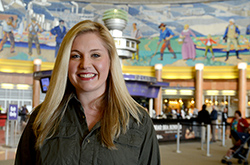
While some actors and actresses wait tables between stints on stage, 24-year-old Brittany Barker talks the Dead Sea Scrolls with guests at the Cincinnati Museum Center, where she works as a Visitation Enhancement Specialist.

ESCC helps nonprofits maximize output

In 1995, a small group of retired business executives came together with the intent of giving back to their community by investing their time and talents in work that would assist nonprofits. Now, nearly 18 years later, Executive Service Corps of Cincinnati is the recipient of an $85,000 award that will help more than 130 volunteers provide low-cost, high-quality strategic thinking, planning, training and coaching to other nonprofits in need.  The recent funding will help the ESCC implement its Community Benefit Business Model, which, according to Andy McCreanor, executive director and CEO of the organization, is a model that has essentially always existed within the nonprofit, but has now been refined and strengthened. The model helps nonprofits maximize results so that they may receive additional funding to better fulfill their missions, which ultimately works to improve the communities they serve. “It enables investors to get more out of the nonprofits that they’re investing in, and secondly, it helps the nonprofits because we’re affordable," says McCreanor. "We’re merely a vehicle so that the community gets the benefit that they’re trying to get." The ESCC has worked on long-term projects with more than 500 nonprofits in Cincinnati, Northern Kentucky and Southeast Indiana since 1995, including most recently the Jewish Federation of Cincinnati. ESCC also offers a 10-month program at its Nonprofit Leadership Institute each year; and at its culmination in June, more than 100 nonprofit leaders from Cincinnati will have graduated.  McCreanor says that because of the recent economic downturn, nonprofits have suffered and organizations are reevaluating and assessing their goals and missions. “We’re here to help,” he says. “If you’re struggling out there, it really doesn’t cost anything to talk about what you’re dealing with, and if in fact there is a way for us to help, it’s going to be done at a very low cost, so it’s kind of the best of all worlds.”  Do Good: • Sign up to attend classes at the Nonprofit Leadership Institute. • Volunteer your business skills and experience to serve other nonprofits. • Reach out to the ESCC if you are a nonprofit that could benefit from its services. By Brittany York  Brittany York is a professor of English composition at the University of Cincinnati and a teacher at the Regional Institute of Torah and Secular Studies. She also edits the For Good section of SoapboxMedia.

Shield gives back to those who give daily

The Shield started in September 2000 during a crisis. A Cincinnati police officer was killed in the line of duty, and his family, which was from out of town, couldn't afford to fly in on short notice. Tom Streicher, who was Cincinnati’s police chief at the time, knew something had to be done; he offered up his credit card to ensure the officer’s family was where they were needed—by the fallen officer’s side.  “It was a leadership issue,” says Satch Coletta, a retired officer and trustee for the nonprofit that was soon to launch. “What are the odds, should something happen? Something should be there.”  In that moment of need, police chiefs came together to make contributions and began to fund a new nonprofit. The organization has continued to operate ever since, thanks to community donations, and in large part, to the willingness of officers who take payroll deductions to contribute.  The organization’s board, which is composed of 10 officers—current and retired—works entirely on a volunteer basis. They meet monthly during lunch breaks to fulfill The Shield’s mission: to assist the families of officers killed or critically injured in the line of duty.  Policing is a dangerous job, and according to Coletta, “It’s not a matter of if we’re going to pay money out, it’s a matter of when and how much.”  The funds are available to families immediately—prior to workers’ compensation or life insurance, says Coletta. “If it happens at one in the afternoon, at 1:01 p.m., there’s a benefit committee that’s ready to spring into action to aid an officer or his family.”   Coletta knows the circumstances surrounding the loss of an officer all too well. In 1978, Officer John Bechtol, next-door neighbor and friend whom Coletta trained with, died after a vehicle struck his police cruiser. There was no immediate support available for the family . “Back then, policemen, not that they make a great fortune now, made even less; and to be able to set funeral arrangements and getting people in and situated—things along that line…” were very difficult, he says. The funds are not just meant for funeral arrangements and families’ transportation, however. “Say he would have survived the crash,” Coletta says, “he would have been in very serious condition, say in ICU for a long time. You would expect the spouse to be there in ICU. If their job doesn’t pay, The Shield would entertain paying the spouse’s wages because they’re already down one. We don’t want them to suffer additionally.”  In times of need, Coletta says people always want to help, but the organization’s goal is to create an emergency fund that can create interest, so that there is enough money available to families, prior to the moment when the unthinkable occurs. “The family knows what’s needed, and we work on the things to try to aid them,” Coletta says. “But it’s one of those things where at the time, that’s one less thing they have to worry about.”  Do Good: • Provide corporate or community support by donating to The Shield. • Contact The Shield about volunteer opportunities and upcoming events. • Connect with The Shield and share the organization's page on Facebook.  By Brittany York  Brittany York is a professor of English Composition at the University of Cincinnati and a teacher at the Regional Institute of Torah and Secular Studies. She also edits the For Good section of SoapboxMedia.  

Betts House exhibit reveals past visible through modern lens

What better way to experience the beauty and diversity of Cincinnati’s historic architecture than within the walls of its oldest brick house?   Forward Into the Past, an art exhibit custom-tailored to its venue, will open at the historic Betts House on Jan. 12.  Photographer Jens Rosenkrantz, Jr,. combines a variety of historic and contemporary materials to reveal long-ago places and scenes, which remind viewers “that in a city like Cincinnati, the past is ever present through the historic architecture and streetscapes we encounter daily,” says Julie Carpenter, executive director of Betts House. Rosenkrantz, local artist, entrepreneur and partial owner of Clifton’s La Poste Eatery and Django Western Taco in Northside, uses a variety of techniques to recreate century-old views of the city.   Finding old maps at the Public Library of Cincinnati and Hamilton County, he overlaid them with historic photographs for an aerial and street-view of 19th century Cincinnati. In other photographic landscapes, the artist removed reminders of modern life—telephone lines, stop lights—and reveals the unadulterated historic authenticity that many of the city’s streetscapes still process, viewed from behind the frames of old windows salvaged from Building Value.  “We spend most of our time living in a house or working in a building, but we seldom think about the built environment,” says Carpenter. “A great way to think about that is from an artist’s perspective.”    This show is the final exhibit in the Betts House’s 2012-2013 series, The Art of the Built Environment, supported by a Project Support Grant from ArtsWave. The Betts House, built in 1804 and located in the Betts-Longworth Historic District near downtown, is the only local museum that explores the history of the built environment through architecture, building trades and materials, construction technologies and historic preservation.   Do Good: • Visit Forward Into the Past, which will run from Jan. 12-Feb. 28 at the Betts House, two blocks west of Music Hall at 416 Clark St. • Donate time or funds. Historic homes require regular maintenance and upkeep; consider a donation to the Betts House or help with its house tours or public programs.  • Stop by Jens Rosenkrantz’s studio at The Pendleton Art Center to see his work, which ranges from history-inspired pieces to abstract and contemporary material. By Becky Johnson

Video Cool Kids: Hi-tech show celebrates local fashions

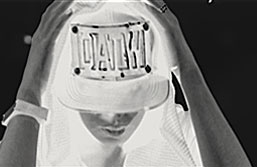
The Rise of the Cool Kids fashion event at the Bertke Electric Warehouse in Northside celebrated local designers and their work. Video courtesy Lightborne.

My Soapbox: Duru Armagan, organizer, Rise of the Cool Kids

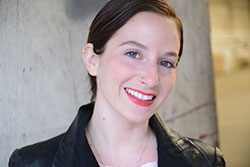
You may know Duru Armagan as the owner of OTR's Sloane Boutique. This month, she styles Rise of the Cool Kids (ROCK), a projection fashion show and performance that highlights streetwear and Cincinnati's growing fashion scene. She shares the details with Soapbox's Robin Donovan.

Breaking the cycle of bad eating, one banana at a time

The Nutrition Council of Greater Cincinnati is working to break the cycle of unhealthy eating habits, one banana, one yogurt parfait and one recipe at a time.   And, they are doing it one family at a time.  The Council, in its 35th year, just wrapped up its latest series of "What’s Cooking?" classes for parents and caregivers of kids in Camp Washington and Winton Hills.  The classes, offered each fall and spring, are a four-part series that meet for about an hour after the school day ends at schools with Head Start programs. They are designed to show parents how to make quick, affordable and healthy meals for their families. Each week is themed, and participants receive take-home tools like measuring spoons and grocery cards. Parents also get multiple recipes that encourage cooking at home, rather than relying on packaged and processed foods.  The classes and the Council’s work come at a time when the nation—and Cincinnati—is getting fatter. Childhood obesity has more than tripled in the past 30 years, according to the Centers for Disease Control and Prevention. Currently, one in four Cincinnati Public School kindergarten students is overweight (13.9 percent) or obese (11.7 percent).   “I think what strikes me is that things I am aware of and take for granted, not everyone does,’’ says Tracy Wilking, the nonprofit’s special project manager, who worked at the Winton Hills location this fall.   In 2011, nearly 100 families participated in the cooking sessions. And of those, according to the Council’s web site:  • 85 percent reported they changed one action to improve a targeted health behavior.• 67 percent of families increased their consumption of fruits and vegetables.• 67 percent said they decreased their child’s sweetened beverage intake.  Wilking says it is not uncommon to hear parents share how the instruction really does change cooking habits, from eating as a family to introducing fresh fruits and vegetables at meals. One recent participant told one of the Council workers that she had completely changed how her family was eating.   The Council targets very young children, before habits are established and before they start kindergarten. Wilking says many parents may not have been taught how to eat healthy, and the earlier the Council and others can share information with parents, the more likely the cycle of poor food choices can be broken.   In addition to the cooking series, the Council also visited 38 Early Childhood Education classrooms in the Cincinnati area over 17 days to teach parents and their kids how to make healthy snacks. Recently, they made fruit and yogurt parfaits.   “A little education really can go a long way,’’ says Wilking. “This work is reaching individuals and those with the power to reach someone else.”  Do Good: •  Make a donation •  Volunteer your time or skills. • Like the Council on Facebook.• Follow the Council's news on Twitter.  By Chris GravesChris Graves, assistant vice president of digital and social media at the Powers Agency, is using several of the Council’s recipes at home with her two teens.  

Vacant CPS schools recently sold at auction

On Nov. 8, Cincinnati Public Schools auctioned 13 school buildings and four land parcels, valued at more than $27 million, according to the county auditor's office. Eleven of the buildings sold, along with one piece of land. Bidding opened on Nov. 5 at $50,000; at the close of the auction, CPS made $3.5 million, which was more than enough to complete the district's Facilities Master Plan.   The FMP was part of a bond levy that was passed in spring 2003 that combined state and other funds for a $1 billion build-out of the district. In the next 18 months, every school currently in use by CPS will either have been renovated or rebuilt to create a better environment for students, faculty and staff.   As part of the FMP, many of the schools that were sold at auction were “swing” schools, which means they were used for classes while other schools were being renovated. After renovations, CPS no longer had a need for the schools, but wanted the buildings to have second lives.   “As part of the plan, we knew we couldn’t overbuild, and we didn’t want to under-build,” says Janet Walsh, director of public affairs for CPS. “The consequence of that was that there were some beautiful buildings that we weren’t able to use as school buildings, but could be used by the community in other ways.” The district's approach, as it has been before, was to put the buildings up for auction.   CPS held a successful auction about three years ago, but this one included more buildings and raised more money than expected, says Eve Bolton, board president of CPS. Some of the schools that didn’t sell in the 2009 auction sold this time around.   “The reality is that the economic upturn in this region and the interest in Greater Cincinnati leaves a stock of historic, well-built schools empty,” says Bolton. “We want to see our buildings reused and recycled so that they can be beneficial to the neighborhoods they are a part of.”   State law allows CPS to auction off unused buildings, but only after they have first been offered to local charter schools. Those left after auction can be sold on the public market as pieces of real estate. Buyers have no legal restrictions regarding what the school buildings can be used as—some of the buildings will become other schools, residential housing or office buildings; others will be torn down and something else will be built in their places.   CPS schools and land included in the Nov. 8 auction:Burton Elementary School, 876 Glenwood Street, North Avondale: sold for $305,000; built in 1966, last class in 2008Central Fairmount Elementary School, 2475 White Street, South Fairmount: sold for $310,000; built in 1900, last class in 2012Heberle Elementary School, 2015 Freeman Avenue, West End: sold for $60,000; built in 1929, last class in 2007Hoffman Elementary School, 3060 Durrell Avenue, Evanston: sold for $200,000; built in 1922, last class in 2011Kirby Road Elementary School, 1710 Bruce Avenue, Northside: sold for $230,000; built in 1910, last class in 2005Lafayette Bloom Middle School, 1941 Baymiller Street, West End: sold for $60,000; built in 1915, last class in 2006Linwood Fundamental Academy, 4900 Eastern Avenue, Linwood: sold for $75,000; built in 1927-29, last class in 2005Losantiville Elementary School, 6701 Elbrook Avenue, Amberley Village: sold for $525,000; built in 1954, last class in 2008Old SCPA, 1310 Sycamore Street, Pendleton: sold for $1.3 million; built in 1910, last class in 2010Old Shroder Junior High School, 3500 Lumford Place, Kennedy Heights: sold for $150,000; built in 1956, last class unknownParadrome Street parcel, Mount Adams: sold for $135,000Winton Montessori School, 4750 Winton Road, Winton Place: sold for $265,000; closed in early Nov. 2012George F. Sands School, 940 Poplar Street, West End: not sold, valued at $1.89 million; built in 1912, last class in 2007North Fairmount Elementary School, 2001 Baltimore Avenue, North Fairmount: not sold, valued at $2.2 million; built in 1954, last class unknownE. Apple Street parcel, Winton Hills: not sold, valued at $485,628Terry Street parcel, East Price Hill: not sold, valued at $13,400Site of old Millvale school building, 3277 Beekman Street, Millvale: not sold, valued at $135,550By Caitlin Koenig Follow Caitlin on Twitter


BRIDGES looks forward to bridge-building in Queensgate

Seeds of change are stirring for human relations organization, BRIDGES for a Just Community. At the end of December, the organization will move its offices from the fourth floor of the National Underground Railroad Freedom Center (NURFC) to 644 Linn St. in Queensgate near the West End. Operating since 1944, the non-profit’s inclusion work centers around equipping people with ways to engage and develop relationships that transform the region into a more equitable and just community. BRIDGES’ CEO and President, Lynnette Heard, believes that strengthening community linkages with neighboring areas—Price Hill, Western Hills and West End, urban hubs with many schools, religious centers and other non-profits—will help the organization carry out its mission more effectively. “We see some synergy connecting with our non-profit neighbors to help continue to build capacity,” says Heard. “We think that this is a great opportunity to operate fully our educational programs with BRIDGES, as well as our Public Allies program in one location where parking is free, the location is on a bus line and it is located nearby an area that we are very supportive of serving and having a presence.” For Heard, BRIDGES’ strengthened presence means being responsive to inequality issues. She intends to direct energies toward youth, citing that between grades 3 to 6 is when many children experience barriers to success. “One of the barriers that we have found has been children not learning effectively in an environment,” Heard explains. In BRIDGES’ 2012 Human Relations Progress Report only 11 percent of respondents said Cincinnati was welcoming and inclusive. “We still have gaps in reaching a variety of individuals who don’t necessarily feel that they are a part of everyday life in this community,” Heard says, “so what we look to do is to reach out to synagogues, to mosques, to temples, to churches, to schools and other non-profit organizations to say, ‘What can we all do working together to include everyone at the table of opportunity?’” For the past 20 months, NURFC (which merged with the Cincinnati Museum Center in July) was BRIDGES’ home. Both organizations say they will remain close partners and collaborate on future programs. “BRIDGES pursues an important mission, and we are pleased they found a new location to suit their purposes,” says Elizabeth Pierce, vice president of marketing and communications for CMC and NURFC. “As the Freedom Center continues on its path toward financial sustainability, it became necessary to identify new ways to increase revenue.” In April, BRIDGES hosted a race forum in response to Trayvon Martin’s death and violence directed at African-American males. Heard says BRIDGES will revisit the topic in early 2013 and continue to host community dialogues. “We want to be relevant, we want to evolve and we want to make certain that as an organization we are tapping on the pulse of the city—knowing that as issues arises, BRIDGES is there to help respond.” Do Good: • Like Bridges on Facebook. • Find out more about the Public Allies program that BRIDGES administrates. • Keep up on the latest news by signing up to get the organization’s free newsletter. By Mildred Fallen

Our Partners

Taft Museum of Art
Warsaw Federal

Don't miss out!

Everything Cincinnati, in your inbox every week.

Close the CTA

Already a subscriber? Enter your email to hide this popup in the future.