
Mt. Adams

One of Cincinnati's most charming neighborhoods, this winding hilltop community hosts trendy residents, diverse retail businesses and a hot collection of nightclubs and restaurants. Featuring some of the most spectacular river and city views, Mt. Adams boasts an array of the city's most diverse and interesting examples of architectural styles, including five sites currently listed on the historic register.

$1.6M Mount Adams steps project nearly complete

The $1.6 million reconstruction of the public steps between the Adams Crossing condominiums and the Holy Cross-Immaculata Church in Mount Adams is largely complete. The Mount Adams Steps Restoration Project began shortly after Easter 2008, when work began on replacing the 369 steps and missing railing along the key pedestrian corridor. But the most significant part of the project was the installation of the historic Arch and Ellipse, uncovering of a weed-strangled public plaza, and construction of a new retaining wall at the end of Adams Crossing.The Arch and Ellipse, which have been part of the Ohio Historic Inventory for 32 years, were constructed for the city's first park around 1853 and were known at the time as the Riverfront Playground Entrance.The structures were moved in 1990 to make way for the Adams Place Condominiums, where they sat in storage at Hummel Restoration.The project is scheduled for completion within the next few months.Still to be completed are final painting of hand rails, landscaping, and wayfinding and educational graphics.Partial funding for the project came from $647,000 in Federal Transportation Enhancement Funds, and project partners included the Ohio Department of Transportation, Ohio-Kentucky-Indiana Regional Council of Governments, and the city's departments of Transportation and Engineering, Public Services, and Parks.The Adams Place Condominium homeowners association and AP Parking Company, LLC donated one-eighth acre for the project.Writer: Kevin LeMasterSource: Tiffaney Hardy, senior communications specialist, City of Cincinnati

Issue 9 debate engages local businesses one month before the November vote

Keep Cincinnati Beautiful's biggest event of the year takes place on April 25 with a kickoff in College Hill, and the organization could use your help.Great American Cleanup, the nation's largest community improvement project with an estimated 2.8 million volunteers, is aimed at boosting the quality of life in neighborhoods by planting flowers and trees, picking up litter, collecting discarded tires, painting façades, landscaping, and recyclingBecause of the massive amount of work to be done, Keep Cincinnati Beautiful program manager Josman Rodriguez says that volunteers are very much needed.Just last year, 8,352 volunteers collected 406,460 pounds of litter and debris; planted 13,500 flowers and bulbs; cleaned 578 miles or roads, streets and highways; and recycled more than 40,000 plastic bottles and more than 2,500 scrap tires."We're expecting 10,000 volunteers beautifying 90 communities, 25 parks, and 30 schools," Rodriguez says.He also says that Give Back Cincinnati, community leaders, and Cincinnati council members plan to participate, and that United Dairy Farmers is serving as a co-sponsor.To volunteer, contact Liz Bowater at (513) 352-4380 or at liz.bowater@cincinnati-oh.gov.Writer: Kevin LeMasterSource: Josman Rodriguez, project manager/public awareness, Keep Cincinnati Beautiful

Focus on environment garners planning award for Green Cincinnati plan
Qualls pushes council to make streets ‘for people, not just cars’

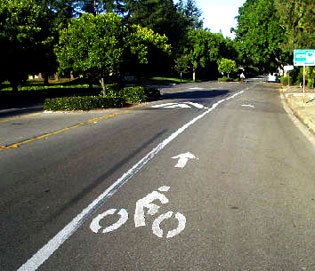
Cincinnati City Councilmember and chair of the Vibrant Neighborhoods Committee, Roxanne Qualls introduced a resolution supporting the federal Complete Streets Act of 2009, a piece of legislation meant to encourage streets that are safe for all forms of human transportation.Sponsored by Sen. Tom Harkin (D-IA) and Rep. Doris Matsui (D-CA) and introduced earlier this month, the legislation promotes the design of streets that are safe for motorists, bus and transit riders, pedestrians, bicyclists, and people with disabilities by directing state departments of transportation and metropolitan planning organizations to adopt and implement complete streets policies for federally-funded transportation projects.It would also update the current federal code on pedestrian and bicycle accommodation and authorize research, data collection, technical assistance and dissemination of best practices.Qualls' resolution is currently in council's Economic Development Committee, which next meets on April 7."We actually put funds in the biennial budget to develop a complete streets program," Qualls says.  "So the city has already recognized the need to design streets for people, not just cars.  Ultimately, the goal is to make our streets multi-modal."According to the National Complete Streets Coalition, more than 5,000 annual fatalities and 70,000 injuries occur to pedestrians and bicyclists because of inadequate sidewalks and crosswalks, space for bicyclists, and room for transit riders.Locally, the city's Department of Transportation and Engineering has been working with the Mount Washington Community Council to retrofit a portion of Beechmont Avenue that has seen an increase in speeding and accidents since a road widening project in 2004.Residents of Westwood have also requested traffic calming measures for a mostly residential – but busy – section of Montana Avenue."Our competitive advantage is in our neighborhoods, and our quality of life is dependent on our streets," Qualls says.  "If we look at our streets as our largest public spaces, then the quality of those spaces is critical to economic development."Qualls says that complete streets is one of many strategies that cities are using to become more walkable and mixed-use, pointing out that more than 80 state and local governments already have passed complete streets policies."It's a matter of changing how we think about streets," Qualls says.  "What we recognize is that if you design streets for cars, you get cars.  If you design streets for people and alternative modes of transportation, that's what you'll get."Writer: Kevin LeMasterSources: Roxanne Qualls, Cincinnati City Council; Jennifer O'Donnell, assistant to Councilmember Qualls

Hamilton County taxes lower than its peers

A recent Forbes survey finds that Hamilton County's property tax rate is the lowest, as a percentage of income, of Ohio's six largest urban areas, says Hamilton County Commissioner David Pepper.In his PepTalk blog, Pepper says that there are misconceptions about the county's tax rate, but that it's actually relatively low when compared to other metropolitan areas against which it competes for jobs, businesses, and talent.The Forbes survey found that Hamilton County's property tax rate as a percentage of income was 26 percent lower than Cuyahoga County (Cleveland), 16 percent lower than Franklin County (Columbus), and 8.5 percent lower than Summit County (Akron).Hamilton County's sales tax was also the lowest of the top six urban counties, tied with Summit County.Read the blog post here.

Talking architecture with Aaron Betsky

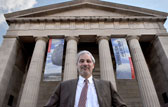
Conversations with Aaron Betsky, Cincinnati  Art Museum director, are likely to wheel around to architecture. He and Jane Durrell settle down to talk on that subject itself, beginning with Betsky's "Of course, architects never do what you expect them to." 

Mount Adams neighborhood plan ready for city review

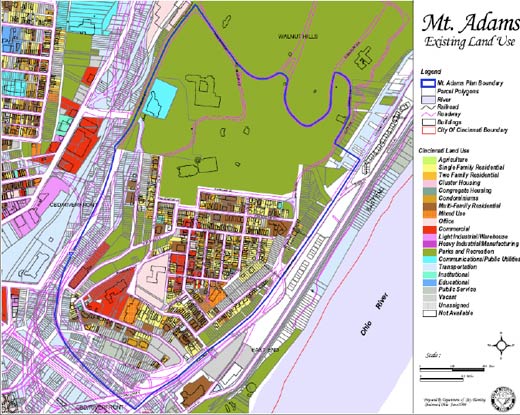
The Mount Adams Strategic Neighborhood Plan steering committee has released its final findings and recommendations, and the document should be ready for consideration by Cincinnati's City Planning Commission this spring.The 100-page plan provides a common vision for the future of the neighborhood, and is meant to inform policy direction for city officials.The Mount Adams Civic Association launched the planning initiative in September 2007 as a way to address the neighborhood's growing pains, putting the neighborhood in a proactive – rather than a reactive – position.Beginning with community meetings last June and continuing through open houses held in January, the steering committee also solicited public input through direct mail, flyers, e-mail, surveys, conversations, and the project website.Through all of this work, steering committee member David Brecount says that they've come as close as possible to developing a neighborhood consensus."There have been no surprises from all the feedback and it's amazing how consistent the views are on what we need to address as a neighborhood," he says.  "The feedback was encouraging and it helped us re-prioritize what we had come up with as a steering committee.  Some things were more or less important than what we thought."The plan's recommendations are organized into seven groups: community life, development and preservation, views and hillsides, business district, parking, clean and safe, and infrastructure and utilities.To Brecount, the top three priorities are keeping Mount Adams clean, safe, and attractive; revitalizing the business district; and establishing real estate and preservation guidelines."Mt. Adams is a regional attraction because of the unique views, architecture, and quant community feel," he says.  "It doesn't exist anywhere else in the region and we need to give people more reasons to come visit." Writer: Kevin LeMasterSource: David Brecount, strategic planning team, Mount Adams Neighborhood Strategic Plan Steering Committee

Spohr appointed to direct SW Ohio workforce development

Jennifer Spohr has been appointed as the regional workforce director of the Ohio Department of Development's (ODOD) Southwest Ohio office.In her new role, Spohr will serve as a liaison to state government, local business leaders, elected officials, and economic and workforce development entities to meet the training and talent development needs of businesses throughout Hamilton, Butler, Warren, and Clermont counties.Spohr joined ODOD in 2005 as coordinator for the Ohio Investment in Training Program and is currently on the Greater Cincinnati Workforce Network's Hard-2-Hire Workforce subcommittee.This year, she received from Cincinnati mayor Mark Mallory the 2009 Super Award from the Workforce One Investment Board of Southwest Ohio in recognition for her work with the SuperJobs Center.Read the full release here.

Mallory highlights economic growth in State of the City address

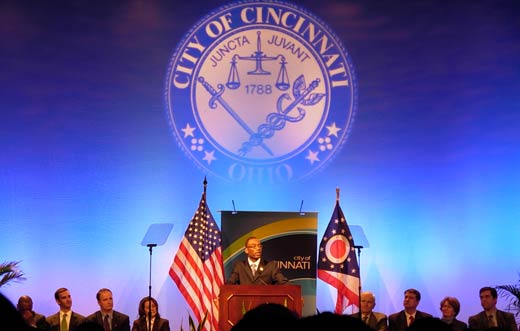
In his fourth State of the City address, delivered last Wednesday at the Duke Energy Center, Cincinnati Mayor Mark Mallory said that the city is weathering the poor economy much better than most."At a time when other cities are seeing businesses move out, we are seeing businesses expand and new businesses move in," he said.He credited the "aggressive and strategic" approach of City Manager Milton Dohoney and Economic Development Director Holly Childs for bringing 2,500 new jobs to Cincinnati last year, including commitments from such major players as Medpace, Humana, dunnhumbyUSA, and US Bank.Mallory also spoke of the need to empower small and minority-owned businesses, saying that four more Shop52 seminars will be held this year to link entrepreneurs with business experts, non-profit service providers, and lending professionals."We must also ensure that individuals have the opportunity to realize their dreams," he said.  "Shop52 is all about small business growth and strengthening our neighborhoods."In addition to job creation, Mallory noted that construction is underway on two major building projects – Great American Tower at Queen City Square, a 41-story, $340 million office tower and The Banks, a 2.8-million-square-foot mixed-use development on the city's riverfront.But Mallory said that the most crucial component of Cincinnati's development plans is the streetcar system that would connect Downtown, Over-the-Rhine, and the Uptown neighborhoods."Now, we have done our homework and the benefits of a streetcar system are clear," Mallory said.  "When a city puts rails in the ground, economic growth follows."Mallory said that $1.4 billion in economic impact would result from the project's first phase, giving the city additional resources that it can use in neighborhoods throughout the city."The benefits of the streetcar system are too significant to allow the naysayers to derail our efforts," he said.  "Streetcars must be a part of Cincinnati's future and we will fight to make it happen."According to Mallory, the key to Cincinnati's future success is strong local, national, and global partnerships.To achieve these partnerships, the city and its residents must be their own advocates."We have a great city and we must make it our priority to promote it here at home, across the nation and around the world," Mallory said.Writer: Kevin LeMasterSource: 2009 Cincinnati State of the City address Photography by Kevin LeMaster

Cincinnati earns its ‘Queen City’ nickname

Yes, Cincinnati has a sometimes shaky reputation.  But let's forget about that for a second.  (Or forever.)Laura DeMarco, a writer for the Newhouse News Service whose story was picked up by the Minneapolis Star-Tribune, sees in Cincinnati a cultural revival, a city that boasts "world-class museums, a vibrant nightlife and dining scene, and a rich look at the state's history".For sights, DeMarco recommends Fountain Square, the Lois & Richard Rosenthal Center for Contemporary Art, the National Underground Railroad Freedom Center, and the "forward-thinking" architecture at the University of Cincinnati.The writer also recommends catching a show at the Southgate House, taking a trip off the beaten path to the Comet in Northside to dine on a giant burrito, or experiencing the fine dining, fantastic views, and charming streets of Mount Adams.Read the full article here.

Our Partners

Taft Museum of Art
Warsaw Federal

Don't miss out!

Everything Cincinnati, in your inbox every week.

Close the CTA

Already a subscriber? Enter your email to hide this popup in the future.