Ludlow

It doesn’t get much more quaintly picturesque than the quiet riverside town of Ludlow. Located along Highway 8 in northwestern Kenton County, Ludlow offers ample opportunities for enterprise and fun on the river, which factors prominently in the town’s history and economy. It's easily accessed from Cincinnati via I-75/Covington and the nearby Anderson Ferry.     Taverns and eateries that once provided respite for traveling boatmen are experiencing a renaissance as revelers from all over Greater Cincinnati flock to more offbeat spots like the popular Ludlow-Bromley Yacht Club.   Affordable cost of living and plentiful green spaces make Ludlow an increasingly attractive option for families. On summer nights the air is thick with barbeque smoke and the crack of baseball bats from nearby parks, which range from untouched nature to fully outfitted playgrounds. Available real estate includes historic homes, multi-unit buildings, condos, townhouses and commercial properties with substantial acreage.  

More bike lanes, early planning for cycle track highlight city’s Bike Plan

Some of the city's biggest bike-related projects in the works for 2013 are still in the planning stages, but a few will continue and build on the momentum from last year.  This year, the city's Bicycle Transportation Program includes plans to finish more than two miles of bike lanes along Riverside Drive, a project that was started in 2009. Plans are also in the works to extend the Spring Grove bike lanes from Hopple to Bank Street downtown; proposals have been drafted for rehabilitation projects along Dalton Street, Bank, Western Avenue and Langdon Farm Road.  The City also hopes to continue its design work on the Ohio River Trail, extending bike-friendly paths from Salem Street to Sutton Road and Collins Avenue to Corbin Street.   The City is also in the early stages of looking to put Ohio’s first cycle track on Central Parkway between Ludlow Avenue and Liberty Street. “Cycle tracks aren’t mainstream yet, but New York City and Washington, D.C., have quite a few,” says Melissa McVay, senior city planner in the Division of Transportation & Engineering. “They’re the most family-friendly bike facility you can build.”   A cycle track is like a bike trail or shared path, but it’s in the street, for bikes only and separated from cars by a physical barrier, such as planters, trees or a curb. Cycle tracks are meant to keep cars from veering into bicyclists’ paths.   “A typical bike lane is usually enough to encourage cyclists to try them, but sometimes, they don’t make everyone feel comfortable,” says McVay. “The physical barrier of a cycle track is meant to make cyclists feel safe.”  One of the most exciting developments for bicyclists last year was the addition of a green bike lane on Ludlow last year. “It started the conversation among people who don’t ride bikes, and they’re beginning to see the infrastructure,” McVay says. “I feel like the bike community has grown, and there is now a growing city-wide awareness.” Approved by the City in 2009 and put into action in 2010, the Bike Plan outlines bicycle-related projects over the next 15 years. In all, the plan recommends 445 miles of on-street and off-street bike facilities, such as bike lanes, bike racks and multi-use trails.   In 2009, there were about seven miles of bike lanes and sharrows in Cincinnati, says McVay. In 2010, 2.3 miles were added; in 2011, 4.5 miles; in 2012, five more miles were added, for a total of 19 miles.   Since 1993, many bike-friendly projects have been implemented, including striping 12 miles of bike lanes, creating 21 miles of shared-use paths and trails and installing six miles of sharrows, or shared lane markings, throughout the city.   The bulk of the Bicycle Transportation Program's focus is on developing on-street and off-street bike facilities as outlined in the Bike Plan, but it also organizes bike-related events, proposing policy and zoning changes, and working on advocacy projects with Queen City Bike and Mobo Bicycle Co-op.   The public played a huge part in developing the Bike Plan by utilizing online tools to show the City where bike facilities were needed.   Even though there has been an outpouring of public support for bike facilities, there are still issues when it comes to removing parking. The City proposed a project along Spring Grove Avenue this past summer that would consolidate on-street parking to one side of the street, but businesses liked having parking available on both sides of the street.   “The project will be successful if the community comes together and rallies around the project, and the trade-off of on-street parking for a bike lane will ultimately benefit both business owners and bicyclists,” McVay says. The City wants to hear from you! Take the survery and grade Cincinnati on different bike-friendly aspects around town.   By Caitlin Koenig Follow Caitlin on Twitter

ESCC helps nonprofits maximize output

In 1995, a small group of retired business executives came together with the intent of giving back to their community by investing their time and talents in work that would assist nonprofits. Now, nearly 18 years later, Executive Service Corps of Cincinnati is the recipient of an $85,000 award that will help more than 130 volunteers provide low-cost, high-quality strategic thinking, planning, training and coaching to other nonprofits in need.  The recent funding will help the ESCC implement its Community Benefit Business Model, which, according to Andy McCreanor, executive director and CEO of the organization, is a model that has essentially always existed within the nonprofit, but has now been refined and strengthened. The model helps nonprofits maximize results so that they may receive additional funding to better fulfill their missions, which ultimately works to improve the communities they serve. “It enables investors to get more out of the nonprofits that they’re investing in, and secondly, it helps the nonprofits because we’re affordable," says McCreanor. "We’re merely a vehicle so that the community gets the benefit that they’re trying to get." The ESCC has worked on long-term projects with more than 500 nonprofits in Cincinnati, Northern Kentucky and Southeast Indiana since 1995, including most recently the Jewish Federation of Cincinnati. ESCC also offers a 10-month program at its Nonprofit Leadership Institute each year; and at its culmination in June, more than 100 nonprofit leaders from Cincinnati will have graduated.  McCreanor says that because of the recent economic downturn, nonprofits have suffered and organizations are reevaluating and assessing their goals and missions. “We’re here to help,” he says. “If you’re struggling out there, it really doesn’t cost anything to talk about what you’re dealing with, and if in fact there is a way for us to help, it’s going to be done at a very low cost, so it’s kind of the best of all worlds.”  Do Good: • Sign up to attend classes at the Nonprofit Leadership Institute. • Volunteer your business skills and experience to serve other nonprofits. • Reach out to the ESCC if you are a nonprofit that could benefit from its services. By Brittany York  Brittany York is a professor of English composition at the University of Cincinnati and a teacher at the Regional Institute of Torah and Secular Studies. She also edits the For Good section of SoapboxMedia.

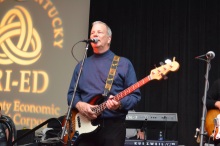
Region’s leaders gather to celebrate 25 years of Tri-ED

In 1987, no one knew if fledgling efforts to bring together Kentucky's northern counties would succeed. Twenty-five years later, a region gathered at Northern Kentucky University for a brief look back - and an aggressive look forward.

Faces Without Places founder wants to see homeless program expand

Karen Fessler has a message she wants you to hear loud and clear: Faces Without Places is alive, well and kicking.  For years, the nonprofit, grassroots organization that has provided nearly $1.5 million in educational support for homeless children in Greater Cincinnati was affiliated with the Cincinnati Public Schools. But about two years ago--and for a variety of reasons--the organization split with the school system, says Fessler, who is a board member and a founding member of the 17-year-old group.   But its mission remains intact, says Fessler.  “The most important part of the program is that we get kids out of shelters, we get kids off the streets and we show them that education is a way to experience a larger world,’’ says Fessler. “We want to broaden our reach. We want to broaden our horizons.”  Fessler declines to discuss what led to the parting of ways, but adds the founders of the program all left their jobs at CPS as well.   “But none of us lost our passion for the kids and the mission of Faces Without Places,’’ she adds. “I want people to know that we are here, and we are committed to providing services. We are toughing it out through thick and thin--for the kids.”  The nonprofit helps about 3,000 school children annually in Greater Cincinnati. Last year, the group provided 7,702 services to 3,013 children, according to its website. Those services included providing taxi services to school for 112 students, uniform vouchers for 777 students, backpacks and supplies for more than 839 students and Payless gift cards for 320 students so they could get a new pair of shoes, a luxury for many, Fessler says.  The nonprofit is best known for its Yellow Bus Summer Camp, which completed its 15th year this past summer. Last year, 152 children attended the eight-week camp that focuses on reading and day trips.  Earlier this month, the group’s biggest fundraiser--the Yellow Bus Ball--raised more than $23,000, most of which will go to fund the camp.   “The ball is critical because we have to have money to pay teachers and buy supplies,’’ Fessler says. “We can get grant money for field trips, but the fundraiser really helps us be able to put on the camp to the degree we have always done it.”  Fessler has worked with thousands of homeless children over the years, and she readily admits she is biased toward teens.   “A lot of people don’t realize this, but these kids are completely out on their own; they are either staying at friends' or living eight, nine, 10 kids piled up in an apartment,’’ she says. “They are squatting and some are living on the streets trying to negotiate life … they are all living life on the edge. I am most impressed by their sheer tenacity and their desire to find a better life.” Do Good:  • Register for the Mt. Adams Yellow Bus Pub Crawl on Saturday, Nov. 17.  • Attend the 5th annual Chili Taste Off on Dec. 9 at Northside Tavern.  • Contribute to Faces Without Places' wishlist of school and personal hygiene supplies.  • Sign up for the monthly email newsletter.  • Give back while you shop.  By Chris GravesChris Graves is the assistant vice president of digital and social media at Powers Agency

Grant lets Kentucky school children learn about fruits, veggies

What happens when a nurse and librarian get together in a rural Campbell County school where many students lack access to fresh fruit and vegetables?  An integrated education plan that enables kids to read about fruits and vegetables, plant their own gardens as well as mathematically graph the likelihood that their food will grow.  The Silver Grove Independent Schools was awarded a $400 Learning Links grant from the Greater Cincinnati Foundation this fall to buy more than 40 books on the topic of fruits and vegetables. The grant was among $97,000 the foundation awarded to 109 schools in the Greater Cincinnati and Northern Kentucky area this year. The grants, of up to $1,000 each, are for creative and interesting programs or events in classrooms.   The books at Silver Grove are aimed at all learning levels and include cookbooks and resource books, says Julie Kaeff, the school’s family resources and Youth Service Center director.   “We have a high rate of free and reduced lunch kids  - about 86 percent – and we discovered that many have very little exposure to fresh fruits and vegetables, beyond bananas and apples,’’ she says. “We hope that through teaching them there are other options, that when given the opportunity, they will make wiser choices.”  The previous school nurse and librarian – who continues to volunteer at the school – came up with the idea last year amid concerns about childhood obesity, Kaeff says. Through conversations with the kids, the nurse realized that many of the students lacked access to fresh fruits. They also lacked knowledge about where their food comes from. The duo crafted the plan that also included applying for federal funding from the Fresh Fruit and Vegetable Program to provide fresh snacks three days a week.   And while they did not win the federal funding, several teachers are bringing in various fruits and vegetables to introduce students to various foods, including raspberries, squash, pumpkins and zucchini.   “There are a lot of students who think it’s all just chicken nuggets, hot dogs and hamburgers," Kaeff says. "They think all fruits and vegetables are disgusting. We are trying to change that.”  Kaeff says teachers and students will take their in-classroom learning outside to a newly constructed greenhouse, which was donated by La Farge North America, a construction company based in Silver Grove. Last spring, some students started tomato plants from seeds and grew the plants in the greenhouse and then took them home over summer break.  “We hope to plant various different things in the spring,’’ she says.   Kaeff said the books are just the beginning. She said she hopes that parents or grandparents might even check them out to learn about fresher options and more diversified menu planning. She also hopes the school can offer some workshops for adults, including showing how to eat healthy on a budget.    “Maybe, just maybe, this will open the door,’’ Kaeff says. “Maybe the kids will say: ‘Hey Mom, hey Dad, can we have this?”  Do Good  · View the complete list of Learning Link recipients (pdf).  · Give to the Silver Grove canned food drive.  · View the school’s photo gallery and video gallery.  · To learn more about the program, email Kaeff. By Chris Graves Chris Graves is the assistant vice president of digital and social media at the Powers Agency. 

NKY says riverfront open for business

The riverfront is back! That's the message delivered by Northern Kentucky's leaders at Developers Day on Sept. 26.  Reports the Enquirer:  Northern Kentucky leaders believe the south side of the Ohio River is on the brink of a renaissance: Developments such as The Ascent at Roebling’s Bridge and SouthShore have renewed urban living; Gateway Community and Technical College’s new Urban Campus could bring up to 5,000 students into Covington; and urban industry clusters such as biotech and health information technology are growing. Read the full story here.

High-tech, health care will grow jobs in NKY through 2020

The Greater Cincinnati / Northern Kentucky region ranks in the top 5 in terms of expected total employment by 2020. We take a  close look at the 2020 Jobs Outlook report and discuss what's needed for NKY to realize its potential for growth.

Six NKY companies make the Inc. 5000

It's a sign of Northern Kentucky's accelerating growth and potential: Six Northern Kentucky-based companies have been recognized among the fastest-growing private companies in America by the 2012 Inc. 5000.  NKY is the proud home of 2012 Inc. 5000 companies The Eisen Agency, TiER1 Performance Solutions, Omega Processing Solutions, Lohmann Technologies, Parkway Products, and RWI Transportation. The list, compiled by Inc. Magazine, is ranked according to revenue and percentage growth over a four-year period. "We congratulate these companies and their leadership teams on their success and growth," says Karen Finan, senior vice president, Northern Kentucky Tri-ED. "They have contributed much to Northern Kentucky's thriving and diverse business community." Year after year, more Kentucky-based companies are making the list, which maps the vitality of the nation's independent entrepreneurs. In 2012, 47 Kentucky-based companies made the list, up from 46 in 2011 and 44 in 2010.   Inc. 5000 companies map the vitality brought to the nation's economy by independent entrepreneurs. The median growth rate of 2012 Inc. 500 / 5000 companies is an impressive 97 percent, and its honorees have created over 400,000 jobs in the past three years. Aggregate revenue among Inc. 5000 companies tops $299 billion.  See a complete list of all the Kentucky companies on the Inc. 5000, including company profiles and an interactive database that can be sorted by industry and other criteria, here.

Northern Kentucky and Cincinnati make Top 50 Cities for Global Trade

In Global Trade's Top 50 Cities, Northern Kentucky / Greater Cincinnati region ranks number 16 -- and boasts the best cost structure on the list, ranking as the least-costly metropolitan area for businesses in the U.S. Low rates for facility leasing, transportation and property taxes contribute to the Northern Kentucky and Cincinnati region's competitive ranking.  Northern Kentucky and Cincinnati have a business cost index 4.1% under the U.S national baseline of 100. The region also offers proximity to consumers, suppliers and competitors, along with access to major ports on the Ohio River, five airports and three interstate highways. Read more here.

Northern Kentucky Developers’ Day is Sept. 26

Northern Kentucky's "front door" is open -- for new businesses, shops, hotels, and residents.  The region's riverfront cities -- Bellevue, Covington, Newport, Dayton, Fort Thomas, and Ludlow -- comprise Northern Kentucky's urban core and present a tremendous growth opportunity for developers. That's why the riverfront will be the focus of the third-annual Developers' Day, hosted by Northern Kentucky Tri-ED, Southbank Partners, and the Catalytic Fund, in partnership with several local sponsors. Event organizers promise a fast-paced, high-impact day, which begins at 10 a.m. at the Newport Aquarium. "We are a dynamic community offering incredible development projects for the right professional," said Jack Moreland, President of Southbank Partners. "Northern Kentucky Developers' Day will serve as the catalyst for the right match." Developers will learn about immediately available residential and commercial opportunities, as well as creative financing options and community-led projects that are driving Northern Kentucky forward. What sets this year's event apart, says Karen Finan, Senior Vice President of Tri-ED, is that it will be a one-stop shop for developers who are ready to make a deal.  "We'll have the right folks there at the right time and at the right place to answer questions, make connections and move things forward for the developer -- and for Northern Kentucky," Finan says. "It's really a project-oriented event." The day concludes in grand fashion with a scenic cruise on River Queen, where developers can see the area's potential with their own eyes and network with city leaders and business allies. "Northern Kentucky is known for the ease in which the community conducts business and we intend to welcome developers of all types – residential, commercial, industrial, retail – to the region," says Jeanne Schorer, President of the Catalytic Fund. "We will provide them the tools to succeed in Northern Kentucky's urban core."  Learn more about Northern Kentucky Developers' Day and register here.

Our Partners

Taft Museum of Art
Warsaw Federal

Don't miss out!

Everything Cincinnati, in your inbox every week.

Close the CTA

Already a subscriber? Enter your email to hide this popup in the future.