Downtown

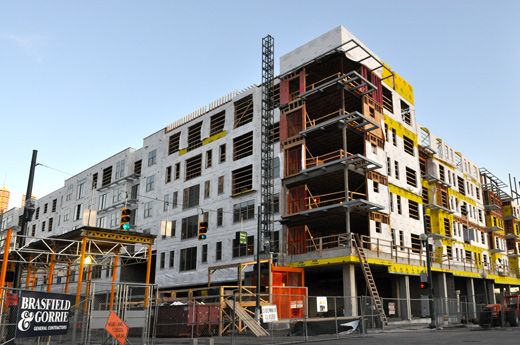
Downtown Cincinnati is the place to live, work, and play populated by restaurants, cafes, bars, arts and culture venues around every corner, plus a long-awaited and busy Kroger's that anchors recently-renovated Court Street Plaza. The downtown urban core is alive with programming, including music during the summer and ice skating in the winter, and features the largest living room 'television' in the region overlooking The Genius of Water at Fountain Square. Downtown has experienced dramatic expansion and population growth with residential developments, including condos and apartments in all price ranges, many of which boast scenic views of the hillsides and the river and offer unparalleled access to nightlife and recreation.

North America’s largest franchise expo making its first stop in Cincinnati

The Mayor's office has worked to bring North America's largest franchise fair to the Queen City to support job creation and the city's entrepreneurial spirit. It's the first time Toronto-based National Event Management has brought The Franchise & Business Opportunities Expo to Cincinnati.The city took a proactive approach to bringing the expo here, said show director Leslie Lawrence."This is something we normally produce on our own, but we're putting on this show with the Mayor's office, which wanted to bring it to the city," Lawrence said. National Event Management each year holds 27 annual business ownership events across North America, showcasing over 1,700 businesses to 65,000 prospective businesses.       PNC Bank is also sponsoring the event, which is part of Cincinnati Mayor Mark Mallory's Shop 52 economic development initiative to encourage investment in the city's 52 neighborhoods."Buying a franchise is a great way for individuals to go into business for themselves because they are buying into a proven business concept and the franchising company will have many resources to help them succeed," Mayor Mallory said.  "This is another part of my Shop 52 initiative to create opportunities for Cincinnatians to open their own businesses and be successful."The expo is set for Nov. 20 and 21 at the Duke Energy Center downtown. The expo will be 10 a.m. - 5 p.m. and Sunday 11 a.m. - 4p.m. There are full-time and part-time opportunities, and about 50 businesses will be on hand including Firehouse Subs, Allstate, Jack of All Trades Handyman, Griffin Waste Services, Re-Bath and Budget Blinds.  Admission is free and tickets are available online. Lawrence described the expo as a "low pressure" event where people can talk directly to franchise representatives at a variety of investment levels. Those interested can also learn more about sources of financing, and how to begin the process of owning a franchise. "There are seminars that provide a free education before you start a business. There is free financing and free legal advice and people talking about the core competencies you need so you chose the right business for you," said Lawrence.Writer: Feoshia HendersonSources: Mayor's Office and National Event Management show director Leslie Lawrence  You can follow Feoshia on twitter @feoshiawrites
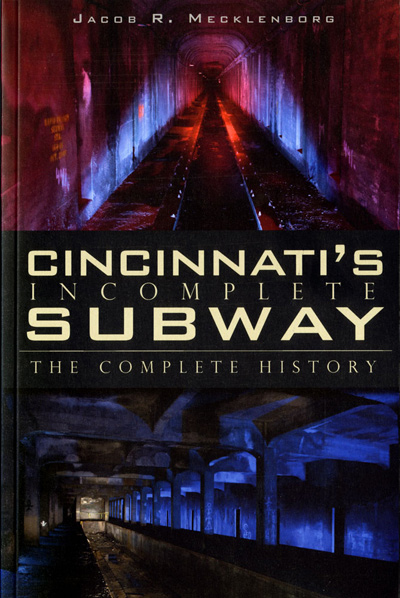
Local author’s history of Cincinnati’s incomplete subway looks to future developments

When Jacob Mecklenborg set out to write a book about the two miles of empty subway tunnel that lie beneath downtown Cincinnati - a catacombish network of concrete that has never heard the clang of a rail car - he had no idea how much history he would uncover."I made the mistake of thinking because I had written an article on it ten years earlier that I had a really big head start, but that was not the case," he said at a book signing at Neon's in Over-the-Rhine. "So much of this story had never been told," he added. His new book  "Cincinnati's Incomplete Subway; The Complete History," covers 150 years of rail development in Cincinnati, most famously one called the Rapid Transit Loop which included the two-mile subway tunnel. The bond issue that funded it did not provide enough money to complete the project once material costs skyrocketed after WWI and, as Mecklenborg's book follows in meticulous detail, repeated efforts to resurrect the tunnel over the next 90 years failed as well.  Mecklenborg argues that while pro-automobile federal policy exacerbated efforts to build the line, local smear-campaigns and inaccurate media coverage were what effectively killed it.A photographer and graphic designer by training, Mecklenborg was commissioned by the History Press to write the book after one of their editors read an article about the subway that he wrote and published on his website, Cincinnati-transit.com.A transit-enthusiast, Mecklenborg warned that the same problems that kept the subway from being built still threaten transit issues in Cincinnati."The struggle for all of us who are interested in improving the public transportation situation in Cincinnati is that the local media does not report state law, federal law, and the transit situation here in an accurate way," Mecklenborg said. "People can say whatever misinformation they want, and they don't get rebuked or fact-checked."One common misconception that the subway failed because rail cars wouldn't fit, is entirely false but still persists, he said. That particular myth was promoted by a group of young politicians who were trying to embarrass the political establishment that built the tunnel.Mecklenborg attributed the recent success of Cincinnati's streetcar campaign to the advent of "fact-checking" web sites that informed local voters about where funding for the system would come.  He believes the original subway tunnel might still be used to house light rail transit someday, and tells his readers what infrastructure improvements would be required to do so.Mecklenborg, who has an encyclopedic knowledge of local transit history, sums up his hopes for the future in the book's introduction: "I believe that this book will help clear the fog surrounding the subject, and in doing so remove the subway's construction and nonuse as a dependable "argument" of anti-rail, anti-city forces."Mecklenborg's book is available through History Press.Writer: Henry SweetsPhotography provided.

Local Envoys Bridge The Gap Between Cincinnati And China

From opening restaurants and exploring the world's most hyped consumer market to forging official ties, a growing number of local ambassadors are building a strong bridge between the Queen City and China.

Rosson Crow

Celebrated painter Rosson Crow was in Cincinnati this weekend to unveil "Myth of the American Motorcycle," an exhibition pairing all new work from Crow with customized American motorcycles painted by local artists.

How top employers leverage social media

Companies across the nation use social media, such as Linkedln, Facebook, and Twitter, to leverage and strengthen the workforce. Bridge Worldwide, a digital and relationship marketing company, promotes exchanging ideas through several avenues such as posting them on the company's internal sites and on the organization's Facebook group. This allows the people to learn about the company and to contribute to an ongoing conversation. Read the full story here.

Procter & Gamble enters Nigeria

Unlike other major companies that flee from African countries, Procter & Gamble plans to stay in Nigeria and build a new plant. They are focused on long-term investment in Nigeria by working in partnership with the Nigerian government. Nigeria will be the business and manufacturing hub for P&G in West Africa and beyond. Read the full story here.

Video A Casino Meets a Neighborhood

Soapbox and Seven/Seventy-Nine take a closer look at an effort to gather community input to ensure the casino being built at Broadway Commons drives development that reflects positively on the neighborhoods surrounding it.

Riverfront Park progress shows signs of things to come

The construction of Cincinnati's Riverfront Park reached a milestone last week when a newly-relocated stretch of Mehring Way opened to the public. The road's relocation required immense infrastructure work, including new foundations for the Roebling bridge, but was integral to the success of the park, project manager Dave Prather said. It was one of many major planning hurtles overcome in the 13 years since the project began."I can still remember the magic marker arcs drawn on a napkin," Prather said. "We had been asking 'how are we going to build a river-front park with a road so close to the river?"The road's new location, a few hundred feet north of the old one, will make room for a large green space, bike path, labyrinth, fountain and other public gathering spaces near the bank of the river. But the features just to the north of the new Mehring Way will be completed first, by next fall. Those will include three levels of public space. At the top level, an event lawn will gently slope from the future Moerlein Brew House to an event stage, bordering the commercial and residential development called The Banks that is being constructed in tandem with the park.Two stories below the lawn, with parking in between, will be more water features and a large set of stairs flanking the Roebling Bridge. A geo-thermally heated visitor's center and bicycle center will also be constructed on that level."If you want to commute into town, you'll be able to bring your bike into the garage, swipe your card, go into men's or women's showers and locker rooms and walk to work," Prather said. "Or that could be your lunchtime workout."Prather, who has nurtured the project along since it's planning began in 1997, said all the massive changes to the riverfront in recent years, including two new stadiums and the re-engineering of Fort Washington Way, have allowed the park to vie for the land and money needed to become the 40-acre project it is today."I'm really glad we didn't build the ideas we had 12 years ago," he said. "There are many more features now."Though he said the project was "on schedule," Prather said several major steps were reached earlier than initially planned due to the availability of federal stimulus money. After the remaining cash comes in, and the adjacent Lot Two parking garage is opened, much of the asphalt to the west of the Roebling Bridge will become green space too.Writer: Henry Sweets Photography by Scott Beseler

Terry Garcia Crews, METRO CEO & General Manager

New METRO CEO & General Manager, Terry Garcia Crews, takes time from packing her belongings in Austin to talk with Soapbox Managing Editor Sean Rhiney about public transportation in Cincinnati.

Cincinnati vs. St. Louis: Which Riverfront Would You Choose?

Urban STL compares the riverfronts of St. Louis and Cincinnati. Although St. Louis has the presence of the famous Saarinen's Arch, Urban STL praises Cincinnati for its more active, inviting, and interesting Central Riverfront Park, it's two stadiums, the National Underground Railroad Freedom Center, and the Moerlein Lager House. Read the full story here.

Our Partners

Taft Museum of Art

We want to know what's on your mind.

Close the CTA

Don't miss out!

Everything Cincinnati, in your inbox every week.

Close the CTA

Already a subscriber? Enter your email to hide this popup in the future.