
Soapdish: Of Dollars and Sense
Columnist Casey Coston says don't blame the streetcar for Cincinnati's budget balancing woes - it might just be part of the solution.
Downtown Cincinnati is the place to live, work, and play populated by restaurants, cafes, bars, arts and culture venues around every corner, plus a long-awaited and busy Kroger's that anchors recently-renovated Court Street Plaza. The downtown urban core is alive with programming, including music during the summer and ice skating in the winter, and features the largest living room 'television' in the region overlooking The Genius of Water at Fountain Square. Downtown has experienced dramatic expansion and population growth with residential developments, including condos and apartments in all price ranges, many of which boast scenic views of the hillsides and the river and offer unparalleled access to nightlife and recreation.

Columnist Casey Coston says don't blame the streetcar for Cincinnati's budget balancing woes - it might just be part of the solution.

Cincinnati ranked second on Daily Finance's "11 Best Cities for Telecommuters" due to its diverse attractions, universities, and affordable living. Daily Finance considered many factors and chose cities with a big-city experience at a small-town price. Cincinnati has plenty to offer as the headquarters for nine Fortune 500 Companies, the host of America's largest Oktoberfest celebration, the second-most fit city in the nation, and the "chili capital of the world." Read the full story here.
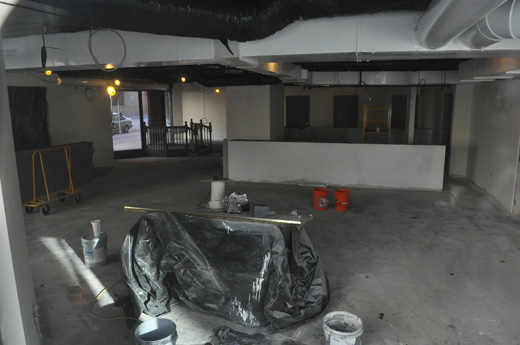
The creative team behind popular bar FB's will unveil their next project, a two-story space-themed lounge and nightclub called Lunar, at 435 Elm St. on December 10.They plan to add a restaurant and outdoor concert pavilion to the complex by next summer, one of the owners Bill Foster said.Foster's first foray into the bar industry was with FB's, the richly-decorated downtown Cincinnati lounge that also hosts a basement dance club called "The Rabbit Hole." To open the establishment, he partnered with Cincinnati nightclub veteran Scott Sheridan. Sheridan had developed the concept after years managing local nightclubs including Club Clau and Purgatory. Foster, who has built a national warehousing business from Cincinnati in the last decade, provided the drive to put it into action, he said. "We started out small just to get the kinks worked out, and now we're ready for a larger project like this," Foster said. "We're going to have a whole campus on this block."The men partnered with Ryan Goldschmidt and Ron Goldschmidt, the building's owners, to create the complex. Their fifth partner is Jimmy Gibson, who worked for a decade as a chef for Jeff Ruby. He will design the menu for Lunar Lounge and direct the upcoming restaurant. Lunar's lounge and nightclub will maintain a futuristic, space-travel theme. Foster said bare concrete walls and an expansive lighting system with a liberal dose of LED's and chandeliers will be the defining decorative elements."We're bringing a lot of new technology to the area," he said. Lunar will also blur the lines between social networking and real-live-partying as an employee will scan twitter feeds of Lunar's guests and display them on monitors throughout the bar. The men also have plans for a rooftop bar that would open in about two years, Foster said.The downstairs portion of the bar, called Lunar Lounge, will be open seven days a week, with the larger upstairs portion open Thursday, Friday and Saturday as well as for special events.Writer: Henry SweetsPhotography by Scott Beseler.
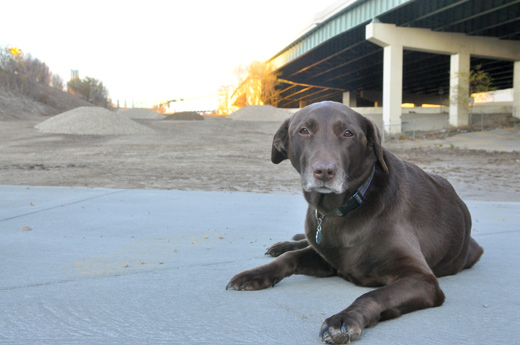
Working, living, or visiting in the downtown area and need an open green space to take your dog? The Downtown Dog Recreation Area will be coming to the east end of Downtown soon. The Park broke ground this month after a long and difficult start - the project initially began three years ago with a budget of $325,000, but after the economy faltered the project was put on hold. But a new project manager, Craig Beachler, and a revised budget, have downtown in place to finally get an off-leash dog play area.The recreation area for dogs and their owners has been funded and supported by local companies, residents, and the City. The City of Cincinnati and the State of Ohio donated the land along with ten trees for the park. The new budget of $75,000 has been supported largely by a $50,000 gift from Procter & Gamble, and $7,000 from the private funds of supporters. The Downtown Residents Council raised 76 percent of the park's annual budget but continues to look for funding from local animal lovers. "For me and for the dogs, it is all about raising more money so we can do this right." Beachler said. "The goal is to spread the word and have peoples' love of dogs play out through their financial donations." When Beachler moved to downtown Cincinnati in 2006, he started a pub-crawl, "Bars Around the Block," to spread the word about the recreation area. The pub crawls have raised $7,000 alone -Beachler will host the sixth crawl this February with all proceeds going towards the dog park. Beachler emphasized the importance of liability and trust with the donations. "I publish the results so that the people who come and contribute know exactly where their money goes. I have accountability in terms of the public and getting the project done and spending the money in the right way," Beachler said.Once completed in 2011, Beachler thinks the park will be widely used by new and old residents."We wouldn't do it if we didn't think people were going to use it," Beachler explained. With the help of donations and volunteer labor, Beachler loves seeing people come together with one common goal in order to accomplish something good for the city. "We are helping create a city where people want to live and don't want to leave. It is a part of the rebirth of downtown Cincinnati," Beachler said. Writer: Lisa EnsmingerPhotography by Scott Beseler.
The 3C passenger rail plan would link Ohio's major cities and provide connections to regional hubs in Chicago and on the East Coast, but Ohio's next governor doesn't want it. How about you Cincinnati?
The Circuit, Greater Cincinnati's IT Association, has a new partner in online market research that allows the region's consumers to give product opinions, earn dollars and give back to their favorite nonprofit.The Circuit recently partnered with Op4G (Opinions for Good) a national, online market research company that gives members cash for their feedback. Op4G also helps fund nonprofits by requiring members to contribute at least 25 percent of those earnings to their favorite nonprofit.Op4G is working with The Circuit's membership to get Cincinnati area opinions, but the site is open to anyone interested in the market research program. This is the first time The Circuit has worked with a market research company. As a nonprofit itself, The Circuit also benefits from the partnership, said President Jim Cunningham."We're promoting it to our members, and we can make money off it. Op4G will pay the individual who takes the survey, then part of it goes to a nonprofit like us. We're also interested because it's an IT-based business," Cunningham said. Op4G's panel is comprised of non-profit supporters and organization from across the country, including alumni groups, civic organizations, charities, and others. Organizations needing consumer insight to improve their marketing decisions turn to Op4G to conduct research among Op4G's members who have agreed to donate a minimum of 25 percent of their compensation to their choice of non-profits."We are always looking for ways in which our organization and members can make positive contributions to our communities, and Op4G provides a simple and effective program that can serve as a catalyst for fund-raising efforts for The Circuit and a variety of local non-profit organizations," said Cunningham.The Circuit is the information technology association for the Cincinnati and Northern Kentucky region and is dedicated to raising awareness for the region’s growing IT community by providing support and services for local technology professionals, companies and institutions. The association’s growing membership consists of a variety of professionals and organizations representing all areas of information technology.Writer: Feoshia HendersonSources: Jim Cunningham, The Circuit and KWPR You can follow Feoshia on twitter @feoshiawrites
The Cincinnati Chapter of the American Institute of Architects (or AIA) has launched a new program aimed at shaping the next generation of leaders in the profession.AIA's VISION: Architect's Leadership Forum launched in mid-November with its first class of area architects from a variety of backgrounds. The 10-person class includes young professionals from large and small firms, as well as sole practitioners.AIA has spent the last year and half developing program curriculum and raising funds for the program. The inaugural class is a mix of architects identified as potential leaders by their employers and an open call to the region's professionals.The program is designed to teach leadership skills to professionals in their 30s and 40s who soon will be tapped as leaders as current leaders begin to retire. About 40 percent of today's industry professionals are 50 or older, said VISION co-chair Miranda Mote."We recognized there was a gap in support for young architects who will have to move up in firms more quickly as CEO and in firm management than those before them," Mote said.To qualify for the program, architects had to be licensed and able to demonstrate experience in the field.There are only a few programs like this in the country. Some of the most recognized are in Kansas City, Boston and Atlanta, Mote said.The 10-month program includes four keynote lectures by nationally recognized speakers, seminars, workshops, professional networking opportunities, panel discussions and a group service project. Throughout, participants will be asked to consider challenge's that Cincinnati faces including legacy, design, project delivery, politics, management practices, community, education and economics. The class takes place once a month.Keynotes will be publicized and open to the public, Mote said. Each day following the keynote presentation, VISION participants will work one on one with the speaker and offer short presentations on the topic each speaker covers. They will also address these topics in a blog that will be available at aiacincinnativision.com. AIA is working with nationally recognized Architect Magazine to offer blog content to a wider audience of professionals in either an online or print format, Mote said.The presentations are key to building leadership skills, she added."Communication is one of the key skills lacking in the architect community, and this is where the presentation comes in developing those skills," Mote said.Writer: Feoshia HendersonSource: VISION co-chair Miranda MoteYou can follow Feoshia on twitter @feoshiawrites
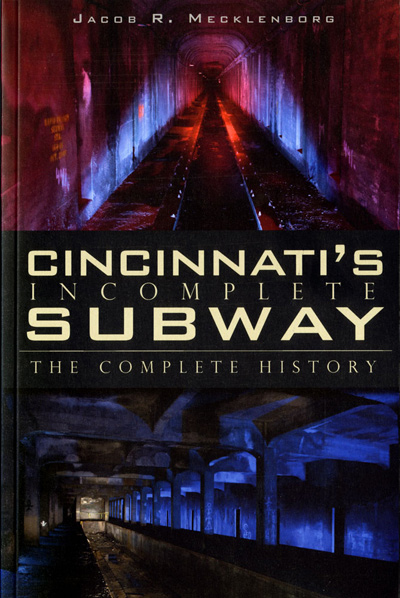
When Jacob Mecklenborg set out to write a book about the two miles of empty subway tunnel that lie beneath downtown Cincinnati - a catacombish network of concrete that has never heard the clang of a rail car - he had no idea how much history he would uncover."I made the mistake of thinking because I had written an article on it ten years earlier that I had a really big head start, but that was not the case," he said at a book signing at Neon's in Over-the-Rhine. "So much of this story had never been told," he added. His new book "Cincinnati's Incomplete Subway; The Complete History," covers 150 years of rail development in Cincinnati, most famously one called the Rapid Transit Loop which included the two-mile subway tunnel. The bond issue that funded it did not provide enough money to complete the project once material costs skyrocketed after WWI and, as Mecklenborg's book follows in meticulous detail, repeated efforts to resurrect the tunnel over the next 90 years failed as well. Mecklenborg argues that while pro-automobile federal policy exacerbated efforts to build the line, local smear-campaigns and inaccurate media coverage were what effectively killed it.A photographer and graphic designer by training, Mecklenborg was commissioned by the History Press to write the book after one of their editors read an article about the subway that he wrote and published on his website, Cincinnati-transit.com.A transit-enthusiast, Mecklenborg warned that the same problems that kept the subway from being built still threaten transit issues in Cincinnati."The struggle for all of us who are interested in improving the public transportation situation in Cincinnati is that the local media does not report state law, federal law, and the transit situation here in an accurate way," Mecklenborg said. "People can say whatever misinformation they want, and they don't get rebuked or fact-checked."One common misconception that the subway failed because rail cars wouldn't fit, is entirely false but still persists, he said. That particular myth was promoted by a group of young politicians who were trying to embarrass the political establishment that built the tunnel.Mecklenborg attributed the recent success of Cincinnati's streetcar campaign to the advent of "fact-checking" web sites that informed local voters about where funding for the system would come. He believes the original subway tunnel might still be used to house light rail transit someday, and tells his readers what infrastructure improvements would be required to do so.Mecklenborg, who has an encyclopedic knowledge of local transit history, sums up his hopes for the future in the book's introduction: "I believe that this book will help clear the fog surrounding the subject, and in doing so remove the subway's construction and nonuse as a dependable "argument" of anti-rail, anti-city forces."Mecklenborg's book is available through History Press.Writer: Henry SweetsPhotography provided.
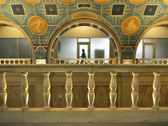
Unknown to many current Queen City residents, the Cincinnati Stock Exchange operated from 1885 until 1995 and was a leader in the technological transformation of the global securities markets. Soapdish columnist Casey Coston looks back at the CSE's history via the innovative work of UC journalism students.
Our Partners









We want to know what's on your mind.

