Dayton

In 1867 two Northern Kentucky communities, Jamestown and Brooklyn, merged to create the city of Dayton. Back then, before the Army Corps of Engineers raised the level of the Ohio River, Dayton's swimmers and sunbathers took advantage of the natural sand bar and gently curving coastline of what was then known as Manhattan Beach.   Today's Dayton is committed to revitalizing its historic core while making way for profile-boosting projects. Major developments include extending the city’s riverfront presence eastward by adding residential and commercial opportunities at Manhattan Harbour

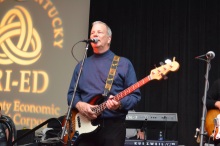
Region’s leaders gather to celebrate 25 years of Tri-ED

In 1987, no one knew if fledgling efforts to bring together Kentucky's northern counties would succeed. Twenty-five years later, a region gathered at Northern Kentucky University for a brief look back - and an aggressive look forward.

Faces Without Places founder wants to see homeless program expand

Karen Fessler has a message she wants you to hear loud and clear: Faces Without Places is alive, well and kicking.  For years, the nonprofit, grassroots organization that has provided nearly $1.5 million in educational support for homeless children in Greater Cincinnati was affiliated with the Cincinnati Public Schools. But about two years ago--and for a variety of reasons--the organization split with the school system, says Fessler, who is a board member and a founding member of the 17-year-old group.   But its mission remains intact, says Fessler.  “The most important part of the program is that we get kids out of shelters, we get kids off the streets and we show them that education is a way to experience a larger world,’’ says Fessler. “We want to broaden our reach. We want to broaden our horizons.”  Fessler declines to discuss what led to the parting of ways, but adds the founders of the program all left their jobs at CPS as well.   “But none of us lost our passion for the kids and the mission of Faces Without Places,’’ she adds. “I want people to know that we are here, and we are committed to providing services. We are toughing it out through thick and thin--for the kids.”  The nonprofit helps about 3,000 school children annually in Greater Cincinnati. Last year, the group provided 7,702 services to 3,013 children, according to its website. Those services included providing taxi services to school for 112 students, uniform vouchers for 777 students, backpacks and supplies for more than 839 students and Payless gift cards for 320 students so they could get a new pair of shoes, a luxury for many, Fessler says.  The nonprofit is best known for its Yellow Bus Summer Camp, which completed its 15th year this past summer. Last year, 152 children attended the eight-week camp that focuses on reading and day trips.  Earlier this month, the group’s biggest fundraiser--the Yellow Bus Ball--raised more than $23,000, most of which will go to fund the camp.   “The ball is critical because we have to have money to pay teachers and buy supplies,’’ Fessler says. “We can get grant money for field trips, but the fundraiser really helps us be able to put on the camp to the degree we have always done it.”  Fessler has worked with thousands of homeless children over the years, and she readily admits she is biased toward teens.   “A lot of people don’t realize this, but these kids are completely out on their own; they are either staying at friends' or living eight, nine, 10 kids piled up in an apartment,’’ she says. “They are squatting and some are living on the streets trying to negotiate life … they are all living life on the edge. I am most impressed by their sheer tenacity and their desire to find a better life.” Do Good:  • Register for the Mt. Adams Yellow Bus Pub Crawl on Saturday, Nov. 17.  • Attend the 5th annual Chili Taste Off on Dec. 9 at Northside Tavern.  • Contribute to Faces Without Places' wishlist of school and personal hygiene supplies.  • Sign up for the monthly email newsletter.  • Give back while you shop.  By Chris GravesChris Graves is the assistant vice president of digital and social media at Powers Agency

Grant lets Kentucky school children learn about fruits, veggies

What happens when a nurse and librarian get together in a rural Campbell County school where many students lack access to fresh fruit and vegetables?  An integrated education plan that enables kids to read about fruits and vegetables, plant their own gardens as well as mathematically graph the likelihood that their food will grow.  The Silver Grove Independent Schools was awarded a $400 Learning Links grant from the Greater Cincinnati Foundation this fall to buy more than 40 books on the topic of fruits and vegetables. The grant was among $97,000 the foundation awarded to 109 schools in the Greater Cincinnati and Northern Kentucky area this year. The grants, of up to $1,000 each, are for creative and interesting programs or events in classrooms.   The books at Silver Grove are aimed at all learning levels and include cookbooks and resource books, says Julie Kaeff, the school’s family resources and Youth Service Center director.   “We have a high rate of free and reduced lunch kids  - about 86 percent – and we discovered that many have very little exposure to fresh fruits and vegetables, beyond bananas and apples,’’ she says. “We hope that through teaching them there are other options, that when given the opportunity, they will make wiser choices.”  The previous school nurse and librarian – who continues to volunteer at the school – came up with the idea last year amid concerns about childhood obesity, Kaeff says. Through conversations with the kids, the nurse realized that many of the students lacked access to fresh fruits. They also lacked knowledge about where their food comes from. The duo crafted the plan that also included applying for federal funding from the Fresh Fruit and Vegetable Program to provide fresh snacks three days a week.   And while they did not win the federal funding, several teachers are bringing in various fruits and vegetables to introduce students to various foods, including raspberries, squash, pumpkins and zucchini.   “There are a lot of students who think it’s all just chicken nuggets, hot dogs and hamburgers," Kaeff says. "They think all fruits and vegetables are disgusting. We are trying to change that.”  Kaeff says teachers and students will take their in-classroom learning outside to a newly constructed greenhouse, which was donated by La Farge North America, a construction company based in Silver Grove. Last spring, some students started tomato plants from seeds and grew the plants in the greenhouse and then took them home over summer break.  “We hope to plant various different things in the spring,’’ she says.   Kaeff said the books are just the beginning. She said she hopes that parents or grandparents might even check them out to learn about fresher options and more diversified menu planning. She also hopes the school can offer some workshops for adults, including showing how to eat healthy on a budget.    “Maybe, just maybe, this will open the door,’’ Kaeff says. “Maybe the kids will say: ‘Hey Mom, hey Dad, can we have this?”  Do Good  · View the complete list of Learning Link recipients (pdf).  · Give to the Silver Grove canned food drive.  · View the school’s photo gallery and video gallery.  · To learn more about the program, email Kaeff. By Chris Graves Chris Graves is the assistant vice president of digital and social media at the Powers Agency. 

NKY says riverfront open for business

The riverfront is back! That's the message delivered by Northern Kentucky's leaders at Developers Day on Sept. 26.  Reports the Enquirer:  Northern Kentucky leaders believe the south side of the Ohio River is on the brink of a renaissance: Developments such as The Ascent at Roebling’s Bridge and SouthShore have renewed urban living; Gateway Community and Technical College’s new Urban Campus could bring up to 5,000 students into Covington; and urban industry clusters such as biotech and health information technology are growing. Read the full story here.

High-tech, health care will grow jobs in NKY through 2020

The Greater Cincinnati / Northern Kentucky region ranks in the top 5 in terms of expected total employment by 2020. We take a  close look at the 2020 Jobs Outlook report and discuss what's needed for NKY to realize its potential for growth.

Six NKY companies make the Inc. 5000

It's a sign of Northern Kentucky's accelerating growth and potential: Six Northern Kentucky-based companies have been recognized among the fastest-growing private companies in America by the 2012 Inc. 5000.  NKY is the proud home of 2012 Inc. 5000 companies The Eisen Agency, TiER1 Performance Solutions, Omega Processing Solutions, Lohmann Technologies, Parkway Products, and RWI Transportation. The list, compiled by Inc. Magazine, is ranked according to revenue and percentage growth over a four-year period. "We congratulate these companies and their leadership teams on their success and growth," says Karen Finan, senior vice president, Northern Kentucky Tri-ED. "They have contributed much to Northern Kentucky's thriving and diverse business community." Year after year, more Kentucky-based companies are making the list, which maps the vitality of the nation's independent entrepreneurs. In 2012, 47 Kentucky-based companies made the list, up from 46 in 2011 and 44 in 2010.   Inc. 5000 companies map the vitality brought to the nation's economy by independent entrepreneurs. The median growth rate of 2012 Inc. 500 / 5000 companies is an impressive 97 percent, and its honorees have created over 400,000 jobs in the past three years. Aggregate revenue among Inc. 5000 companies tops $299 billion.  See a complete list of all the Kentucky companies on the Inc. 5000, including company profiles and an interactive database that can be sorted by industry and other criteria, here.

Adding patients to healthcare’s IT equation

Steve Deal has one problem with the infusion of technology into today’s healthcare model: it leaves out the patient. “We have the government pouring money into health IT on the providers’ side, but patients don’t have anything,” he says. Along with co-founders Rene Raphael Vogt-Lowell and David Pingleton, Deal launched IFG Health, which is now in the beginning stages of launching a host of apps aimed at helping patients and families work more efficiently with their physicians and other healthcare providers. Their first app, the IFG Provider Journal is available in web and mobile versions, and has a Facebook-like interface that allows users to track vital statistics, such as height, weight or blood pressure, record details of care plans during appointments and note progress via text and photos. In many ways, the app is an electronic version of the notebook many people take to their physician’s office, and may be especially useful for caregivers who help a loved one manage complex conditions. Unlike a physical notebook, the app has search and sort functions for ease. Deal says that having information available – even basics that should be in a provider’s electronic medical record – helps appointments flow smoothly when time is limited. Also, not every physician or nurse is comfortable with EMRs, Deal points out. A video on the company’s website says physicians wait an average of 10 to 15 seconds for the answer to a question before they move on, with or without the necessary information. Deal has experienced this firsthand as a caregiver for his father and mother-in-law, but doesn’t fault physicians. Today’s primary care providers, he points out, “go from one life crisis to another every 15 minutes,” facing burnout along the way. He hopes that organized patients will be able to partner better with their doctors, and plans to unveil a host of new web and mobile apps to help. By Robin Donovan

Adding patients to healthcare’s IT equation

Steve Deal has one problem with the infusion of technology into today’s healthcare model: it leaves out the patient. “We have the government pouring money into health IT on the providers’ side, but patients don’t have anything,” he says. Along with co-founders Rene Raphael Vogt-Lowell and David Pingleton, Deal launched IFG Health, which is now in the beginning stages of launching a host of apps aimed at helping patients and families work more efficiently with their physicians and other healthcare providers. Their first app, the IFG Provider Journal is available in web and mobile versions, and has a Facebook-like interface that allows users to track vital statistics, such as height, weight or blood pressure, record details of care plans during appointments and note progress via text and photos. In many ways, the app is an electronic version of the notebook many people take to their physician’s office, and may be especially useful for caregivers who help a loved one manage complex conditions. Unlike a physical notebook, the app has search and sort functions for ease. Deal says that having information available – even basics that should be in a provider’s electronic medical record – helps appointments flow smoothly when time is limited. Also, not every physician or nurse is comfortable with EMRs, Deal points out. A video on the company’s website says physicians wait an average of 10 to 15 seconds for the answer to a question before they move on, with or without the necessary information. Deal has experienced this firsthand as a caregiver for his father and mother-in-law, but doesn’t fault physicians. Today’s primary care providers, he points out, “go from one life crisis to another every 15 minutes,” facing burnout along the way. He hopes that organized patients will be able to partner better with their doctors, and plans to unveil a host of new web and mobile apps to help. By Robin Donovan

Northern Kentucky and Cincinnati make Top 50 Cities for Global Trade

In Global Trade's Top 50 Cities, Northern Kentucky / Greater Cincinnati region ranks number 16 -- and boasts the best cost structure on the list, ranking as the least-costly metropolitan area for businesses in the U.S. Low rates for facility leasing, transportation and property taxes contribute to the Northern Kentucky and Cincinnati region's competitive ranking.  Northern Kentucky and Cincinnati have a business cost index 4.1% under the U.S national baseline of 100. The region also offers proximity to consumers, suppliers and competitors, along with access to major ports on the Ohio River, five airports and three interstate highways. Read more here.

Northern Kentucky Developers’ Day is Sept. 26

Northern Kentucky's "front door" is open -- for new businesses, shops, hotels, and residents.  The region's riverfront cities -- Bellevue, Covington, Newport, Dayton, Fort Thomas, and Ludlow -- comprise Northern Kentucky's urban core and present a tremendous growth opportunity for developers. That's why the riverfront will be the focus of the third-annual Developers' Day, hosted by Northern Kentucky Tri-ED, Southbank Partners, and the Catalytic Fund, in partnership with several local sponsors. Event organizers promise a fast-paced, high-impact day, which begins at 10 a.m. at the Newport Aquarium. "We are a dynamic community offering incredible development projects for the right professional," said Jack Moreland, President of Southbank Partners. "Northern Kentucky Developers' Day will serve as the catalyst for the right match." Developers will learn about immediately available residential and commercial opportunities, as well as creative financing options and community-led projects that are driving Northern Kentucky forward. What sets this year's event apart, says Karen Finan, Senior Vice President of Tri-ED, is that it will be a one-stop shop for developers who are ready to make a deal.  "We'll have the right folks there at the right time and at the right place to answer questions, make connections and move things forward for the developer -- and for Northern Kentucky," Finan says. "It's really a project-oriented event." The day concludes in grand fashion with a scenic cruise on River Queen, where developers can see the area's potential with their own eyes and network with city leaders and business allies. "Northern Kentucky is known for the ease in which the community conducts business and we intend to welcome developers of all types – residential, commercial, industrial, retail – to the region," says Jeanne Schorer, President of the Catalytic Fund. "We will provide them the tools to succeed in Northern Kentucky's urban core."  Learn more about Northern Kentucky Developers' Day and register here.

Our Partners

Taft Museum of Art
Warsaw Federal

Don't miss out!

Everything Cincinnati, in your inbox every week.

Close the CTA

Already a subscriber? Enter your email to hide this popup in the future.