Dayton

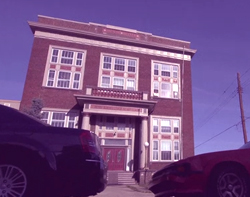
In 1867 two Northern Kentucky communities, Jamestown and Brooklyn, merged to create the city of Dayton. Back then, before the Army Corps of Engineers raised the level of the Ohio River, Dayton's swimmers and sunbathers took advantage of the natural sand bar and gently curving coastline of what was then known as Manhattan Beach.   Today's Dayton is committed to revitalizing its historic core while making way for profile-boosting projects. Major developments include extending the city’s riverfront presence eastward by adding residential and commercial opportunities at Manhattan Harbour

Art’s impact at Camp Carnegie

At Camp Carnegie, children from around the region come together to brainstorm, write a script, perform a play and create their own scenery and costumes. Still, for Alissa Paasch, who serves as the camp's education director, the goal is not to make sure that every child becomes an artist. Instead, she hopes that young people involved "become well-rounded human beings who know how to communicate, problem solve, who care about each other, and who are using the arts to spur their interest in the world.”   Through this year’s theme, Opposite Land, participants use their imaginations to prompt one another’s creative instincts. Paasch says the children’s caring attitudes find ways to the forefront through the process.  “It’s so much about cooperation and collaboration, and we’re always discussing and responding to things,” Paasch says. “We were doing an activity about imagination and how important it is for us to imagine things and use our theater tools to bring it to life, so then as we were talking, we’re saying why it’s important to keep using our imagination, keep it fresh—even as adults—and one little girl says, ‘In order to care about or work with others, you have to be able to imagine how they feel so you can actually make the right choices.’” It’s these kinds of moments, Paasch says, that make her realize that even as a teacher who plans each lesson, she can learn from the young participants.  The artistic process at Camp Carnegie enables children not only to learn and grow with one another, but to experience theater and all its elements in just two weeks, which culminates with their own original productions. “We want to make sure they understand there’s a lot of hard work and perseverance that has to go into creating a piece of theater,” Paasch says. “We want them to feel proud of all the work they’ve done at the end.”  Do Good: • Purchase a ticket to Suits that Rock to support The Carnegie's educational programming.  • Attend a performance to support the summer campers' work. Choose a session and attend on the final day of the workshop at 4:30 p.m. • Support The Carnegie by donating.  By Brittany York Brittany York is a professor of English composition at the University of Cincinnati and a teacher at the Regional Institute of Torah and Secular Studies. She also edits the For Good section of SoapboxMedia. 

Children, Inc. merges with VISIONS, extends reach to Ohio

The best communities have a lot of people who get involved, according to Rick Hulefeld, founder and executive director of Children, Inc.  Children, Inc., a Northern Kentucky based nonprofit, aims to ensure that young people are successful both in school and in life. And a primary way in which the organization succeeds in doing that is by developing partnerships with schools and other community-based nonprofits in order to maximize resources to help as many as possible.  Its most recent partnership is with Cincinnati’s VISIONS Community Services, which sought out Children, Inc., as a partner for a merge. With the merger comes a new division of Children, Inc., which will now operate in both Kentucky and Ohio. As a result of the merger, Children Inc. will continue its programs, which include everything from before- and after-school care to service learning initiatives in schools, while building its programming by incorporating VISIONS’ multi-generational approach.  “They had something unique,” Hulefeld says. “They had a certified family counselor on staff who would meet on a regular basis to help—that’s a model that needs to be carefully expanded and taken to the next level. But we want to do something VISIONS has already been doing, and then bring a lot more resources to it.”  One way of doing that, Hulefeld says, is to partner with other organizations that have similar goals. “There are organizations who really want to help families to become self-sufficient,” Hulefeld says. “Sometimes, little things get in the way of big dreams.”  If organizations could partner to provide families with funds for bus fare to get to job training, and if they could also enroll their children in the center, Hulefeld says the children would ultimately do better in school “because they won’t always be at the mercy of the next financial crisis.”  “We can’t live in communities where just a few people do everything,” he says. And it’s this motto that makes its way into the service learning initiatives that Children Inc. sets up in local schools so that students can learn by doing, while also giving back and making a difference during the process.  Recently, the organization set up a project for a group of first grade students who were learning about the effects of the sun.  “If you get too much of it, it’s bad,” Hulefeld says, so Children’s Inc. provided the school with funds to purchase bracelets that would change color based on how much sunlight the wearer was getting. The students then sold the bracelets and made $843, which they gave to Shriners Hospital for Children to help provide funds for burn victims.  “What you really want to teach kids is that you can make a difference—and not some day—you can make it now,” Hulefeld says. “We all know that we cannot by ourselves do what the community needs us to do. None of us can do this by ourselves, but we can get together with other people and figure out, ‘How do we do what we’re doing better?’”  Do Good:  • Like Children, Inc. on Facebook. • If you are a teacher interested in a service learning program, contact Children, Inc. for free assistance. • Contribute by making a donation to Children, Inc.  By Brittany York Brittany York is a professor of English composition at the University of Cincinnati and a teacher at the Regional Institute of Torah and Secular Studies. She also edits the For Good section of SoapboxMedia. 

Life Learning Center instills confidence, facilitates job placement

Since 2006, the Life Learning Center in Covington has been working to help at-risk individuals find hope, own past mistakes and learn how to successfully move forward so they can achieve their goals.  Participants who are committed to bettering their lives work through a 16-week educational program where they attend classes centered on topics from stress management to financial management. They also work one-on-one with a life coach who helps them set and define goals, and work through some of the issues that may be holding them back.  Once participants have completed the Foundations for a Better Life and Pillars of Growth components of the program, they move on to Working for a Better Life, where they learn how to craft effective résumés, apply for employment and engage in mock interviews so they feel more prepared for future job placement. Erich Switzer, director of awareness and fundraising at the Center, says there are many individuals who are either afraid of or discouraged by the process of job searching and that the NKYLLC helps them move past those fears.  “I saw the need of the folks we serve—people just really struggling, and seeing HR as the enemy—almost that they’re not people or that they’re out to get them or that they come up with reasons to not hire people,” Switzer says. “So we have people from other companies—HR representatives—come in and do mock interviews with them, do an HR panel, and this is where we start breaking down some of the barriers. They’re real people, they do want to hire you, but you’ve got to be able to answer the questions, and you’ve got to have the skill sets to be employed.”  Forty percent of the individuals the NKYLLC has served have criminal backgrounds, and one of the barriers they face is figuring out how to talk about their employment gaps. The nonprofit addresses the issue by teaching classes on effective oral communication.  “Why people are stuck for so long is they really can’t change the way they’re communicating about what’s taken place, so when they sit down and talk to an employer—I’ve seen it when we’ve done mock interviews—it’s just a purposeless sort of rambling,” Switzer says.  “So we help them tighten that up and move forward. You’re already in front of the employer, so they have some level of interest in potentially hiring you, so you don’t want to spend too much time on a potential negative. You want to get to the positive where you can sell yourself and talk about your skills.”  The NKYLLC helps individuals come to understand the positive assets they have to offer through StrengthsFinders and a variety of inspirational activities. And since the nonprofit’s inception, more than 800 participants have found jobs.  “If there’s one word that sums up the Center, it’s about providing hope for people who likely don’t have any," says Switzer. "We try to start building them back up with positive affirmations rather than the stuff they’ve been listening to.”  Do Good:  • Donate to the Life Learning Center.  • Volunteer if you are an individual who would like to help lead classes or if you are a business who would be interested in participating in mock interviews or panels.  • Like the Life Learning Center's Facebook page and share the page with your friends, especially if you know of someone who could benefit from the center's services.  By Brittany York Brittany York is a professor of English composition at the University of Cincinnati and a teacher at the Regional Institute of Torah and Secular Studies. She also edits the For Good section of SoapboxMedia.   

UCAN celebrates 50,000 low-cost spay, neuter surgeries in April

Melanie Corwin has spent the past several years volunteering with local no-kill shelters, and while she recognizes the importance of finding homes for pets, she says the root problem that leads to their abandonment is what needs to be addressed.   “You see the conditions of the animals when they came in, and it breaks your heart,” Corwin says. “I poured all my time and attention when I first started volunteering to try to get these animals adopted, but it gets very disheartening when they continue to leave but more fill the space right away. You’ve got to stop the unwanted ones from being born.”  According to Corwin, 10,000 people are born on a daily basis, compared to 70,000 kittens and puppies. And more than half of those, she says, are unwanted litters.  Corwin now serves as executive director at the United Coalition for Animals—an opportunity she says she jumped at when it was offered to her because she can now work toward eliminating that root problem: a lack of access to affordable spay and neuter services. UCAN’s clinic opened in April 2007, and as its sixth-year anniversary approaches, the organization expects to celebrate its 50,000th spay/neuter surgery.  The clinic’s ultimate goal is to eliminate the killing of the more than four million healthy or treatable dogs and cats that are euthanized in the United States each year because of overcrowded and underfunded shelters.  “It’s documented in so many research projects that the intake rates at shelters go down significantly when there’s a low-cost spay/neuter facility in the area, so that’s our goal,” Corwin says.  The clinic not only provides affordable spay/neuter surgeries to the 24 counties it serves, but it also provides free transport to various areas in the Tri-State that have limited access to public transportation or veterinary care.  “We just helped a person who had 49 cats, so we did a special Friday transport just for her and went out and got all her animals,” Corwin says. “Our transport driver has a really good heart, and if someone doesn’t have transport, we will find it for them.”  Corwin says UCAN does everything in its power to prevent the problem of unwanted litters. Due to a generous grant from the Joanie Bernard Foundation, the clinic provides free surgery for anyone who brings in a trapped feral cat or who is taking care of a stray, Corwin says.  Additionally, Corwin says the organization will never turn anyone away. If someone can’t afford the low-cost spay/neuter, UCAN will find a donor.  “I just hope people make the connection,” Corwin says. “I know they see ads and things of fuzzy, cute animals to adopt at shelters, but I’d just love for them to make the connection that even though they pay to get that one out, another one’s just going to fill its spot unless we solve the problem.” Do Good:  • Like and share UCAN's Facebook page, and let your friends know low-cost spay/neuter is available to them. • Donate so UCAN can continue to increase its efforts. UCAN also accepts items if you prefer to make a non-monetary donation. • Volunteer with UCAN. By Brittany York Brittany York is a professor of English composition at the University of Cincinnati and a teacher at the Regional Institute of Torah and Secular Studies. She also edits the For Good section of SoapboxMedia. 

Architecture firm engages Covington students to add graffiti to Pike Street

Ben Eilerman says he realized his love of architecture during his adolescent years at Covington Catholic High School.  As a professional in the field at Hub+Weber, he has the opportunity to engage in educational outreach with other students who have that same appreciation for art at the same age he did. Hub+Weber’s latest venture, which not only engaged students in artmaking but also gave them real-world experience, involved Holmes High School’s graffiti club and visual communications class.  Located in Covington since the firm’s founding nearly 40 years ago, Hub+Weber relocated for the first time last year. Though it maintained its roots in the area, the firm moved from its old home on Greenup Street to the city’s former train station on Pike Street.  “Behind it are the old passenger stairs up to an elevated rail line, and that area is largely abandoned,” Eilerman says. “[It had] that kind of urban decaying aesthetic to it that we were drawn to, and we wanted to use that space and address it from our standpoint, and then also to start to make the city aware of it.”  So Hub+Weber reached out to the Center for Great Neighborhoods, who put the firm in touch with Donny Roundtree, the visual communications teacher at Holmes.  “We talked to him and saw that this was a great opportunity to bring his students down and do a real-life project and build it into something bigger, as far as his curriculum goes,” Eilerman says.  So the two joined forces to provide students with the opportunity to create an eight-foot by 16-foot graffiti art mural.  “The students explored different techniques so each of the panels read as an individual panel, and as it draws into the center, it starts to be defined more as a singular mural,” Eilerman says. “It has the background of the Covington skyline across the back, and then it has two trains coming out of the center from a tunnel with the word ‘Pike’ in the middle.”  Eilerman says the area surrounding Pike has undergone a renaissance over the past few years, so the firm wanted to find a way to contribute by livening up the area while also reaching out to a local school district.  The mural is currently on display inside the building, and a week ago, the students showed off their work at a gallery opening hosted by Hub+Weber. They received feedback from local designers who gave advice about what it means to “take the arts into a profession,” Eilerman says.  This month, the mural will inhabit its permanent home—below the underpass where it will be visible from the sidewalk and street for all to see.  “They spent about six months or so on this,” Eilerman says. “We really acted as a client—they brought the sketches and they talked about what their vision was, and we talked about what ours was, and they had to mesh that. They had to provide a proposal for their work—and I think it was a big benefit to the students.”  Do Good:  • Support the arts in your local school district.  • Support Holmes High School's Nordheim Gallery. • Like Hub+Weber on Facebook.  By Brittany York Brittany York is a professor of English composition at the University of Cincinnati and a teacher at the Regional Institute of Torah and Secular Studies. She also edits the For Good section of SoapboxMedia. 

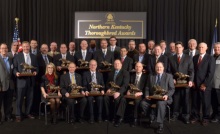
Northern Kentucky recognizes 2013 Thoroughbreds

Twenty-four new companies and expansion projects in 2012 are projected to create nearly 6000 jobs in Northern Kentucky and add $438M in value to the region's economy. Tri-ED's annual report shares more about these engines of growth. 

NKY celebrates educational leaders

When it comes to preparing students to become future leaders and contributors to society, schools have a huge responsibility. And while their work is often recognized from within, it’s not often enough that it's honored on a community-wide basis.   The Northern Kentucky Education Council and the Northern Kentucky Chamber of Commerce seek to remedy that, however, with their 2013 Excellence in Education Celebration—though it’s not just the work of students and educators that they plan to recognize.   “We started thinking about the awards dinner and others in the community who are also driving action in the excellence in education besides our educators, and realizing it goes beyond the scope of the school day,” says Polly Page, NKYEC’s executive director. “It’s the responsibility of our entire community to make this happen for our children.”   According to Page, students, teachers, administrators, school board members, mentors and businesses within the community all play a role in the education of younger generations, and it’s important to come together to let those individuals and organizations know that their work does not go unnoticed.   Students will be recognized in various categories for academic performance and leadership skills. And this year, there’s a new award that recognizes one’s ability to overcome obstacles and succeed in school, despite barriers that may have occurred along the way.   “Those stories were really very heartwarming, and folks don’t really think about Northern Kentucky having students with a lot of trials and tribulations,” Page says. “But these were really pretty poignant about what the students have experienced in their lifetimes.”   With educators, businesses and community members, it’s all about what they’re doing “to go beyond the requirements” at their positions, Page says.   “There are many companies in Northern Kentucky that have a solid partnership and are really thinking about ways they can make a difference in the classroom,” says Page. “Employees are working in the classroom and teaching side by side with instructors and working with students.”    Kentucky was ranked 10th in the nation in Quality Counts this year, which Page says is huge because the state was more than 30 positions behind that ranking in past years. But it’s all about moving forward and making sure “students and young adults are prepared for college.”   “We want to take it up and meet national standards,” Page says. “It’s a time for everybody to just hit the pause button and take some time to celebrate what’s going on in our community—who is driving action?”  Do Good:  • Register to attend the 2013 Excellence in Education Celebration, which takes place March 28. • Volunteer as a mentor or literacy coach in the One to One program. • Encourage your business to partner with its local school district in the B.E.S.T (Business Education Success Teams) program. By Brittany York Brittany York is a professor of English composition at the University of Cincinnati and a teacher at the Regional Institute of Torah and Secular Studies. She also edits the For Good section of SoapboxMedia. 

Video DAAP Girls: Kate

Local band DAAP Girls' debut music video from their latest release, "Tape Songs," which was recorded at The Lodge, a Northern Kentucky art academy opening later this year. Video courtesy of DAAP Girls. 

SpringBoard grads infuse city with creative startup energy

Laura Chenault took an abandoned garage on Spring Grove Avenue and transformed it into a space for everything from filming indie documentaries and music videos to hosting cooking classes, dinner parties and dance parties, too. But she didn’t do it alone.

ESCC helps nonprofits maximize output

In 1995, a small group of retired business executives came together with the intent of giving back to their community by investing their time and talents in work that would assist nonprofits. Now, nearly 18 years later, Executive Service Corps of Cincinnati is the recipient of an $85,000 award that will help more than 130 volunteers provide low-cost, high-quality strategic thinking, planning, training and coaching to other nonprofits in need.  The recent funding will help the ESCC implement its Community Benefit Business Model, which, according to Andy McCreanor, executive director and CEO of the organization, is a model that has essentially always existed within the nonprofit, but has now been refined and strengthened. The model helps nonprofits maximize results so that they may receive additional funding to better fulfill their missions, which ultimately works to improve the communities they serve. “It enables investors to get more out of the nonprofits that they’re investing in, and secondly, it helps the nonprofits because we’re affordable," says McCreanor. "We’re merely a vehicle so that the community gets the benefit that they’re trying to get." The ESCC has worked on long-term projects with more than 500 nonprofits in Cincinnati, Northern Kentucky and Southeast Indiana since 1995, including most recently the Jewish Federation of Cincinnati. ESCC also offers a 10-month program at its Nonprofit Leadership Institute each year; and at its culmination in June, more than 100 nonprofit leaders from Cincinnati will have graduated.  McCreanor says that because of the recent economic downturn, nonprofits have suffered and organizations are reevaluating and assessing their goals and missions. “We’re here to help,” he says. “If you’re struggling out there, it really doesn’t cost anything to talk about what you’re dealing with, and if in fact there is a way for us to help, it’s going to be done at a very low cost, so it’s kind of the best of all worlds.”  Do Good: • Sign up to attend classes at the Nonprofit Leadership Institute. • Volunteer your business skills and experience to serve other nonprofits. • Reach out to the ESCC if you are a nonprofit that could benefit from its services. By Brittany York  Brittany York is a professor of English composition at the University of Cincinnati and a teacher at the Regional Institute of Torah and Secular Studies. She also edits the For Good section of SoapboxMedia.
Our Partners

Taft Museum of Art
Warsaw Federal

Don't miss out!

Everything Cincinnati, in your inbox every week.

Close the CTA

Already a subscriber? Enter your email to hide this popup in the future.