Corryville

Often lumped in with Clifton, Corryville has its own special mix of residential and retail built along a business district that runs the length of Short Vine. Home to music fan favorites like Bogart's live concert hall and Mike's Music's collection of vintage guitars; the Public Library's branch in the handsomely renovated Carnegie building; and UC's Niehoff Urban Studio headquartered in a turn-of-the-century dance hall across the street.

Big plans in the works for Cincinnati

As many areas of Cincinnati are being rejuvenated, including OTR and Washington Park, the City of Cincinnati approved a comprehensive approach to focus on development in the city as a whole, not just targeted neighborhoods.  Last Friday, the City Planning Commission approved and adopted Plan Cincinnati, which was designed with input from residents. The Plan is an opportunity to strengthen what people love about the city, what works and what needs more attention, says Katherine Keough-Jurs, senior city planner and project manager.   The idea is to re-urbanize suburbanized Cincinnati; in a sense, to return to the strengths of the city's beginnings. Cincinnati was established just after the American Revolution in 1788 and grew into an industrial center in the 19th century. Many of those industries no longer exist in the city, which is part of why Cincinnati has become more suburbanized in the past 50 years. One of the long-term goals of the Plan is to bring new industries to Cincinnati.   With a new approach to revitalization, Cincinnati is blazing the trail for other cities. With a focus on building on existing strengths rather than tearing down structures and creating new ones, the Plan aims to capitalize on the city's “good bones” and good infrastructure.   Cinicinnatians had a huge role in developing the Plan. The first public meeting for the Plan was held in September 2009, when residents offered their insights into “what makes a great city?" and "what would make Cincinnati a great city?” A steering committee of 40 people representing businesses, nonprofits, community groups, local institutions, residents and City Council helped develop the Plan. The Plan also got support from a grant from the Partnership for Sustainable Communities, which the City received in 2010. The grant allotted $2.4 million over three years to support the Land Development Code, which combines and simplifies Cincinnati's codes, reviews the development process, implements Form-based Codes and considers more creative uses for land. The grant allowed the city to start implementing some of the ideas voiced in public meetings.   Visionaries included youth, too. City staff worked with community centers and Cincinnati Public Schools to develop an art project for children. They were given clay pots and asked to paint their fears for the city on the inside and their dreams for the city on the outside. The children saw the big issue was quality of life, just like the adults did.   “It was an interesting way to get the kids involved and thinking about the future,” Keough-Jurs says.   The Plan aims to strengthen neighborhood centers—the neighborhoods’ business districts. It maps out areas that people need to get to on a daily basis and found that most are within about a half-mile of the business districts. But in some neighborhoods, residents can’t access their neighborhood centers. The accessibility of a neighborhood center is based on walkability—not just for pedestrians, but also about how structures address walking. For exampke, if a pedestrian can walk from one end of the neighborhood center to the other without breaking his or her pattern (the window shopping effect), the area is walkable; if he or she has been stopped by a parking lot or vacancies, it’s not walkable, Keough-Jurs says.   The neighborhood centers are classified in one of three ways in the Plan: maintain, evolve or transform. Some neighborhoods have goals to maintain levels of walkability, whereas others need to gradually change or evolve. Still others need to completely transform in order to strengthen their business districts.   “Cincinnati is at the heart of the region,” Keough-Jurs says. “If we strengthen Cincinnati, we strengthen a region.” The next step for the Plan is to go before the Cincinnati City Council, specifically the Livable Communities Committee, which is chaired by Vice Mayor Roxanne Qualls.   By Caitlin Koenig Follow Caitlin on Twitter

UC welcomes more Indian students

In 2010, Indian students at the University of Cincinnati were granted scholarships worth $5 million; in 2012, scholarships worth $7 million are expected to be given. Read more here.

Modern Makers builds community in Uptown

A collaboration between the Uptown Consortium and Hark + Hark sets its sights on engaging community members in Uptown in the arts in new, creative, and super cool ways. Together, they host monthly art events as Modern Makers. This month, Modern Makers presents performances from ALICE (in wonderland) by Cincinnati Ballet II Second Company at the Clifton Cultural Arts Center on Wed., Oct. 17, from 6 to 8 p.m. Modern Makers is sponsored through Uptown Consortium and Hark and Hark, both nonprofits. “Bringing and highlighting arts and the arts environment to uptown Cincinnati by featuring and displaying different art programs and opportunities for everyone…is the main key of what we’re trying to do,” says Janelle Lee, Uptown Consortium’s Director of Business and Community Affairs and a member of the Cincinnati Ballet Board of Trustees. Most of the monthly art shows are held in Corryville on Short Vine or on Glendora Avenue, right behind Bogart’s.  About a year and a half ago, Uptown Consortium partnered with Hark and Hark, an art and community-based firm started by two former University of Cincinnati DAAP graduates, Catherine Richards and Ahn Tran, to create Modern Makers. The second season of Modern Makers coincides with UC’s school year, with different art shows each month from August until June.  This year’s MM season kicked off with a chef, who prepared food through art. The event was an overwhelming success, according to Lee. All MM events are free and open to the public; food is provided by a restaurant on Short Vine. Each event also features an interactive creative art project; for example, last year for Mardi Gras, participants created masks. In November, Modern Makers will present the second annual “Light Up Short Vine,” Wed., Nov. 28—a Christmas celebration complete with lights, a Christmas tree, Santa Claus and CCM carolers. By Stephanie Kitchens

My Soapbox: Craig Vogel, University of Cincinnati

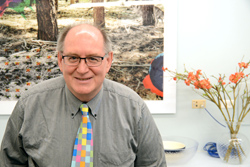
What do machines that make frozen margaritas, OXO Good Grips and the entrepreneurs on Main Street have in common? According to UC's design guru Craig Vogel, two very important things:  Opportunity and innovation. Vogel shares his thoughts on Cincinnati and what companies need to do to “get it right.”  

New certificates at UC focus on sustainability

The University of Cincinnati recently added four new degree certificates to the College of Design, Architecture, Art and Planning. The Sustainable Landscape Design, Urban Agriculture, Urban Landscapes and Green Roofs certificates are in the horticulture department and focus on green living. The four certificates are available at the undergraduate level, but graduate students can arrange for credit.   A certificate in Sustainable Landscape Design focuses on the sustainability aspect of building and landscape design. The Urban Agriculture area of study examines contemporary issues in horticulture, urban design, livability and quality of life, food security and sustainability. A certificate in Urban Landscapes focuses on the role of plant life in a sustainable urban environment. The certificate in Green Roofs addresses contemporary issues in living architecture, while focusing on the environmental, economic and social aspects of sustainable urban design.   The certificates give students the opportunity to add a specialized area of study to their overall horticulture degree. Plus, it allows them to enhance their skills and build their resumes, says Virginia Russell, associate professor of architecture at DAAP. She teaches a class on infrastructure and green roofs in the Urban Landscape realm of study.     New courses in urban agriculture and ecology, living architecture and plant biogeography were added to the horticulture program in response to students’ passion for sustainable living. Many horticulture students have done service projects in the community to gain experience and enhance their skills, says Russell.   Students aren’t the only ones interested in green projects. The UC Master Plan, which was developed by Hargreaves Associates, a landscape architecture firm, includes different aspects of sustainable landscape design. These aspects have been incorporated into projects around campus, including the sub-grade retention basin near the student recreation center that uses recycled storm water for irrigation purposes. UC also installed two green roofs over the summer—one on Procter Hall and one on the DAA building of DAAP.   Russell believes that green living is important for everyone because so many areas of expertise are beginning to show concern for the environment. For example, professionals in medicine, the culinary arts and all fields of design should understand the importance of plant-based tools, such as new types of packaging, a food-secure supply chain and the therapeutic uses of plants and gardening.   By Caitlin Koenig Follow Caitlin on Twitter 

UC student’s ‘green’ IT to be presented in Baltimore

University of Cincinnati computer science doctoral student Dippy Aggarwal will be among the leaders in their fields who are sharing emerging research and career interests at the Grace Hopper Celebration of Women in Computing Conference. Read the full story here.

FotoFocus featured in New York Times

FotoFocus, Cincinnati's month-long celebration of photography, gets a shout-out in The New York Times fall arts preview. Read the excerpt here.

Cincinnati Public Schools highlighted in Education Nation

Cincinnati Public Schools made a national mark when the local Community Learning Centers were highlighted as part of a national series of solutions that work in education systems. Read the full case study here.

University of Cincinnati cracks US News’ list of top colleges

The University of Cincinnati cracks US News & World Report's listing of top American colleges. Read the full listing here.

Cincinnati Innovates’ winners collect $100K in awards

One is a soccer dad tired of suffering on the sidelines. Another is a savvy entrepreneur with a plan to help professionals who have said “yes” to one too many find a safe and convenient way home. Still another is a mom inspired by healthy living. This year’s Cincinnati Innovates winners encompass an impressive range of ideas and strategies to improve quality of life and health. Rick Pescovitz of Under-the-weather.com won one of the top awards, the $25,000 CPG Strategies Award, for his all-purpose tent built to fit soccer chairs and protect fans from extreme weather. The other $25,000 winner, Brooke Griffin of Skinny Mom, has built a network of more than 70 mom-bloggers around the world. She won investment help from CincyTech. Another winner, Jon Amster of 321RIDE.com, received a $5,000 Taft Legal/Patent Award for his innovative approach to his membership-based designated driver service already used by the Cincinnati Reds and Dunhumby USA. In its third year, the Cincinnati Innovates competition awarded $100,000 in funding and in-kind services to entrepreneurs representing 12 business ideas. Since its inception, the competition has sparked millions of dollars of investments in companies with local connections. More than 200 entries vied for support this year, with awards given in a variety of categories. Commercialization award winners were selected by their sponsors (CincyTech, LPK) with help from a team of judges; in-kind services awards were chosen by sponsors with help from judges; community choice award winners were chosen by the public. Browse this year’s innovative entries here.  By Elissa Yancey Follow Elissa on Twitter.

Our Partners

Taft Museum of Art

Common Ground Is Brewing

Support local stories and receive our signature roast straight to your door when you join at the Standard level (or above).

Drink Better, Read Local

Close the CTA

Don't miss out!

Everything Cincinnati, in your inbox every week.

Close the CTA

Already a subscriber? Enter your email to hide this popup in the future.