Clifton / CUF

Resting on a hill overlooking the north side of Cincinnati, Clifton offers a wide range of experiences from a college atmosphere with the city's largest school, the University of Cincinnati, to an international center for cutting-edge medicine featuring University, Children's and Good Samaritan hospitals. Clifton's history has been preserved in historical buildings and homes — from modest to millionaire. Trendy shops and restaurants can be found on Ludlow Avenue in the Gaslight District, along with the Esquire Theatre, yoga studios, Clifton Market and a newly renovated branch of the Cincinnati Public Library. Even though Clifton is tightly compacted with large buildings and interesting architecture, green space does exist at Burnet Woods

Community opportunity through Carnegie’s Call to Artists

For nearly 40 years, The Carnegie has strengthened the Northern Kentucky community as a venue that displays, fosters and inspires creativity in both the visual and performing arts. One way it fulfills that mission is through its annual Call to Artists, which is now underway. Call to Artists provides a means for the nonprofit to expose the work of local and regional artists, as it selects enough pieces to fill its six galleries for the 2014 season with more than 30 solo and group shows.  Gallery director and curator Bill Seitz says he’s fine-tuned the process behind the Call to Artists by ensuring that the work chosen is based solely on artistic merit, as all of the artists are juried anonymously.  “Each artist is equal; it doesn’t matter," Seitz says. "I tell artists, ‘I don’t care if you’re in the Museum of Modern Art. The only way you’re getting a show here is because your work’s good.' I have friends who have never gotten a show here because they haven’t made the cut. Give me the best art and artists, and they’ll give me the best shows.”  Seitz says the fact that work is chosen anonymously is part of the beauty of the process. “I know in the world, you can get a lot of things on who you know, but here, I put everyone—especially the artists—on equal playing turf.”  When Seitz says he puts everyone on equal playing turf, he means it, because The Carnegie’s galleries are meant for everyone in the public to enjoy—not just art aficionados who seem to understand and connect with every piece they see. “I think a lot of people get intimidated coming to galleries because you have that elitism stereotype attached to it, and we try to break that down," Seitz says. "We try to make that personal. When you come in, you’re family. If you don’t like something, that’s okay.”  According to Seitz, It’s not expected or even fair to assume that one particular show will capture the attention of everyone. There are some pieces in the gallery that he says even he doesn’t like, and he wants the public to know that that’s okay and perfectly normal.  “You’ll run into somebody who’ll say, ‘Well, all he showed was contemporary artwork, and it’s not my thing,’" he says. "So I’ll say, ‘You didn’t see the glass show or the basket show or the craft show.' I do 30 to 40 shows a year. We try to put a little bit of everything in there. You cant like it all—because I don’t like it all—but you’re going to come and hopefully find something you like or find something that maybe enlightens you about something you didn’t know you like.”  There are all kinds of art, and variety is something the Call to Artists prides itself on finding. From photography, to art made from paper, food or even hair, the exhibitions don’t place value on one type of art over another, but instead encompass a wide array of work, from as many artists of differing abilities as is possible.  “You’ve got to put everything in perspective," Setiz says. "The biggest thing I tell people is I’m happy that you came, happy that you showed up, that you looked at art, that there was something there that you enjoyed that made you happy, that you looked at something and communicated with it." “That’s what art is—visual communication. It’s like sitting down with a book—that’s written communication. You can put on a CD or go to a movie or a theatrical performance—there are different art forms, but see the talent that’s basically in your own backyard. The fun part of it is that this is your own; they’re your own talent; these are people that live right in this area.”  Do Good: • Visit The Carnegie's current gallery exhibition "Pulp Art." • Submit your artwork for review with the Call to Artists. • Support The Carnegie by becoming a member. By Brittany York Brittany York is a professor of English composition at the University of Cincinnati and a teacher at the Regional Institute of Torah and Secular Studies. She also edits the For Good section of SoapboxMedia. 

Building strong communities through Charitable Words

It only took Tom Callinan a few months to realize how much he missed the community and connections he had built in Cincinnati.  Callinan—who served as editor of the Cincinnati Enquirer for eight years and then as the McMicken Professor of Journalism at the University of Cincinnati’s journalism program—tried to retire, but the lifestyle just didn’t work out. He traveled to his home in Arizona with the intention of finally taking a break from his long-time career as a communicator. He took up golfing to occupy his time, but he says it simply wasn’t rewarding.  “I just woke up one morning and thought, ‘I love Cincinnati,’” says Callinan. “One of the gifts of being the editor of the paper is you get to know a lot of people. So connections are currency, and I know people, so what can I do to put that to good use?”  So Callinan returned to Cincinnati and founded Charitable Words, an organization that functions as an intern-placement program, which helps students gain real-world job experience as they put their skills to use at small nonprofits in the community. Then they, too, can better fulfill their missions and strengthen their messages.  “What I see in the nonprofit world is there’s such a need, but the audience is so fragmented—you can’t just get a story in the paper, and Twitter and Facebook have become noise, so communication’s really essential,” Callinan says.  One of Charitable Words’ most recent matchups, and the one that Callinan is most proud of, is the pairing of Charitable Words Scholar Tia Garcia, a UC student who works as the multimedia editor at The News Record, with Melodic Connections, a local nonprofit that provides music therapy to students with special needs.  “They have this wonderful program—not a lot of people know about it—and what a wonderful story to tell," Callinan says. “It’s just an amazing matchup to me because it’s small enough that she will make a huge difference, and I just love it. I’m not sure there is another internship program that thinks that way.”  Callinan’s aim is to turn Charitable Words Scholars into a community—a family—that will function as a microcosm of what he, and others from outside the Cincinnati area, view as the makeup of this city.  “I moved here from Phoenix, and the term I use is, ‘That was a crowd, not a community,’” says Callinan. “A lot of people doesn’t make a community, and here, it’s amazing. Every place I go, I tend to know someone. It’s like a small town, but it’s not. It’s a metropolitan area.” At workshops and presentations across the country, Callinan says Cincinnati is recognized as a “really special place,” with a model that other cities look to replicate, for the purpose of achieving social change through collective action.  “It really strikes me as I travel around," Callinan says. "There’s the old cliché that people in Cincinnati don’t appreciate how good they have it; they’ve got inferiority complexes and whatnot, but people who move here are astonished at how wonderful the city is and that anyone would think it’s not a world-class city." There are currently six Charitable Words Scholars, but the vision is that there will be hundreds. In the coming months, Callinan will form an advisory board with professionals from a variety of industries who can serve as mentors to interns so they can better achieve nonprofits’ missions; and Charitable Words will become much more than an internship-placement program that serves community organizations.  “What I’d like to do is become a family,” Callinan says. “We’d have an annual service day; maybe we’d have a party. These Charitable Words Scholars would stay together over the course of time, network as friends and continue to make a difference. That’s my wish for it.”  Do Good:  • Connect with Charitable Words by liking and sharing its Facebook page. • Contact Charitable Words if you're seeking an internship and have a passion for humanitarian efforts. • Reach out to the organization if you would like to support an intern in his or her placement. By Brittany York Brittany York is a professor of English composition at the University of Cincinnati and a teacher at the Regional Institute of Torah and Secular Studies. She also edits the For Good section of SoapboxMedia. 

FRONDORF: Lessons from Santa

This holiday season, I started believing in Santa...Dr. Santa Ono, the new president of the University of Cincinnati. In just a little more than four months as president at UC, Ono has captured the attention of an entire city. Read the full story here.

Untethered adds intimacy to local theater scene

It’s not often that you find students so engrossed in their studies that they decide to do more than what’s asked of them and expand a project beyond the realm of the classroom. For Untethered Theater, however, a single-scene performance in a theme study course taught by Miami-Hamilton professor Bekka Reardon led to a full-fledged self-produced play in 2011. And now, two years later, the group’s continued passion for intimate theater continues as the ensemble takes on Adam Rapp’s “Red Light Winter”—the second of four plays in the company’s 2012-13 season.  “Red Light Winter” portrays the hard truth of “how impossible it is for people to let things go,” says Mary Kate Moran, one of Untethered’s three founding members. It takes place throughout the course of a year: one night in Amsterdam and then a year later in New York City, and it’s performed in a 50-seat basement-level space at the Clifton Performance Theatre, where Moran says the audience is oftentimes in the middle of the action.  “We want to provide accessible, sort of in-your-face storefront theater,” says Moran. “It’s intimate. It’s participatory. We want to be so different that you’re going to go to a night of theater and feel like maybe you walked into something and were a fly on the wall.”  Moran says the ensemble, which has nine official members—most of whom have full-time day jobs as well—decided to put on the play because of some of the members’ intense passion for its themes, in addition to the group’s mission to perform pieces that people don’t see very often.  “This is a labor of love,” says Moran. “We go and do this full-time after we get away from our desk or retail jobs or whatever because there’s no other place we want to be. We just want to create art that is a lot of fun for people who know and love theater.”  Untethered contributes to the community by bringing its skills and dedication to the stage, but the company also hopes to reach out to the neighborhood by providing support to increase involvement in the arts. “We want to have nights where we have shows where almost all of the profits go toward people in the community,” says Moran. “We want to surprise people with that kind of stuff. We love Clifton, we love being in Clifton, and we want to make Clifton a better place.”  Untethered Theater’s “Red Light Winter” will continue through Feb. 2.  Do Good:  • Purchase tickets to a performance of "Red Light Winter."  • Support Untethered Theater and its sister-company Clifton Players by attending an upcoming show or purchasing a season subscription. • Like Untethered Theater on Facebook. By Brittany York Brittany York is a professor of English composition at the University of Cincinnati and a teacher at the Regional Institute of Torah and Secular Studies. She also edits the For Good section of SoapboxMedia. 

Metro-Zipcar partnership boosts car sharing in Cincinnati

The European notion of car sharing has found broad appeal around the world because of its environmental and economic sustainability. In December, the City of Cincinnati brought Zipcar to downtown to make commuting easier. Metro and Zipcar then formed a partnership. It's an ideal selling point because using one or both of the transportation services is environmentally conscious, saves money and gives people the freedom to get up and go. It’s a win-win for Metro and Zipcar. Zipcar, a business with a mission to create a future where car-sharing members outnumber car owners, offers a self-service alternative to car rental. Intended for the technologically savvy commuter, Zipcar members log in online or through the mobile app, see where vehicles are located, choose one and unlock the car by holding their Zipcard against the windshield.  Its successful rollout on the University of Cincinnati’s campus last year prompted Larry Falkin, director of the City’s Office of Environmental Quality, to bring the program to Over-the-Rhine and downtown.  Kim Lahman, Metro’s ridership development manager, says that using both Metro and Zipcars eliminates excuses that not owning a car limits commuters’ ability to travel when and where they need to. “We thought this was a great opportunity to say, ‘If you ride the Metro downtown and don’t have to worry about parking or the hassle of traffic, and you need a car to use during the day, all you would need to do is take a Zipcar,’” Lahman says. “You would have it out for an hour or a couple of hours, and then take it back to the lot and go back to your office. How convenient would that be?” Walking from your downtown apartment or office to somewhere close by, like Garfield Place, would be very convenient for many urban dwellers. According to Falkin, 20 percent of Cincinnati households do not own a car, or own less than one car per licensed driver.  “More and more of us are choosing a sustainable lifestyle, in which we walk or bike first, use transit as the second choice and drive as a last resort,” Falkin explains. “Using Metro and Zipcar, a person can go anywhere, anytime, without being burdened by car ownership.” “It can also save money,” says Jill Dunne, Metro public affairs manager. “If you’re riding Metro, you’re saving money, versus the gas and the parking expenses you would pay if you had your own car. And then if you’re able to give up that car payment and you pay per trip the fee for a Zipcar, that could really save you a lot.” The partnership also means that Metro riders get a special incentive to register and become “Zipsters.” Besides already saving money on gas and parking, Metro riders can expect to see interior advertisement cards in February from Zipcar with a discount code redeemable for up to $60 worth of free Zipcar rental. Zipcars are parked next to blue signs that say “City of Cincinnati Car Share Parking Spots.”  Current locations are: NW corner of 12th and Vine (on the north side of 12th Street)Court Street between Walnut and Vine (angled parking spaces)NW corner of Garfield and Race (on the north side of Garfield Place)To join or for more information, visit Zipcar's website.  By Mildred Fallen  

ESCC helps nonprofits maximize output

In 1995, a small group of retired business executives came together with the intent of giving back to their community by investing their time and talents in work that would assist nonprofits. Now, nearly 18 years later, Executive Service Corps of Cincinnati is the recipient of an $85,000 award that will help more than 130 volunteers provide low-cost, high-quality strategic thinking, planning, training and coaching to other nonprofits in need.  The recent funding will help the ESCC implement its Community Benefit Business Model, which, according to Andy McCreanor, executive director and CEO of the organization, is a model that has essentially always existed within the nonprofit, but has now been refined and strengthened. The model helps nonprofits maximize results so that they may receive additional funding to better fulfill their missions, which ultimately works to improve the communities they serve. “It enables investors to get more out of the nonprofits that they’re investing in, and secondly, it helps the nonprofits because we’re affordable," says McCreanor. "We’re merely a vehicle so that the community gets the benefit that they’re trying to get." The ESCC has worked on long-term projects with more than 500 nonprofits in Cincinnati, Northern Kentucky and Southeast Indiana since 1995, including most recently the Jewish Federation of Cincinnati. ESCC also offers a 10-month program at its Nonprofit Leadership Institute each year; and at its culmination in June, more than 100 nonprofit leaders from Cincinnati will have graduated.  McCreanor says that because of the recent economic downturn, nonprofits have suffered and organizations are reevaluating and assessing their goals and missions. “We’re here to help,” he says. “If you’re struggling out there, it really doesn’t cost anything to talk about what you’re dealing with, and if in fact there is a way for us to help, it’s going to be done at a very low cost, so it’s kind of the best of all worlds.”  Do Good: • Sign up to attend classes at the Nonprofit Leadership Institute. • Volunteer your business skills and experience to serve other nonprofits. • Reach out to the ESCC if you are a nonprofit that could benefit from its services. By Brittany York  Brittany York is a professor of English composition at the University of Cincinnati and a teacher at the Regional Institute of Torah and Secular Studies. She also edits the For Good section of SoapboxMedia.

Katie’s House turns tragedy into opportunity

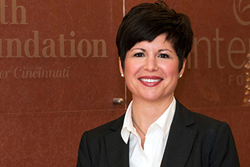
While Katie Haumesser was on her way home from taking her daughter to Children’s Hospital in February 2006, a drunk driver who was traveling at about 100 miles per hour hit her vehicle head-on. Haumesser, a single mom who had devoted her life’s work to serving children with special needs as a speech-language pathologist, died instantly at the scene. Her compassion, however, lived on and is the inspiration for Katie’s House, which is set to open later this year.  The Katie Haumesser Foundation was founded in 2007 to honor Haumesser’s life by giving back to the children she lived to help. Led by her family, the nonprofit started raising funds for the special needs department at Haumesser’s former place of employment, Willowville Elementary. Part of the foundation’s mission is to fund scholarships for University of Cincinnati students who follow Haumesser’s path by majoring in speech-language pathology. Initially, the organization decided to raise money for one charity per year to help students like the ones Haumesser helped; but in 2010, a broader vision emerged.  With the help of the Hearing Speech & Deaf Center of Greater Cincinnati, the leaders of the Katie Haumesser Foundation came up with the idea for Katie’s House, a comfortable, home-like facility where children with special needs could receive speech, language, audiology and occupational therapy. The facility will be housed on the renovated third floor of the Hearing Speech & Deaf Center and will provide services to those in need, regardless of whether or not they have the ability to pay.   “The home-like setting is going to be more inviting for the kids instead of walking into a sterile doctor’s office,” says Amy Zeisler, Haumesser’s sister and co-founder of the nonprofit. “When you get off the elevator, it’s going to look like the front of a house, and the carpet is going to be AstroTurf to look like grass.” Within the facility, there will be a living room, which will serve as a group area, a kitchen, a gym—designed as a backyard—for occupational therapy, and bedrooms, which will serve as individual therapy areas. In addition to serving children, the Center will provide education for parents who may be struggling with how to understand and cope with their children’s disabilities.  Katie’s House will also provide support for children with other conditions, such as autism. “Katie worked with a boy who had autism and wasn’t speaking for a while, and then he became verbal,” says Zeisler. “It was very moving for her to see how what she was doing impacts kids' futures and how important communication is to succeed.”  According to Zeisler, her sister knew that early intervention is key to helping children with disabilities maintain a “steady life.” With Katie’s House, those ideals will take shape in a way that Zeisler is confident her sister would be proud of; and she says she can’t wait for the grand opening later this year. “We’re taking tragedy and turning it into something positive,” Zeisler says. “And I’m hoping that people can see what we’re doing. It’s going to be amazing.” Do Good:  • Make a financial contribution or contact the nonprofit to donate items for silent auction. • Volunteer at the annual fundraiser April 12.  • Nominate a community member who serves children for an Outstanding Service Award. By Brittany York  Brittany York is a professor of English composition at the University of Cincinnati and a teacher at the Regional Institute of Torah and Secular Studies. She also edits the For Good section of SoapboxMedia. 

Shield gives back to those who give daily

The Shield started in September 2000 during a crisis. A Cincinnati police officer was killed in the line of duty, and his family, which was from out of town, couldn't afford to fly in on short notice. Tom Streicher, who was Cincinnati’s police chief at the time, knew something had to be done; he offered up his credit card to ensure the officer’s family was where they were needed—by the fallen officer’s side.  “It was a leadership issue,” says Satch Coletta, a retired officer and trustee for the nonprofit that was soon to launch. “What are the odds, should something happen? Something should be there.”  In that moment of need, police chiefs came together to make contributions and began to fund a new nonprofit. The organization has continued to operate ever since, thanks to community donations, and in large part, to the willingness of officers who take payroll deductions to contribute.  The organization’s board, which is composed of 10 officers—current and retired—works entirely on a volunteer basis. They meet monthly during lunch breaks to fulfill The Shield’s mission: to assist the families of officers killed or critically injured in the line of duty.  Policing is a dangerous job, and according to Coletta, “It’s not a matter of if we’re going to pay money out, it’s a matter of when and how much.”  The funds are available to families immediately—prior to workers’ compensation or life insurance, says Coletta. “If it happens at one in the afternoon, at 1:01 p.m., there’s a benefit committee that’s ready to spring into action to aid an officer or his family.”   Coletta knows the circumstances surrounding the loss of an officer all too well. In 1978, Officer John Bechtol, next-door neighbor and friend whom Coletta trained with, died after a vehicle struck his police cruiser. There was no immediate support available for the family . “Back then, policemen, not that they make a great fortune now, made even less; and to be able to set funeral arrangements and getting people in and situated—things along that line…” were very difficult, he says. The funds are not just meant for funeral arrangements and families’ transportation, however. “Say he would have survived the crash,” Coletta says, “he would have been in very serious condition, say in ICU for a long time. You would expect the spouse to be there in ICU. If their job doesn’t pay, The Shield would entertain paying the spouse’s wages because they’re already down one. We don’t want them to suffer additionally.”  In times of need, Coletta says people always want to help, but the organization’s goal is to create an emergency fund that can create interest, so that there is enough money available to families, prior to the moment when the unthinkable occurs. “The family knows what’s needed, and we work on the things to try to aid them,” Coletta says. “But it’s one of those things where at the time, that’s one less thing they have to worry about.”  Do Good: • Provide corporate or community support by donating to The Shield. • Contact The Shield about volunteer opportunities and upcoming events. • Connect with The Shield and share the organization's page on Facebook.  By Brittany York  Brittany York is a professor of English Composition at the University of Cincinnati and a teacher at the Regional Institute of Torah and Secular Studies. She also edits the For Good section of SoapboxMedia.  

Innov8 for Health breeds success by forcing failure

When it comes to the fast-evolving world of health care, Cincinnati's startup community is attracting fans from the White House on down, in part by focusing on fast failures as well as lasting ideas.

U Square brings Waffle House, Mongolian BBQ, hot yoga, more to Clifton

Construction crews have been parked on Williams Howard Taft and Calhoun for months, but by March, University Square at the Loop in Clifton will begin opening a series of restaurants and shops that are new to the campus scene. Apartments in the mammoth development are slated to open starting in July. Currently, nine restaurants have been announced through the project’s official website: Firehouse Subs, bd’s Mongolian Barbeque, Lime Fresh Mexican Grill, Waffle House, DiBella’s Old Fashioned Submarines, Mr. Sushi, Hwy 55, Orange Leaf and Keystone Bar & Grill. Shop tenants include Great Clips, Moksha Yoga, Rue 21 and Altar’d State. “Over 70 percent of the space has been leased to prospective tenants,” says Arn Bortz, former Cincinnati mayor and a partner at U Square developer Towne Properties. While most of the apartment tenants will likely be students, the apartments are market rate, Bortz says. So students who are looking to lease an apartment for next year should expect to pay a bit more, assuming the convenient location is enough to sway them — apartments range from $695-$1650 per month. “Income qualified apartments,” those for qualified individuals with limited incomes, are not available to full-time students, according to U Square at the Loop’s website. The development will also include parking garages to accommodate the influx of traffic the complex will bring. For more updates, check out U Square at the Loop’s Facebook or follow them on Twitter. By Kyle Stone

Our Partners

Taft Museum of Art

We want to know what's on your mind.

Close the CTA

Don't miss out!

Everything Cincinnati, in your inbox every week.

Close the CTA

Already a subscriber? Enter your email to hide this popup in the future.