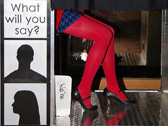
High Street’s “shopping with cocktails” gets noticed

MSN's News on Main asked small businesses across the nation about their tactics for attracting customers for the upcoming Black Friday. Featured lifestyle design store, High Street, hosts an annual White Russian Party. Last year, nearly 1000 customers came to the event, celebrating and shopping with cocktails. Watch the video here.

Ohio school goes from dead end to high-tech star

Cincinnati's Taft High School, once known as one of Ohio's worst, has reached a high-tech level. Graduation rates increased from 21 percent to 95 percent and Taft earned an "excellent" rating along with the National Blue Ribbon Award. The turnaround is a result of good leadership internally and from corporate citizens like Cincinnati Bell, innovative planning, and a desire to make a difference. Read the full story here.

UC brain pathways research finds food, sex reduce stress

Researchers at the University of Cincinnati found that food, sex, and other pleasurable activities reduce stress by inhibiting anxiety and producing pathways in the brain. Researchers conducted testing on rats, giving them a sugar solution twice a day. Stress responses lowered with lower stress hormones and heart rate. These results could help provide potential strategies to prevent obesity and other metabolic disorders. Read the full story here.

GCWW’s new facility enhanced by UV technology

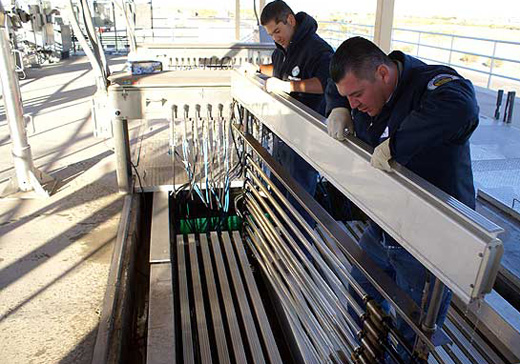
To every outdoorsman, germophobe and gadget geek who has looked skeptically at UV water purifiers, consider this: The Metropolitan Sewer District of Greater Cincinnati will soon use the same basic technology as products like the Steripen purifier to disinfect the city's water.Greater Cincinnati Water Works (GCWW) is on track to open a 19,600 square-foot UV disinfection facility at its Richard Miller Treatment Plant on Kellogg Avenue by the end of 2012. According to Calgon Carbon, the company building the UV units for the plant, the $30 million facility will be able to treat up to 240 million gallons of water a day.The UV treatment will actually be the third step in the plant's disinfection process. Water first flows through a sand filtration system; just like it sounds, sand traps larger particles as the water is forced through it. The water then flows through a Granular Activated Carbon (GAC) filter, which uses a type of charcoal to pull more chemicals out of the water.Both of these systems are effective and time-tested, but they can't catch some of the worst drinking water contaminants: microorganisms and viruses that can cause diseases like gastroenteritis, typhoid fever and cholera. Until now, most water utilities have relied on a system in which chlorine is added to - then removed from - the water. It's effective, but can't kill all the microorganisms, and leaves trace amounts of chlorine (a deadly gas in its pure form) in the drinking water. While UV disinfection won't eliminate the need to use chlorine in Cincinnati's water, it will add another layer of protection. UV disrupts the internal mechanisms in microorganisms and certain viruses, leaving them unable to multiply or killing them outright.So why add the large, sophisticated, $30 million extra layer of protection for Cincinnati water drinkers? The city has not seen an outbreak of a waterborne disease such as Giardia or Cryptosporidium in the recent past, after all. According to a GCWW report, part of the reason is that there's been cause for concern about just such a problem occurring. A wastewater treatment plant in Alexandria, Kentucky, releases treated water into the Ohio River 11 miles upstream of the Richard Miller facility. And while GCWW doesn't report concerns about the Kentucky treatment facility's ability to do its job, it's taking a "trust, but verify" approach to the issue."New or unexpected contaminants are sure to be discovered in our source water in the future," reports the GCWW. "UV disinfection, combined with GCWW's current treatment processes, provides an extra layer of protection against those contaminants. This is an important step in insuring public health now and for future generations."Writer: Matt CunninghamPhotography provided


Cincy Unchained’s independent businesses building better neighborhoods

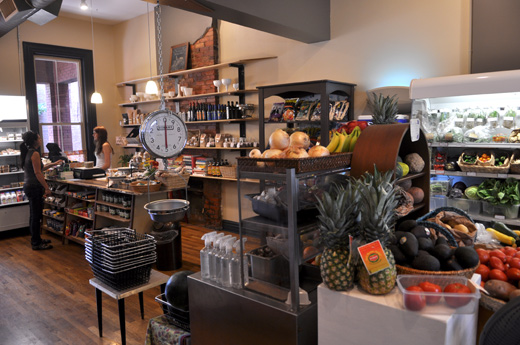
The holiday shopping season is officially underway and this year Cincinnatians are being encouraged to buy locally.  Sean Fisher, founder of BuyCincy.com, has planned Cincinnati Unchained for Saturday, November 20th.  Fisher has coordinated with local independent businesses within the cityin twelve Cincinnati neighborhoods to offer special discounts, door buster specials, or donate a portion of the day's sales to their favorite charity. Lisa Kagen, storeowner of Melt and Picnic & Pantry in Northside, thinks consumers who seek out independent retailers are choosing to support their local economy first. And that's good for the neighborhoods where independent businesses are located."This is the only way we can be patient with our economy and rebuild it by reinvesting in our local economy instead of chain businesses," Kagen said. "It is not a trend, but a movement back to how a real economy used to work."Kagen opened Picnic & Pantry in May of this year. She found the need to add a local grocery and market in Northside and loved the area because of its diverse atmosphere, affordability, and historic appeal. Always attracted to neighborhoods on the cusp of blossoming, Kagen finds that Northside, along with other areas in Cincinnati, provide a lot of opportunity for independent shops to thrive. Kagen explained that she has no trouble finding local resources and that other businesses are willing to communicate and support one another. Another thriving neighborhood for entrepreneurs is Over-the-Rhine with forty-seven new businesses in the past two years. Brian Tiffany, Executive Director of the Over-the-Rhine Chamber of Commerce, supports the Cincinnati Unchained event, and views it as a great opportunity to demonstrate that buying local during the holidays offers shoppers a unique alternative. According to Tiffany, Over-the-Rhine businesses attract a variety of age groups ranging from the younger community to the "empty-nesters" looking for something new in the historic area. "The younger community is a lot faster at embracing the change and opportunity, but as the word gets out a wide variety of people seem to visit the neighborhood," Tiffany said. Tiffany explains that Over-the-Rhine is attractive to new businesses due to the changes taking place in the neighborhood, including Washington Park's overhaul and SCPA's new facility, and the Chamber's Business First grant program. So much affordable opportunity is available for small businesses as well as for home ownership. "For once in a long time, I feel like the planets are aligning in Over-the-Rhine. I think the neighborhood has been challenged for so many years, and now it is moving into its own and starting to recognize its full potential," Tiffany said.Writer: Lisa EnsmingerPhotography by Scott Beseler. Picnic & Pantry

Local author’s history of Cincinnati’s incomplete subway looks to future developments

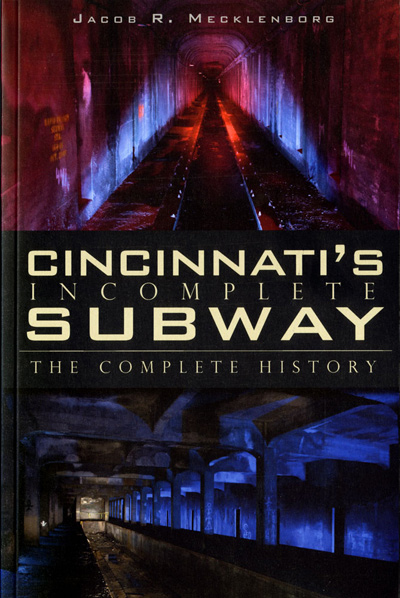
When Jacob Mecklenborg set out to write a book about the two miles of empty subway tunnel that lie beneath downtown Cincinnati - a catacombish network of concrete that has never heard the clang of a rail car - he had no idea how much history he would uncover."I made the mistake of thinking because I had written an article on it ten years earlier that I had a really big head start, but that was not the case," he said at a book signing at Neon's in Over-the-Rhine. "So much of this story had never been told," he added. His new book  "Cincinnati's Incomplete Subway; The Complete History," covers 150 years of rail development in Cincinnati, most famously one called the Rapid Transit Loop which included the two-mile subway tunnel. The bond issue that funded it did not provide enough money to complete the project once material costs skyrocketed after WWI and, as Mecklenborg's book follows in meticulous detail, repeated efforts to resurrect the tunnel over the next 90 years failed as well.  Mecklenborg argues that while pro-automobile federal policy exacerbated efforts to build the line, local smear-campaigns and inaccurate media coverage were what effectively killed it.A photographer and graphic designer by training, Mecklenborg was commissioned by the History Press to write the book after one of their editors read an article about the subway that he wrote and published on his website, Cincinnati-transit.com.A transit-enthusiast, Mecklenborg warned that the same problems that kept the subway from being built still threaten transit issues in Cincinnati."The struggle for all of us who are interested in improving the public transportation situation in Cincinnati is that the local media does not report state law, federal law, and the transit situation here in an accurate way," Mecklenborg said. "People can say whatever misinformation they want, and they don't get rebuked or fact-checked."One common misconception that the subway failed because rail cars wouldn't fit, is entirely false but still persists, he said. That particular myth was promoted by a group of young politicians who were trying to embarrass the political establishment that built the tunnel.Mecklenborg attributed the recent success of Cincinnati's streetcar campaign to the advent of "fact-checking" web sites that informed local voters about where funding for the system would come.  He believes the original subway tunnel might still be used to house light rail transit someday, and tells his readers what infrastructure improvements would be required to do so.Mecklenborg, who has an encyclopedic knowledge of local transit history, sums up his hopes for the future in the book's introduction: "I believe that this book will help clear the fog surrounding the subject, and in doing so remove the subway's construction and nonuse as a dependable "argument" of anti-rail, anti-city forces."Mecklenborg's book is available through History Press.Writer: Henry SweetsPhotography provided.

World planning day brings new ideas to Amberley Village

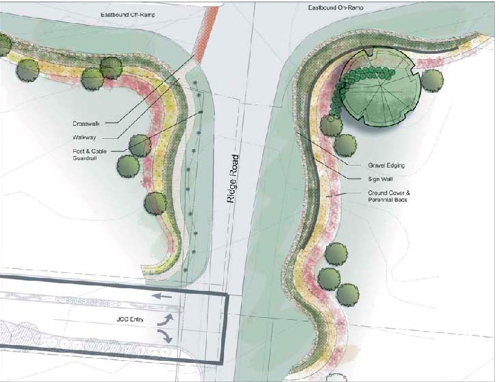
To celebrate World Planning Day in Hamilton County, ninety planners and planning students gathered in Amberley Village to brainstorm how the town might utilize vacant green space that would fulfill the community's goals. The annual event, organized by the Hamilton County Planning Department and Cincinnati's chapter of the American Planning Association, helps one community think through their major planning issues each year. The Amberley town government owns a vacant golf course and swim club, and the neighborhood also has an unused school. A town where young families are moving in and new ways of thinking are on the rise, Amberly hopes to improve its community dynamic while also staying green. At the World Planning Day charette, planners gathered into groups to address the vacant properties, as well as the lack of sidewalks and bike paths in the community. At the end of the day they presented their ideas to the mayor and town council. Mayor Merrie Stillpass said that almost all of the town is built-out except for the 133 acre golf course, Amberley Green, that is currently used by residents for walking and running, and its future is a hot issue in the small community. "We are currently working on ideas - which this World Planning Day event helped us look at with a different lens - to develop it as a mixed use area," Stillpass said. "We've turned down some previously proposed developments because we're looking for the right mix and right density that adds value, is an amenity to the community and doesn't have negative impacts." The planning group covering Amberley Green suggested one idea, or a combination of ideas, that stuck out to Stillpass. "For the Amberley Green property there were some thoughts about having an interdisciplinary program that might be supported by a couple of the local college programs," she said. "A research facility that could become a sustainability center with an agricultural component and maybe a residential component, or a banquet center - something that could generate revenue for the Village but perpetuate the higher calling of sustainability." Another big issue in Amberley is the lack of sidewalks or bike paths, and one group of planners suggested a hierarchy of pathways that could be built to begin connecting the Village's different neighborhoods to community gathering spots. In a couple of weeks the ideas gathered that day will be posted on a website hosted by the Hamilton County Planning Department, and at that point Amberley's Mayor and Town Council will start sifting through the ideas to see which ones are worth future investigation, Stillpass said. Hamilton County's director of planning, Todd Kinskey, said Wednesday's event had the highest turnout in the eleven years his office has helped to sponsor the event. Community's that are interested in hosting a World Planning Day charrette can contact his office for more information. Writer: Henry Sweets Illustration provided The approval by Village Council of a plan to landscape the intersection of Ronald Reagan Highway and Ridge Road

Artworks Lets The Secret Out

In the market to add to your art collection and willing to take a chance? You can discover emerging artists or get lucky with established artists at Secret Artworks this Friday.

Know Cincinnati? Newport’s Global Business Solutions uses social media to find out

Often, social media isn't all that social. In fact, while Facebookers and Tweeters interact online, those interactions don't usually connect to the outside world.The same holds true for businesses using Social Media to connect with customers. And the interaction can be boring and generic. One local company, Global Business Solutions in Newport, is using social media in a different to raise company awareness and engage potential clients in a fresh way.GBS is an IT consulting, support and managed services firm that since 1994 has worked with small- to medium-sized businesses and municipalities. The company was founded by President Gaby Batshoun and CEO Nael Mabjish and employs about two dozen people. This year it was awarded the Northern Kentucky Chamber of Commerce Small Business Success Award for Professional Services.The company is one of many across Greater Cincinnati tapping into social networking sites to generate buzz. Starting in late October, the company began a quirky, four-week contest on Facebook. Each day for the first three weeks, GBS posted a photo of the company mascot -  an inflatable globe -  somewhere in Cincinnati. People who "like" the Facebook page guess where the photo was taken; the first person who answers correctly wins a Flip camera that week. It's the first time the company has used its Facebook page this way."The city has such a large social media footprint, and we're able to connect to a lot of our clients that way. We wanted to use this space to reward the people who have already been communicating with us there, and draw some more attention to our company," said Joe Robb, GBS Head of Marketing.Since beginning the contest the company's Facebook followers have grown from 99 to 156. The page has been up about seven months."For us it's not really about the numbers," Robb said. "It's about getting to know people. Plus it's fun. This kind of work isn't really thought of as fun, but people who work here are fun and they enjoy what they do."The contest wraps up this week (Nov. 19) with a big prize, an iPad. To win this prize, however, the winner has to get off the computer and into Cincinnati. This week GBS is posting pictures at four different locations, one picture per day through Thursday. On Friday, the globe will be left somewhere in Cincinnati. The first person to upload a picture or video of him/herself with the globe, who also correctly guesses the locations of the pictures from earlier in the week will win the iPad. Think you know Cincinnati? You can go for the iPad at Global Business Solutions Facebook page.Writer: Feoshia HendersonSource: Joe Robb, GBS Head of MarketingYou can follow Feoshia on twitter @feoshiawrites

NanoDetection Technology moving to Cincinnati from Tennessee

An Oak Ridge, Tenn. medical device company that specializes in detecting biological hazards and diseases is moving to Cincinnati, and will be lead by former Union Springs Pharmaceuticals' President Joel Ivers.NanoDectection Technology is a startup that's making its way to Cincinnati to grow. The company's first product, the patented Biosensor Detection System, finds genes, antibodies or pathogens within a biological or environmental sample. It could be used in emergency rooms, doctor's offices or by food safety or law enforcement organizations. It works quickly, taking just minutes instead of days to detect infections or bio threats. The system is about two years from hitting the market.At least $1 million will be invested in the company, including $250,000 from CincyTech. Southern Ohio Creates Companies is investing $100,000, and an unnamed private investor is putting in a sizeable stake. The U.S. Department of Agriculture awarded NanoDetection a $175,000 grant to research food-safety applications.  NanoDetection was founded by Knoxville physician Charles Barnett, whose relationship with Ivers was a factor in bringing the company to Cincinnati. Ivers has worked in biomedical fields in Greater Cincinnati and Northern Kentucky for more than 30 years, most recently as president of Union Springs."The funds raised now will allow the company to complete clinical trials and obtain regulatory approval to launch the system in the health-care market in early 2013," said Ivers, now company CEO.A lab technician will be joining Ivers here in Cincinnati; company founder Barnett will remain in Tennessee. This is CincyTech's 18th portfolio company, and marks the first time the nonprofit venture development investor has attracted a company from out of state."We were impressed by the platform potential and performance of the NDT biosensor as an in-vitro diagnostic device in the clinical environment, coupled with the data collection and transmission capabilities, in a low-cost, simple-to-use, portable format,” said CincyTech executive-in-residence Dr. Jan Rosenbaum.Writer: Feoshia HendersonSource: CincyTechYou can follow Feoshia on twitter @feoshiawrites

Our Partners

Taft Museum of Art

We want to know what's on your mind.

Close the CTA

Don't miss out!

Everything Cincinnati, in your inbox every week.

Close the CTA

Already a subscriber? Enter your email to hide this popup in the future.